.webp&w=384&q=75)

Loading, please wait...
Loading, please wait...

Early genetic diagnosis provides essential guidance for managing refractory childhood seizures and severe developmental encephalopathies. Pediatric epilepsy genome sequencing offers an unprecedented diagnostic scope by examining coding exons, noncoding regulatory elements, and structural rearrangements simultaneously. Furthermore, landmark clinical data from major European academic medical centers demonstrate that integrating comprehensive genomic testing into frontline pediatric neurology care resolves complex diagnostic dilemmas. Consequently, clinicians can tailor anti-seizure interventions and discontinue burdensome diagnostic odysseys promptly.
Pediatric epilepsies encompass a clinically heterogeneous group of disorders with substantial neurodevelopmental morbidity. Historically, physicians relied on single-gene Sanger sequencing or targeted multigene panels to identify underlying mutations. However, these traditional diagnostic pathways often leave many cases unresolved and delay critical therapeutic decisions. Whole genome sequencing overcomes these diagnostic barriers by assessing nuclear and mitochondrial genomic variations simultaneously in a single assay. Furthermore, broad genomic testing identifies rare single-nucleotide variants, deep intronic variants, and copy number variations that conventional exome panels frequently overlook. Recent prospective evaluations demonstrate that frontline genomic sequencing substantially reduces the diagnostic timeline for affected infants. Therefore, establishing a timely molecular diagnosis allows pediatricians to comprehend underlying disease biology at initial presentation. In addition, prompt genomic characterization prevents unnecessary invasive testing, including repeated lumbar punctures and serial sedated neuroimaging examinations. Clinicians can also deliver individualized genetic counseling regarding recurrence risks for future pregnancies. Additionally, genomic findings guide early referral to multidisciplinary developmental support teams. Ultimately, clinical whole genome sequencing transforms pediatric neurology from reactive symptom management into proactive, precision medicine.
A landmark investigation at Karolinska University Hospital evaluated 733 pediatric families comprising 2029 individuals between 2014 and 2022. Within this real-world cohort, clinicians evaluated children presenting with early-onset seizures and complex neurodevelopmental phenotypes. Notably, the median age at seizure onset was merely 9 months, highlighting the vulnerability of young infants. Developmental delay or intellectual disability affected 61.3% of the cohort, while 38.1% received formal syndromic diagnoses under international criteria. Overall, clinical whole genome and exome sequencing secured a definitive molecular diagnosis in 278 of 733 individuals. This resulted in an impressive overall diagnostic yield of 37.9% across the entire cohort. Most positive diagnoses emerged directly through curated in silico epilepsy gene panels. Furthermore, human phenotype ontology queries and focused metabolic panels resolved additional challenging clinical presentations. In addition, whole genome sequencing identified pathogenic structural variants and single-nucleotide alterations across diverse genetic loci. Moreover, trio sequencing involving biological parents accelerated the identification of de novo pathogenic mutations. Consequently, health systems can systematically adopt genome sequencing to optimize diagnostic pathways for infants.
Identifying clinical features associated with high diagnostic yields helps clinicians prioritize genomic testing effectively. Multivariable logistic regression revealed several independent clinical predictors that significantly increased the likelihood of obtaining a definitive genetic diagnosis. Specifically, neonatal seizure onset increased the odds of achieving a molecular diagnosis by 2.5-fold compared to later onset. Furthermore, female sex independently predicted positive diagnostic confirmation, with an adjusted odds ratio of 1.8. The presence of developmental delay, intellectual disability, or epileptic encephalopathy also conferred an 1.8-fold increased diagnostic likelihood. In addition, patient mortality emerged as an independent predictor, reflecting the severe biological impact of monogenic encephalopathies. In contrast, researchers identified microcephaly as the single strongest independent predictor for severe neurodevelopmental disability, conferring nearly an eightfold increased risk. Moreover, abnormal neuroimaging findings frequently aligned with specific monogenic developmental channelopathies. Clinicians must therefore account for these distinct clinical markers when stratifying patient risk. Consequently, physicians should prioritize rapid genomic evaluation in neonates with intractable seizures or infants presenting with coexisting microcephaly.
An initial negative genomic result should not conclude the diagnostic evaluation in unexplained pediatric epilepsy. Whole genome sequencing generates comprehensive, unskewed digital sequence data that bioinformatics pipelines can re-evaluate periodically as scientific knowledge expands. Within the Karolinska cohort, researchers performed iterative computational reanalysis in 211 previously unresolved cases. Remarkably, reanalysis yielded a definitive molecular diagnosis in 51 of these children, representing a 24.2% diagnostic yield among re-evaluated patients. This remarkable diagnostic recovery occurred because international research consortia regularly discover novel disease-associated genes. Furthermore, clinical teams frequently reclassify variants of uncertain significance into pathogenic variants as functional evidence accumulates. In addition, improved bioinformatic variant callers uncover cryptic structural variants and noncoding mutations that older software versions missed. Therefore, clinical genetics services should institute scheduled biennial re-evaluation protocols for negative genomic datasets. Moreover, routine re-evaluation eliminates the diagnostic odyssey that often leaves families distressed and without answers. Close collaboration between pediatric neurologists and laboratory geneticists ensures that evolving clinical phenotypes trigger targeted in silico re-filtering over time.
Securing a definitive molecular diagnosis directly influences therapeutic decisions and improves clinical outcomes in pediatric neurology. For instance, discovering pathogenic variants in ion channel genes such as SCN1A guides physicians to avoid sodium channel blocking anticonvulsants. Conversely, identifying gain-of-function mutations in SCN2A or SCN8A indicates that sodium channel blockers may suppress intractable seizures successfully. Furthermore, confirming metabolic channelopathies like SLC2A1 allows clinicians to initiate a ketogenic diet swiftly, bypassing ineffective pharmacological trials. Beyond drug selection, early molecular identification prompts targeted screening for systemic extra-neurological manifestations, including cardiac arrhythmias, renal abnormalities, and endocrine dysfunction. In addition, families gain essential clarity regarding long-term functional prognosis, mitigating profound psychological stress. Moreover, precise genetic stratification qualifies affected children for emerging clinical trials evaluating antisense oligonucleotides and gene replacement therapies. Furthermore, avoiding inappropriate medication choices minimizes adverse drug reactions and prevents seizure exacerbation. Consequently, comprehensive genomic diagnosis serves as the foundational cornerstone for personalized medicine, optimizing neurodevelopmental trajectories and patient safety across tertiary pediatric practices.
Whole exome sequencing analyzes only protein-coding exons, covering about two percent of the human genome. In contrast, whole genome sequencing analyzes noncoding regulatory regions, deep intronic sequences, and complex structural variations. Furthermore, genome sequencing provides uniform read coverage and enables periodic reanalysis without requiring repeat blood sampling or laboratory re-sequencing.
Multivariable analyses show that neonatal seizure onset significantly increases diagnostic likelihood by 2.5-fold. Furthermore, female sex and co-occurring intellectual disability or developmental delay elevate diagnostic odds by 1.8-fold. In addition, patients exhibiting microcephaly or medically refractory early infantile epileptic encephalopathy demonstrate higher rates of identifiable pathogenic monogenic variants.
Medical researchers identify dozens of novel epilepsy-associated genes and pathogenic variants each year. Periodic computational reanalysis of existing whole genome datasets can resolve approximately 24% of previously negative cases. Consequently, reanalysis provides definitive diagnostic answers without inflicting additional venipunctures, hospital admissions, or significant procedural costs on pediatric patients.
Disclaimer: This content is for informational and educational purposes only and does not constitute medical advice, diagnosis, or treatment. Healthcare professionals should evaluate clinical cases individually and refer to official clinical management guidelines. Refer to the latest local and national guidelines for clinical practice.
References

Read summarized clinical updates, watch expert medical content, and earn CME certifications right from your smartphone.
Open your smartphone camera to scan and install.





A study of 733 pediatric epilepsy families reveals a 37.9% diagnostic yield using whole genome and exome sequencing. Key predictors of a genetic cause include neonatal seizure onset, female sex, and developmental encephalopathy, highlighting the utility of iterative reanalysis and precision treatment.
Today

Left bundle branch pacing is an emerging physiological resynchronization strategy for heart failure. While observational data and some trials show benefits over biventricular pacing, divergent trial outcomes highlight the importance of confirmed conduction capture and specialized operator technique.
Today

A retrospective study of 86,012 pregnancies demonstrates that size-selective cfDNA enrichment boosts mean fetal fraction to 18.88% and achieves a 59.20% PPV for fetal copy number variants. However, 85.83% of CNVs showed size discrepancies, underscoring the mandatory role of confirmatory microarray testing.
Today
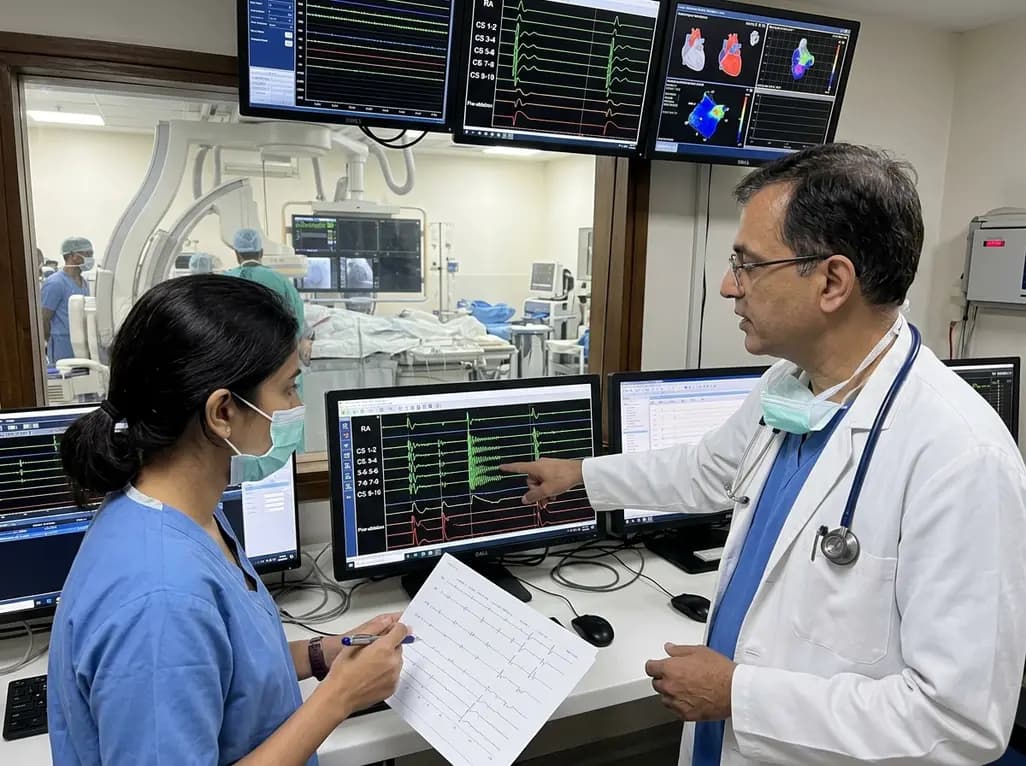
Radiofrequency catheter ablation of the cavotricuspid isthmus successfully terminates typical atrial flutter. This article reviews the mechanisms driving coronary sinus electrogram changes, wavefront activation pathways, and clinical criteria to verify bidirectional block during electrophysiology studies.
Today

A recent investigation examined load-dependent kinetic and kinematic profiles during two-way ballistic exercise across 30% to 80% 1-RM. Findings highlight load effects on velocity, impulse, and power, offering sports physicians objective guidance for neuromuscular conditioning and rehabilitation.
Today

A cross-sectional study demonstrates that increased BMI in adolescents significantly enhances mandibular length and alters salivary adipokines like adiponectin and resistin, providing novel insights into craniofacial growth and orthodontic planning.
Today
