.webp&w=384&q=75)

Loading, please wait...
Loading, please wait...

SGPGIMS surgeons in Lucknow recently achieved a major milestone in pediatric cancer surgery. Specifically, they successfully treated two young patients suffering from highly complex hepatobiliary and pancreatic tumors. These successful outcomes highlight the critical role of timely clinical intervention and multidisciplinary collaboration in managing rare pediatric malignancies.
Doctors diagnosed a 10-month-old infant from Ayodhya with hepatoblastoma. This is a rare and aggressive childhood liver malignancy. Crucially, diagnostic investigations revealed that the tumor occupied over 70% of the liver. Furthermore, the lesion lay precariously close to a major blood vessel. Because of these anatomical complexities, direct surgical resection was initially impossible. Consequently, the medical team administered four cycles of neoadjuvant chemotherapy to shrink the tumor. Subsequently, doctors performed a meticulous six-hour surgery to safely resect the mass while preserving healthy hepatic tissues. Additionally, the SGPGIMS liver transplant unit provided vital intraoperative support.
The second case involved an 11-year-old boy from Prayagraj who presented with abdominal pain, fever, and jaundice. Imaging studies identified a large solid pseudopapillary epithelial neoplasm (SPEN) obstructing the bile duct. However, SPEN is highly uncommon in male pediatric patients. Consequently, the case presented a unique diagnostic and therapeutic challenge. Ultimately, the surgical team performed an eight-hour pylorus-preserving pancreaticoduodenectomy, commonly known as a modified Whipple procedure. During this complex pediatric cancer surgery, the team successfully resected the pancreatic head mass while preserving pyloric and gastric function.
Prof. Basant Kumar, Head of Pediatric Surgical Superspecialities, led both complex procedures alongside a dedicated multidisciplinary team. He emphasized that early detection is key to improving survival rates. Thus, clinicians and parents must remain vigilant regarding suspicious symptoms. For instance, warning signs include persistent abdominal pain, unexplained swelling, jaundice, recurrent fever, or rapid weight loss. Fortunately, both pediatric patients have recovered exceptionally well and continue to show positive progress during their follow-up examinations.
Q1: What are the primary warning signs of pediatric gastrointestinal cancers?
Symptoms often include persistent abdominal pain, progressive abdominal swelling, unexplained jaundice, chronic recurrent fever, and rapid, unexplained weight loss.
Q2: Why is neoadjuvant chemotherapy used before liver tumor resection?
Neoadjuvant chemotherapy shrinks large tumors near major vessels. Consequently, this intervention makes the subsequent surgical resection significantly safer.
Disclaimer: This content is for informational and educational purposes only. It does not constitute medical advice or replace professional judgment. Refer to the latest local and national guidelines for clinical practice.
References

Read summarized clinical updates, watch expert medical content, and earn CME certifications right from your smartphone.
Open your smartphone camera to scan and install.





Surgeons at SGPGIMS, Lucknow, successfully cured two children with rare and complex hepatobiliary cancers. A 10-month-old underwent a major liver tumor resection after chemotherapy, while an 11-year-old boy underwent a complex pylorus-preserving pancreaticoduodenectomy (Whipple procedure) for a solid pancreatic tumor.
4 months ago
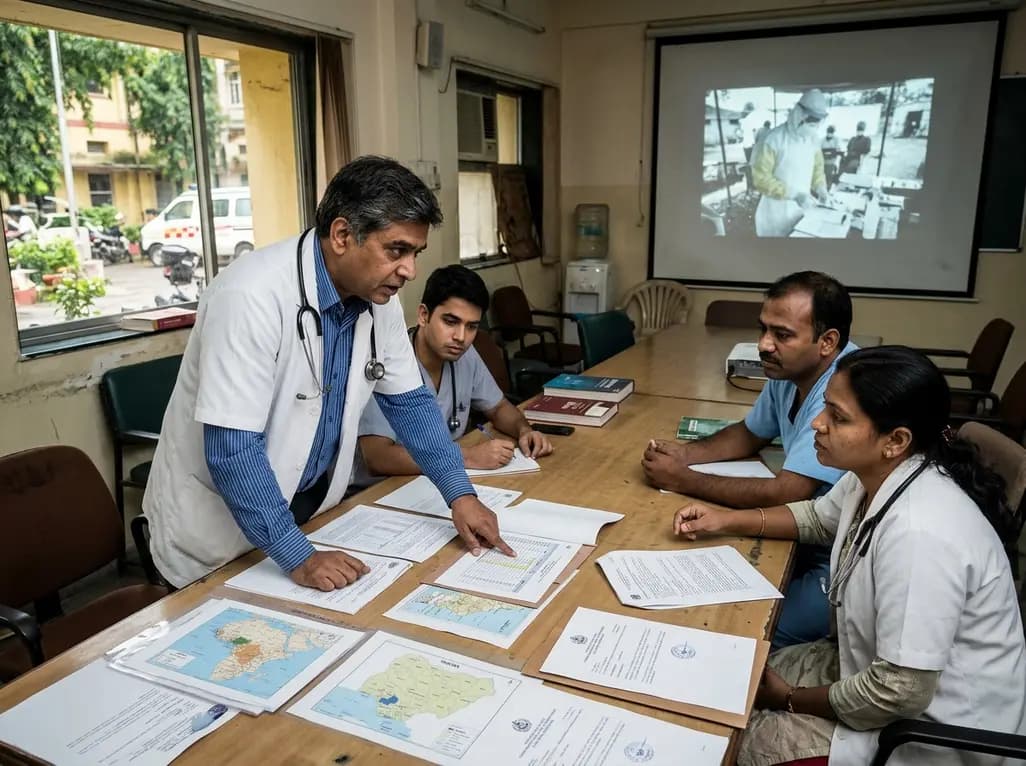
Following Nigeria's first recorded Ebola case linked to regional travel, the Africa CDC has convened an emergency ministerial summit. This alert underscores critical clinical priorities for healthcare professionals, including differentiating early viral infection from malaria, implementing barrier nursing, and triage.
Today

Leucine Rich Bio has introduced South Asia's first comprehensive vaginal microbiome test, BugSpeaks. By profiling microbial dysbiosis, pathogens, and antimicrobial resistance, this next-generation diagnostic platform provides clinicians with deeper insights into recurrent infections, fertility, and reproductive health.
Today

Review how tailored exercise programs benefit frail older patients with heart failure. Explore pathophysiological mechanisms, individualized training prescriptions, and strategies to overcome adherence barriers in clinical practice.
Today

This comparative study evaluates posterior labral tears with and without glenohumeral instability, highlighting distinct demographic patterns, MRI underestimation in stable shoulders, and successful arthroscopic repair outcomes.
Today

A clinical study demonstrates that early intervention with tocilizumab, either as monotherapy or bridged with corticosteroids, achieves significant proptosis reduction and resolves active inflammation in treatment-naive thyroid eye disease.
Today
