

Loading, please wait...
Loading, please wait...

Childhood malignancies present profound clinical hurdles, yet recent genomic advances reveal that underlying germline alterations cause a substantial portion of these cases. Geneticists identify cancer predisposition syndromes in approximately ten percent of pediatric oncology patients. When a child receives this genetic diagnosis, the entire household enters an unfamiliar realm of clinical vulnerability. Parents must manage active treatments, coordinate rigorous surveillance regimens, and navigate complex inheritance risks for other siblings. Consequently, understanding the emotional distress and systemic burdens experienced by these families is essential for comprehensive pediatric oncologic care.
Pediatric oncology teams increasingly encounter genetic conditions that elevate childhood tumor risks. Well-characterized conditions include Li-Fraumeni syndrome, Beckwith-Wiedemann spectrum, retinoblastoma, DICER1-related disorders, and neurofibromatosis type 1. In addition, researchers recognize constitutional mismatch repair deficiency and Fanconi anemia as major contributors to malignant transformation. Historically, clinicians identified these germline conditions only after children presented with classic physical anomalies or multiple primary tumors. Today, however, routine next-generation sequencing reveals pathogenic germline mutations even in children without dysmorphic phenotypes. As genetic diagnostic capabilities expand, the population of identified pediatric mutation carriers grows rapidly. Therefore, pediatric teams must anticipate the complex long-term trajectory of these young patients. Clinicians cannot restrict their focus solely to tumor eradication. Instead, they must simultaneously address organ toxicity, secondary cancer risks, and psychological vulnerability. Furthermore, healthcare teams must recognize that a pediatric genetic diagnosis directly alters health surveillance for parents and extended family members. Consequently, medical geneticists and pediatric oncologists must establish unified workflows to provide prompt counseling and coordinated follow-up for every affected relative.
Living with an inherited susceptibility to childhood malignancy creates a distinct form of psychological distress. Clinicians often describe this chronic anticipatory dread as the Damocles syndrome. Parents live in persistent fear that the next ultrasound, whole-body MRI, or blood draw will uncover an aggressive malignancy. Furthermore, this medical uncertainty significantly amplifies parental anxiety and depressive symptoms. Caregivers frequently report debilitating fatigue, sleep disturbances, and substantial difficulty maintaining stable employment. In addition, unaffected siblings often experience emotional isolation as parents focus intense energy on the affected child. Meanwhile, adolescent patients carry unique developmental vulnerabilities as they begin to comprehend their hereditary disease risk. These teenagers often struggle with existential uncertainty, altered body image, and peer alienation. Consequently, their emotional well-being deteriorates without proactive mental health interventions. Many parents also struggle with profound guilt if they passed the pathogenic mutation to their offspring. Therefore, pediatric multidisciplinary units must establish routine, standardized psychological screening. Identifying parental burnout and adolescent anxiety early allows medical social workers and clinical psychologists to deliver targeted support before crises emerge.
Effective cancer surveillance programs significantly reduce morbidity and mortality in pediatric germline mutation carriers through early detection. For example, standard surveillance protocols for Li-Fraumeni syndrome mandate annual whole-body magnetic resonance imaging, dedicated brain scans, abdominal ultrasounds, and frequent laboratory evaluations. However, implementing these comprehensive screening regimens imposes immense logistical friction on family units. Frequent hospital appointments disrupt schooling, daily family routines, and parental work schedules. In developing nations and resource-constrained environments like regional centers in India, these barriers intensify dramatically. Families often travel vast distances to tertiary genetic centers, absorbing major transportation and lodging expenses. Moreover, pediatric imaging frequently requires general anesthesia or conscious sedation in toddlers, which elevates parental apprehension regarding procedural safety. Financial strain further compounds family distress when insurance policies fail to cover routine surveillance imaging. Consequently, healthcare administrators and clinical coordinators must streamline appointment scheduling. Organizing multiphase diagnostic evaluations into clustered single-day visits minimizes travel burdens and reduces unnecessary school absenteeism for vulnerable children.
To resolve critical evidence gaps regarding family experiences, German researchers launched the KiTDS-Care study funded by German Cancer Aid. This comprehensive mixed-methods research initiative specifically evaluates the psychosocial care landscape and unmet needs of families navigating childhood tumor risk. Initially, the project investigators execute a systematic review synthesizing published global literature on family coping mechanisms and care deficits. Subsequently, the research team conducts a nationwide cross-sectional quantitative survey involving parents and youth aged seven years or older. This survey uses validated diagnostic tools to quantify anxiety, depression, health-related quality of life, and healthcare utilization. Furthermore, investigators conduct semistructured qualitative interviews with affected children, caregivers, and multidisciplinary healthcare professionals. By blending rigorous quantitative metrics with rich qualitative narratives, the researchers obtain nuanced perspectives on existing systemic barriers. As of early 2026, recruitment actively progresses across specialized pediatric oncology centers, with dozens of family participants already enrolled. Ultimately, the collected data will guide the formulation of evidence-based clinical recommendations to optimize pediatric psychosocial care infrastructure.
Although the KiTDS-Care initiative focuses on European healthcare systems, its core findings offer vital guidance for pediatric oncologists worldwide. In countries such as India, where genetic testing expands rapidly amidst heterogeneous healthcare access, family-centered supportive frameworks are critical. Clinicians must actively dismantle communication barriers between genetic laboratories and pediatric wards. Genetic counselors should translate complex sequencing reports into clear, empathetic guidance that respects diverse cultural, religious, and economic realities. Furthermore, multidisciplinary tumor boards must integrate psycho-oncology specialists, medical social workers, and genetic counselors from the moment of germline testing. Clinicians should also facilitate connections between newly diagnosed families and validated patient advocacy organizations. Mutual peer support markedly reduces emotional isolation and empowers parents to advocate effectively for appropriate clinical surveillance. Additionally, hospital leadership must invest in telemedicine platforms to conduct routine psychosocial assessments and coordinate remote surveillance follow-ups. By embedding longitudinal psychosocial care into standard oncologic management, pediatric teams can safeguard the physical and mental well-being of these vulnerable young patients.
Sporadic childhood cancers arise from acquired, non-inherited somatic mutations occurring randomly within specific somatic tissues. In contrast, cancer predisposition syndromes result from germline genetic mutations present in every cell from conception. Consequently, children with germline variants face significantly elevated risks of developing multiple or bilateral tumors throughout their lives. Furthermore, these hereditary variants can pass to subsequent generations, necessitating comprehensive cascade genetic counseling and lifelong specialized surveillance for extended family members.
Siblings of children diagnosed with hereditary cancer syndromes frequently experience severe emotional neglect and heightened personal anxiety. Because parents must dedicate enormous time and financial resources to intensive surveillance appointments and oncologic therapies, healthy siblings often feel isolated or marginalized. Furthermore, these siblings frequently endure persistent dread that they may secretly harbor the same genetic defect, highlighting the urgent necessity for inclusive, family-wide psychosocial counseling.
Whole-body magnetic resonance imaging provides comprehensive multi-organ visualization without exposing patients to ionizing radiation. Because children with germline conditions like Li-Fraumeni syndrome possess defective DNA repair pathways, ionizing radiation from repeated computed tomography scans markedly increases their secondary cancer risk. Therefore, non-contrast whole-body MRI represents the safest, most effective gold-standard imaging modality for serial pediatric screening protocols, enabling early tumor detection while strictly avoiding radiation-induced cellular damage.
Disclaimer: This content is for informational and educational purposes only and is not intended as a substitute for professional medical advice, diagnosis, or treatment. Always seek the advice of your physician or other qualified health provider with any questions you may have regarding a medical condition. Refer to the latest local and national guidelines for clinical practice.
References

Read summarized clinical updates, watch expert medical content, and earn CME certifications right from your smartphone.
Open your smartphone camera to scan and install.





Cancer predisposition syndromes affect 10% of pediatric cancer cases, triggering significant emotional and surveillance burdens. The KiTDS-Care study investigates family support needs to guide targeted interventions.
Today
A retrospective study of 6,113 adults shows that combining GLP-1 receptor agonists with digital health apps nearly doubles the odds of achieving significant weight loss. Frequent progress logging serves as a primary behavioral driver of long-term metabolic success.
Today

Sexual dysfunction affects a high proportion of reproductive-age females with multiple sclerosis. This comprehensive review highlights multi-tier etiologies, proactive clinical screening tools, preconception counseling considerations, and integrated therapeutic options across multidisciplinary care pathways.
Today
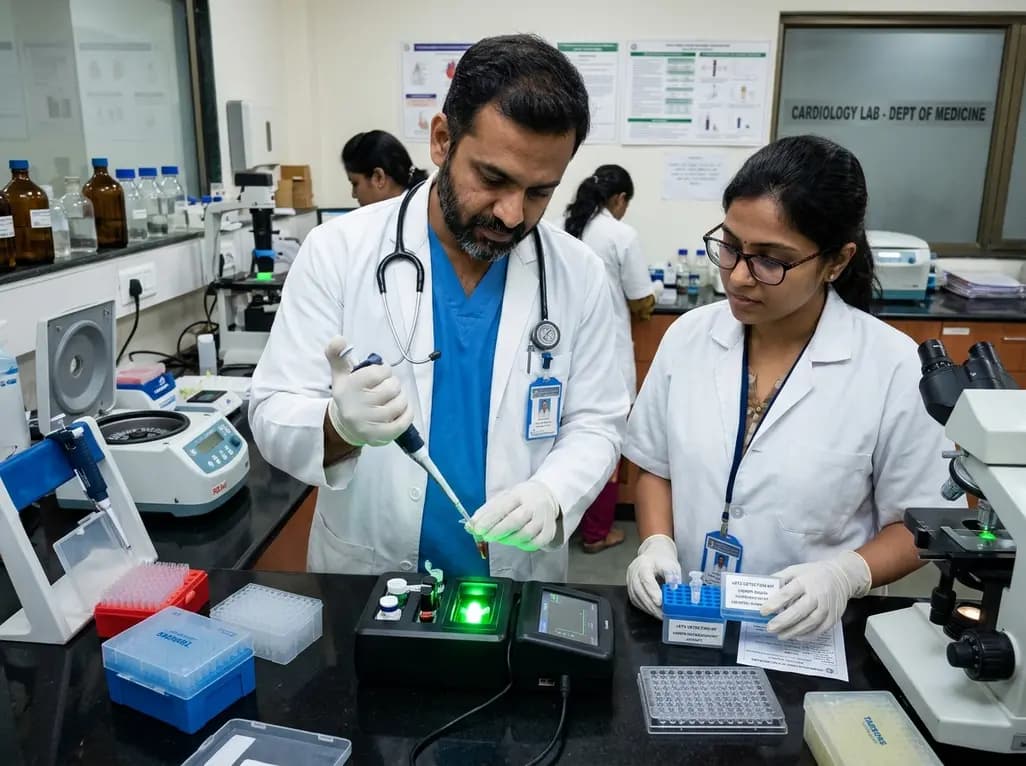
Researchers have engineered an innovative CRISPR-Cas12a fluorescent diagnostic kit for clinical sST2 detection. By combining nanotechnology with enzymatic trans-cleavage, this platform enables rapid, ultrasensitive heart failure diagnosis and risk stratification, outperforming conventional laboratory ELISA methods.
Today

Non-union fractures occur in 2-5% of cases, causing significant disability and cost. Conservative modalities such as LIPUS, PEMF, and focused ESWT offer non-surgical healing options for defects up to 5-10 mm when adequate mechanical stability exists without infection.
Today
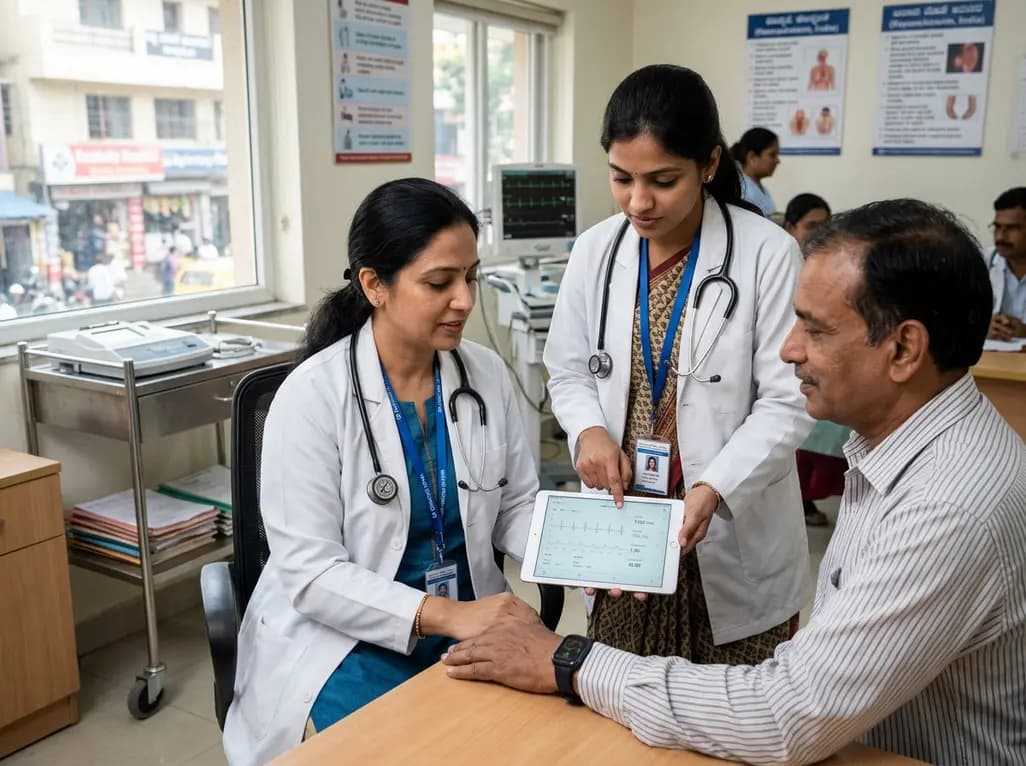
India is poised to transform chronic disease management through wearable health technology. Discover how continuous remote monitoring and predictive algorithms empower clinicians to detect early cardiovascular signals, personalize metabolic interventions, and deliver equitable preventive care across populations.
Yesterday
