.webp&w=384&q=75)

Loading, please wait...
Loading, please wait...

Researchers recently announced a landmark shift in women's healthcare during the European Congress of Endocrinology in Prague. They are officially renaming polycystic ovary syndrome (PCOS) to better reflect the condition's systemic nature. This PMOS renaming to polyendocrine metabolic ovarian syndrome marks a significant move toward scientific accuracy. Consequently, the change aims to improve diagnosis and care for over 170 million women globally.
The previous name often misled both patients and clinicians by focusing exclusively on the ovaries. Many people mistakenly believe that ovarian cysts must be present to confirm a diagnosis. However, these \"cysts\" are actually immature antral follicles rather than pathological growths. Furthermore, this anatomical focus often leads to delayed diagnoses and fragmented treatment. Therefore, the global coalition chose the new name to highlight the disorder's wide-ranging hormonal and metabolic impacts.
The decision resulted from an unprecedented consensus process involving more than 14,000 survey responses. Moreover, 56 academic, clinical, and patient organizations contributed to this international effort. This collaboration ensures that the new terminology resonates with both health professionals and the community. By emphasizing the metabolic component, clinicians can better address long-term risks like diabetes and cardiovascular disease. As a result, the medical community expects a more holistic approach to patient management.
PMOS involves complex disturbances in insulin, androgens, and other neuroendocrine hormones. Patients frequently present with irregular menstrual cycles, infertility, and excess hair growth. Additionally, many experience metabolic complications such as weight gain and insulin resistance. Notably, mental health challenges like anxiety and depression are also common. Therefore, the new name validates these diverse symptoms as integral parts of the syndrome.
Health systems will transition to the new PMOS terminology over the next three years. This period involves updating clinical guidelines, health records, and professional training programs. Furthermore, researchers believe this shift will reduce the stigma associated with reproductive-only disorders. Clinicians should begin integrating this metabolic perspective into their practice immediately. Consequently, patients will benefit from earlier detection and more personalized care strategies.
Q1: Why was the name changed from PCOS to PMOS?
The name was changed to better reflect the condition's broad hormonal and metabolic impacts. Experts wanted to move away from the term \"polycystic,\" which wrongly suggests that ovarian cysts are the primary cause of the disorder.
Q2: Will diagnostic criteria change with the new name?
While the name is changing to emphasize metabolic health, the core clinical symptoms remain the same. However, the transition to PMOS encourages clinicians to prioritize metabolic screening and holistic management alongside reproductive health.
Q3: How long will the transition to the new name take?
The global medical community has planned a three-year transition period. During this time, PMOS will be integrated into international clinical guidelines, health system classifications, and professional medical training.
Disclaimer: This content is for informational and educational purposes only. It does not constitute medical advice or replace professional judgment. Refer to the latest local and national guidelines for clinical practice.
References

Read summarized clinical updates, watch expert medical content, and earn CME certifications right from your smartphone.
Open your smartphone camera to scan and install.





PCOS is being renamed to PMOS (Polyendocrine Metabolic Ovarian Syndrome) to reflect its metabolic impact. Learn about the new diagnostic focus and care plan...
5 months ago
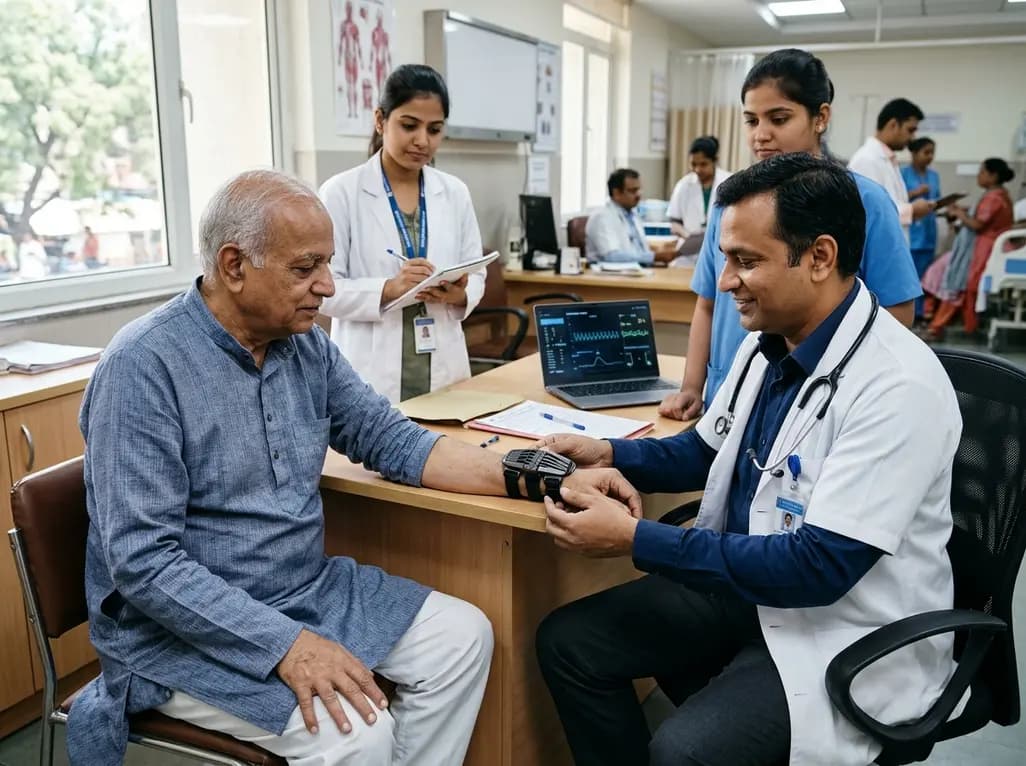
The TREM-AB open-label pilot study evaluated a wearable passive nonlinear vibration absorber for essential tremor. The Nonlinear Energy Sink bracelet reduced clinical Fahn-Tolosa-Marin tremor scores by 32.1% and electrophysiological tremor power by 49.2% with no adverse effects reported.
Today

A population-based study of 20,928 children reveals that small vulnerable newborns face sex-divergent mental capital outcomes at ages 6-7: term SGA girls show higher behavioral difficulties and lower resilience, while preterm non-SGA boys experience increased behavioral problems.
Today
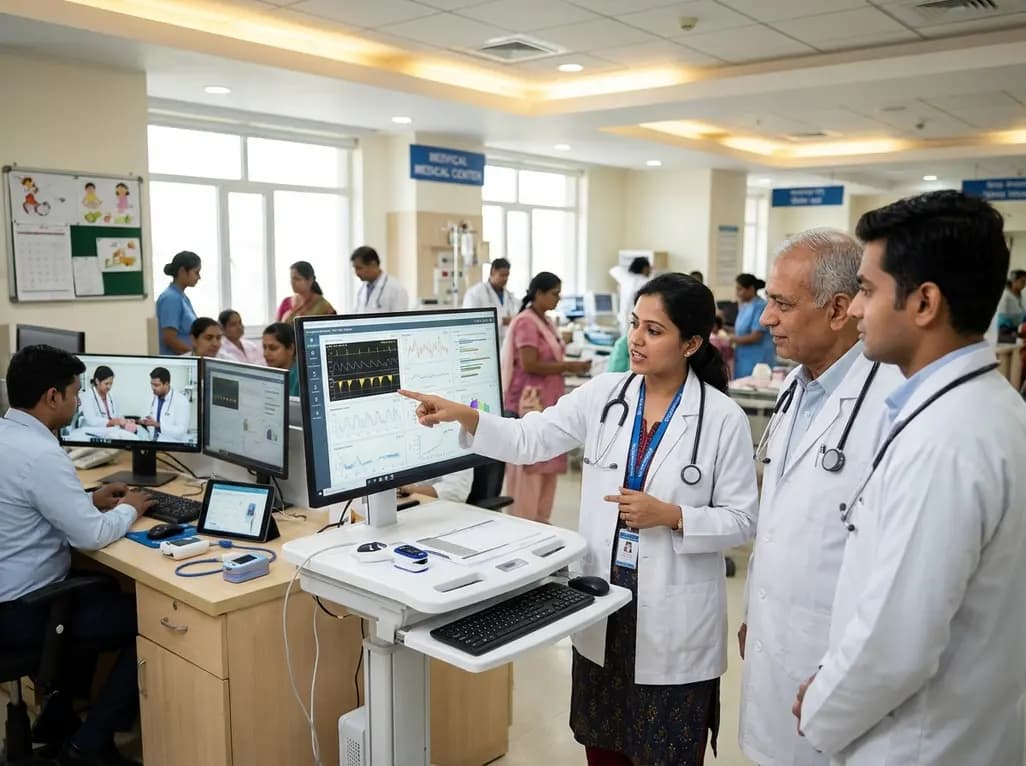
A landmark study details how an enterprise pediatric remote patient management model expanded from a single cardiology pilot to 16 diverse specialty programs by combining centralized digital operations with specialty clinical leadership.
Today

A comparative review of tension band wiring and intramedullary screw fixation in thumb metacarpophalangeal arthrodesis, evaluating union rates, hardware complications, and clinical outcomes.
Today
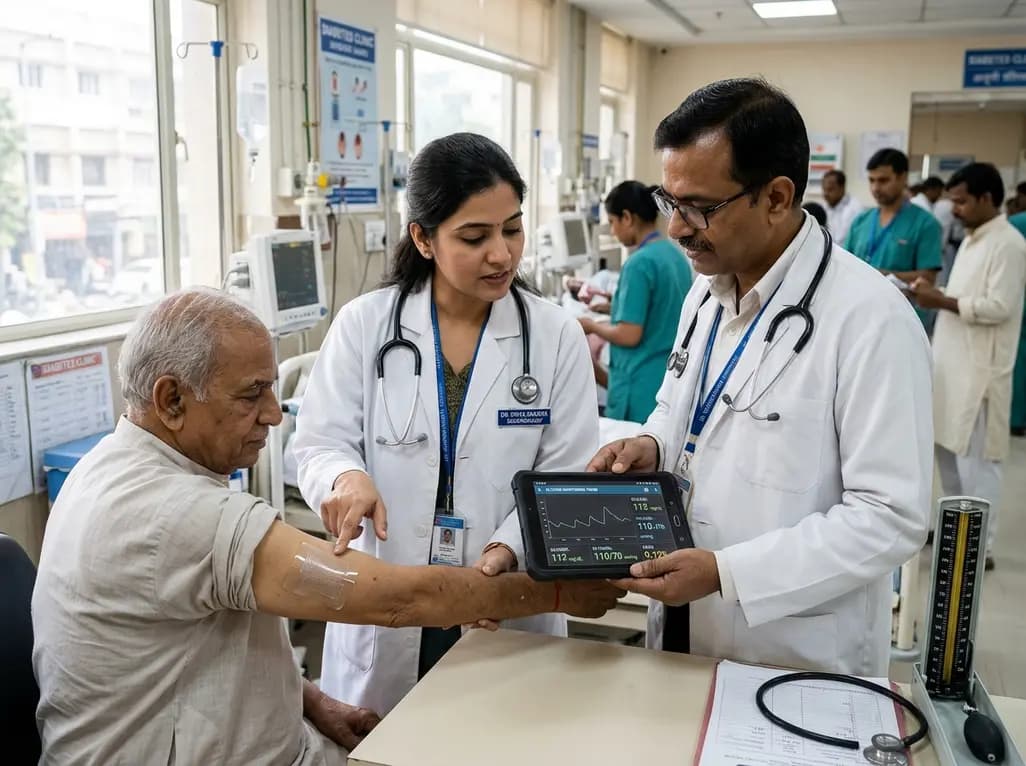
A breakthrough ultrathin multimodal sensor decouples physical hemodynamic monitoring from disposable electrochemical calibration, achieving long-term wearable glucose prediction with 81.36% accuracy and a 9.12% MARD. This offers a robust, drift-free solution for outpatient metabolic surveillance.
Today
