.webp&w=384&q=75)

Loading, please wait...
Loading, please wait...
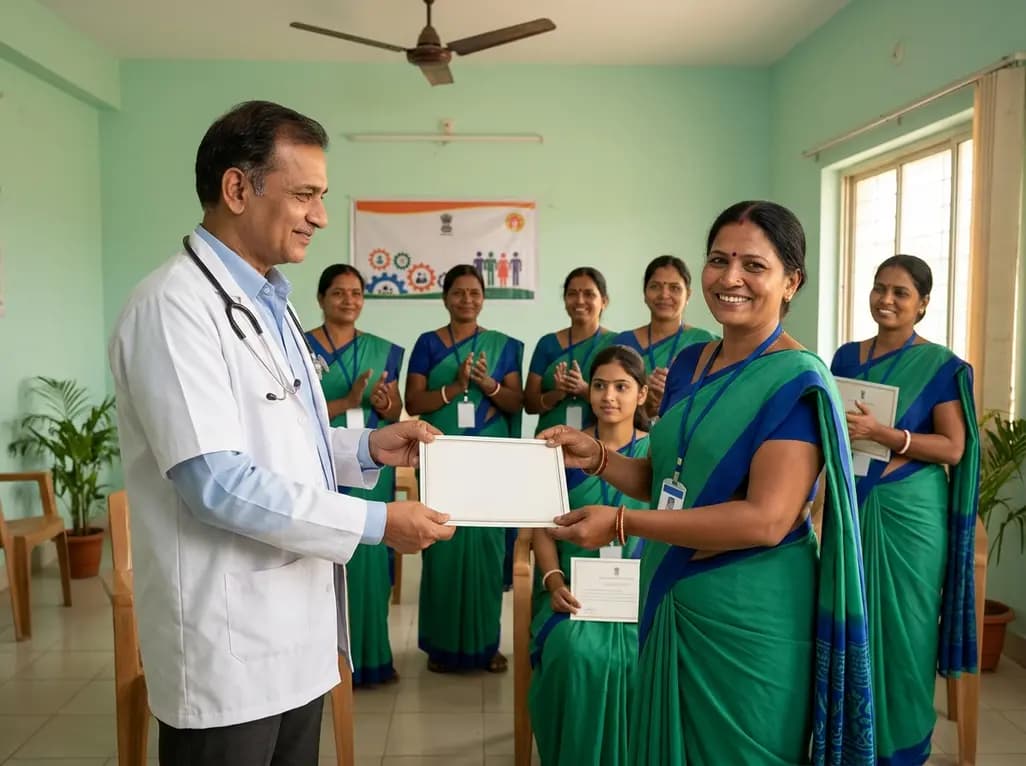
The National Institute of Open Schooling recently concluded a crucial training session. Consequently, this event strengthens the implementation of the ASHA Certification Programme. This major initiative, supported by key national bodies, intends to uplift community health activists. These frontline workers act as the backbone of rural healthcare. Therefore, upgrading their skills remains a top national priority. This educational article explores the details of this certification process. Additionally, we analyze its structure, current success rates, and its long-term impact on public health.
To build a healthy nation, we must train our frontline workers rigorously. Consequently, the Ministry of Health and Family Welfare partnered with key institutions. These include the National Health Systems Resource Centre and the National Institute of Open Schooling. Together, they established a structured vocational framework. This framework evaluates the competencies of Accredited Social Health Activists. Indeed, the program operates through Accredited Vocational Institutes at the district level. These centers provide vital support services. For instance, they handle registrations, distribute study materials, and conduct final examinations. Therefore, the curriculum meets high national standards. Furthermore, it covers essential community medicine concepts. This includes maternal care, childhood nutrition, and basic infection control. Ultimately, the program turns local activists into certified healthcare providers. This structured approach builds professional confidence. It also ensures that every community receives standardized care. Thus, the program bridges the gap between rural villages and formal hospitals. Additionally, this initiative provides a formal learning pathway for adult learners. Consequently, working women can upgrade their skills without leaving their homes. This continuous learning model has revolutionized community healthcare delivery in remote areas.
The ongoing phase of the certification process has achieved remarkable success. Currently, twenty-two states and three Union Territories actively implement the program. Consequently, thousands of health activists have joined the formal system. Over 2.27 lakh workers have registered for the vocational courses. Moreover, more than 1.65 lakh workers have successfully secured their official certificates. These numbers reflect strong administrative commitment and community interest. Furthermore, the collaborative effort ensures that examinations remain fair and highly transparent. Candidates receive digital certificates after passing standard practical and theory tests. Therefore, this digital system minimizes errors and speeds up verification. Many state governments now recognize these certified workers for advanced roles. For example, certified activists can lead village health and sanitation committees. This recognition motivates other workers to enroll in the upcoming sessions. As a result, the national health registry becomes more robust. The training sites also receive regular audits to maintain high teaching standards. Indeed, this systematic rollout prepares India for a massive expansion in the next phase. Ultimately, the program creates a dedicated, skilled workforce capable of handling rural health crises effectively.
The upcoming phase of the program targets a monumental milestone. Specifically, the government aims to certify ten lakh health workers across the nation. This ambitious goal aligns with the national vision of skilled and self-reliant citizens. Consequently, officials are upgrading training centers to accommodate more learners. They are also standardizing study materials in regional languages. Therefore, non-English speaking activists can easily access the curriculum. Additionally, the training sessions will focus heavily on hands-on practical skills. Indeed, health workers must know how to use basic diagnostic kits correctly. They must also learn how to monitor chronic conditions like hypertension. Furthermore, the new phase will leverage mobile applications for remote learning. This digital shift ensures that workers in remote areas do not fall behind. As a result, the program will scale up quickly without compromising educational quality. National trainers will conduct virtual check-ins with local coordinators. Thus, the administration can address implementation bottlenecks in real-time. Ultimately, this scale-up will establish a uniform standard of care throughout India. It will also empower millions of rural women with professional credentials. Through this effort, India takes a giant leap toward achieving global health coverage targets.
Certified social health activists directly improve the quality of primary healthcare. Because they live within the communities they serve, they understand local challenges. However, raw enthusiasm is not enough to tackle complex health issues. Consequently, formal certification equips them with evidence-based medical knowledge. This ensures they can deliver safer maternal and neonatal care. For instance, certified workers can identify early warning signs of high-risk pregnancies. They can also facilitate timely referrals to district hospitals. Therefore, rural maternal mortality rates are likely to decrease. Moreover, these trained workers help combat vaccine hesitancy in conservative areas. They explain the benefits of immunization in simple, local dialects. As a result, vaccination coverage has improved significantly. Additionally, they assist in managing non-communicable diseases at the grassroots level. This includes conducting home screenings for diabetes and hypertension. Indeed, early detection prevents serious long-term complications. Thus, certified workers reduce the patient burden on overcrowded urban hospitals. Ultimately, they act as an efficient triage system for the public healthcare network. This demonstrates how a small investment in frontline training yields massive public health dividends.
The certification program offers profound socio-economic benefits to the workers themselves. Historically, society viewed these activists as voluntary helpers rather than professionals. However, a formal certificate from a national institute changes this perception. Consequently, it brings social recognition and professional dignity. Certified workers feel more empowered and valued within their communities. Furthermore, this qualification can lead to better career pathways. For example, some states prioritize certified activists for formal nursing auxiliary roles. Therefore, the program promotes social mobility among rural women. Additionally, it fosters financial independence as they receive performance-linked incentives. This financial stability encourages them to perform their duties with greater dedication. Moreover, the digital certification platform protects them from administrative delays. It provides a transparent record of their professional qualifications. As a result, they can easily prove their credentials to health authorities. Indeed, this initiative builds a stronger, more motivated frontline workforce. Ultimately, empowering these women transforms the entire rural economy. Healthy communities are more productive, and skilled women lead this positive change. By investing in these health advocates, India builds a resilient future.
Q1: What is the main objective of the ASHA Certification Programme?
The primary objective of the program is to enhance the competency, professional credibility, and social recognition of community health workers. By establishing a standardized training and testing framework, the initiative ensures that frontline activists can deliver high-quality, evidence-based primary healthcare. Consequently, this formal certification empowers rural health workers while improving maternal and child health outcomes across diverse Indian communities.
Q2: Which institutions are collaboratively implementing this training initiative?
This national initiative is successfully implemented through a tripartite partnership. Specifically, the Ministry of Health and Family Welfare, the National Health Systems Resource Centre, and the National Institute of Open Schooling work together. While NIOS handles the curriculum delivery and examinations, the other bodies ensure clinical quality and state-level coordination. Therefore, this collaborative effort ensures uniform training standards throughout the country.
Q3: How does the digital certification platform benefit the enrolled candidates?
The digital platform offers a highly transparent, secure, and efficient way to manage student records and issue certificates. Consequently, it eliminates administrative delays and prevents the loss of physical documentation. Enrolled candidates can easily track their examination results and access their certified credentials online. Ultimately, this modern system provides a reliable proof of skill that workers can use for advanced career opportunities.
Disclaimer: This content is for informational and educational purposes only. It does not constitute medical advice or replace professional judgment. Refer to the latest local and national guidelines for clinical practice.
References

Read summarized clinical updates, watch expert medical content, and earn CME certifications right from your smartphone.
Open your smartphone camera to scan and install.





The ASHA Certification Programme, led by NIOS, MoHFW, and NHSRC, is stepping into a major phase to certify 10 lakh community health workers. Discover how this milestone initiative strengthens India's primary public healthcare delivery.
3 months ago
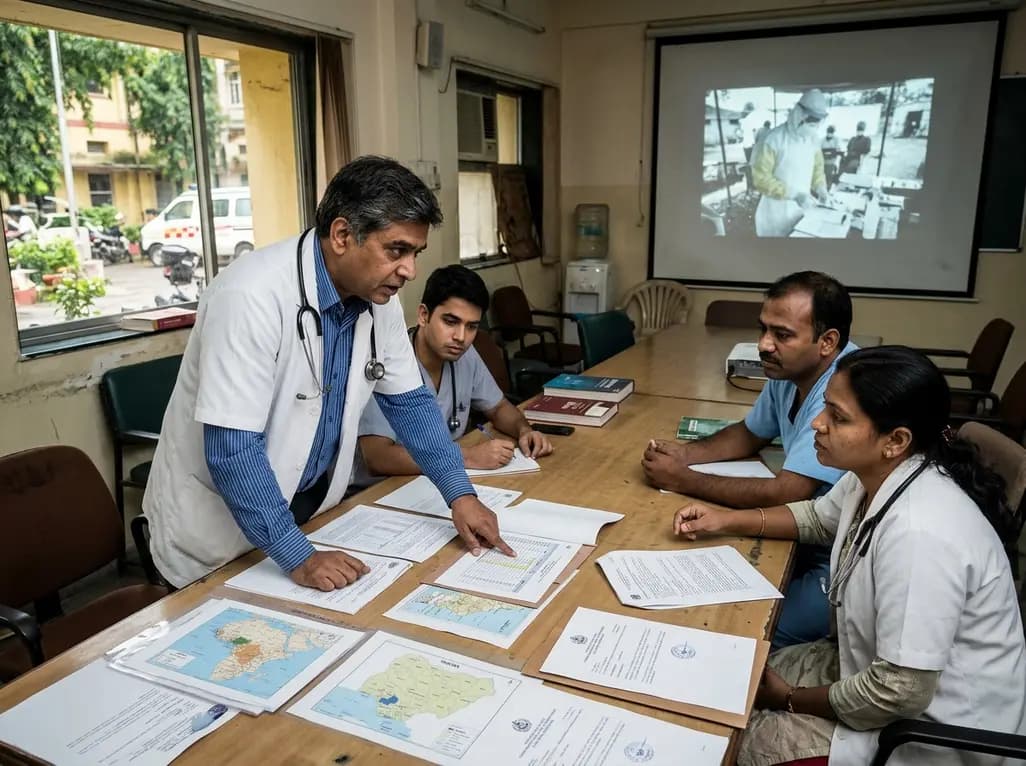
Following Nigeria's first recorded Ebola case linked to regional travel, the Africa CDC has convened an emergency ministerial summit. This alert underscores critical clinical priorities for healthcare professionals, including differentiating early viral infection from malaria, implementing barrier nursing, and triage.
Today

Leucine Rich Bio has introduced South Asia's first comprehensive vaginal microbiome test, BugSpeaks. By profiling microbial dysbiosis, pathogens, and antimicrobial resistance, this next-generation diagnostic platform provides clinicians with deeper insights into recurrent infections, fertility, and reproductive health.
Today

Review how tailored exercise programs benefit frail older patients with heart failure. Explore pathophysiological mechanisms, individualized training prescriptions, and strategies to overcome adherence barriers in clinical practice.
Today

This comparative study evaluates posterior labral tears with and without glenohumeral instability, highlighting distinct demographic patterns, MRI underestimation in stable shoulders, and successful arthroscopic repair outcomes.
Today

A clinical study demonstrates that early intervention with tocilizumab, either as monotherapy or bridged with corticosteroids, achieves significant proptosis reduction and resolves active inflammation in treatment-naive thyroid eye disease.
Today
