.webp&w=384&q=75)

Loading, please wait...
Loading, please wait...

Recent neuroscientific research has unveiled how our brains judge the accuracy of our decisions. Metacognition, or "thinking about thinking," allows us to estimate confidence in our choices. However, our prior expectations often cloud these judgments. A groundbreaking study now identifies parietal alpha-band modulation as the specific oscillatory mechanism linking these expectations to metacognitive bias.
In the first of two complementary studies, researchers utilized a visual detection task. They found that cues indicating target probability induced a specific type of bias. Specifically, when decisions aligned with expectations, confidence increased. Conversely, when outcomes diverged from what was expected, confidence dropped. Notably, the study revealed that right-parietal alpha-band activity predicted these individual differences in bias magnitude.
To confirm these findings, the second study employed continuous Theta-Burst Stimulation (cTBS). By disrupting parietal alpha-band modulation, researchers successfully reduced the metacognitive bias in participants. This intervention did not affect general perceptual sensitivity. Instead, it selectively targeted how expectations influence confidence levels. Consequently, this demonstrates a causal role for parietal oscillations in predictive metacognition.
For clinicians in India, understanding these neural pathways is vital. Metacognitive deficits are often observed in psychiatric conditions like schizophrenia or obsessive-compulsive disorder. Furthermore, these findings suggest that modulating specific brain frequencies could potentially correct distorted self-monitoring. Therefore, this research opens new avenues for neuromodulation therapies in neuropsychiatry.
It acts as a bridge between your prior expectations and how confident you feel about a decision. It essentially "tunes" your metacognitive judgment based on what you expected to see.
Yes, research shows that techniques like continuous Theta-Burst Stimulation (cTBS) can disrupt alpha-band activity. This disruption leads to a significant reduction in the influence of prior expectations on confidence.
Disclaimer: This content is for informational and educational purposes only. It does not constitute medical advice, diagnosis, or treatment. Always seek the advice of your physician or other qualified health provider with any questions you may have regarding a medical condition. Refer to the latest local and national guidelines for clinical practice.
References
Tarasi L et al. Prior Expectations Bias Confidence Judgments Through Parietal Alpha-Band Modulation. Adv Sci (Weinh). 2026 May 23. doi: 10.1002/advs.202519417. PMID: 42175740.
Fleming SM, Lau HC. (2014). How to measure metacognition. Frontiers in Human Neuroscience, 8, 443.
Maniscalco B, Lau H. (2012). A signal detection theoretic approach for estimating metacognitive sensitivity from confidence ratings. Consciousness and Cognition, 21(1), 422-430.

Read summarized clinical updates, watch expert medical content, and earn CME certifications right from your smartphone.
Open your smartphone camera to scan and install.





New research identifies parietal alpha-band modulation as the neural mechanism linking prior expectations to metacognitive bias in decision-making....
5 months ago

Co-administering antiseizure medications and DOACs frequently causes pharmacokinetic interactions, subtherapeutic drug levels, and thromboembolic failures. This review highlights enzyme induction risks, unpredictable outcomes with levetiracetam, and the vital role of therapeutic drug monitoring.
Today

Demanding exhaustive hormonal profiling can inadvertently discourage clinical studies involving females. Methodological standards must align with the specific scientific question to expand, not restrict, equitable evidence for women.
Today
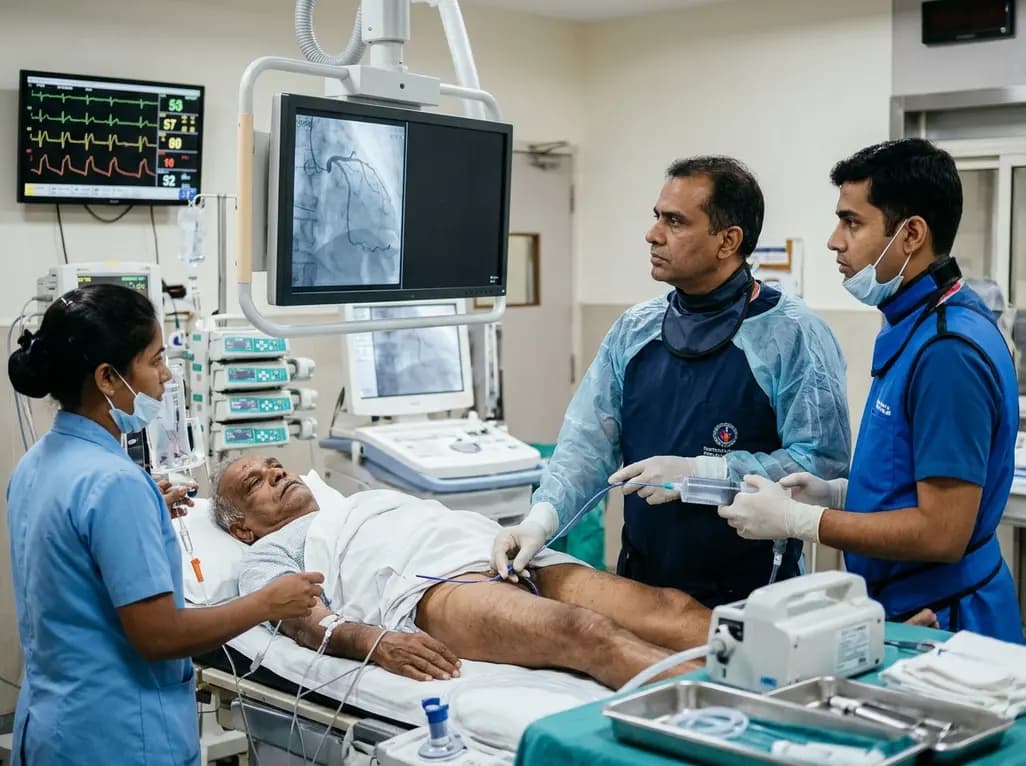
An elderly man with partially repaired Tetralogy of Fallot presented with STEMI caused by coronary embolism rather than atherosclerosis. Successful treatment with sustained mechanical aspiration thrombectomy underscores the vital need for high clinical vigilance in adult congenital heart disease.
Today

A comparative review of tension band wiring and intramedullary screw fixation in thumb metacarpophalangeal arthrodesis, evaluating union rates, hardware complications, and clinical outcomes.
Today

Following regulatory scrutiny from FSSAI regarding promotional representations and lean muscle preservation claims, Dr. Reddy's Laboratories and Nestlé Health Science are currently reviewing the branding and marketing strategy for their joint nutritional supplement Celevida GLP+.
Today
