.webp&w=384&q=75)

Loading, please wait...
Loading, please wait...

Obstructive sleep apnoea (OSA) remains a significant health burden in India, often necessitating the development of more accessible OSA screening tools. While polysomnography serves as the gold standard for diagnosis, its high cost and technical requirements often lead to long waiting times. Consequently, clinicians are increasingly exploring simpler anatomical and metabolic markers to identify high-risk individuals early. A recent retrospective cross-sectional study has validated a new approach by combining neck circumference (NC) with the US-guided attenuation parameter (UGAP).
The research, conducted between August 2023 and August 2024, included 147 participants. Among these individuals, 60.5% received a definitive OSA diagnosis. Researchers evaluated the area under the curve (AUC) for neck circumference, UGAP, and their combined application. Specifically, the combination of NC and UGAP yielded the highest diagnostic value with an AUC of 0.765. This synergistic approach effectively bridges anatomical features with metabolic indicators, providing a more comprehensive risk profile for overweight and obese patients.
Furthermore, the study highlighted that these OSA screening tools are particularly effective for detecting severe OSA in female patients. While neck circumference alone is a strong predictor of upper airway crowding, UGAP reflects metabolic disturbances often associated with OSA development. Therefore, integrating both parameters allows for a more refined screening process in primary care settings. Future interventions should focus on applying this combined index to facilitate earlier diagnosis and timely clinical management.
Polysomnography is time-consuming, expensive, and requires high technical expertise. These factors often lead to long waiting lists, making simpler screening tools necessary for initial risk stratification.
Combining these tools allows clinicians to assess both anatomical risks (neck circumference) and metabolic features (UGAP). This dual approach increases diagnostic accuracy compared to using either marker alone.
The study found that the combination of NC and UGAP is especially effective for adult overweight and obese patients, particularly women suffering from severe OSA.
Disclaimer: This content is for informational and educational purposes only. It does not constitute professional medical advice, diagnosis, or treatment. Always seek the advice of your physician or other qualified healthcare provider with any questions you may have regarding a medical condition. Refer to the latest local and national guidelines for clinical practice.
References
Zheng J et al. Validation of neck circumference and US-guided attenuation parameter for screening of obstructive sleep apnoea in adult overweight and obese patients: a retrospective cross-sectional study. Eur J Med Res. 2026 Mar 04. doi: 10.1186/s40001-026-04143-z. PMID: 41782158.
Sharma SK et al. Prevalence and risk factors of obstructive sleep apnea syndrome in a population of Delhi, India. Chest. 2006;130(1):149-156.

Read summarized clinical updates, watch expert medical content, and earn CME certifications right from your smartphone.
Open your smartphone camera to scan and install.





A retrospective study validates combining neck circumference and UGAP as effective screening tools for OSA in overweight patients, especially severe cases....
7 months ago

Co-administering antiseizure medications and DOACs frequently causes pharmacokinetic interactions, subtherapeutic drug levels, and thromboembolic failures. This review highlights enzyme induction risks, unpredictable outcomes with levetiracetam, and the vital role of therapeutic drug monitoring.
Today

Demanding exhaustive hormonal profiling can inadvertently discourage clinical studies involving females. Methodological standards must align with the specific scientific question to expand, not restrict, equitable evidence for women.
Today
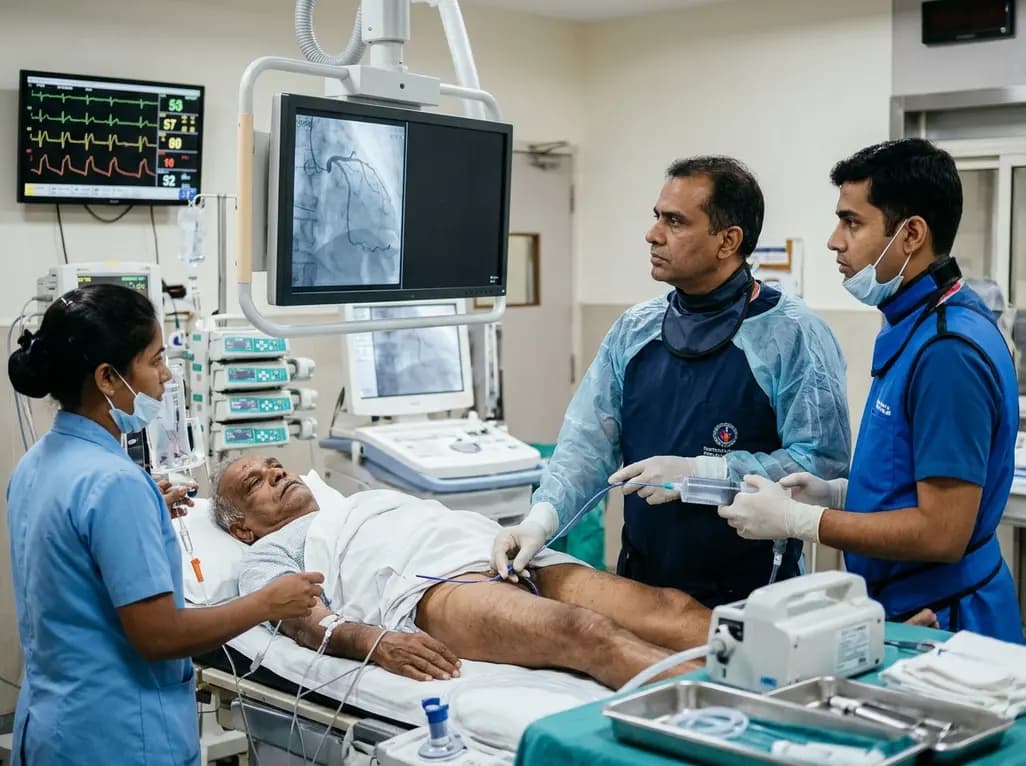
An elderly man with partially repaired Tetralogy of Fallot presented with STEMI caused by coronary embolism rather than atherosclerosis. Successful treatment with sustained mechanical aspiration thrombectomy underscores the vital need for high clinical vigilance in adult congenital heart disease.
Today

A comparative review of tension band wiring and intramedullary screw fixation in thumb metacarpophalangeal arthrodesis, evaluating union rates, hardware complications, and clinical outcomes.
Today

Following regulatory scrutiny from FSSAI regarding promotional representations and lean muscle preservation claims, Dr. Reddy's Laboratories and Nestlé Health Science are currently reviewing the branding and marketing strategy for their joint nutritional supplement Celevida GLP+.
Today
