.webp&w=384&q=75)

Loading, please wait...
Loading, please wait...

Modern orthodontists strive to achieve optimal function and aesthetics for every patient. Therefore, quantitative assessment of orthodontic treatment outcome plays an indispensable role in maintaining high clinical standards. Clinicians and researchers frequently rely on standardized occlusal indices to evaluate therapeutic success. However, selecting the most reliable and efficient scoring tool remains an ongoing debate in dental education.
Standardized occlusal indices offer reproducible frameworks to evaluate malocclusion severity and therapeutic progress. Specifically, orthodontists commonly employ the Index of Orthodontic Treatment Need, the Index of Complexity, Outcome, and Need, and the Peer Assessment Rating. Each system evaluates dental casts through distinct measurement parameters, weighting systems, and diagnostic criteria. For example, clinicians utilize these indices to benchmark treatment efficacy across diverse patient populations.
Furthermore, comparative research provides critical insights into how these evaluation instruments align during active clinical monitoring. Recent investigations evaluated pre-treatment and post-treatment dental casts to determine correlation patterns among these primary systems. The investigators observed high to very high correlation among the Aesthetic Component, ICON, and PAR before treatment initiation. Consequently, these findings validate baseline diagnostic harmony among aesthetic and occlusal metrics. However, post-treatment assessments reveal distinct variations between dental health parameters and subjective aesthetic scores. Dental faculties must therefore understand these intrinsic differences when implementing index-based audits in resident clinics.
The Index of Complexity, Outcome, and Need provides a unified scoring protocol that captures complexity, treatment need, and final outcomes. Consequently, many international postgraduate programs favor ICON because it combines aesthetic evaluation with dental health metrics into a single weighted score. Clinicians assign scores to five distinct occlusal traits, including upper arch crowding, crossbites, incisor relationships, and aesthetic impairment.
Moreover, recent clinical trials highlight substantial practical advantages associated with ICON in educational environments. Orthodontic residents demonstrated moderate reliability during baseline examinations and achieved good reliability when assessing post-treatment casts. Additionally, ICON required significantly less scoring time than the comprehensive Peer Assessment Rating protocol. Therefore, the reduced assessment duration enhances daily clinical workflow without sacrificing measurement precision. Examiners must undergo calibrated training to score aesthetic components consistently across varying degrees of malocclusion. When training standards remain rigorous, ICON serves as an exceptionally robust metric for postgraduate performance monitoring and healthcare resource management.
The Peer Assessment Rating remains one of the most widely validated indices in contemporary orthodontic research. Specifically, PAR calculates occlusal deviations across five components: contact point displacements, buccal occlusion, overjet, overbite, and midline discrepancies. Clinicians quantify treatment success by calculating the absolute reduction and percentage change between initial and finished study casts.
Furthermore, experienced examiners consistently achieve exceptional scoring accuracy when utilizing the PAR system. Research confirms that PAR demonstrated excellent reliability among orthodontic residents during baseline cast evaluations. As a result, many regulatory bodies and academic departments regard PAR as a definitive benchmark for clinical quality control. However, the multi-step measurement protocol demands substantial scoring time and meticulous ruler calibration. Undergraduate students frequently struggle with the complex arithmetic weightings, which diminishes inter-examiner consistency across mixed cohorts. Consequently, dental institutions often reserve full PAR audits for formal postgraduate theses and institutional accreditations rather than high-volume daily clinic triage.
The Index of Orthodontic Treatment Need divides malocclusion evaluation into two distinct components: the Dental Health Component and the Aesthetic Component. The DHC records objective anatomical anomalies, whereas the AC uses a standardized ten-point photographic scale to grade aesthetic impairment. Therefore, dental practitioners frequently utilize IOTN for rapid patient screening and public healthcare eligibility prioritization.
Additionally, recent comparative investigations demonstrate that IOTN remains the quickest scoring tool to apply in clinical settings. Both undergraduate dental students and resident examiners completed IOTN assessments significantly faster than PAR or ICON scoring protocols. Furthermore, both IOTN components demonstrated good reproducibility during pre-treatment examinations. However, researchers noted low correlations between DHC scores and both PAR and ICON finished values. Moreover, investigators detected negligible correlation between post-treatment aesthetic scores and dental health measurements. These disparities arise because anatomical tooth alignment does not always correlate linearly with aesthetic perception. Thus, clinicians should avoid using DHC in isolation when evaluating post-treatment aesthetic success.
Assessing scoring agreement between experienced residents and undergraduate dental students reveals important educational lessons. Training level substantially influences examiner reliability, especially during post-treatment cast evaluations. Specifically, while baseline cast evaluations achieved moderate to excellent reliability across resident cohorts, post-treatment finished casts presented noticeable scoring variability. When researchers evaluated all examiners collectively, both ICON and PAR demonstrated poor post-treatment reliability.
Consequently, these variations underscore the critical necessity of standardized calibration sessions in dental schools. Resident clinicians develop refined visual perception through daily hands-on biomechanical management and cephalometric analysis. In contrast, undergraduate students lack prolonged clinical exposure, which hampers their ability to detect subtle occlusal imperfections on finishing casts. Therefore, dental faculties must integrate structured index training into undergraduate curricula to improve diagnostic reproducibility. Furthermore, academic clinics should adopt digital cast software with integrated scoring rubrics to minimize human measurement discrepancies. By bridging this educational gap, academic institutions ensure consistent quality assessment standards throughout all stages of dental education.
The Index of Complexity, Outcome, and Need demonstrates superior reliability and practical efficiency among orthodontic residents. ICON effectively balances comprehensive occlusal traits with facial aesthetics in a unified scoring formula. Furthermore, resident clinicians achieve good reproducibility on post-treatment casts while spending significantly less time compared to PAR scoring. Consequently, ICON represents the most practical tool for resident assessment and institutional clinical audits.
Post-treatment dental casts exhibit subtle occlusal differences that require experienced visual discrimination and precise ruler placement. Undergraduate students often lack the clinical experience necessary to detect minor finishing discrepancies in torque, tip, or marginal ridge alignment. In contrast, residents apply advanced diagnostic criteria learned through clinical training. Therefore, mixing examiners with disparate training levels introduces measurement variance and reduces overall post-treatment inter-examiner reliability scores.
The Index of Orthodontic Treatment Need requires the least amount of scoring time, making it exceptionally fast for routine triage. Conversely, the Peer Assessment Rating demands the longest scoring time because examiners must measure multiple occlusal traits with a specialized ruler. The ICON system occupies an ideal middle ground, delivering reliable and comprehensive outcome assessments in substantially less time than PAR protocols.
Disclaimer: This content is for informational and educational purposes only... Refer to the latest local and national guidelines for clinical practice.
References
Aldausari R et al. A comparison and evaluation of the use of three orthodontic indices in assessing the treatment outcome. Acta Odontol Scand. 2026 Oct 15. doi: 10.2340/aos.v85.46998. PMID: 42878228.
Fox NA, Daniels C, Gilgrass T. A comparison of the index of complexity outcome and need (ICON) with the peer assessment rating (PAR) and the index of orthodontic treatment need (IOTN). Br Dent J. 2002;193(4):225-230.
Richmond S, Shaw WC, O'Brien KD, Buchanan IB. The development of the PAR: A method for measuring occlusal change with a view to looking at the outcome of orthodontic treatment. Am J Orthod Dentofacial Orthop. 1992;102(2):119-128.
Brook PH, Shaw WC. The development of an index of orthodontic treatment priority. Eur J Orthod. 1989;11(3):309-320.

Read summarized clinical updates, watch expert medical content, and earn CME certifications right from your smartphone.
Open your smartphone camera to scan and install.





A comparative analysis of three orthodontic indices (IOTN, ICON, and PAR) evaluates treatment outcomes and examiner agreement. The findings highlight ICON as the most reliable metric among orthodontic residents, while IOTN offers the fastest clinical application for dental practitioners.
Today

Healthcare resource cutbacks create severe organizational conditions that constrain moral agency, triggering moral distress across frontline clinicians and healthcare leaders. Addressing this crisis requires ethical leadership, relational solidarity, and transparent resource allocation frameworks.
Today

Maharashtra has initiated the appointment of two dedicated special public prosecutors in every district alongside a joint police-health SOP to fast-track PCPNDT and MTP cases. Medical imaging centers, radiologists, and obstetricians must strengthen statutory documentation and audit preparedness.
Today
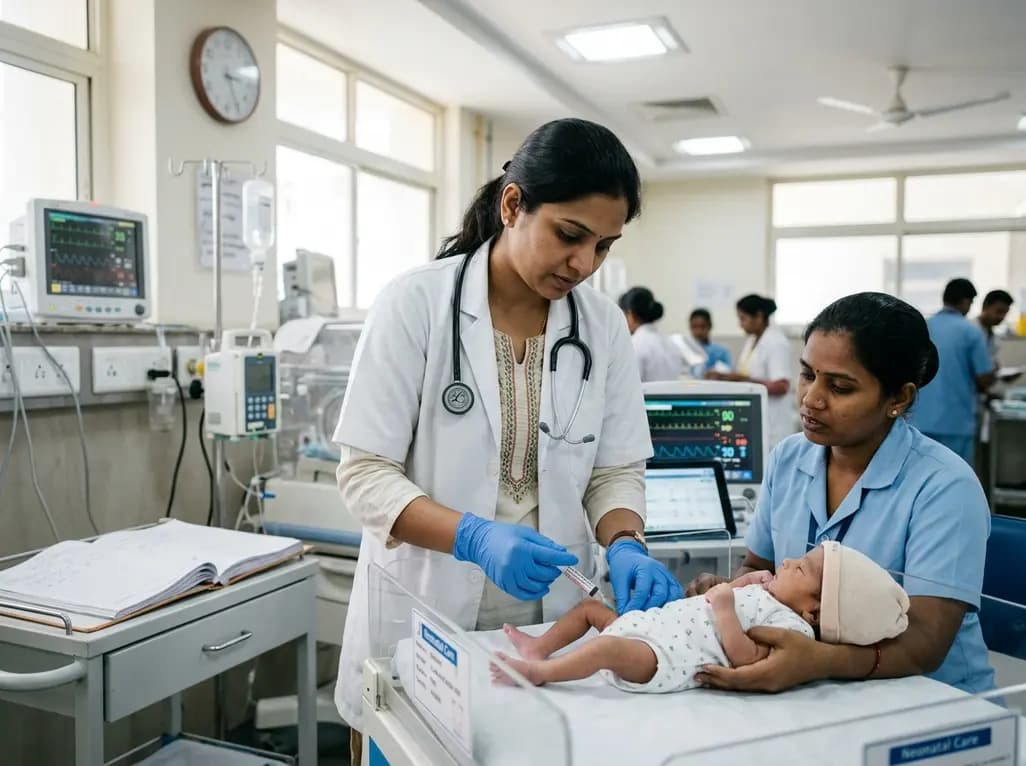
A study in pediatric cardiology reveals that infants under two months require median enoxaparin doses of 2.13 mg/kg/dose, alongside more dose titrations and longer times to reach target anti-Xa levels compared to older children, underscoring the need for tailored dosing and aggressive monitoring.
Today

Higher LACE+ scores independently predict non-home discharge and 90-day readmissions following intradural spinal tumor surgery. Utilizing this validated scoring index enables neurosurgical teams to stratify perioperative risk, improve transitional care, and optimize resource allocation.
Today

An exploratory pilot study evaluates metoprolol pharmacokinetics across cisgender males, cisgender females, and transgender women on gender-affirming hormone therapy. Findings reveal distinct drug disposition trends, emphasizing the critical need for genotype-stratified research in transgender cardiovascular care.
Today
