.webp&w=384&q=75)

Loading, please wait...
Loading, please wait...

The clinical integration of complementary therapies has gained significant traction in modern medicine, particularly within the domains of mental health and long-term rehabilitative care. Among these interventions, nature-based strategies often provide a non-invasive means to alleviate the physiological and psychological stressors associated with institutional living. Recent research highlights ornithotherapy in psychiatric care as a promising modality that utilizes birdsong and natural vocalizations to achieve measurable health outcomes. While animal-assisted therapy frequently involves direct interaction with mammals, the auditory stimulation provided by songbirds represents a unique, low-cost alternative. This approach is especially relevant for populations with intellectual disabilities who may struggle with more complex interpersonal interventions. Therefore, understanding the physiological changes induced by these natural sounds is essential for clinicians seeking to optimize patient environments. Consequently, this article examines recent findings regarding the impact of birdsong on cardiovascular markers like blood pressure and pulse rate.
Integrating ornithotherapy in psychiatric care addresses a critical gap in traditional treatment protocols by providing a passive yet effective sensory intervention. Institutions caring for psychiatric patients often face challenges related to environmental stressors, which can exacerbate cardiovascular issues and behavioral dysregulation. Furthermore, the use of auditory stimulation allows for a broad implementation without the logistical hurdles of maintaining live animals within a clinical ward. This makes birdsong an ideal tool for communal areas where patients spend significant portions of their day. Studies suggest that natural sounds possess an inherent ability to soothe the human psyche, a phenomenon often attributed to our evolutionary connection with nature. Moreover, these interventions are easily scalable and require minimal financial investment, making them particularly attractive for resource-constrained healthcare settings in India and elsewhere. By consistently playing high-quality recordings of birdsong, healthcare providers can cultivate a restorative atmosphere that supports overall well-being. This shift toward ecotherapeutic methods reflects a growing recognition of the environmental influence on clinical outcomes.
The physiological efficacy of ornithotherapy is largely rooted in its ability to modulate the autonomic nervous system. When individuals are exposed to the complex and melodious frequencies of birdsong, the brain often perceives these sounds as signals of safety and environmental stability. In contrast, urban noise or silence in a clinical setting can trigger a heightened sympathetic response, leading to increased heart rate and blood pressure. Research indicates that auditory stimulation from nature promotes parasympathetic activation, which facilitates the body’s “rest-and-digest” state. This shift helps to lower systemic levels of cortisol, a primary stress hormone that directly impacts cardiovascular function. Additionally, the rhythmic and non-threatening nature of birdsong helps in regulating the hypothalamic-pituitary-adrenal (HPA) axis. Therefore, patients experiencing chronic anxiety or agitation may find significant relief through this sustained auditory exposure. This mechanism is particularly important because it operates independently of cognitive effort, making it highly effective for patients with profound intellectual disabilities or neurocognitive impairments. Consequently, ornithotherapy acts as a biological regulator that harmonizes the patient’s internal physiological state with their external environment.
Recent retrospective analyses have provided compelling evidence that birdsong-based interventions specifically target systolic blood pressure. In a study conducted between 2022 and 2025 involving residents in an institutional setting, researchers observed a statistically significant reduction in systolic values during the intervention period. Specifically, mean systolic blood pressure decreased by approximately 2-3 mmHg when birdsong was played for just ten minutes daily. Interestingly, diastolic blood pressure and pulse rate remained largely unaffected, suggesting a selective impact on the vascular system’s response to stress. Systolic blood pressure is often more sensitive to immediate environmental stressors and sympathetic tone than diastolic pressure. Thus, the observed reduction indicates a decrease in the acute stress response among the patient population. While a reduction of 2-3 mmHg may seem modest, it can have substantial long-term implications for cardiovascular risk management in vulnerable populations. Furthermore, these results were consistent across multiple years, reinforcing the reliability of ornithotherapy as a complementary tool. This selective physiological response underscores the necessity of targeted sensory interventions in psychiatric rehabilitation.
Beyond the direct cardiovascular effects, the psychological benefits of ornithotherapy are often explained through the lens of Attention Restoration Theory (ART). According to this framework, urban environments and clinical settings require “directed attention,” which is mentally fatiguing and leads to irritability and stress. In contrast, natural stimuli like birdsong provide “soft fascination,” which allows the mind to rest and replenish its cognitive resources. For psychiatric patients, especially those with intellectual disabilities, the constant demand for directed attention in a structured ward can be overwhelming. Therefore, providing periods of auditory “soft fascination” helps to reduce mental fatigue and improve emotional regulation. Moreover, birdsong is often associated with the presence of an intact and healthy ecosystem, which provides a subconscious sense of security. This sense of safety is vital for patients who may struggle with paranoia or high levels of baseline anxiety. By restoring attentional capacity, ornithotherapy not only improves mood but also potentially enhances the patient’s engagement with other therapeutic activities. Consequently, the auditory environment becomes a fundamental pillar of the holistic treatment plan.
Implementing ornithotherapy in a clinical setting is remarkably straightforward and requires minimal training for nursing staff. The intervention typically involves playing high-fidelity recordings of diverse birdsong in communal areas during specific times of the day, such as late morning or early afternoon. For optimal results, clinicians should ensure the volume is kept at a moderate, non-intrusive level that mimics a natural outdoor environment. In India, where institutional overcrowding can lead to high ambient noise levels, birdsong can serve as a “sound mask” that filters out disruptive noises. Furthermore, practitioners should consider the cultural and environmental context; using familiar local bird sounds may enhance the patient’s sense of comfort. Regular monitoring of blood pressure and behavioral markers can help tailor the duration and frequency of the intervention to the specific needs of the ward. This low-risk approach complements pharmacological treatments and can potentially reduce the dosage requirements for anti-anxiety medications. Ultimately, the integration of such nature-based sounds represents a step toward more human-centric and environmentally aware psychiatric care.
The evidence supporting the use of ornithotherapy suggests that nature-based sounds are far more than just pleasant background noise; they are active therapeutic agents. As healthcare systems globally move toward personalized and holistic care, the role of environmental design becomes increasingly critical. The modest yet significant reduction in systolic blood pressure demonstrated in recent studies provides a strong rationale for further investigation. Future prospective trials should explore the impact of different bird species and the optimal duration of exposure for various psychiatric diagnoses. Additionally, investigating the long-term cardiovascular benefits of sustained ornithotherapy could redefine standards for institutional care. While it is not a replacement for traditional medical therapy, it offers a valuable, evidence-based adjunct that improves quality of life. By embracing these innovative yet simple strategies, clinicians can provide more compassionate and effective care for psychiatric patients. Therefore, the simple act of listening to birdsong may indeed be a vital component of the healing process in the 21st century.
Ornithotherapy influences blood pressure by reducing sympathetic nervous system activity and promoting parasympathetic dominance. Birdsong acts as a natural stimulus that signals environmental safety to the brain, which in turn lowers the production of stress hormones like cortisol and adrenaline. This physiological shift leads to a relaxation of the vascular walls, primarily resulting in a modest but clinically measurable reduction in systolic blood pressure.
While live birdsong offers a multi-sensory experience including visual and environmental elements, high-quality recorded auditory stimulation has been proven effective in clinical settings. Recordings provide a controlled and consistent therapeutic dose, which is often easier to implement in institutional environments. Studies indicate that the brain processes the melodic and frequency patterns of recorded birdsong similarly to live sounds, successfully triggering the body’s relaxation response.
Systolic blood pressure is typically more responsive to immediate changes in stress levels and autonomic tone compared to diastolic pressure. Since birdsong primarily functions by alleviating acute environmental stress and calming the nervous system, its impact is most visible in the systolic reading. Diastolic pressure is often influenced by more stable factors like vascular resistance and long-term health status, which may require more intensive or prolonged interventions to change.
Disclaimer: This content is for informational and educational purposes only and does not constitute professional medical advice, diagnosis, or treatment. Always seek the advice of your physician or other qualified health provider with any questions you may have regarding a medical condition. Refer to the latest local and national guidelines for clinical practice.
References
Veress E et al. [Assessment of the effects of ornithotherapy in psychiatric patients with intellectual disabilities]. Orv Hetil. 2026 Jul 12. doi: 10.1556/650.2026.33598. PMID: 42437466.
Ratcliffe LS et al. The restorative effects of birdsong: A review of the psychological and physiological evidence. J Environ Psychol. 2023; 82: 101851.
Stobbe E et al. Birdsongs alleviate anxiety and paranoia in healthy participants. Sci Rep. 2022; 12: 16414.

Read summarized clinical updates, watch expert medical content, and earn CME certifications right from your smartphone.
Open your smartphone camera to scan and install.





Ornithotherapy, the use of birdsong as a therapeutic tool, shows promise in reducing systolic blood pressure among psychiatric patients. This study highlights its potential as a low-cost, non-invasive complementary approach in institutional care environments, specifically for those with intellectual disabilities.
3 months ago

Co-administering antiseizure medications and DOACs frequently causes pharmacokinetic interactions, subtherapeutic drug levels, and thromboembolic failures. This review highlights enzyme induction risks, unpredictable outcomes with levetiracetam, and the vital role of therapeutic drug monitoring.
Today

Demanding exhaustive hormonal profiling can inadvertently discourage clinical studies involving females. Methodological standards must align with the specific scientific question to expand, not restrict, equitable evidence for women.
Today
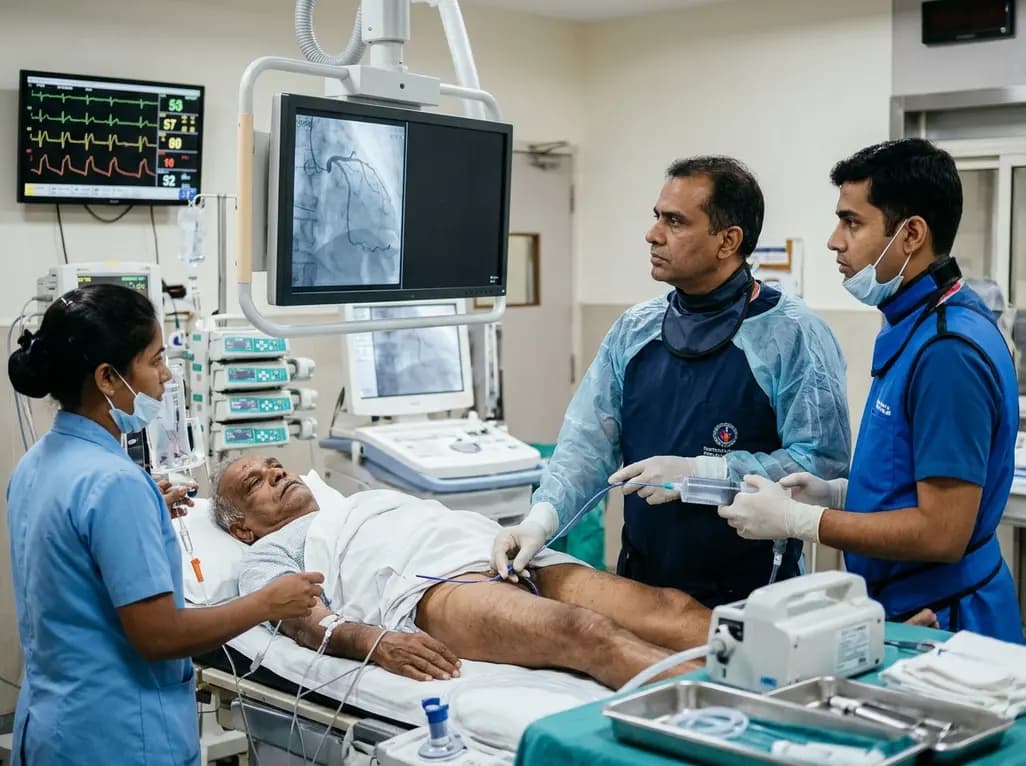
An elderly man with partially repaired Tetralogy of Fallot presented with STEMI caused by coronary embolism rather than atherosclerosis. Successful treatment with sustained mechanical aspiration thrombectomy underscores the vital need for high clinical vigilance in adult congenital heart disease.
Today

A comparative review of tension band wiring and intramedullary screw fixation in thumb metacarpophalangeal arthrodesis, evaluating union rates, hardware complications, and clinical outcomes.
Today

Following regulatory scrutiny from FSSAI regarding promotional representations and lean muscle preservation claims, Dr. Reddy's Laboratories and Nestlé Health Science are currently reviewing the branding and marketing strategy for their joint nutritional supplement Celevida GLP+.
Today
