.webp&w=384&q=75)

Loading, please wait...
Loading, please wait...
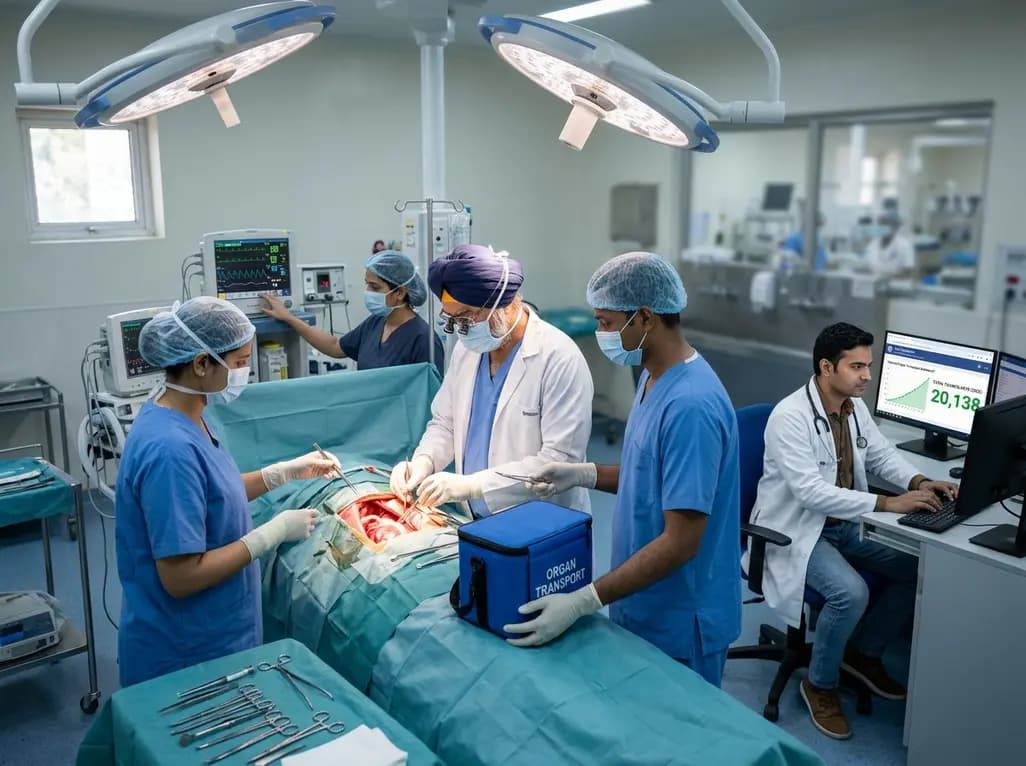
The landscape of end-organ failure management in South Asia has reached a major milestone. Specifically, organ transplants in India surged to a record high of 20,138 completed procedures during the year 2025. This historic figure reflects rapid advancements in surgical expertise, intensive care management, and public health infrastructure across the nation. Union Minister of State for Health Anupriya Patel highlighted this milestone during the 16th Indian Organ Donation Day event organized by the National Organ and Tissue Transplant Organisation (NOTTO). Furthermore, over five lakh citizens have now completed Aadhaar-verified organ donation pledges through the unified national digital portal since its inception in 2023.
This transformation represents a remarkable shift in clinical practice and healthcare logistics. Historically, patients with end-stage renal, hepatic, or cardiac disease faced dismal long-term prognoses due to systemic shortages of donor organs. However, sustained institutional momentum and comprehensive regulatory updates have significantly expanded access to lifesaving procedures. Over the past decade, total transplant volumes increased fourfold from 4,990 cases in 2013. Additionally, deceased donor procedures expanded from 837 in 2013 to 3,526 in 2025. Consequently, healthcare providers and clinical specialists are experiencing an unprecedented expansion in surgical capacity and organ preservation protocols across public and private tertiary care institutions nationwide.
India currently ranks third globally in overall annual organ transplantation volume, trailing only the United States and China. Furthermore, the country continues to maintain its international leadership in living donor organ transplants. Living donor kidney and liver transplantations constitute the vast majority of surgical interventions across premier Indian medical centers. However, public health leadership has focused heavily on augmenting deceased donor procurement to bridge the persistent clinical demand gap.
Despite achieving record procedural numbers, the clinical demand for viable organs continues to outpace available donor supplies. Thousands of end-stage patients remain on active registry waitlists across regional transplantation hubs. Therefore, clinical leaders are emphasizing systematic organ retrieval strategies alongside community education to demystify donation ethics. Misconceptions regarding organ procurement often hinder potential donor registrations. Consequently, health authorities continue to emphasize that major religious faiths actively endorse donation as an act of humanitarian altruism.
Moreover, institutional governance has expanded rapidly to streamline donor identification and patient matching. A robust national framework now coordinates retrieval and allocation through NOTTO, five Regional Organ and Tissue Transplant Organizations (ROTTOs), and twenty-six State Organ and Tissue Transplant Organizations (SOTTOs). Together, this network connects approximately 1,200 registered transplant facilities, creating a standardized pathway for graft allocation across administrative boundaries.
To ensure legal compliance and clinical uniformity, the Ministry of Health released the updated National Brain Stem Death Certification Guidelines. Prompt and accurate identification of brain stem death in intensive care units remains the pivotal rate-limiting step in deceased organ donation. However, variations in institutional protocol previously created delays and legal ambiguity for critical care teams. Consequently, the newly introduced guidelines offer a standardized framework for medical boards certifying permanent brain stem cessation.
The standardized guidelines mandate two comprehensive clinical evaluations conducted by a qualified board of medical experts with a mandatory six-hour interval between tests. These evaluations strictly assess cranial nerve reflexes, motor responses, and respiratory drive via standardized apnea testing. Furthermore, the guidelines clarify procedural pathways for Non-Transplant Organ Retrieval Centers (NTORCs) operating in secondary and tertiary hospitals. By standardizing these diagnostic parameters, critical care specialists can confidently navigate legal requirements under the Transplantation of Human Organs and Tissues Act (THOTA).
Additionally, prompt brain stem death certification preserves somatic stability and organ viability prior to surgical retrieval. Intensive care specialists play a fundamental role in maintaining donor hemodynamics, oxygenation, and endocrine homeostasis during management. Thus, standardized certification workflows eliminate diagnostic ambiguity, enhance public trust, and streamline the transition from intensive care management to surgical organ retrieval.
In compatible paired kidney exchanges, immunological barriers frequently prevent living donor transplantation between willing family pairs. To address this clinical hurdle, the government officially introduced the National Guidelines on Swap Transplantation. Swap or paired kidney donation allows two or more incompatible donor-recipient pairs to exchange organs, effectively overcoming ABO blood group incompatibility or positive human leukocyte antigen (HLA) crossmatches.
Previously, swap transplants occurred primarily on an ad-hoc basis within individual institutions due to logistical and legal hurdles. However, the new national guidelines establish a transparent, automated matching matrix managed through the centralized NOTTO digital registry portal. This algorithmic pairing process matches incompatible pairs across different states, dramatically increasing the probability of finding immunologically suitable organ matches. Consequently, patients who previously faced prolonged wait times on dialysis can undergo living donor kidney transplantation far more efficiently.
Furthermore, the swap guidelines establish strict ethical safeguards to prevent commercial exploitation and ensure regulatory compliance. Authorization committees must rigorously evaluate paired exchanges to verify genuine altruistic intent and legal documentation. Importantly, international swap pairings involving foreign nationals and Indian donors remain strictly prohibited under national law. Overall, these standardized swap guidelines provide a robust legal framework that significantly expands living donor options for renal failure patients across India.
Technological integration plays a pivotal role in modernizing healthcare governance and organ allocation efficiency. During the 16th Indian Organ Donation Day, officials launched the 'e-Pratyaropan' digital platform alongside a dedicated NOTTO mobile application. This unified portal serves as a real-time digital backbone connecting registered hospitals, transplant surgeons, candidates, and administrative bodies. Consequently, the platform eliminates paper-based administrative friction and enhances procedural transparency across all administrative levels.
The e-Pratyaropan system integrates national organ waitlist management, donor registration, matching algorithms, and organ transport tracking into a single digital architecture. Furthermore, the platform links seamlessly with Aadhaar-based digital verification, allowing citizens to register legally binding organ donation pledges securely online. By centralizing waiting list data, the system prevents duplicate patient registrations across multiple state registries, ensuring equitable and transparent organ distribution based strictly on objective clinical criteria.
Additionally, the newly deployed NOTTO mobile application provides clinicians and transplant coordinators with instant notifications regarding organ availability and allocation status. Real-time updates facilitate rapid coordination during time-sensitive organ transport logistics, such as green-corridor transfers for heart and liver grafts. Therefore, this digital infrastructure establishes operational trust, minimizes ischemia time, and optimizes post-transplant clinical outcomes nationwide.
Infrastructure development across public sector healthcare institutions has significantly expanded specialized surgical access beyond metropolitan hubs. Union Health Secretary Punya Salila Srivastava highlighted that ten newly established AIIMS institutes now routinely perform kidney transplantation services. Furthermore, AIIMS institutions in Jodhpur, Bhubaneswar, Patna, and Rishikesh have successfully operationalized liver transplant programs, while AIIMS Bhopal recently initiated complex heart transplantation procedures. This decentralization ensures that advanced solid organ transplants are accessible to regional populations across underserved states.
Simultaneously, financial assistance programs are alleviating the severe economic burden associated with complex organ replacement surgeries. Under the Ayushman Bharat Pradhan Mantri Jan Arogya Yojana (ABPM-JAY), kidney transplantation procedures are fully included within standard health benefit packages for eligible beneficiaries. Additionally, economically underprivileged patients can access financial grants through the Rashtriya Arogya Nidhi (RAN) fund to cover surgical and hospital expenses. These social security schemes ensure that financial constraints do not preclude lower-income families from receiving lifesaving medical therapy.
Moreover, post-operative care requires lifelong immunosuppressive therapy to prevent graft rejection and long-term dysfunction. To improve medication adherence, the national network of over 20,000 Jan Aushadhi Kendras provides high-quality, generic immunosuppressive drugs at highly subsidized costs. Consequently, patients can access essential maintenance medications affordably, ensuring long-term graft survival and reduced post-transplant morbidity.
Q1: What are the primary objectives of the newly released National Brain Stem Death Certification Guidelines in India?
The updated guidelines aim to standardize diagnostic criteria and administrative protocols for certifying brain stem death across all healthcare facilities. By establishing clear testing timelines and required clinical reflexes, these guidelines streamline legal compliance under THOTA. Consequently, critical care teams can accurately identify potential deceased organ donors, maintain donor stability, and facilitate timely organ retrieval while upholding the highest medical and ethical standards.
Q2: How does the National Guidelines on Swap Transplantation benefit end-stage renal failure patients?
Swap transplantation guidelines establish a centralized, legal framework for paired organ exchanges between incompatible donor-recipient pairs. Managed through NOTTO's digital platform, automated algorithms match immunologically incompatible pairs across participating hospitals nationwide. This process bypasses blood group and HLA tissue barriers, enabling patients to receive living donor kidney transplants safely and avoiding prolonged, high-risk dependence on chronic maintenance hemodialysis.
Q3: What digital tools were introduced to streamline organ donation and allocation in India?
The Health Ministry launched the e-Pratyaropan digital platform and the NOTTO mobile application to integrate the transplant ecosystem. These tools centralize waiting list management, donor pledges, and real-time organ allocation tracking across NOTTO, ROTTO, SOTTO, and registered hospitals. Additionally, the platform utilizes Aadhaar verification for secure donor pledges, improving operational transparency, data reporting compliance, and regional organ transport coordination.
Disclaimer: This content is for informational and educational purposes only. It does not constitute medical advice or replace professional judgment. Refer to the latest local and national guidelines for clinical practice.
References

Read summarized clinical updates, watch expert medical content, and earn CME certifications right from your smartphone.
Open your smartphone camera to scan and install.





India achieved a historic peak with 20,138 organ transplants performed in 2025, solidifying its global position in transplant surgery. The Union Health Ministry launched digital tools, including e-Pratyaropan, alongside national guidelines for brain stem death certification and swap transplantation.
last month
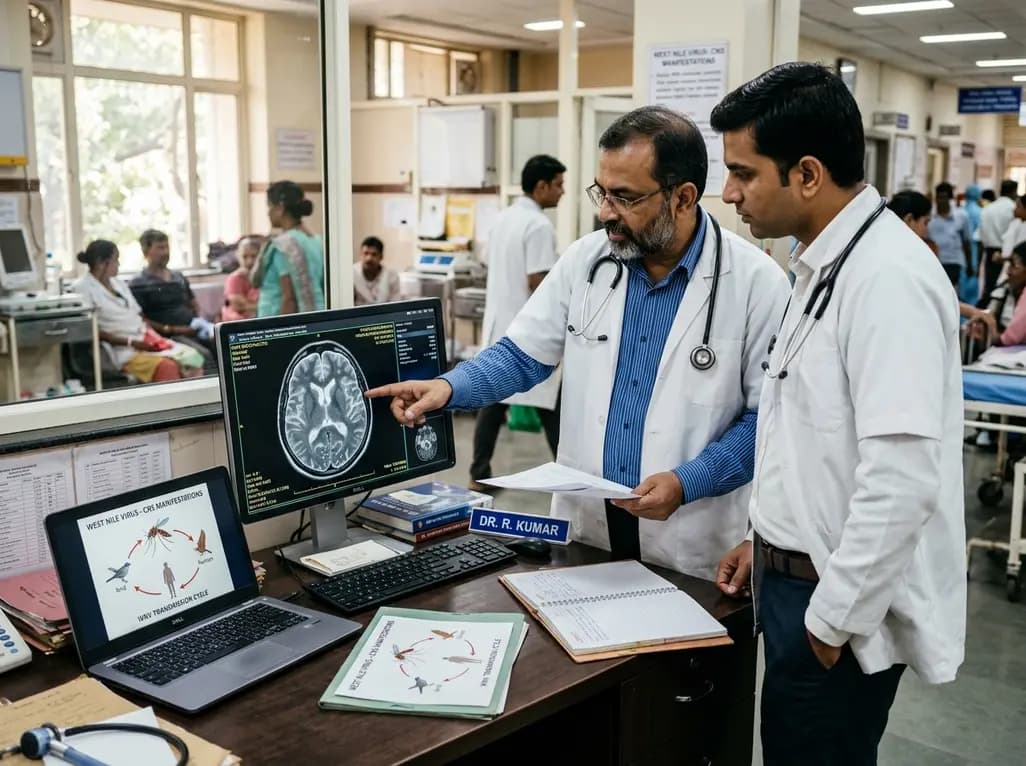
Health authorities have confirmed fatal West Nile virus infections in the Netherlands amid expanding mosquito activity across Europe. This clinical overview outlines transmission cycles, clinical presentation, neuroinvasive manifestations, diagnostic workup, and supportive treatment considerations for physicians.
Today

At the 79th Regional Committee session, the World Health Organization commended India's public health advancements. Key achievements include the operationalization of 160,000 Ayushman Arogya Mandirs, higher institutional delivery rates, strong ASHA networks, and persistent efforts to eliminate tuberculosis nationwide.
Today

The Supreme Court questioned FSSAI's phased warning approach, urging single-phase implementation for foods exceeding limits in any nutrient of concern. Backed by ICMR-NIN recommendations, the proposed red hexagonal warnings target added sugar, salt, and fat to combat India's escalating chronic disease epidemic.
Today

A premature neonate developed upper limb compartment syndrome after uterine rupture extruded the arm through a scar defect. Conservative management with continuous monitoring yielded complete functional recovery and normal limb growth at 10-year follow-up, highlighting non-operative safety in selected cases.
Today
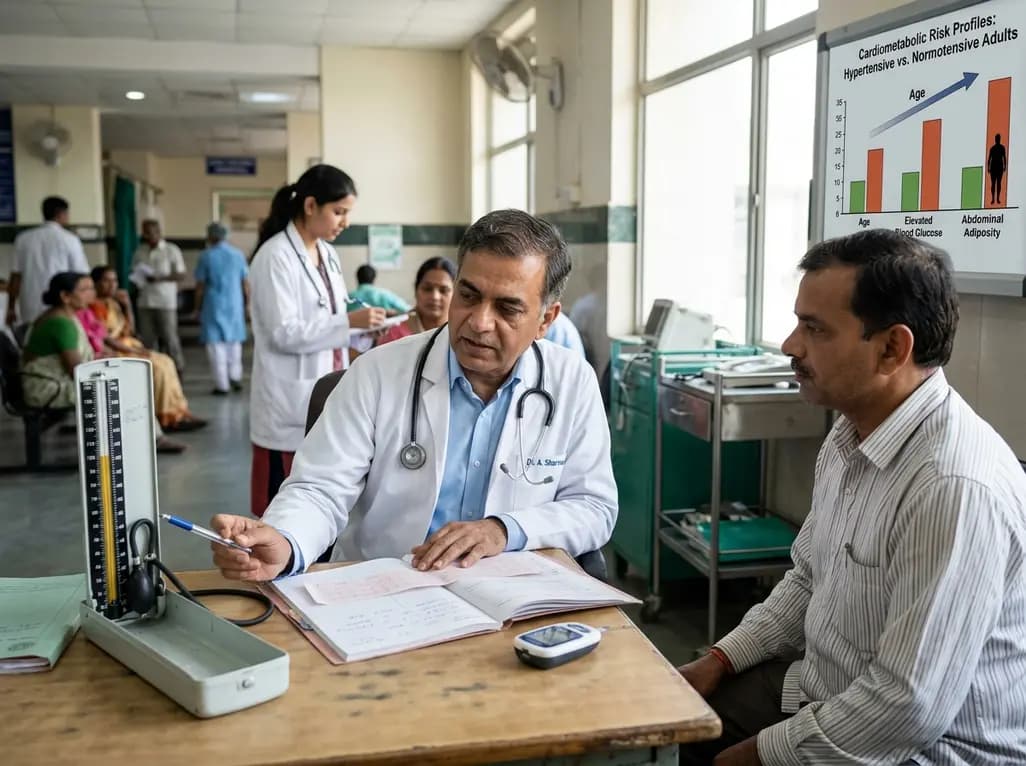
A comparative analysis shows that older age, elevated blood glucose, and abdominal adiposity are primary drivers of hypertension. Comprehensive evaluation of cardiometabolic risk profiles enables clinicians to detect overlapping metabolic dysfunctions early and optimize targeted prevention strategies.
Today
