.webp&w=384&q=75)

Loading, please wait...
Loading, please wait...

The landscape of substance use management is rapidly evolving, yet retention in Opioid Agonist Treatment India remains a significant clinical challenge. For many healthcare providers, the primary goal of OAT is to ensure long-term stabilization and prevent relapse. However, recent data suggests that a substantial number of patients discontinue treatment prematurely. This phenomenon is particularly concerning given the chronic, relapsing nature of opioid use disorder (OUD). Understanding why patients leave treatment is essential for developing effective interventions. This exploration looks into the specific structural and psychological drivers that lead to dropout within the Indian community setting. By examining these factors, clinicians can better tailor their approach to enhance patient adherence and improve overall health outcomes for those struggling with dependency.
Structural barriers represent some of the most persistent obstacles for individuals enrolled in Opioid Agonist Treatment India. According to recent research, occupational difficulties and relocation are among the top reasons cited for treatment discontinuation. Specifically, many patients find that the strict daily dosing schedules required at community clinics conflict with their work responsibilities. Consequently, these individuals often feel forced to choose between maintaining their livelihood and continuing their recovery journey. Furthermore, the necessity of daily clinic visits becomes an insurmountable burden for those who relocate or live far from treatment centers. Therefore, clinicians must recognize that the physical and logistical accessibility of OAT centers plays a pivotal role in patient retention. When patients struggle with transportation or work-related time constraints, they are significantly more likely to abandon treatment despite the clinical benefits. Addressing these structural issues requires a shift toward more flexible dosing protocols and the decentralization of care. By providing options such as take-home doses for stable patients or extended clinic hours, providers can mitigate the impact of these external stressors. Ultimately, reducing the logistical friction associated with OAT is a fundamental step in ensuring that patients remain engaged in long-term care.
Beyond logistics, the psychosocial environment of the patient heavily influences their commitment to Opioid Agonist Treatment India. Research indicates that perceived social support is a critical predictor of treatment success. Patients who report higher levels of support from family and friends are generally more resilient and better equipped to handle the challenges of recovery. In contrast, those with lower perceived social support often experience greater isolation and a higher risk of dropout. Additionally, attitudes toward OAT medications themselves can become a barrier. If a patient or their family views buprenorphine or methadone with skepticism, adherence naturally suffers. Moreover, psychological states like ambivalence toward change and low motivation, as measured by tools like the SOCRATES-8D, are closely linked to discontinuation. Therefore, it is imperative for clinicians to incorporate psychosocial assessments into routine care. Engaging family members in the treatment process can also help build a supportive network that encourages the patient to stay the course. Furthermore, addressing the internal stigma associated with medication-assisted recovery can improve a patient's self-perception and motivation. By focusing on the holistic needs of the individual, healthcare providers can address the underlying emotional and social factors that drive treatment attrition.
One of the most frequent reasons patients cite for leaving Opioid Agonist Treatment India is the perceived ability to maintain improvement without further medical assistance. Many individuals experience a period of stabilization where they feel they have regained control over their lives. Consequently, they believe that the medication is no longer necessary and decide to self-discharge. However, this perception is often a clinical trap, as the underlying neurological and behavioral patterns of OUD may still be fragile. Research shows that while nearly 60% of those who discontinue treatment remain abstinent from illicit opioids in the short term, they also report higher rates of current use compared to those who stay in treatment. This discrepancy highlights a fundamental misunderstanding among patients regarding the chronic nature of the disorder. Therefore, education must be a cornerstone of OAT programs. Providers need to clearly communicate that OAT is not just about avoiding withdrawal but about long-term brain healing and relapse prevention. Furthermore, patients should be taught to recognize that the absence of cravings does not necessarily equate to a permanent cure. By managing expectations and providing ongoing education, clinicians can help patients navigate the dangerous overconfidence that often precedes a relapse.
To improve the effectiveness of Opioid Agonist Treatment India, a multi-faceted approach is necessary. First and foremost, clinical teams should implement regular screenings for motivation and social support to identify high-risk patients early. Additionally, counseling sessions should specifically target the ambivalence that often leads to dropout. Furthermore, structural changes, such as simplifying the administrative requirements for treatment, can reduce the burden on patients. Moreover, clinicians should advocate for policy shifts that allow for more community-based and flexible dispensing models. Specifically, integrating OAT into general primary care settings could significantly reduce the stigma and logistical barriers associated with specialized addiction clinics. Notably, the use of telephonic follow-ups can also provide a safety net for those who have recently relocated or are facing occupational stress. Ultimately, the goal is to create a treatment environment that is as accessible and supportive as possible. By addressing both the structural and psychosocial barriers, the medical community can foster higher retention rates and better long-term outcomes. Consistency in care is the key to recovery, and every effort must be made to keep patients connected to the services they need.
Patients often experience a honeymoon phase where their initial stabilization leads to a false sense of security. Because they no longer feel the immediate pressure of withdrawal or intense cravings, they mistakenly believe they are fully recovered. However, opioid use disorder is a chronic condition that requires long-term management to prevent relapse. Consequently, clinicians must emphasize that OAT provides the necessary stability for the brain to heal over an extended period.
In many Indian community settings, patients work in jobs with long hours or unpredictable schedules. The requirement for daily clinic visits can lead to missed shifts or even job loss. Therefore, when faced with the choice between financial survival and treatment, many patients opt for the former. Improving retention requires more flexible clinic hours or the implementation of stable take-home dosing protocols to accommodate the working population's needs.
Social support acts as a psychological buffer against the stressors of recovery. Patients with strong family ties or supportive peers are more likely to attend appointments and adhere to their medication regimens. Conversely, those lacking support often feel isolated, making them more susceptible to cravings and negative attitudes toward treatment. Therefore, involving family members in the counseling process is vital for building the social infrastructure necessary for long-term recovery success.
Disclaimer: This content is for informational and educational purposes only and does not constitute medical advice, diagnosis, or treatment. Always seek the advice of your physician or other qualified health provider with any questions you may have regarding a medical condition. Never disregard professional medical advice or delay in seeking it because of something you have read here. Refer to the latest local and national guidelines for clinical practice.
References
Muhammed JK et al. Reasons for Discontinuation and Associated Factors in Opioid Agonist Treatment: A Community-Based Study from India. Subst Use Misuse. 2026 Jun 27. doi: 10.1080/10826084.2026.2693054. PMID: 42363731.
"
Read summarized clinical updates, watch expert medical content, and earn CME certifications right from your smartphone.
Open your smartphone camera to scan and install.





A community-based study from New Delhi explores the primary reasons for Opioid Agonist Treatment (OAT) discontinuation, revealing that structural barriers like occupational difficulties and psychological factors like ambivalence toward change significantly impact patient retention in India.
3 months ago

Following regulatory scrutiny from FSSAI regarding promotional representations and lean muscle preservation claims, Dr. Reddy's Laboratories and Nestlé Health Science are currently reviewing the branding and marketing strategy for their joint nutritional supplement Celevida GLP+.
Today
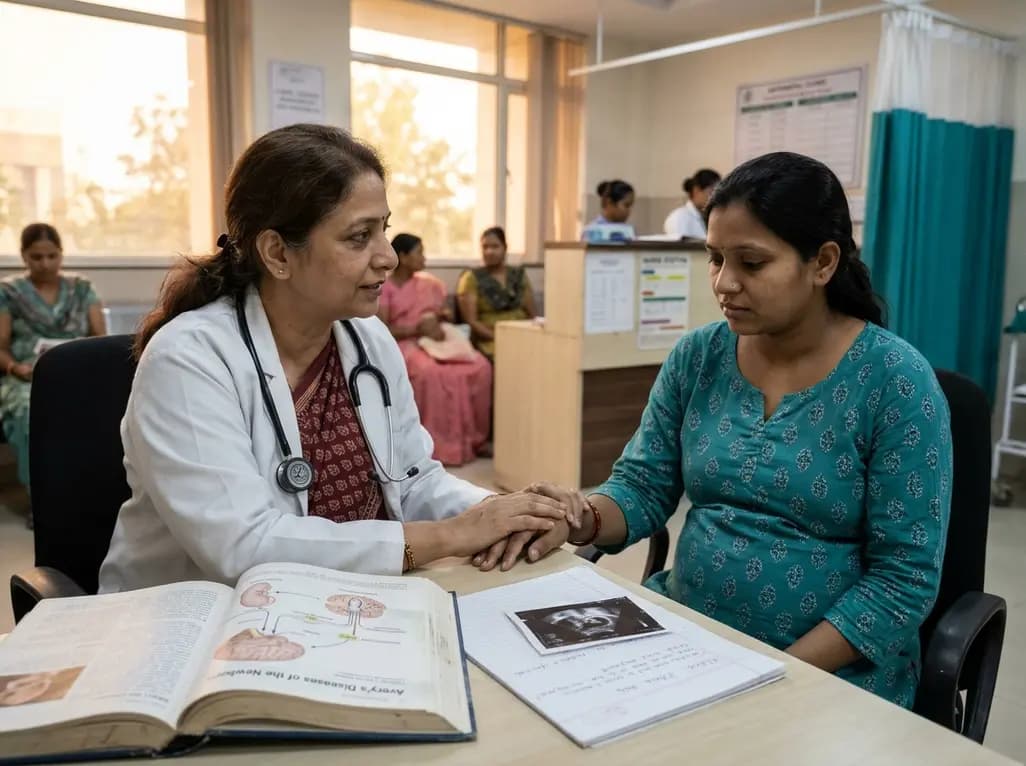
A comprehensive scoping review synthesises evidence linking prenatal maternal mental health to long-term offspring neurodevelopment, evaluating neuroendocrine, inflammatory, and epigenetic pathways while highlighting clinical screening and future research priorities.
Today

The Directorate General of Health Services directs Indian states to halt the hazardous reuse and reprocessing of single-use medical devices. Discover regulatory implications under the Drugs and Cosmetics Act, critical infection risks, legal liabilities, and operational changes required across clinical specialties.
Today

A 25-year multi-institutional cohort reveals high recurrence rates in pediatric giant cell tumor of bone, particularly in patients with open physes and bone marrow edema on preoperative MRI. Early surveillance and careful balance between growth plate preservation and tumor clearance are essential.
Today

India is advancing preventive healthcare by integrating genomics, artificial intelligence, and quantum technologies. With the SANGAM programme sequencing one million Indian genomes, clinicians can unlock personalized therapies, detect cardiometabolic risks early, and curb the burden of diabetes and heart disease.
Today
