.webp&w=384&q=75)

Loading, please wait...
Loading, please wait...
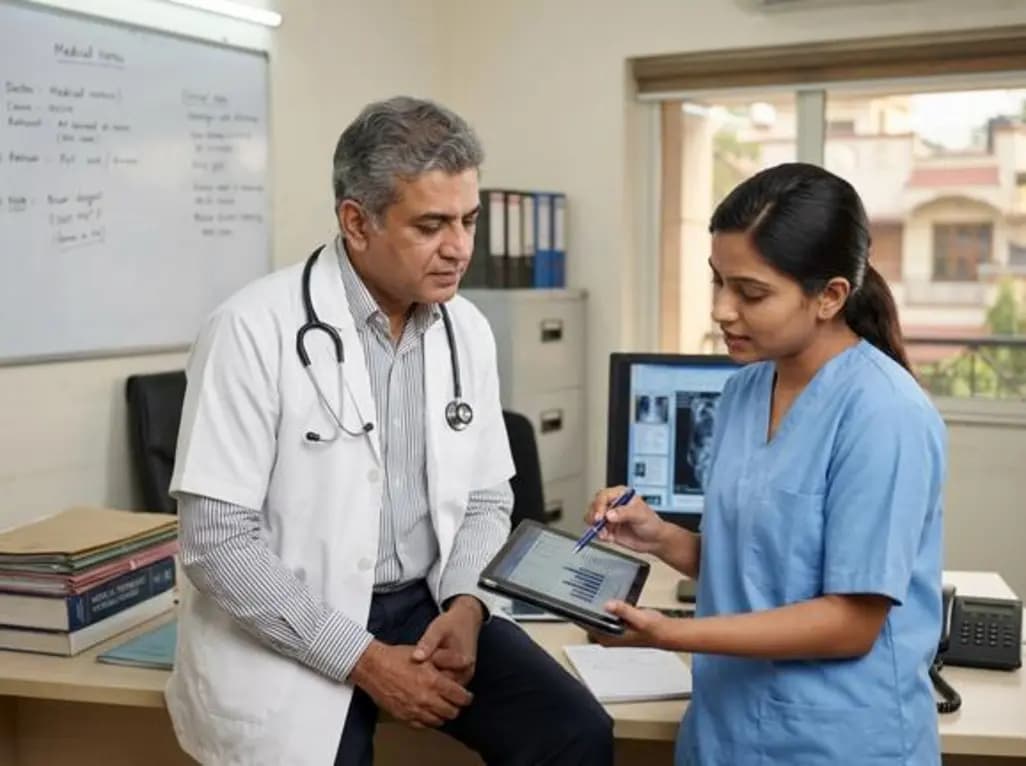
Traditional cancer care delivery is evolving as healthcare systems seek ways to improve patient outcomes while controlling rising expenses. Recent evidence suggests that an oncology hospital-at-home program can effectively bridge the gap between intensive hospital services and the comfort of a patient's residence. This initiative shifts acute care services, such as symptom management and post-surgical monitoring, into the home environment. Consequently, patients receive high-quality medical attention without the burden of prolonged hospital stays.
Researchers conducted a comprehensive study to evaluate the economic impact of the Huntsman at Home (HH) program. Specifically, they utilized a difference-in-difference approach to compare 169 oncology patients in the HH program with 198 control patients. The analysis revealed that the program was associated with a statistically significant cost reduction of $8,337 per patient over a six-month period. Moreover, the first quarter following admission saw the most dramatic savings, totaling approximately $10,516 per patient. These reductions stemmed primarily from lower pharmacy, facility, and diagnostic costs. Therefore, the model demonstrates significant financial viability for both patients and healthcare providers.
The study also highlighted specific benefits for high-risk populations. For instance, patients with gastrointestinal or gynecologic cancers often face extended complications. Even in these complex cases, the oncology hospital-at-home program maintained its cost-saving efficacy. Savings for these specific subsets reached $10,438 during the first quarter. Furthermore, this model reduces the risk of hospital-acquired infections, which is critical for immunosuppressed oncology patients. In the Indian context, where hospital bed shortages are common, such programs provide an essential alternative for managing acute cancer symptoms and supportive care.
As the demand for oncology services grows, shifting toward home-based models will likely become a necessity. Currently, the India chemotherapy-at-home market is expanding rapidly, reflecting a global trend toward decentralized healthcare. However, successful implementation requires robust remote monitoring and trained oncology nursing staff. By adopting these innovative frameworks, clinicians can optimize resource allocation while ensuring patients receive dignified, personalized care in a familiar setting.
The program primarily reduces costs related to hospital facility fees, intensive pharmacy requirements, and repeated laboratory or imaging tests that occur during inpatient stays.
Yes, research shows that with appropriate supervision and specialized nursing, home-based care for gastrointestinal and gynecologic cancer patients provides outcomes equivalent to hospital care with fewer complications.
In India, home-based oncology programs help alleviate the severe shortage of hospital beds and reduce out-of-pocket expenses for families while providing a scalable solution for the rising incidence of cancer.
Disclaimer: This content is for informational and educational purposes only and does not constitute medical advice or a professional relationship. Always seek the advice of a qualified healthcare provider for any questions regarding a medical condition. Refer to the latest local and national guidelines for clinical practice.
References
1. Nelson RE et al. The Impact of an Oncology Hospital at Home Program on Health Care Costs. Med Care. 2026 Jun 22. doi: 10.1097/MLR.0000000000002347. PMID: 42319970.
2. Express Healthcare. The homeward shift in cancer care: Home healthcare as a critical extension of oncology in India. Feb 2026.
3. Mooney K et al. Evaluation of Oncology Hospital at Home: Unplanned Health Care Utilization and Costs in the Huntsman at Home Real-World Trial. J Clin Oncol. 2021;39(23):2582-2593.
"
Read summarized clinical updates, watch expert medical content, and earn CME certifications right from your smartphone.
Open your smartphone camera to scan and install.





A study on the Huntsman at Home (HH) program reveals that home-based oncology care significantly reduces healthcare costs, particularly in the three months following an acute episode. With substantial savings in pharmacy and facility costs, this model offers a sustainable solution for modern cancer management.
4 months ago

Review how tailored exercise programs benefit frail older patients with heart failure. Explore pathophysiological mechanisms, individualized training prescriptions, and strategies to overcome adherence barriers in clinical practice.
Today

Leucine Rich Bio has introduced South Asia's first comprehensive vaginal microbiome test, BugSpeaks. By profiling microbial dysbiosis, pathogens, and antimicrobial resistance, this next-generation diagnostic platform provides clinicians with deeper insights into recurrent infections, fertility, and reproductive health.
Today

In high-risk pulmonary embolism complicated by severe anemia and active uterine bleeding, systemic thrombolysis is contraindicated. Large-bore aspiration thrombectomy provides rapid hemodynamic rescue without fibrinolysis, supported by inferior vena cava filter placement and multidisciplinary critical care.
Today

This comparative study evaluates posterior labral tears with and without glenohumeral instability, highlighting distinct demographic patterns, MRI underestimation in stable shoulders, and successful arthroscopic repair outcomes.
Today

A clinical study demonstrates that early intervention with tocilizumab, either as monotherapy or bridged with corticosteroids, achieves significant proptosis reduction and resolves active inflammation in treatment-naive thyroid eye disease.
Today
