.webp&w=384&q=75)

Loading, please wait...
Loading, please wait...
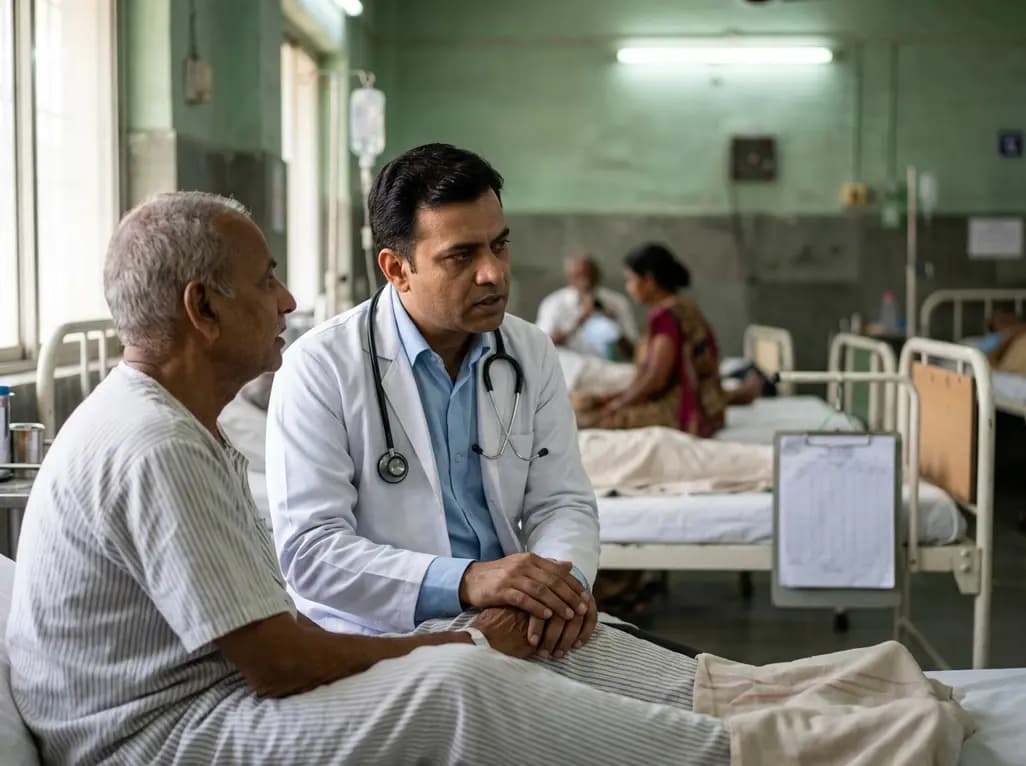
The global shift toward an aging population has significant implications for public safety, particularly regarding transportation and road management. A landmark study by Xue K et al. investigates the systemic impacts of aging on road safety, highlighting that despite their cautious habits, older driver safety risks remain a critical concern. These individuals often exhibit conservative driving patterns characterized by slower reaction times and significantly longer headways. While these behaviors seem safer on the surface, they can paradoxically disrupt the stability of heterogeneous traffic flows. This disruption creates a ripple effect that increases the likelihood of collisions, particularly in mixed environments where young and elderly drivers interact. Consequently, understanding these micro-level car-following behaviors is essential for developing macro-level safety interventions that protect vulnerable populations.
Heterogeneous traffic flows are inherently complex because they involve vehicles operated by individuals with vastly different cognitive and physical capabilities. Older driver safety risks are exacerbated in these settings because conservative driving behaviors often mismatch the expectations of younger, more aggressive motorists. When an older driver maintains a larger-than-average gap or reacts slowly to changes in lead vehicle speed, it introduces turbulence into the traffic stream. This turbulence leads to speed fluctuations and sudden braking further down the line of vehicles. Research indicates that these fluctuations, often measured as acceleration noise, serve as a precursor to rear-end collisions. Furthermore, the variability in driving styles across different age groups creates a less predictable environment. Therefore, clinicians and public health experts must recognize that road safety for the elderly involves not just their individual performance, but how their behaviors integrate into the broader traffic ecosystem.
To analyze the intricate link between individual behavior and systemic safety, researchers have moved beyond traditional traffic models. The study by Xue K et al. utilizes a Time Series Lightweight Adaptive Network, commonly referred to as TSLANet, to predict longitudinal acceleration patterns. This sophisticated data-driven approach significantly outperforms mainstream models like the Intelligent Driver Model or the standard Transformer in terms of predictive accuracy. By training the model on simulator data from both young and older drivers, researchers could simulate various car-following scenarios with high precision. This methodological advancement allows for a refined assessment of older driver safety risks under diverse spatial layouts. Moreover, the framework outputs multidimensional safety indicators that provide a comprehensive view of traffic dynamics. These technological tools are becoming increasingly important for evaluating how different demographics contribute to or mitigate risks on modern roadways.
Evaluating traffic safety requires more than just counting accidents; it involves analyzing near-miss events and longitudinal stability. The researchers employed several key metrics, including the Deceleration Rate to Avoid a Crash (DRAC) and the Potential Index for Collision with Urgent Deceleration (PICUD). These indicators help quantify the safety margins available to drivers in critical situations. The simulation results revealed that as the proportion of older drivers in a traffic flow increases, the overall speed coefficient of variation also rises. This increase signifies greater instability within the vehicle queue. Additionally, the study found that high proportions of older drivers tend to reduce safety margins across the board. Consequently, identifying these metrics helps engineers and medical professionals understand the specific conditions under which older driver safety risks are most likely to materialize into real-world injuries.
One of the most compelling findings of recent research involves the spatial arrangement of drivers within a traffic flow. The simulation experiments demonstrated that the specific layout of older drivers significantly influences the cumulative risk of the group. For instance, when older drivers are concentrated at the front of a queue or distributed randomly, the safety risks are exacerbated due to the amplified speed fluctuations they trigger. In contrast, rear-concentrated or alternating distributions of older and younger drivers appear to mitigate these adverse effects more effectively. This suggests that traffic optimization strategies, such as dedicated lanes or smart signaling, could potentially reduce older driver safety risks by managing how different age groups interact. These findings provide robust evidence for refined traffic management policies in aging societies where mixed-traffic optimization is becoming a necessity.
For medical practitioners in India, these findings underscore the importance of comprehensive geriatric assessments that include driving fitness. As the Indian road environment is uniquely characterized by high density and mixed vehicle types, older driver safety risks are particularly pronounced. Doctors should actively screen for cognitive declines, visual impairments, and slowed motor responses that contribute to conservative yet risky driving. Current Indian regulations, including updated RTO guidelines, emphasize the need for regular medical certification for drivers over a certain age. Furthermore, physicians can play a pivotal role in counseling families about the transition from active driving to alternative mobility solutions. By incorporating traffic safety into routine health checks, clinicians contribute to a systemic reduction in road-related morbidity among the elderly. Ultimately, a multi-disciplinary approach involving technology, medicine, and urban planning is required to ensure safe mobility for our aging population.
Conservative driving, while intended to be safe, often involves slower speeds and longer following distances. In mixed traffic, these behaviors can cause significant speed fluctuations and unpredictable flow. When older drivers move slower than the surrounding traffic, they force others to change lanes or brake suddenly. This disruption increases the coefficient of variation in speed, which correlates strongly with an elevated risk of rear-end collisions and multi-vehicle pile-ups.
In India, the Ministry of Road Transport and Highways mandates that drivers over age 40 or 50, depending on the license type, must submit a Form 1A medical certificate for renewal. This assessment typically covers vision acuity, color blindness, hearing capacity, and general physical fitness. Recent updates suggest more frequent evaluations for senior citizens to ensure they possess the cognitive and motor skills necessary to react to India's complex road conditions effectively.
Yes, research shows that the spatial distribution of drivers matters. When older drivers are scattered randomly, they create multiple points of flow disruption. However, when traffic is managed so that drivers with similar speeds and reaction times are grouped, or when alternating patterns are established, the overall flow becomes more stable. This stability reduces the need for urgent deceleration, thereby increasing the safety margin and reducing the overall probability of a collision occurring.
Disclaimer: This content is for informational and educational purposes only. It does not constitute professional medical or legal advice regarding driving fitness. Always consult with a qualified healthcare provider for individual health assessments and refer to the latest local and national guidelines for clinical practice.
References
Xue K et al. How conservative driving behavior increases crash risk: Understanding the systemic safety impacts of older drivers in mixed traffic flows. Accid Anal Prev. 2026 Jun 27. doi: undefined. PMID: 42364297.
"
Read summarized clinical updates, watch expert medical content, and earn CME certifications right from your smartphone.
Open your smartphone camera to scan and install.





A new study reveals that despite cautious driving, older adults often increase crash risks due to traffic flow disruption. Using AI-driven models, researchers found that spatial distribution of older drivers in traffic significantly impacts safety margins, offering new insights for geriatric safety assessments.
3 months ago

As monsoon seasons elevate arboviral disease threats, Tamil Nadu has initiated an ICMR-monitored evaluation of the tetravalent dengue vaccine in Tenkasi district. Clinicians emphasize clinical monitoring, public prevention, and high-quality early pediatric care to reduce disease morbidity across endemic regions.
Today

Leucine Rich Bio has introduced South Asia's first comprehensive vaginal microbiome test, BugSpeaks. By profiling microbial dysbiosis, pathogens, and antimicrobial resistance, this next-generation diagnostic platform provides clinicians with deeper insights into recurrent infections, fertility, and reproductive health.
Today

Review how tailored exercise programs benefit frail older patients with heart failure. Explore pathophysiological mechanisms, individualized training prescriptions, and strategies to overcome adherence barriers in clinical practice.
Today

This comparative study evaluates posterior labral tears with and without glenohumeral instability, highlighting distinct demographic patterns, MRI underestimation in stable shoulders, and successful arthroscopic repair outcomes.
Today

A clinical study demonstrates that early intervention with tocilizumab, either as monotherapy or bridged with corticosteroids, achieves significant proptosis reduction and resolves active inflammation in treatment-naive thyroid eye disease.
Today
