.webp&w=384&q=75)

Loading, please wait...
Loading, please wait...

High body mass index (BMI) in adults aged forty and older is a primary risk factor for thyroid cancer-related morbidity. Consequently, understanding the clinical link between obesity and thyroid cancer is essential for modern medical practice. A recent study utilizing Global Burden of Disease (GBD) data analyzed these critical trends across various demographics. Researchers evaluated mortality, disability-adjusted life years (DALYs), and years of life lost to quantify the impact. They found that elevated BMI significantly increases the disease burden in aging populations worldwide.
The study analyzed epidemiological data from 1990 to 2021 to identify specific temporal patterns. In 2021 alone, high BMI contributed to 5,255 thyroid cancer-related deaths globally. Additionally, it accounted for nearly 145,000 DALYs, reflecting a substantial impact on public health. The study identified women and individuals in low-middle Socio-demographic Index (SDI) regions as the highest-risk subgroups. Therefore, clinicians must prioritize weight management and targeted screening in these vulnerable populations to mitigate rising cancer rates.
Furthermore, researchers utilized cluster analysis to assess region-specific burdens and geographical heterogeneity. They observed significant differences in how obesity influences cancer mortality across diverse GBD regions. Future projections are particularly concerning for the medical community. The team used exponential smoothing models to forecast trajectories through 2050. These models suggest that thyroid cancer mortality and the overall disease burden will continue to climb over the next three decades. Thus, health systems need robust, evidence-based interventions to address this escalating public health challenge.
In conclusion, the rising prevalence of obesity directly correlates with an increased burden of thyroid malignancy in older adults. Clinicians should focus on lifestyle modifications and early detection in high-risk regions. Proactive management of metabolic health may serve as a primary strategy for reducing future thyroid cancer cases. Moreover, global health policies must adapt to these projected trajectories to ensure adequate resource allocation for oncology and endocrinology services.
Obesity promotes a state of chronic low-grade inflammation and insulin resistance. These metabolic changes often lead to altered adipokine levels and oxidative stress, which can stimulate thyroid cell proliferation and promote tumorigenesis.
Research indicates that women and middle-aged to older adults (aged 40 and above) are high-risk groups. Additionally, populations in low-middle Socio-demographic Index regions show higher susceptibility to thyroid cancer mortality linked to elevated BMI.
Projections based on current GBD data indicate a steady increase in mortality and disability-adjusted life years (DALYs) through 2050. This suggests that the global burden of thyroid cancer attributable to obesity will continue to grow without significant intervention.
Disclaimer: This content is for informational and educational purposes only and does not constitute medical advice or a professional relationship between the reader and the author. Always consult a qualified healthcare professional for any health-related concerns or before making changes to your treatment plan. Refer to the latest local and national guidelines for clinical practice.
References
1. Jiang B et al. Obesity-driven thyroid cancer burden in middle-aged and older populations: temporal trends and projected trajectories based on the Global Burden of Disease study. Hong Kong Med J. 2026 Apr 16. doi: 10.12809/hkmj2513477. PMID: 41986900.
2. Pan D et al. Global burden and temporal trend of thyroid cancer associated with high BMI from 1990 to 2021. PLoS One. 2026;21(3):e0343394.
3. Abiri B et al. Obesity and thyroid cancer: unraveling the connection through a systematic review and meta-analysis of cohort studies. J Diabetes Metab Disord. 2024;23(1):461-474.

Read summarized clinical updates, watch expert medical content, and earn CME certifications right from your smartphone.
Open your smartphone camera to scan and install.





A comprehensive analysis of the global thyroid cancer burden attributable to high BMI in adults aged 40+, with projections showing an increase through 2050....
6 months ago
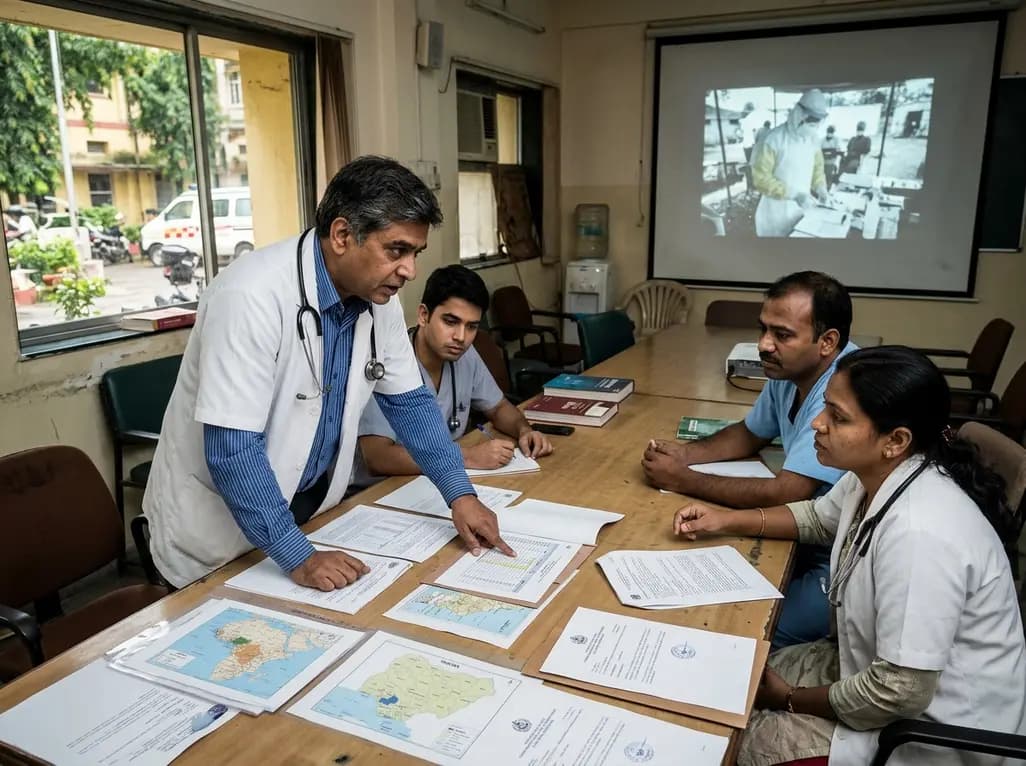
Following Nigeria's first recorded Ebola case linked to regional travel, the Africa CDC has convened an emergency ministerial summit. This alert underscores critical clinical priorities for healthcare professionals, including differentiating early viral infection from malaria, implementing barrier nursing, and triage.
Today

Leucine Rich Bio has introduced South Asia's first comprehensive vaginal microbiome test, BugSpeaks. By profiling microbial dysbiosis, pathogens, and antimicrobial resistance, this next-generation diagnostic platform provides clinicians with deeper insights into recurrent infections, fertility, and reproductive health.
Today

Review how tailored exercise programs benefit frail older patients with heart failure. Explore pathophysiological mechanisms, individualized training prescriptions, and strategies to overcome adherence barriers in clinical practice.
Today

This comparative study evaluates posterior labral tears with and without glenohumeral instability, highlighting distinct demographic patterns, MRI underestimation in stable shoulders, and successful arthroscopic repair outcomes.
Today

A clinical study demonstrates that early intervention with tocilizumab, either as monotherapy or bridged with corticosteroids, achieves significant proptosis reduction and resolves active inflammation in treatment-naive thyroid eye disease.
Today
