

Loading, please wait...
Loading, please wait...

Addressing nursing home suicidal ideation represents an urgent priority for modern geriatric medicine and psychiatry. Across long-term care settings, older adults frequently navigate profound psychological and physical disruptions. For example, the loss of physical autonomy, separation from familial environments, and chronic illnesses exacerbate emotional vulnerability. In rapidly developing nations like India, where demographic shifts and urbanization increasingly lead families toward residential care facilities, geriatric suicide prevention demands heightened clinical focus. Historically, healthcare staff often dismissed depressive withdrawal or passive death wishes as inevitable aspects of advanced aging. However, psychogeriatric evidence decisively refutes this misconception. Suicidal thoughts signal severe emotional suffering that clinicians can manage through timely medical and psychosocial interventions. When healthcare teams overlook subtle expressions of despair, residents experience accelerated cognitive and functional decline. Therefore, medical directors and primary care clinicians must adopt systematic approaches to identify hidden distress. By establishing proactive observation protocols, multidisciplinary teams can recognize early warning signs. This vigilance protects vulnerable residents and preserves their fundamental dignity throughout their institutional stay.
A recent cross-sectional investigation explored the psychosocial correlates of suicidal thinking among 231 residents in the Valencian Community of Spain. The researchers recruited participants aged 60 years or older who demonstrated preserved or mildly impaired cognitive functioning. To decipher the complex pathways linking interpersonal stressors and self-harm desires, the authors applied structural equation modeling. This robust analytical method examined direct relationships alongside indirect pathways. Specifically, the researchers evaluated how social vulnerability, perceived burdensomeness, and loneliness influenced suicidal thoughts through existential mechanisms. The results demonstrated that lower meaning in life correlated strongly with higher suicidal ideation. Furthermore, perceived burdensomeness and weak social support showed no direct statistical association with suicidal thinking. Instead, these adverse social determinants exerted significant indirect effects by eroding existential meaning. In fact, this mediating pathway explained 42.8% of the total variance in suicidal ideation. Conversely, loneliness displayed a direct and potent association with suicidal thoughts, whereas its connection to reduced life meaning remained borderline. Consequently, these empirical findings illuminate two distinct mechanisms driving suicidal vulnerability in residential institutions.
The finding that existential meaning accounts for 42.8% of suicidal risk variance delivers vital clinical guidance for geriatric practitioners. When elderly individuals relocate to residential homes, they often leave behind decades of occupational achievements, domestic routines, and familial responsibilities. Consequently, many residents experience an acute loss of identity and struggle to discover ongoing purpose. Under the interpersonal theory of suicide, perceived burdensomeness develops when individuals believe their continued existence imposes an unwanted strain on others. Similarly, low social support creates feelings of relational emptiness. However, the Spanish findings reveal that burdensomeness and poor social support do not directly trigger suicidal desires. Instead, they operate insidiously by undermining an individual’s perceived reasons for living. When older people lose their sense of significance, despair fills the resulting void. Fortunately, therapeutic strategies that restore meaning can dismantle this destructive pathway. Geriatricians and clinical psychologists can actively rebuild self-worth through structured reminiscence therapy and legacy projects. Therefore, reinforcing personal meaning serves as a formidable buffer against severe psychological distress in residential institutions.
While perceived burdensomeness acts through existential pathways, subjective loneliness behaves as an immediate catalyst for suicidal thoughts. In the Spanish cohort, loneliness demonstrated a strong direct association with suicidal ideation, bypassing intermediate existential mechanisms. This distinction holds immense clinical relevance for nursing home staff. Loneliness denotes a distressing subjective perception that one’s social relationships are quantitatively or qualitatively deficient. Crucially, older adults can feel profoundly lonely even within crowded institutional dining rooms and shared recreational halls. Superficial group gatherings frequently fail to alleviate this deep emotional pain. In addition, chronic loneliness fosters cognitive distortions that amplify feelings of abandonment and hopelessness. Because loneliness acts swiftly and directly, care teams cannot afford to delay intervention. Clinicians must actively distinguish between physical isolation and subjective loneliness during geriatric evaluations. Healthcare providers should facilitate meaningful, one-on-one emotional connections rather than merely organizing passive recreational events. Moreover, facilitating regular contact with loved ones through telecommunications can alleviate acute loneliness. Thus, addressing emotional isolation represents an indispensable pillar of institutional suicide prevention.
Translating these empirical insights into institutional practice requires a comprehensive transformation of residential mental healthcare protocols. First, facilities must implement structured screening programs using validated instruments, such as the Paykel Suicide Scale, during intake and routine follow-ups. Furthermore, attending physicians should incorporate evaluations of existential purpose into regular geriatric comprehensive assessments. When clinicians identify residents with diminished purpose or acute loneliness, multidisciplinary teams must initiate coordinated interventions. For instance, meaning-centered psychotherapy and dignity therapy effectively help older residents articulate their values and process past accomplishments. In addition, facility staff should replace routine busywork with purposeful activities, including peer mentoring, gardening, and creative arts. Nursing directors must also train frontline caregivers to recognize passive death wishes during daily hygiene and feeding assistance. In Indian elder care contexts, where institutional facilities are expanding rapidly, integrating psychiatric consultation into primary geriatric workflows is essential. Multidisciplinary reviews ensure timely pharmacological and psychological care before crises emerge. Ultimately, fostering an environment rich in personal meaning and authentic social connection protects vulnerable seniors from catastrophic despair.
Clinicians frequently employ validated screening instruments such as the Paykel Suicide Scale, the Geriatric Depression Scale, and the Columbia-Suicide Severity Rating Scale in institutional environments. Furthermore, clinicians must evaluate both active suicidal expressions and passive death wishes, because older adults commonly voice existential weariness instead of direct intent. Multidisciplinary teams should administer these standardized questionnaires during routine intake assessments, after acute physical illnesses, and following major social losses to capture fluctuating psychological vulnerabilities promptly.
Meaning in life provides an essential cognitive buffer against feelings of perceived burdensomeness and dependency. When older adults perceive their daily existence as purposeful, they view physical assistance as a natural facet of human interdependence rather than a humiliating imposition. Consequently, strong existential meaning neutralizes self-directed guilt and prevents interpersonal stress from transforming into suicidal ideation. Structured psychotherapies like dignity therapy and life review effectively rebuild this purpose by emphasizing personal wisdom and life achievements.
Institutions must prioritize qualitative social bonds rather than superficial group gatherings. Residential management can establish personalized intergenerational mentorship programs, encourage consistent family contact through digital devices, and facilitate peer-led interest groups. Additionally, nursing homes should train daily care staff to deliver empathetic, attentive presence during basic clinical routines. By creating regular opportunities for authentic human connection, facilities successfully alleviate persistent loneliness, thereby mitigating one of the strongest direct triggers of late-life suicidal ideation.
Disclaimer: This content is for informational and educational purposes only... Refer to the latest local and national guidelines for clinical practice.
References
Pinazo-Hernandis S et al. Social Vulnerability and Suicidal Ideation in Nursing Home Residents: The Mediating Role of Meaning in Life. J Appl Gerontol. 2026 Oct 23. doi: 10.1177/07334648261499932. PMID: 42909481.
Van Orden KA, Cukrowicz KC, Witte TK, Joiner TE. The interpersonal theory of suicide. Psychol Rev. 2010;117(2):575-600. doi:10.1037/a0018697.
Conwell Y, Van Orden K, Caine ED. Suicide in older adults. Psychiatr Clin North Am. 2011;34(2):451-468. doi:10.1016/j.psc.2011.02.002.
Ward M, Nolan A, Kenny RA. Loneliness and wish to die in older adults: Longitudinal findings from The Irish Longitudinal Study on Ageing (TILDA). Front Public Health. 2024;12:1432101. doi:10.3389/fpubh.2024.1432101.

Read summarized clinical updates, watch expert medical content, and earn CME certifications right from your smartphone.
Open your smartphone camera to scan and install.





A Spanish study of 231 nursing home residents reveals that meaning in life mediates 42.8% of suicidal ideation variance driven by burdensomeness and low support, while loneliness acts directly. Enhancing life purpose and social connection is essential for effective geriatric suicide prevention in long-term care.
Today
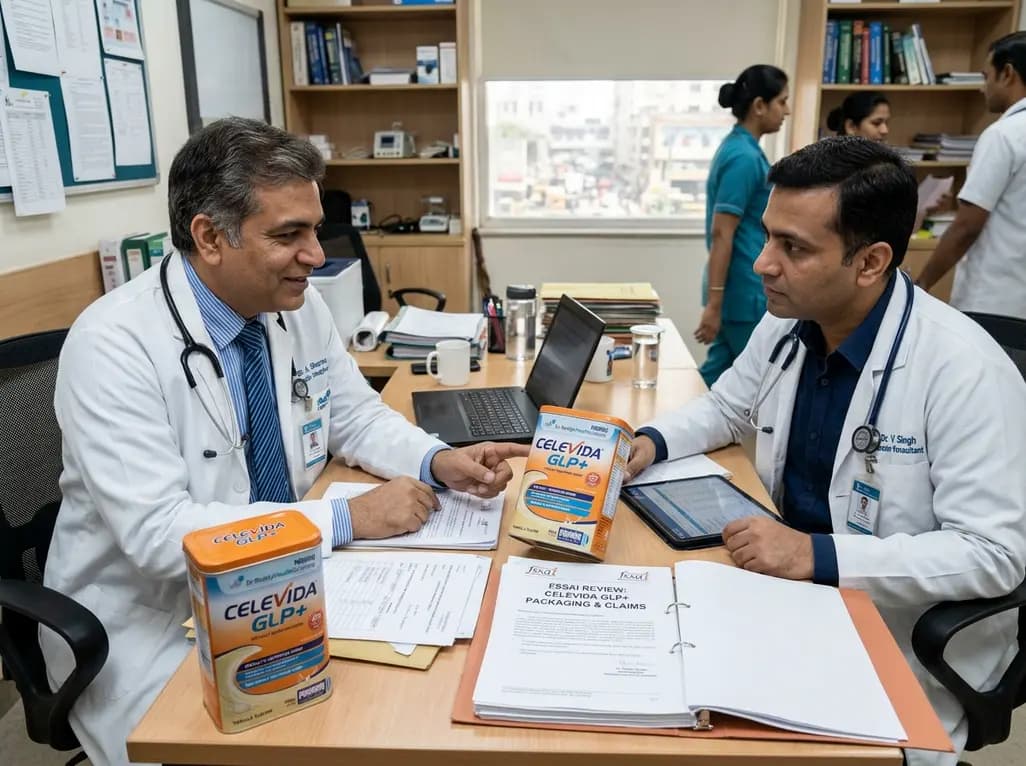
Following regulatory scrutiny from FSSAI regarding promotional representations and lean muscle preservation claims, Dr. Reddy's Laboratories and Nestlé Health Science are currently reviewing the branding and marketing strategy for their joint nutritional supplement Celevida GLP+.
Today
Demanding exhaustive hormonal profiling can inadvertently discourage clinical studies involving females. Methodological standards must align with the specific scientific question to expand, not restrict, equitable evidence for women.
Today

The Directorate General of Health Services directs Indian states to halt the hazardous reuse and reprocessing of single-use medical devices. Discover regulatory implications under the Drugs and Cosmetics Act, critical infection risks, legal liabilities, and operational changes required across clinical specialties.
Today
A novel calcium polyphosphate coacervate enables injectable bone implants with in situ hierarchical porosity via phase separation and gas foaming, significantly enhancing cell proliferation, energy metabolism, and osteogenic differentiation for minimally invasive bone defect repair.
Today

India is advancing preventive healthcare by integrating genomics, artificial intelligence, and quantum technologies. With the SANGAM programme sequencing one million Indian genomes, clinicians can unlock personalized therapies, detect cardiometabolic risks early, and curb the burden of diabetes and heart disease.
Today
