

Loading, please wait...
Loading, please wait...

The National Medical Commission (NMC) recently imposed a massive penalty of ₹1 crore each on seven medical colleges. This significant action targets institutions failing to maintain **NMC stipend transparency** despite several warnings. The commission discovered that these colleges did not publicly disclose the stipend amounts paid to MBBS interns and postgraduate medical residents on their official websites.
The Under-Graduate Medical Education Board (UGMEB) took this step after observing repeated non-compliance with earlier directives. Furthermore, the NMC emphasizes that medical institutions must ensure uniformity in payments across the country. This transparency mandate aligns with various Supreme Court orders that advocate for the fair compensation of medical trainees. Therefore, the failure to publish these details constitutes a serious regulatory violation.
The seven colleges facing these heavy fines represent different regions of India. Specifically, the list includes Dumka Medical College in Jharkhand and Government Medical College, Barmer, in Rajasthan. Additionally, Akash Institute of Medical Sciences in Karnataka and Prasad Institute of Medical Sciences in Lucknow received penalties. Other institutions include Government Medical College in Ongole, RKDF Medical College in Bhopal, and Pt. B.D. Sharma PGIMS in Rohtak.
The NMC warned that continued violations would lead to even stricter disciplinary measures. For example, defaulting colleges may face restrictions on new admissions or the suspension of their existing permissions. Because the regulator views stipend payment as a fundamental right of medical residents, it intends to enforce these rules strictly. Thus, medical professionals can expect more rigorous monitoring of institutional websites moving forward.
Q1: Why did the NMC penalize these seven medical colleges?
The colleges failed to disclose the stipends paid to interns and residents on their websites, violating transparency and regulatory norms.
Q2: What is the amount of the fine imposed by the NMC?
The National Medical Commission has imposed a penalty of ₹1 crore on each of the seven defaulting medical colleges in March 2026.
Q3: Which court orders support these stipend transparency mandates?
The directives follow Supreme Court rulings in cases such as State of Uttar Pradesh vs. Miss Bhavna Tiwari and Abhishek Yadav vs. Army College of Medical Sciences.
Disclaimer: This content is for informational and educational purposes only. It does not constitute medical advice or replace professional judgment. Refer to the latest local and national guidelines for clinical practice.
References

Read summarized clinical updates, watch expert medical content, and earn CME certifications right from your smartphone.
Open your smartphone camera to scan and install.





NMC penalizes seven medical colleges ₹1 crore each for failing to disclose intern and resident stipend details, violating regulatory transparency mandates....
7 months ago
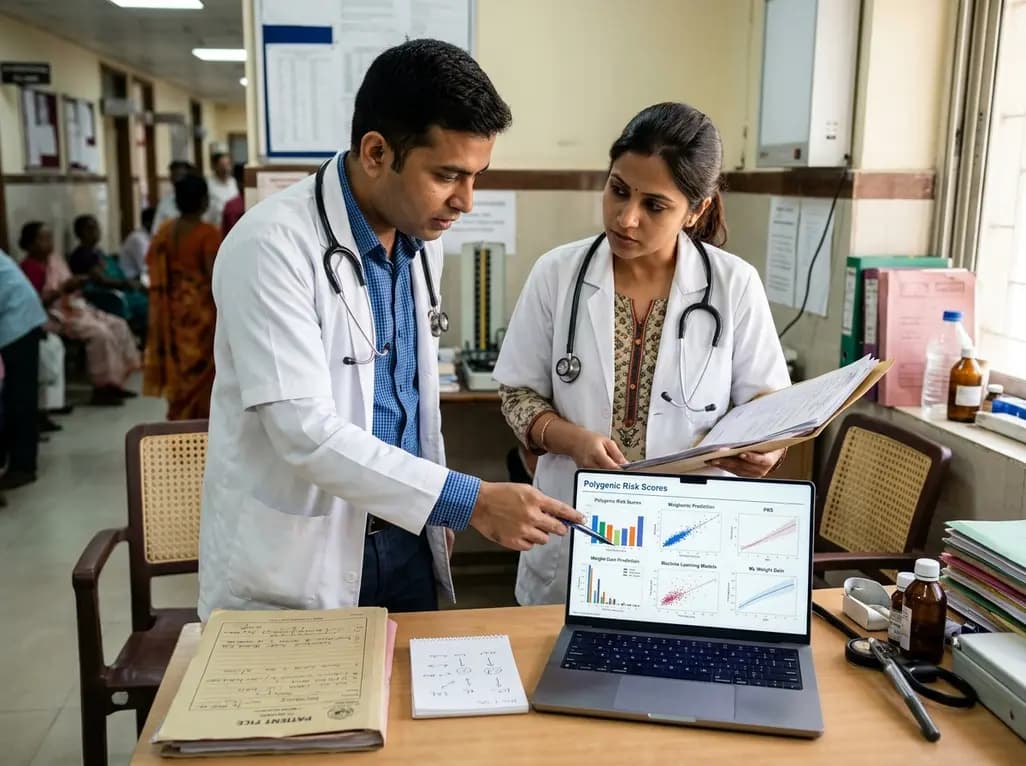
An observational study from the NIH All of Us Research Program reveals that adding a multi-ancestry polygenic risk score to machine learning models provides only modest improvements in predicting adult weight gain, underscoring the enduring significance of routine clinical and lifestyle factors.
Today
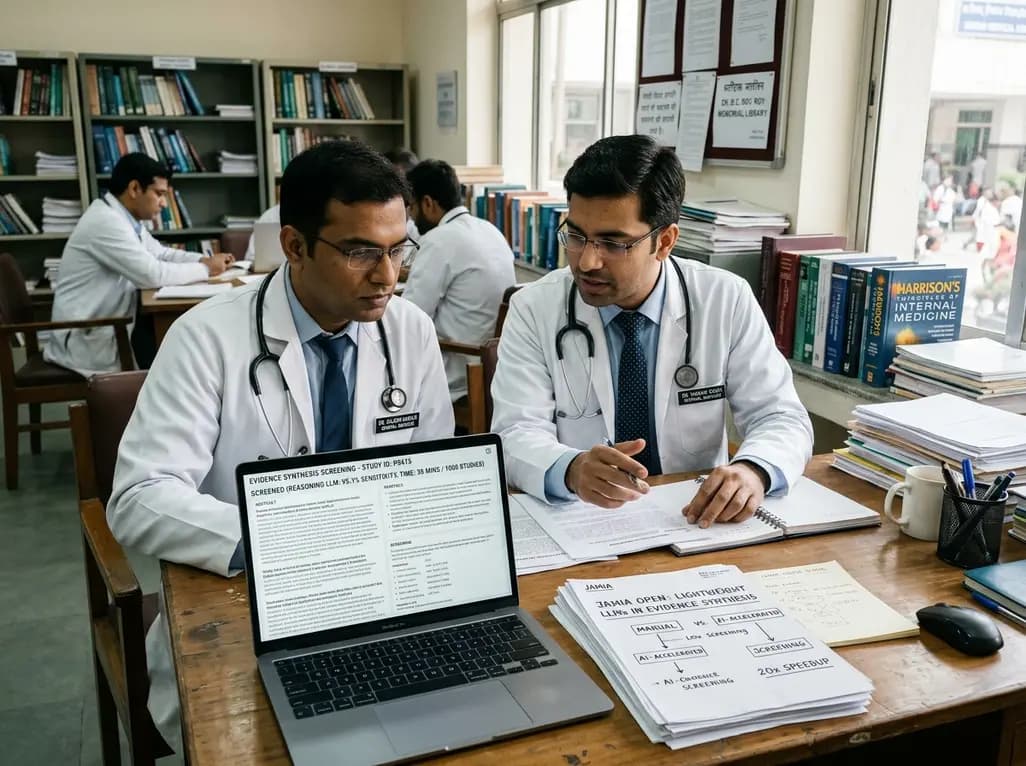
A study in JAMIA Open shows lightweight open-source reasoning LLMs achieve up to 95% sensitivity and accelerate evidence synthesis screening by nearly twentyfold, presenting a cost-effective, scalable AI solution for biomedical research and systematic reviews.
Today
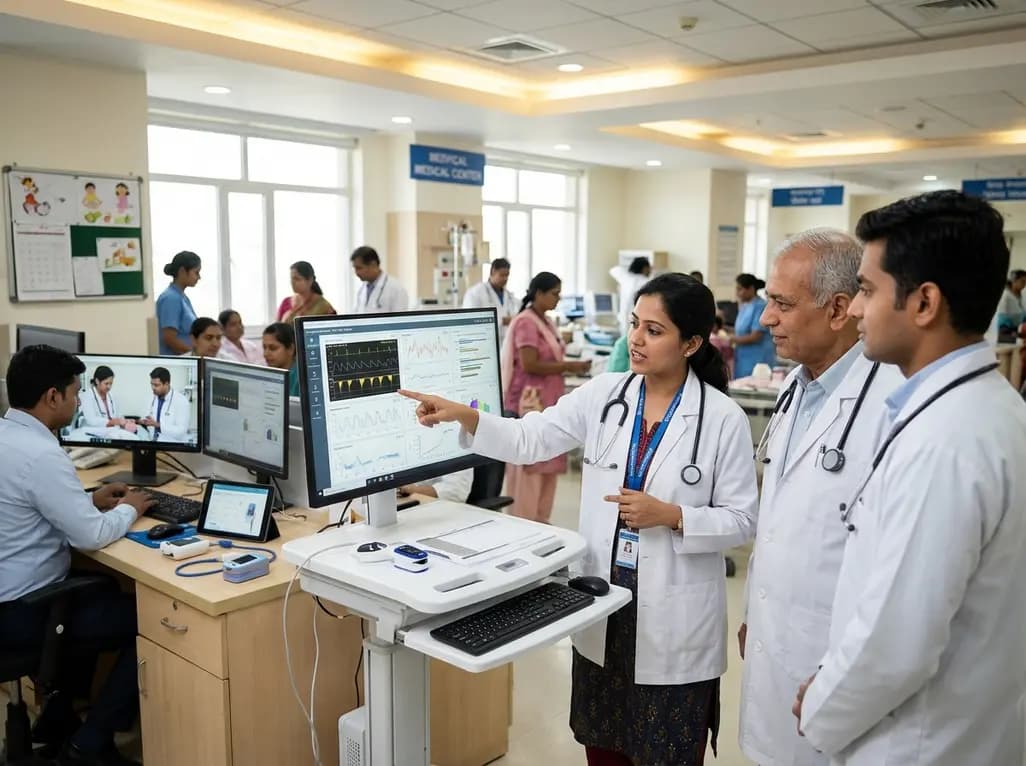
A landmark study details how an enterprise pediatric remote patient management model expanded from a single cardiology pilot to 16 diverse specialty programs by combining centralized digital operations with specialty clinical leadership.
Yesterday
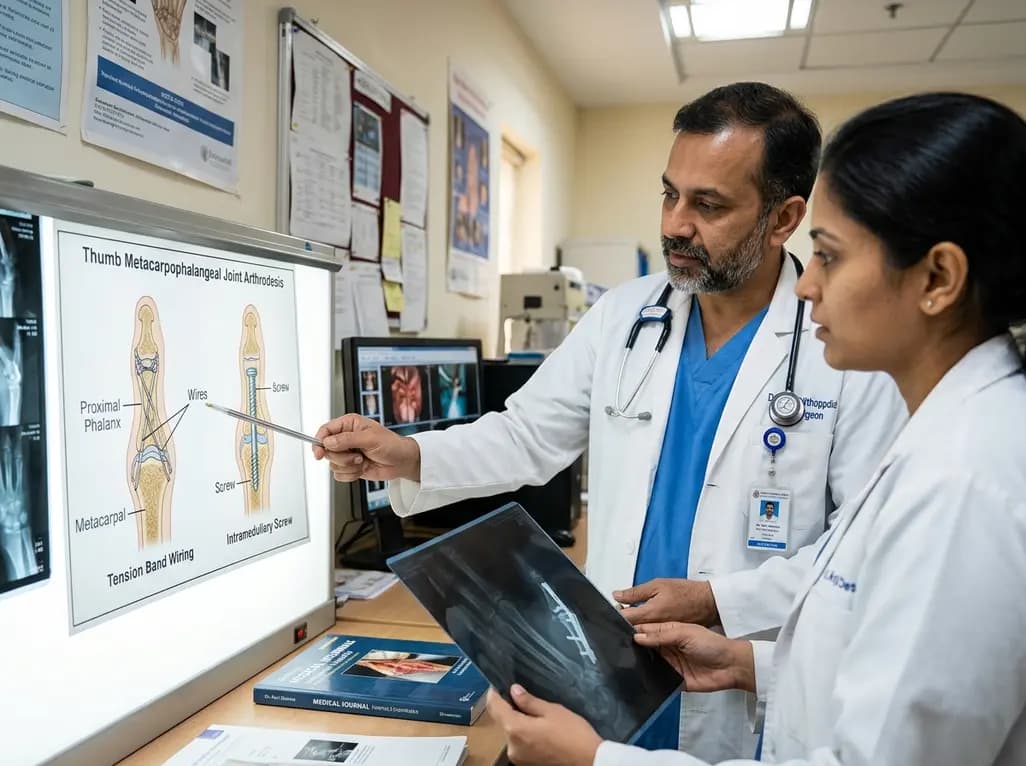
A comparative review of tension band wiring and intramedullary screw fixation in thumb metacarpophalangeal arthrodesis, evaluating union rates, hardware complications, and clinical outcomes.
Yesterday
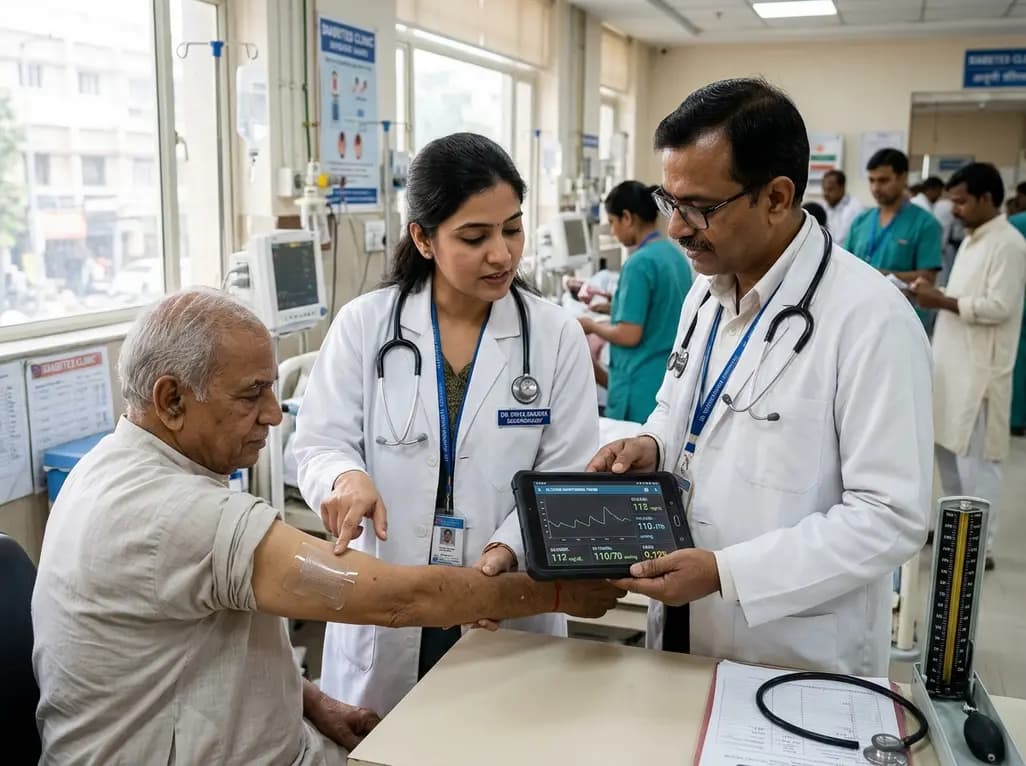
A breakthrough ultrathin multimodal sensor decouples physical hemodynamic monitoring from disposable electrochemical calibration, achieving long-term wearable glucose prediction with 81.36% accuracy and a 9.12% MARD. This offers a robust, drift-free solution for outpatient metabolic surveillance.
Yesterday
