.webp&w=384&q=75)

Loading, please wait...
Loading, please wait...
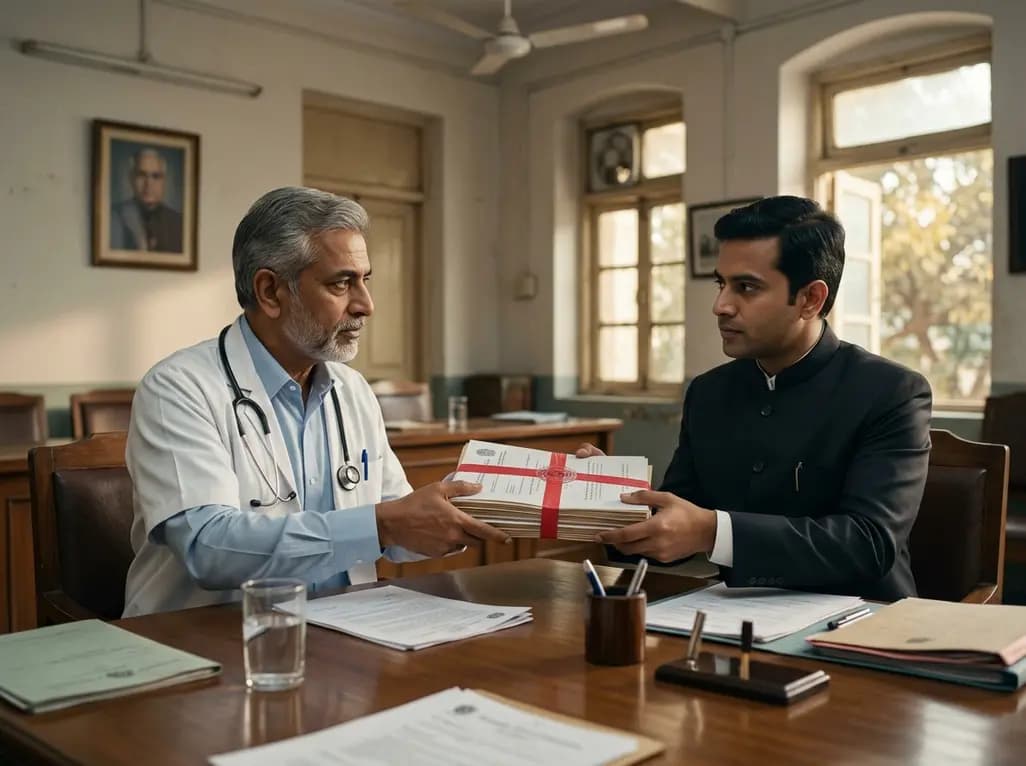
The NMC has referred the controversial issue of NMC patient appeals to the Union Health Ministry. For over five years, the commission rejected numerous complaints from patients, claiming that only registered medical practitioners could appeal. Specifically, the EMRB stated that the ministry should interpret the provisions of the NMC Act. Consequently, this shift has sparked intense debates among medical professionals and healthcare activists across India.
To understand this dispute, we must examine the historical rules of medical ethics. Historically, section 8.8 of the Medical Council Ethics Code 2002 allowed patients to appeal state decisions. However, the EMRB has consistently rejected these appeals since the creation of the NMC in 2020. The board claimed that section 30(3) of the NMC Act, 2019, overrides the 2002 code. Moreover, the board interpreted this section to allow appeals only from medical professionals. Nevertheless, prominent activists like Dr. Babu KV point out that the original text does not contain the word 'only'.
Furthermore, RTI responses show that the EMRB rejected 256 patient appeals in the last five years. Meanwhile, the board accepted 185 appeals from doctors during the same period. This discrepancy has raised serious concerns about patient rights. In addition, the ministry previously directed the NMC to accept appeals from patients. Despite this directive, the EMRB continued to reject patient pleas. Surprisingly, the five-member EMRB is currently vacant, except for one part-time member. Therefore, activists question who made the decision to transfer the responsibility to the ministry.
Q1: What is the primary conflict surrounding NMC patient appeals?
The primary conflict involves whether patients can appeal decisions made by State Medical Councils. Historically, the 2002 Ethics Code permitted patient appeals. However, the EMRB interpreted the NMC Act to restrict this right only to doctors.
Q2: What action has the EMRB recently taken?
Specifically, the EMRB issued an office memorandum in May 2026. This memo requested the Union Health Ministry to interpret the provisions of the NMC Act.
Q3: How many patient appeals did the EMRB reject between 2020 and 2026?
According to RTI data, the EMRB rejected 256 appeals from patients. In contrast, the board accepted 185 appeals from doctors during the same timeframe.
Disclaimer: This content is for informational and educational purposes only. It does not constitute medical advice or replace professional judgment. Refer to the latest local and national guidelines for clinical practice.
References

Read summarized clinical updates, watch expert medical content, and earn CME certifications right from your smartphone.
Open your smartphone camera to scan and install.





The NMC EMRB has referred the long-standing dispute over patient appeals to the Health Ministry, raising questions about medical ethics and patient rights....
4 months ago

An elderly man with partially repaired Tetralogy of Fallot presented with STEMI caused by coronary embolism rather than atherosclerosis. Successful treatment with sustained mechanical aspiration thrombectomy underscores the vital need for high clinical vigilance in adult congenital heart disease.
Today

Demanding exhaustive hormonal profiling can inadvertently discourage clinical studies involving females. Methodological standards must align with the specific scientific question to expand, not restrict, equitable evidence for women.
Today

A recent study demonstrates that spinal oxygen sensors do not require mitochondrial electron transport to trigger sympathetic excitation during acute hypoxia, revealing new insights into how mitochondrial oxidative stress modulates autonomic tone in cardiovascular and neurological diseases.
Today

A comparative review of tension band wiring and intramedullary screw fixation in thumb metacarpophalangeal arthrodesis, evaluating union rates, hardware complications, and clinical outcomes.
Today

Following regulatory scrutiny from FSSAI regarding promotional representations and lean muscle preservation claims, Dr. Reddy's Laboratories and Nestlé Health Science are currently reviewing the branding and marketing strategy for their joint nutritional supplement Celevida GLP+.
Today
