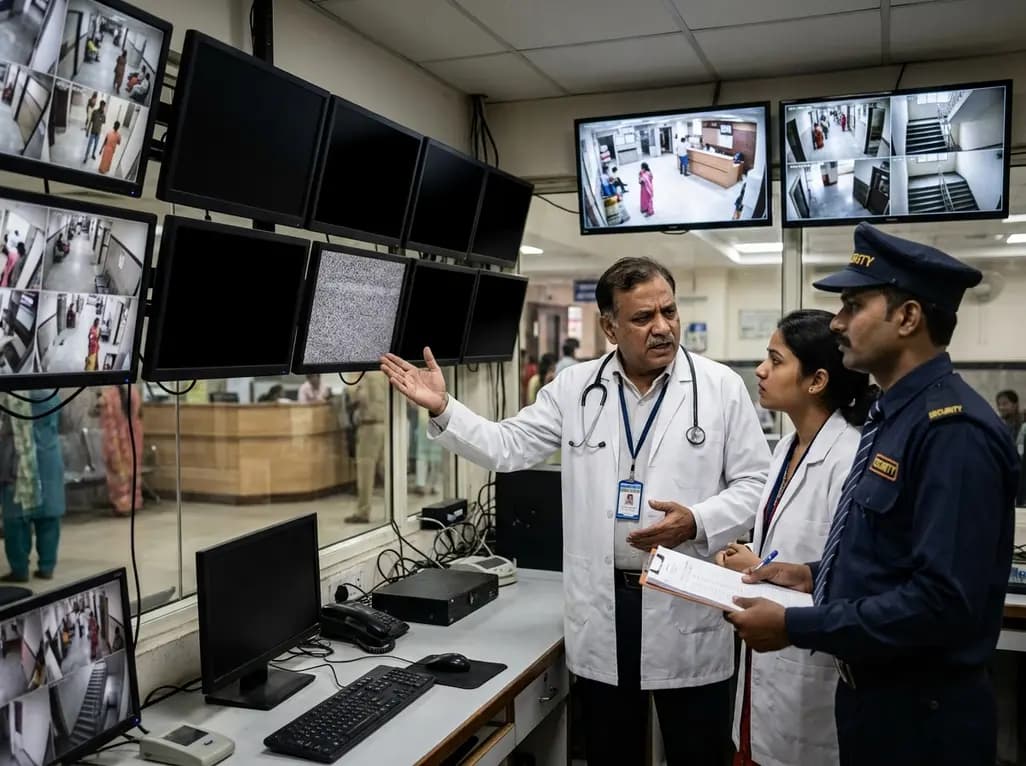
The National Medical Commission has launched a major campaign to enforce transparency. Recently, the commission warned seventy medical colleges for failing to share live video feeds. This strict stance highlights the importance of NMC CCTV compliance for medical institutions. Consequently, authorities demand immediate system integration to verify teaching standards and protect student safety.
Mandate for NMC CCTV Compliance
The commission introduced this monitoring framework in 2022 to strengthen remote oversight of medical colleges. Historically, the regulator faced massive difficulties in physically verifying teaching quality, faculty attendance, and actual patient volumes. To resolve these challenges, the NMC established a digital compliance ecosystem that relies on real-time visual verification. Consequently, this initiative allows central administrators to assess daily classroom operations and clinical activity from a distance. Additionally, it helps eliminate common fraudulent practices, such as ghost faculty or inflated clinical metrics. Indeed, the commission repeatedly followed up with non-compliant institutions through multiple official advisories over the past four years. However, several medical colleges consistently ignored these warnings, which ultimately forced the regulator to publish a public list of defaulters. Therefore, administrators must act rapidly to align their local setups with the statutory directives. This regulatory push is not merely a bureaucratic requirement; rather, it represents a fundamental shift toward digital accountability. Consequently, institutions must prioritize this hardware upgrade immediately to avoid losing recognition. Indeed, establishing absolute compliance remains the only path forward for these centers.
Technical Standards for Live Feeds
To achieve compliance, colleges must follow highly specific technical guidelines. Specifically, the NMC regulations mandate the installation of at least twenty-five closed-circuit television cameras at designated locations. These locations include patient registration counters, outpatient department entrances, emergency wards, lecture theatres, and administrative sections. Additionally, the college must link these cameras to a robust Network Video Recorder. This device acts as the central hub that streams live video feeds directly to the commission's Command and Control Centre. Furthermore, the system must retain at least thirty days of high-definition playback footage for audit purposes. This requirement ensures that the commission can investigate any complaints regarding lack of facilities or student absenteeism. Consequently, local IT teams must maintain high-speed internet connections and stable power backups to avoid stream interruptions. Indeed, many institutions fail not because they lack cameras, but because they do not manage the live streaming interface correctly. Therefore, continuous technical upkeep is essential to prevent system offline alerts from the central servers. Consequently, institutional heads must designate a dedicated administrator to monitor system connectivity daily to maintain continuous stream operations.
A Review of Non-Compliant Institutions
Despite multiple official directives issued since 2022, seventy medical institutions across India failed to meet these standards. Surprisingly, this list of non-compliant entities includes several of the most prominent government institutions in the national capital. Specifically, institutions such as Maulana Azad Medical College, University College of Medical Sciences, and GTB Hospital did not complete their linkage. Additionally, other major centers like the G.B. Pant Institute and the Atal Bihari Vajpayee Institute of Medical Sciences are on the list. Consequently, the public exposure of these premier medical centers has caused widespread concern among healthcare educators. Moreover, the default list is not restricted to Delhi; it covers nineteen different states, including Rajasthan, Maharashtra, and Uttar Pradesh. Indeed, Rajasthan leads the list with thirteen non-compliant colleges, closely followed by Maharashtra with eight defaulting institutions. However, hospital administrators from several affected centers argue that they are currently resolving the technical issues. Therefore, the commission has granted these colleges a final brief window to explain their infrastructure deficiencies before taking action. Specifically, they must provide a detailed timeline to achieve absolute technical alignment with central servers.
Academic Transparency and Auditing
Beyond basic surveillance, the real-time CCTV connection supports a much larger digital compliance framework designed by the regulatory body. Specifically, this digital framework allows the commission to verify classroom attendance, clinical exposure, and general teaching activities remotely. Historically, some colleges used fraudulent practices to pass inspections, such as bringing in temporary faculty or renting equipment. However, live streams make such deception nearly impossible, as the commission can cross-examine feeds at any random moment. Additionally, this system helps verify that clinics actually receive patients and that students obtain hands-on experience. Consequently, this digital audit trail drastically reduces the need for expensive and sometimes biased physical inspections. Indeed, the commission believes that absolute transparency is the only way to restore trust in the Indian medical education system. Therefore, the integration of these systems represents a major step toward modernizing healthcare administration in India. Ultimately, this surveillance ensures that colleges do not compromise on educational quality or clinical standards. Consequently, administrators should view this technology as a valuable tool for institutional self-assessment to maintain high performance standards continuously across all functional areas.
Focus on Student Safety and Security
Additionally, the conversation around camera installation in medical institutions has gained massive public momentum in recent times. Specifically, public safety debates intensified after the tragic incident at Kolkata's RG Kar Medical College and Hospital. Consequently, doctors and medical associations across India are demanding heightened security, restricted campus access, and extensive surveillance networks. Indeed, the commission's camera policy predates this specific tragedy, as the regulator established the rules in 2022. However, the incident has highlighted the severe real-world consequences of poor surveillance in large public hospitals. Therefore, the current regulatory push serves a double purpose by enhancing both academic transparency and physical student safety. Many medical associations now actively support the commission's hardline stance, noting that unmonitored campus corners pose severe security risks. Concurrently, government agencies are pledging technical assistance to help colleges resolve integration bottlenecks rapidly. Ultimately, ensuring that every corner of a medical campus remains under surveillance is vital to protecting the lives of young doctors. Indeed, implementing these systems properly will ensure a safer environment for our next generation of healthcare professionals in modern medical systems.
Frequently Asked Questions
Q1: Why did the NMC mandate CCTV installation in Indian medical colleges?
The commission introduced this policy to build a digital framework for monitoring academic and clinical compliance. Specifically, the live feeds allow administrators to remotely audit classroom teaching, faculty attendance, and actual patient counts in outpatient departments. This continuous digital presence deters colleges from engaging in fraudulent practices, such as hiring temporary faculty or inflating patient volumes purely to pass regulatory inspections.
Q2: What technical specifications must medical colleges fulfill under this mandate?
Under the statutory rules, medical institutions must install at least twenty-five closed-circuit television cameras at designated locations. Furthermore, these cameras must link directly to a Network Video Recorder that feeds live footage into the commission's central command center. Additionally, the local storage systems must retain thirty days of high-definition playback footage, ensuring a secure audit trail is always available for regulatory investigations.
Q3: What actions will the NMC take if a college fails to comply with the rules?
Initially, the regulator offers non-compliant institutions an opportunity to explain their technical deficiencies and resolve local connectivity issues. However, if a college fails to provide a satisfactory response or continues to delay integration, the commission will initiate strict regulatory proceedings. These punitive actions include imposing heavy financial penalties, withholding academic recognition, and suspending undergraduate or postgraduate admissions for the upcoming term.
Disclaimer: This content is for informational and educational purposes only. It does not constitute medical advice or replace professional judgment. Refer to the latest local and national guidelines for clinical practice.
References
- 70 medical colleges fail to comply with NMC's mandatory CCTV norms - ETHealthworld
- NMC Directs 70 Medical Colleges to Link CCTV Systems - Deccan Chronicle
- NMC directs 70 medical colleges to comply with CCTV norms - The New Indian Express
.webp&w=384&q=75)