.webp&w=384&q=75)

Loading, please wait...
Loading, please wait...
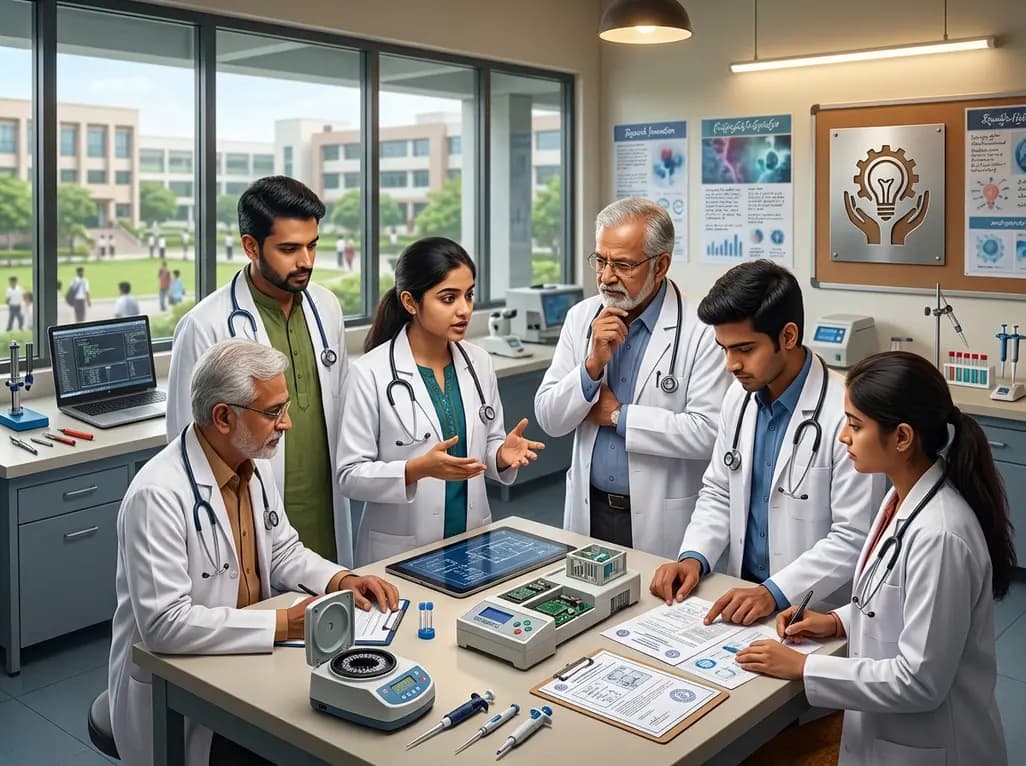
The National Medical Commission (NMC) has issued a vital advisory to strengthen medical research across India. Specifically, the commission directed all medical colleges to implement and promote the Patent Mitra initiative. This specialized program, developed by the Indian Council of Medical Research (ICMR), helps protect medical breakthroughs. In addition, it guides researchers from the initial patenting phases to commercialization. Historically, clinical research in India often remained confined to academic publications. Consequently, many innovative devices never reached the healthcare market. Through this advisory, the NMC aims to change this trend. Therefore, medical institutions must now actively publicize this platform to benefit clinicians, students, and patients.
The National Medical Commission released this regulatory directive on July 1, 2026. Primarily, the advisory instructs Deans and Principals of all recognized medical colleges to share information about the ICMR platform. Historically, academic institutions lacked the structured administrative support required to navigate patent applications. Therefore, the NMC wants to establish a clear bridge between academic inquiry and intellectual property protection. Under this directive, colleges must utilize their official communication channels to reach faculty, doctors, and students. Moreover, institutions should facilitate workshops to demonstrate the direct benefits of patenting. This collective effort will undoubtedly enhance the translation of research into commercial products. Additionally, it ensures that innovators retain full ownership of their ideas. Thus, clinicians can confidently pursue creative medical solutions without fear of losing their intellectual property. Ultimately, this national push establishes a highly organized approach to healthcare innovation within academic medicine. Consequently, the advisory marks a pivotal shift from traditional publishing to active, commercial research. Therefore, this strategic change will elevate the status of Indian medical colleges.
The ICMR designed this platform to serve as a comprehensive, expert-driven intellectual property incubator. Specifically, the program offers fully government-funded legal and administrative assistance to medical innovators. Therefore, candidates do not need to pay out-of-pocket fees for domestic or international patent filings. In addition, the platform provides access to specialized patent attorneys. These experts conduct rigorous prior-art searches to confirm the novelty of each invention. Subsequently, they draft and file the applications, handling all regulatory queries. Furthermore, the initiative is not restricted to internal ICMR researchers. Indeed, it extends to all faculty members, resident doctors, and undergraduate students at Indian medical colleges. Startups registered under the Department for Promotion of Industry and Internal Trade can also benefit. Thus, the program provides a democratic platform for diverse healthcare inventors. Ultimately, this support system removes the steep financial and bureaucratic barriers that historically halted clinical inventions. Consequently, researchers can focus entirely on perfecting their designs. Indeed, this platform creates a continuous pipeline of validated medical designs ready for industrial scaling.
Modern medical education must progress beyond classroom lectures and memorization. Specifically, the NMC aims to cultivate a deep culture of scientific inquiry and problem-solving among students. This advisory directly supports that goal by rewarding clinical curiosity. When students realize that their novel ideas can receive federal funding, they feel motivated to innovate. Consequently, this changes the academic mindset from passive learning to active creation. Furthermore, medical colleges can improve their national and international institutional rankings by holding patents. Therefore, adopting this program creates a win-win scenario for both students and institutions. In addition, patenting medical devices or diagnostic tools enhances the prestige of Indian clinical researchers globally. Thus, medical colleges must treat intellectual property as a core academic metric. Ultimately, this strategy will prepare the next generation of doctors to think like clinical engineering professionals. As a result, India will produce self-reliant medical technologies that address local public health challenges. Consequently, institutions will invest more resources into advanced research laboratories, providing students with superior diagnostic equipment.
Historically, translating a laboratory discovery into a clinical product was highly challenging. Specifically, researchers faced complex regulatory pathways and exorbitant legal expenses. Many valuable innovations remained documented only in lab notebooks. However, the ICMR initiative directly addresses this translation gap. In addition to patent filing, the program actively supports technology transfer. This means the platform helps match medical inventors with commercial manufacturers. Consequently, private partners can license these patents and scale up production. Therefore, academic breakthroughs can quickly transform into affordable, mass-produced medical equipment. To illustrate, this process is vital for creating low-cost diagnostic kits and advanced surgical tools. Furthermore, local manufacturing reduces India's dependence on expensive imported medical devices. Indeed, this aligns perfectly with national initiatives like Make in India. Ultimately, bridging the gap between academia and industry ensures that patients gain rapid access to life-saving technologies. Thus, the program serves as a critical catalyst for healthcare self-reliance. Subsequently, public hospitals can acquire high-quality, indigenous clinical devices at a fraction of their imported cost.
To maximize the benefits of this initiative, medical colleges must take structured, proactive steps. Primarily, institutions should establish dedicated institutional innovation cells. These internal committees can help identify promising student projects and clinician ideas. Additionally, colleges must host informational seminars to explain the patenting process. Faculty members should actively mentor students during the design and testing phases. Furthermore, administrators can invite patent experts to demystify intellectual property laws. Consequently, this will reduce the hesitation that researchers often feel. Therefore, colleges should designate a single point of contact to coordinate directly with the ICMR. This dedicated coordinator will streamline application submissions and handle correspondence. Moreover, institutions must celebrate successful patent filings to inspire others. Indeed, peer recognition is a powerful motivator in academic medicine. Ultimately, these administrative actions will build a sustainable research ecosystem inside every medical campus. Thus, colleges will move beyond simple teaching to become centers of healthcare creation. Consequently, this structural alignment will motivate senior clinicians to participate in clinical advancement.
Q1: What is the primary purpose of the ICMR Patent Mitra platform?
The primary purpose of this platform is to provide comprehensive, government-funded support for patent filing and technology transfer to medical researchers, students, and clinicians. By removing significant financial and bureaucratic hurdles, the program enables innovators to protect their unique intellectual property. Additionally, it facilitates partnerships with commercial manufacturers. Consequently, this initiative ensures that valuable clinical discoveries transition smoothly into accessible, life-saving public healthcare products.
Q2: Who is eligible to apply for assistance under this initiative?
This initiative offers inclusive eligibility across India's entire medical education and research landscape. Specifically, faculty members, practicing clinicians, research scholars, and undergraduate or postgraduate students at any recognized medical college can apply. Furthermore, biomedical startups formally registered under the Department for Promotion of Industry and Internal Trade are fully eligible. Consequently, independent innovators can secure comprehensive, government-funded patenting and legal support for their clinical inventions.
Q3: What specific types of support does the Patent Mitra platform provide to researchers?
The platform provides end-to-end, fully government-funded assistance for the entire intellectual property lifecycle. Initially, expert patent attorneys perform detailed prior-art assessments to verify invention novelty. Subsequently, the program covers all legal drafting and application filing fees for domestic and international patents. Moreover, it manages ongoing maintenance fees and provides professional technology transfer services. Ultimately, this support helps innovators license their discoveries, ensuring overall commercial success.
Disclaimer: This content is for informational and educational purposes only. It does not constitute medical advice or replace professional judgment. Refer to the latest local and national guidelines for clinical practice.
References

Read summarized clinical updates, watch expert medical content, and earn CME certifications right from your smartphone.
Open your smartphone camera to scan and install.





The National Medical Commission (NMC) has issued an advisory directing all medical colleges in India to promote the ICMR's Medical Innovations Patent Mitra initiative. This government-funded program supports medical researchers, faculty, and students with patent filing and technology transfer.
3 months ago

Following Nigeria's first recorded Ebola case linked to regional travel, the Africa CDC has convened an emergency ministerial summit. This alert underscores critical clinical priorities for healthcare professionals, including differentiating early viral infection from malaria, implementing barrier nursing, and triage.
Today

Leucine Rich Bio has introduced South Asia's first comprehensive vaginal microbiome test, BugSpeaks. By profiling microbial dysbiosis, pathogens, and antimicrobial resistance, this next-generation diagnostic platform provides clinicians with deeper insights into recurrent infections, fertility, and reproductive health.
Today

Review how tailored exercise programs benefit frail older patients with heart failure. Explore pathophysiological mechanisms, individualized training prescriptions, and strategies to overcome adherence barriers in clinical practice.
Today

This comparative study evaluates posterior labral tears with and without glenohumeral instability, highlighting distinct demographic patterns, MRI underestimation in stable shoulders, and successful arthroscopic repair outcomes.
Today

A clinical study demonstrates that early intervention with tocilizumab, either as monotherapy or bridged with corticosteroids, achieves significant proptosis reduction and resolves active inflammation in treatment-naive thyroid eye disease.
Today
