

Loading, please wait...
Loading, please wait...

Rising contamination of municipal and rural groundwater sources has intensified scrutiny on chemical pollutants. Consequently, more than 80 international health and environmental organisations have formally petitioned the World Health Organization to re-evaluate guidelines for nitrate in drinking water. While regulatory frameworks have remained static for decades, modern clinical studies present compelling evidence regarding widespread systemic harm. Medical practitioners must understand these emerging epidemiological risks to safeguard maternal, neonatal, and adult health in vulnerable communities.
Decades ago, the World Health Organization established the maximum contaminant level for nitrate at 50 milligrams per litre. That benchmark specifically equated to 11.3 milligrams per litre of nitrate-nitrogen. Crucially, authorities formulated this regulatory threshold in 1958 to mitigate infant methemoglobinemia. Also known as blue-baby syndrome, this acute pediatric condition occurs when nitrites convert hemoglobin into methemoglobin. Because methemoglobin cannot bind oxygen effectively, affected neonates experience severe tissue hypoxia and cyanosis.
However, clinical understanding has expanded substantially over the intervening decades. Agricultural runoff from synthetic fertilizers and intensive livestock operations has escalated dramatically across the globe. As a result, surface water and aquifers now carry substantial chemical burdens worldwide. Although the historical limit curbed acute infantile toxicity in treated municipal supplies, it completely ignored chronic exposure risks. Global bodies like Greenpeace and the World Organization of Family Doctors emphasize that decades-old benchmarks fail today's public health needs. Furthermore, millions of families across rural farming belts consume borehole water that easily exceeds historical limits. Consequently, regulatory stagnation leaves large populations vulnerable to covert pathological processes. Modern toxicology demands thresholds that protect human tissue across an entire lifespan rather than addressing an isolated infantile disorder.
Emerging epidemiological cohorts demonstrate a clear association between long-term nitrate intake and gastrointestinal malignancies. Specifically, researchers highlight colorectal carcinoma as a primary public health concern. The underlying biological mechanism involves the endogenous formation of reactive nitrogen species within the human gut. When people ingest nitrate in drinking water, salivary and commensal intestinal bacteria rapidly reduce it into nitrite.
Subsequently, these reactive nitrites interact with dietary amines and amides to synthesize N-nitroso compounds. Because these chemical agents possess potent mutagenic properties, they directly alter gastrointestinal epithelial cells. In addition, N-nitroso compounds induce alkylative DNA damage, generate persistent cross-links, and trigger genetic mutations in critical tumor-suppressor pathways. Cellular repairs often fail under sustained chemical stress. Thus, mucosal tissues experience chronic inflammation, dysregulated apoptosis, and accelerated epithelial proliferation. Nationwide population studies in Europe demonstrate that colorectal cancer risks elevate at nitrate levels far below the 50 milligrams per litre threshold. In fact, statistically significant risk elevations appear at concentrations below 4 milligrams per litre. Consequently, practicing oncologists and gastroenterologists recognize that current statutory limits offer inadequate safety margins against gastrointestinal carcinogenesis. Health systems must therefore re-examine environmental vectors when addressing increasing cancer incidence among adult demographics.
Obstetricians and pediatricians increasingly identify reproductive vulnerability as a major consequence of environmental pollution. Extensive cohort studies reveal that maternal ingestion of nitrate impairs fetal development. Specifically, maternal exposure strongly correlates with preterm birth, intrauterine growth restriction, and neural tube defects. The pathological mechanism operates through several distinct physiological pathways.
First, absorbed nitrates compete directly with iodide for uptake by the sodium-iodide symporter in maternal thyroid tissue. As a result, maternal thyroid hormone synthesis drops, creating subclinical hypothyroidism. Because developing fetal neural structures require adequate maternal thyroxine, this hormonal deficit disrupts embryogenesis. Second, transplacental transfer of nitrogen compounds induces localized oxidative stress within the growing placenta. This oxidative cascade triggers endothelial dysfunction and impedes uteroplacental blood flow. Consequently, inadequate placental perfusion restricts fetal nutrient delivery and elevates inflammatory cytokine activity. Clinical studies indicate that women consuming water containing more than 5 milligrams per litre of nitrate face a heightened risk of spontaneous preterm labor. In addition, early exposure may exacerbate congenital anomalies affecting craniofacial development and limb formation. Therefore, antenatal care strategies must acknowledge clean drinking water as a fundamental determinant of maternal-fetal wellness. Clinicians should proactively evaluate domestic water sources whenever rural pregnant patients present with unexplained gestational complications.
Faced with escalating scientific evidence, several European nations have begun updating their environmental regulations independently. Most notably, an expert scientific panel commissioned by the Danish government thoroughly evaluated domestic water safety. Their landmark assessment concluded that the international 50 milligrams per litre benchmark fails to safeguard human health. Instead, the Danish scientific advisory panel recommended lowering the maximum permissible nitrate limit to 6.0 milligrams per litre.
Remarkably, this proposed standard sits nearly ten times below the current World Health Organization guidance. Danish authorities subsequently committed to aggressive policy reforms to curb intensive agricultural runoff and remediate polluted aquifers. However, most low- and middle-income countries lack independent scientific panels to establish distinct statutory thresholds. Instead, national ministries of health rely entirely on World Health Organization guidelines to formulate domestic tap water standards. Therefore, an outdated international threshold perpetuates hazardous exposure across continents, particularly throughout rural agricultural territories. By revising its global guidelines, the World Health Organization can empower developing countries to enact meaningful legal standards. International advocacy groups argue that global regulatory updates catalyze local infrastructure improvements and enforce stricter agricultural nitrogen accountability. Consequently, global harmonization under updated WHO benchmarks remains vital for universal public health protection. Ultimately, centralized guideline revisions provide the most equitable mechanism to protect vulnerable communities worldwide.
The unfolding scientific discourse carries immediate relevance for family physicians, internists, and rural healthcare practitioners. In everyday practice, clinicians rarely query patients about residential drinking water sources. Nevertheless, environmental contamination directly influences chronic morbidity across community populations. Medical professionals should maintain high clinical suspicion when evaluating clusters of idiopathic bowel diseases, recurrent miscarriages, or pediatric cyanotic presentations in farming communities.
Furthermore, physicians must bridge the gap between clinical medicine and community advocacy under the One Health framework. Because human health remains inextricably linked to agricultural sustainability and ecological stability, doctors should advocate for watershed protection. Medical organizations can collaborate with local municipal authorities to facilitate regular chemical testing of boreholes and municipal supply networks. Moreover, clinicians can educate pregnant patients and young families regarding point-of-use filtration systems, such as reverse osmosis or ion exchange. Although boiling water removes microbial pathogens, it unfortunately concentrates nitrate ions, increasing toxic ingestion risks. Therefore, patient education must emphasize proper chemical remediation rather than traditional boiling methods. By championing stricter environmental surveillance, healthcare providers actively protect preventative health, mitigating multi-generational risks stemming from contaminated groundwater reserves. Ultimately, integrating environmental exposure screening into regular outpatient consultations empowers doctors to practice truly comprehensive preventive medicine.
Q1: Why is the 1958 WHO nitrate standard considered outdated?
The 1958 World Health Organization guideline was designed exclusively to prevent infantile methemoglobinemia, commonly known as blue-baby syndrome. However, that historical standard overlooked the consequences of chronic, low-dose ingestion over many years. Modern epidemiologic investigations now demonstrate significant associations between nitrate consumption and malignancies or adverse birth outcomes. Therefore, health professionals argue that relying on six-decade-old toxicity thresholds leaves populations vulnerable to long-term chronic conditions.
Q2: How does chronic nitrate exposure promote colorectal carcinogenesis?
Ingested nitrates undergo reduction to nitrites by oral and intestinal commensal bacteria. Subsequently, these nitrites react with secondary amines and amides in the gastrointestinal lumen to produce endogenous N-nitroso compounds. Many of these chemical compounds act as potent direct alkylating agents and mutagens. Consequently, they cause DNA adducts, induce chromosomal aberrations, and stimulate cellular hyperproliferation within the colonic mucosa, significantly elevating the risk of malignant transformation over sustained periods.
Q3: What reproductive and fetal complications correlate with maternal nitrate ingestion?
Epidemiological research associates elevated maternal nitrate consumption with increased rates of preterm delivery, low birth weight, and congenital malformations. Specifically, biological plausibility centres on competitive inhibition of the sodium-iodide symporter within the maternal thyroid gland. As a result, reduced thyroid hormone synthesis impairs fetal neurodevelopment and placental perfusion. Furthermore, transplacental passage of reactive nitrogen intermediates creates oxidative tissue stress, which precipitates early labor and disrupts critical embryonic organogenesis pathways during early gestation.
Disclaimer: This content is for informational and educational purposes only. It does not constitute medical advice or replace professional judgment. Refer to the latest local and national guidelines for clinical practice.
References

Read summarized clinical updates, watch expert medical content, and earn CME certifications right from your smartphone.
Open your smartphone camera to scan and install.





Over 80 global health organisations have urged the World Health Organization to lower drinking water nitrate thresholds. Current guidelines date back to 1958 and focus solely on infantile methemoglobinemia. Modern evidence reveals substantial risks of colorectal cancer and preterm birth at much lower concentrations.
Today

New qualitative research explores stakeholder views across human and animal health to contextualize appropriate antimicrobial use. Defining clear, practical stewardship standards across sectors is critical to combat global antimicrobial resistance and improve prescribing practices.
Today

A major ABCD study analysis reveals that prenatal co-exposure to cannabis and tobacco significantly impairs fluid cognitive abilities in middle childhood, whereas crystallized intelligence remains unaffected. The findings highlight urgent needs for targeted antenatal screening and intervention.
Today
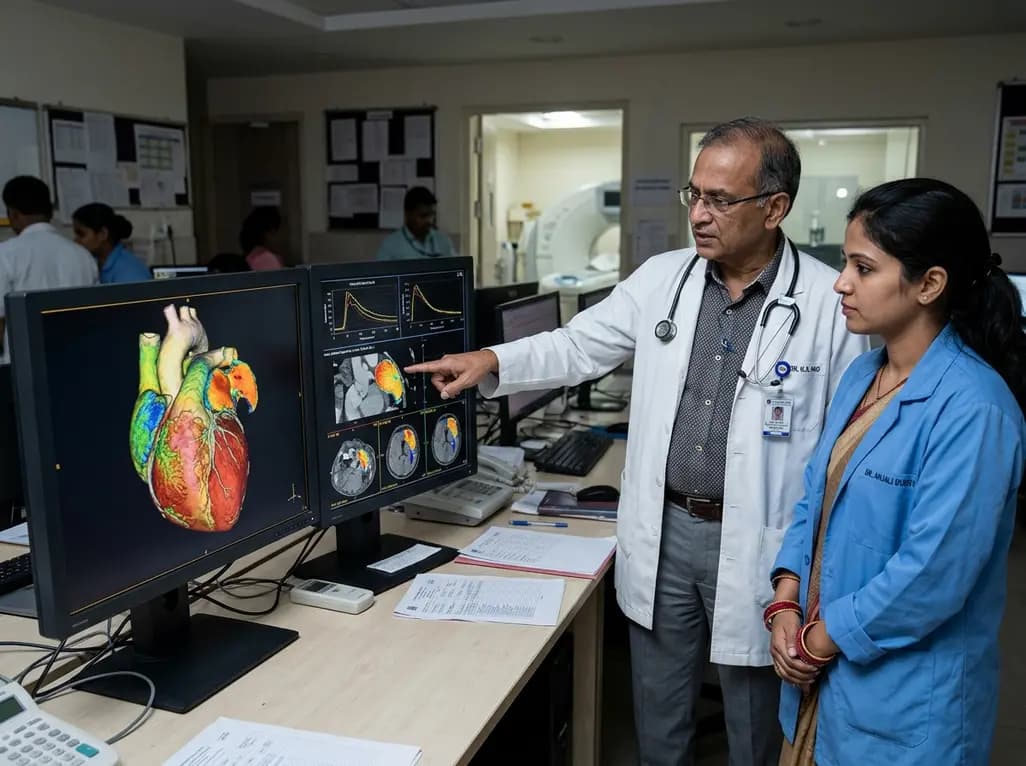
Dynamic contrast 4DCT enables precise mapping of left atrial appendage blood transport in atrial fibrillation. By quantifying regional stasis, wash-in kinetics, and residence time, this imaging advance offers clinician-tailored thromboembolic risk stratification beyond standard clinical scores.
Today

A systematic review and meta-analysis highlights the substantial impact of plyometric jump training on jump performance, reactive strength, and landing kinematics in female team-sport athletes, providing evidence-based programming guidelines for sports medicine and orthopedics.
Today

India is poised to transform chronic disease management through wearable health technology. Discover how continuous remote monitoring and predictive algorithms empower clinicians to detect early cardiovascular signals, personalize metabolic interventions, and deliver equitable preventive care across populations.
Today
