.webp&w=384&q=75)

Loading, please wait...
Loading, please wait...

Researchers have recently achieved a breakthrough by synthesizing fused metallo-carbaporphyrin-embedded graphene nanoribbon (GNR) segments. This innovation holds significant potential for NIR-II photothermal therapy and advanced medical imaging. These segments function as precise model systems for larger graphene structures. Furthermore, they address long-standing synthetic challenges in the field of carbon-based nanomaterials.
The study highlights the use of hexa-peri-hexabenzocoronene-fused carbaporphyrin moieties to create specialized GNR segments. These segments feature two palladium-carbaporphyrin cores with multiple metal-carbon bonds. Consequently, the resulting structure displays intense absorption features within the NIR-II spectral region. This specific wavelength is crucial for deep-tissue penetration in oncological applications. Moreover, the ligand-to-metal charge transfer (LMCT) excited state facilitates efficient energy relaxation. This relaxation occurs primarily through nonradiative decay, which directly translates to superior photothermal conversion.
The rigid, palladium-incorporated backbone significantly enhances both photo- and thermal stability. This structural integrity effectively prevents the photodegradation that commonly affects organic dyes. Therefore, these GNR segments offer a more reliable option for clinical environments. Additionally, the LMCT-driven pathway allows for high photothermal conversion efficiencies (PCEs) when clinicians use 980 or 1064 nm photoirradiation. Because these materials maintain their properties under intense light, they represent a durable solution for targeted cancer treatment. The researchers emphasize that these insights will guide the future solution-phase synthesis of atomically precise hybrids.
GNR segments are suitable because they possess unique electronic features and intense absorption in the NIR-II window. This allows for deeper tissue penetration and high heat generation for destroying tumor cells.
The incorporation of palladium into the carbaporphyrin core creates multiple metal-carbon bonds. This rigid backbone ensures the material remains stable under light and heat, preventing the breakdown typical of other organic materials.
The ligand-to-metal charge transfer (LMCT) pathway allows the molecule to relax after light absorption through heat generation rather than light emission. This efficiency makes it an ideal mechanism for destroying localized tumors via heat.
Disclaimer: This content is for informational and educational purposes only. It does not constitute medical advice or a professional recommendation. Refer to the latest local and national guidelines for clinical practice.
References
Zong Z et al. Fused Metallo-Carbaporphyrin-Embedded Graphene Nanoribbon Segments. J Am Chem Soc. 2026 Apr 28. doi: 10.1021/jacs.6c05014. PMID: 42048662.
Hong G et al. Near-infrared-II fluorescence imaging in life sciences. Nature Reviews Materials. 2017;2:17056.
Zhu S et al. Recent progress in NIR-II fluorescence imaging. Advanced Materials. 2019;31(45):1900321.

Read summarized clinical updates, watch expert medical content, and earn CME certifications right from your smartphone.
Open your smartphone camera to scan and install.





Researchers have developed Pd-carbaporphyrin-embedded graphene nanoribbons that improve NIR-II photothermal therapy through high stability and conversion ef...
5 months ago

Co-administering antiseizure medications and DOACs frequently causes pharmacokinetic interactions, subtherapeutic drug levels, and thromboembolic failures. This review highlights enzyme induction risks, unpredictable outcomes with levetiracetam, and the vital role of therapeutic drug monitoring.
Today

Demanding exhaustive hormonal profiling can inadvertently discourage clinical studies involving females. Methodological standards must align with the specific scientific question to expand, not restrict, equitable evidence for women.
Today
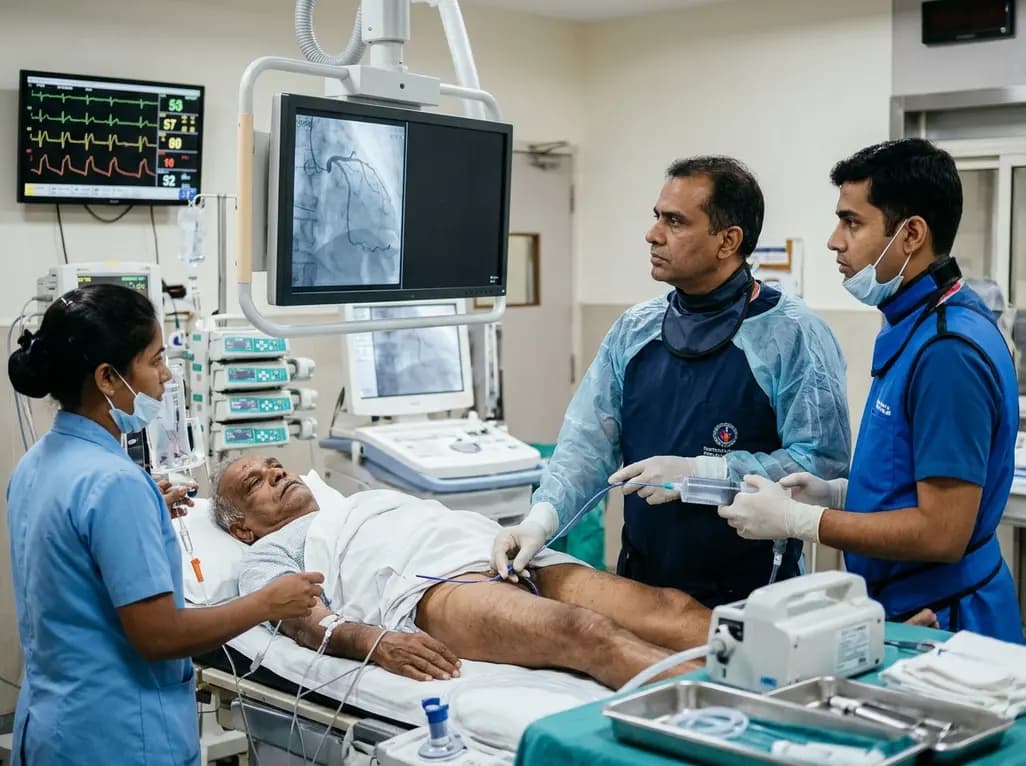
An elderly man with partially repaired Tetralogy of Fallot presented with STEMI caused by coronary embolism rather than atherosclerosis. Successful treatment with sustained mechanical aspiration thrombectomy underscores the vital need for high clinical vigilance in adult congenital heart disease.
Today

A comparative review of tension band wiring and intramedullary screw fixation in thumb metacarpophalangeal arthrodesis, evaluating union rates, hardware complications, and clinical outcomes.
Today

Following regulatory scrutiny from FSSAI regarding promotional representations and lean muscle preservation claims, Dr. Reddy's Laboratories and Nestlé Health Science are currently reviewing the branding and marketing strategy for their joint nutritional supplement Celevida GLP+.
Today
