.webp&w=384&q=75)

Loading, please wait...
Loading, please wait...

Understanding human handedness development has long challenged neuroscientists and developmental clinicians. While ninety percent of the global population demonstrates right-hand preference, genetic inheritance alone cannot fully explain this distribution. Traditional models treat manual asymmetry as a static inherited trait. However, emerging perspectives conceptualize laterality as a dynamic phenotype shaped by biology and cultural context. Niche construction theory provides a valuable framework to explain how motor lateralization unfolds through continuous interactions between individuals and culturally constructed environments.
Niche construction theory posits that organisms actively modify their external environments, generating ecological legacies that reshape developmental trajectories. In human manual laterality, societies construct deeply biased physical and cultural niches. These developmental niches encompass asymmetrical tools, architectural designs, educational practices, and symbolic social customs. Consequently, motor phenotypes emerge through continuous feedback loops between developing nervous systems and culturally engineered environments. For example, infants routinely encounter feeding implements, toys, and utensils that guide motor actions toward a specific limb. In addition, social interactions reinforce these preferences through direct parental modeling and pedagogical instruction. Therefore, manual lateralization stabilizes as children interact with these structured environments over time. Rather than viewing lateral preference as an innate neurological constant, clinicians should recognize that manual specialization reflects ongoing developmental negotiation. This evolutionary framework emphasizes that external cultural scaffolding cooperates with intrinsic neurodevelopment. Furthermore, this dynamic interplay explains why handedness phenotypes vary across distinct geographic regions and historical eras.
Classical genetic paradigms have failed to isolate definitive single genes determining dextrality or sinistrality. Genome-wide association studies identify multiple polygenic loci, but each locus contributes minimal variance to overall manual preference. Furthermore, monozygotic twins frequently display discordant hand preferences, proving that identical genotypes do not guarantee identical lateralization. Epigenetic modifications explain some variation, but non-genetic inheritance systems provide essential missing explanatory power. Organisms inherit not only genomic material but also structured physical habitats, parental habits, and cultural conventions. Evolutionary theorists categorize these mechanisms into genetic, epigenetic, behavioral, and symbolic inheritance systems. When parents repeatedly present items to an infant's right hand, they transmit a cultural behavioral bias. Moreover, standard writing directions, classroom tools, and domestic implements sustain this selective pressure. Consequently, population-level dextrality reflects cumulative cultural niche construction acting upon subtle biological asymmetries. Appreciating this multifaceted inheritance allows pediatricians to understand stable population lateralization patterns without relying on outdated deterministic models.
In many cultural niches, particularly across India, social customs impose strong normative demands regarding hand usage. Traditional cultural norms assign distinct functional roles to each hand. Specifically, religious ceremonies, dining, and greetings require dextral execution, whereas personal hygiene associates strictly with the left hand. Consequently, left-handed children frequently encounter intense social pressure, home discouragement, and classroom correction. This cultural suppression produces an artificial developmental phenotype known as forced dextrality. Although biological sinistrality organizes the underlying cerebral cortex, the child adopts right-hand usage for public motor tasks. Pediatricians and neurologists in India frequently evaluate children undergoing this coercive conversion. Importantly, forced hand switching can trigger notable developmental setbacks. Affected children often exhibit fine motor fatigue, reduced writing speed, frustration, and emotional distress. Furthermore, interrupting natural cerebral dominance can occasionally provoke transient speech disturbances, such as developmental stuttering. Therefore, clinicians must counsel families that sinistrality is a benign, healthy neurological variant requiring ergonomic accommodation rather than behavioral correction.
Clinicians often describe motor lateralization as a simple binary trait, yet human behavior reveals a multidimensional continuum. Standard clinical assessments categorize patients strictly as left- or right-handed. However, thorough functional evaluations demonstrate substantial behavioral variability across different motor tasks. Many individuals display mixed handedness, employing the left hand for gross motor power and the right hand for delicate precision. Niche construction theory clarifies this complexity by emphasizing that distinct motor activities involve unique tool interfaces and instructional histories. For instance, an individual may play sports left-handed while writing right-handed due to targeted cultural training. Furthermore, sophisticated bimanual coordination depends upon rapid interhemispheric transfer via the corpus callosum. In preterm or low-birthweight infants, delayed callosal maturation frequently leads to inconsistent manual lateralization. Consequently, pediatric neurologists should assess task-specific proficiencies rather than assuming uniform dominance. Recognizing a multiplicity of handedness helps clinicians distinguish benign motor adaptations from pathological lateralization caused by early central nervous system pathology.
Applying niche construction principles to clinical practice refines neurodevelopmental surveillance and patient management. During routine pediatric assessments, physicians should observe the natural emergence of hand preference without imposing rigid expectations. Most children establish stable lateralization between three and four years of age. If an infant displays an exclusive hand preference before twelve months, clinicians must immediately investigate for contralateral hemiparesis or intracranial pathology. Conversely, when older children exhibit persistent ambilateral confusion alongside poor fine motor coordination, developmental coordination disorder warrants diagnostic evaluation. Primary care physicians should also advocate for ergonomic modifications in schools. Left-handed students require specialized scissors, appropriate desks, and ergonomic writing tools to prevent chronic musculoskeletal fatigue. Additionally, pediatricians should reassure parents that sinistrality does not impair cognitive capacity or academic potential. In adult stroke rehabilitation, evaluating a patient's historical niche and hand preference guides effective neuroplastic retraining. Ultimately, respecting the interplay between constructed environments and biological architecture optimizes motor outcomes across life stages.
The global dominance of right-handedness results from an intricate interaction between polygenic predispositions and cultural niche construction. While subtle biological asymmetries establish an initial baseline, human societies construct heavily right-biased physical and social environments. Tools, educational methods, and cultural norms consistently reinforce right-hand usage across generations. Consequently, manual laterality stabilizes at the population level through continuous feedback between developing nervous systems and culturally engineered material niches, rather than simple genetic determinism.
Forcing a naturally left-handed child to use their right hand disrupts innate cerebral dominance and cortical motor pathways. This coercive intervention frequently triggers frustration, emotional distress, and poor self-esteem during early childhood. Furthermore, children subjected to hand switching often experience transient fine motor clumsiness, impaired handwriting speed, and academic difficulties. In some vulnerable children, interrupting natural hemispheric specialization may precipitate speech disorders, including developmental stuttering, requiring supportive pediatric reassurance and cessation of forced switching.
Hand preference typically emerges between eighteen and twenty-four months, consolidating into a consistent pattern between three and four years of age. Clinicians should evaluate laterality if an infant demonstrates strong unimanual preference before twelve months, as this early asymmetry often signals contralateral hemiparetic cerebral palsy. In contrast, school-age children with persistent motor confusion, poor bimanual coordination, or severe writing fatigue should undergo comprehensive screening for developmental coordination disorder or unaddressed ergonomic challenges.
Disclaimer: This content is for informational and educational purposes only and should not be considered medical advice. Always consult a qualified healthcare professional regarding any medical condition or treatment. Refer to the latest local and national guidelines for clinical practice.
References

Read summarized clinical updates, watch expert medical content, and earn CME certifications right from your smartphone.
Open your smartphone camera to scan and install.





Niche construction theory reframes human handedness as a dynamic phenotype shaped by biology and cultural niches. For Indian clinicians, understanding forced hand switching and developmental laterality improves pediatric care, developmental surveillance, and parental counseling.
Today
A network meta-analysis of 10 RCTs comprising 37,923 patients reveals that SGLT2 inhibitors offer the broadest cardiorenal protection in diabetic kidney disease. Dapagliflozin reduced kidney outcomes more than semaglutide, while finerenone increased hyperkalaemia and treatment discontinuation rates.
Today
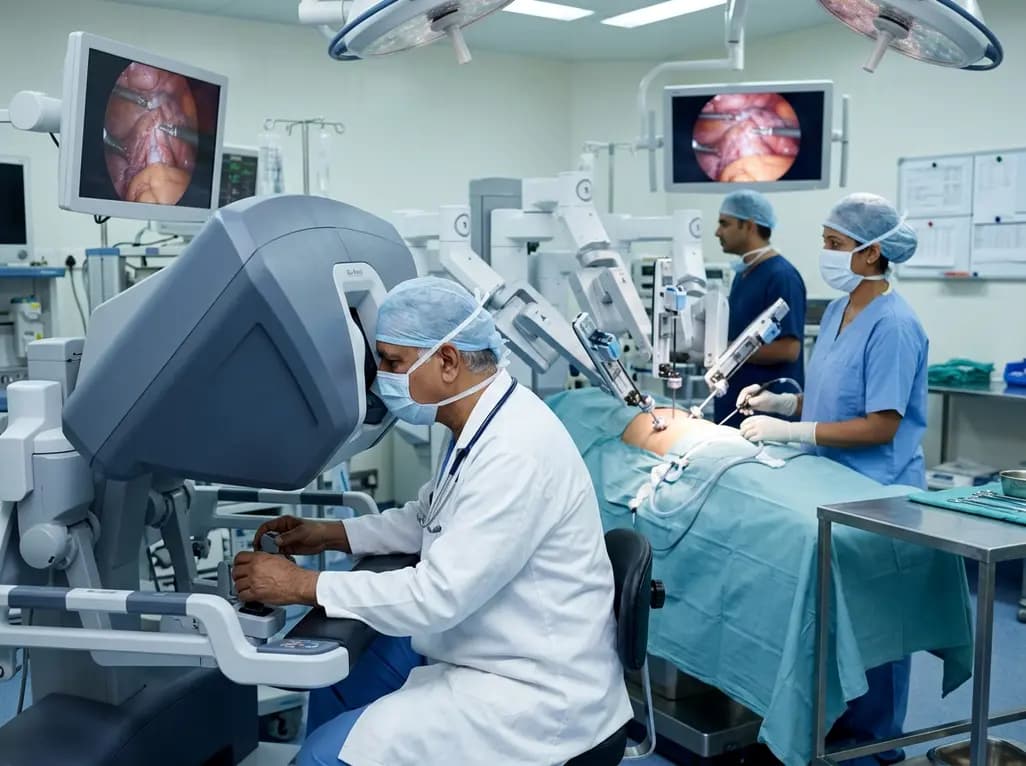
Surgical robotics is redefining modern operating theaters by replacing extensive open incisions with micro-dexterity and stereoscopic 3D vision. Multi-specialty surgeons highlight how robotic platforms mitigate tissue trauma, enhance functional organ preservation, and shorten postoperative hospital recovery.
Today
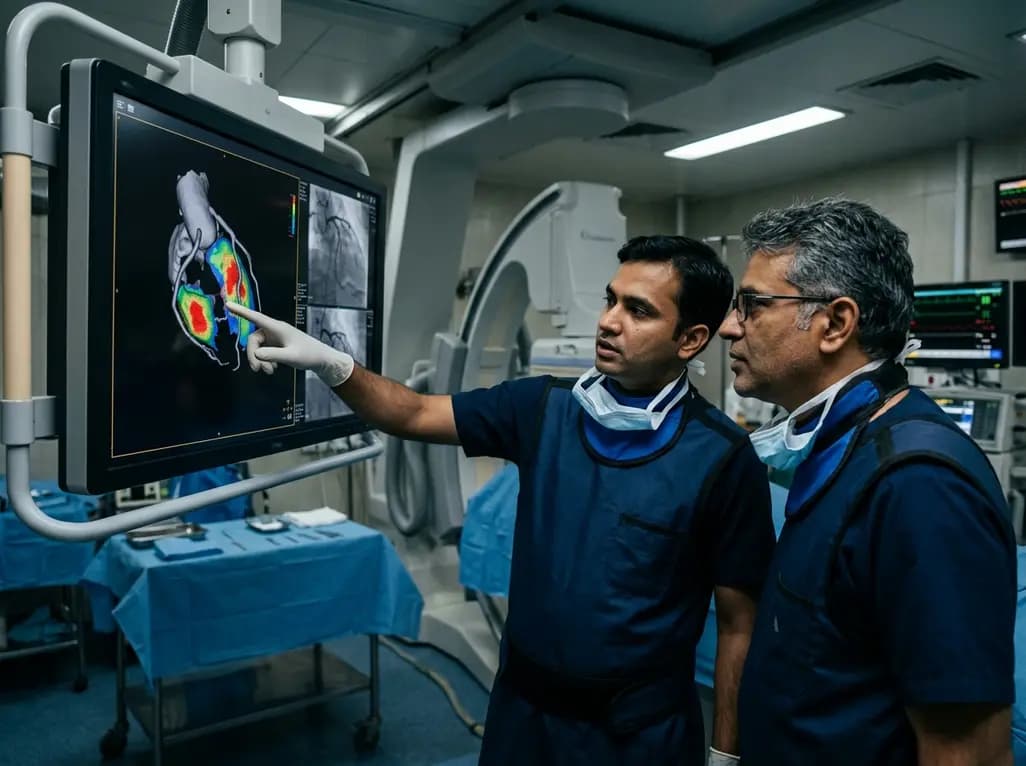
A groundbreaking study demonstrates that coronary angiography-derived radial wall strain reflects plaque morphology, predicting future rupture and erosion.
Today
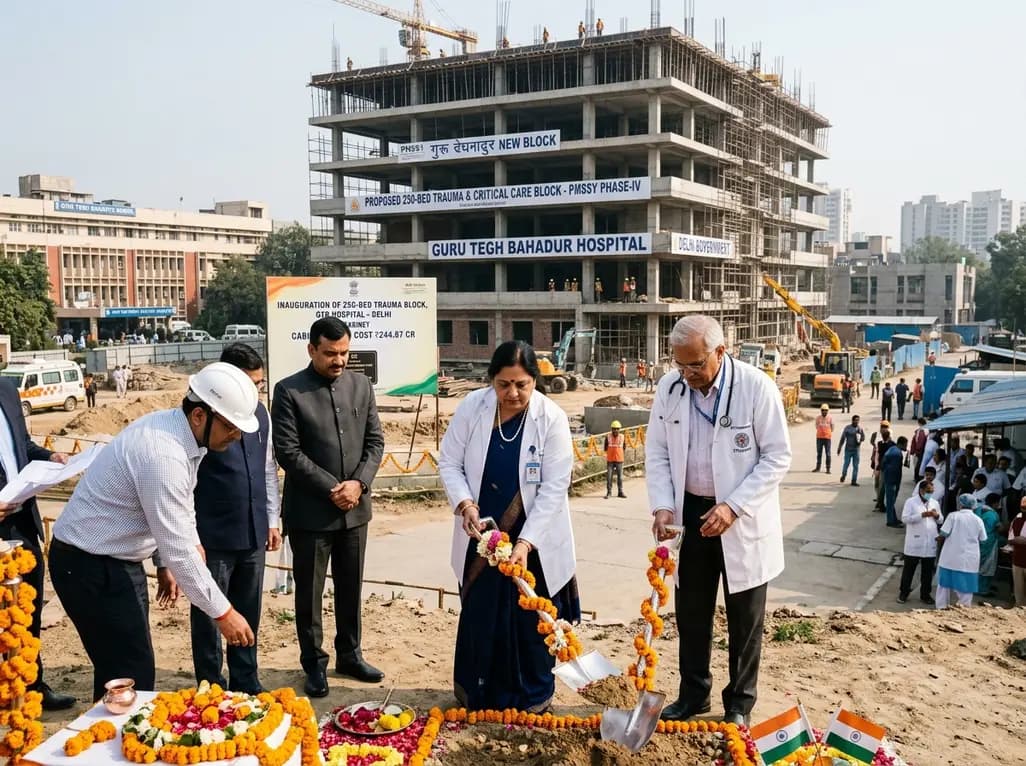
The Delhi Cabinet has cleared an advanced seven-storey critical care expansion at Guru Tegh Bahadur Hospital under PMSSY Phase-IV. Costing Rs 244.87 crore, the new wing features 250 beds, specialized intensive care units, modern operation theatres, and round-the-clock emergency diagnostics for East Delhi.
Today

A landmark case demonstrates that favorable continuous glucose monitoring metrics cannot rule out SGLT2 inhibitor-associated euglycemic diabetic ketoacidosis. Clinicians must educate patients on symptom-based sick-day rules, uninterrupted basal insulin therapy, and proactive blood ketone testing.
Today
