.webp&w=384&q=75)

Loading, please wait...
Loading, please wait...

Cutaneous leishmaniasis is a significant global health issue that often affects travelers returning from endemic regions. Recently, medical professionals identified the first imported case of New World cutaneous leishmaniasis in Romania. A 25-year-old woman developed progressive skin lesions after visiting Panama and Costa Rica. Because Romania is a non-endemic country, the diagnosis initially proved difficult.
Initially, a standard skin biopsy showed only nonspecific inflammation. Consequently, the medical team performed a second biopsy. This deeper investigation successfully identified amastigotes within the patient's macrophages. To confirm the specific species, specialists used advanced molecular tools. Both ITS1 sequencing and hsp70 phylogenetic analysis verified the presence of Leishmania panamensis.
Clinicians chose oral miltefosine as the primary treatment for this patient. She followed a 28-day regimen, which led to a gradual but steady improvement of her skin lesions. Ultimately, the ulcers healed completely, leaving only minor atrophic scars. Most importantly, follow-up evaluations after 473 days showed no signs of disease relapse.
This case emphasizes why doctors in non-endemic regions must stay alert. Early recognition of New World cutaneous leishmaniasis prevents the progression to more severe mucocutaneous forms. Therefore, healthcare systems should prioritize access to molecular diagnostic tools for travelers with suspicious skin lesions.
Symptoms typically include progressive, painless skin ulcers that develop weeks or months after a sandfly bite. These lesions often appear on exposed areas like the arms or face.
Miltefosine is an oral medication usually taken for 28 days. It is highly effective against specific species like L. panamensis and offers a convenient alternative to injectable treatments.
Molecular tests such as PCR and hsp70 sequencing are essential for species identification. Different Leishmania species require different management strategies and carry varying risks of complications.
Disclaimer: This content is for informational and educational purposes only. It does not constitute medical advice or a professional diagnosis. Always seek the advice of your physician or other qualified health provider with any questions you may have regarding a medical condition. Refer to the latest local and national guidelines for clinical practice.
References
Mihalca AD et al. First imported case of New World leishmaniasis in Romania: diagnostic and therapeutic challenges in a non-endemic country. Infect Dis Poverty. 2026 May 02. doi: undefined. PMID: 42067954.
Soto J, Berman J. Treatment of New World cutaneous leishmaniasis with miltefosine. Trans R Soc Trop Med Hyg. 2006 Dec;100 Suppl 1:S34-40. doi: 10.1016/j.trstmh.2006.02.022.
World Health Organization. Leishmaniasis Fact Sheet. [Online] Available at: https://www.who.int/news-room/fact-sheets/detail/leishmaniasis

Read summarized clinical updates, watch expert medical content, and earn CME certifications right from your smartphone.
Open your smartphone camera to scan and install.





A case report of Romania's first New World cutaneous leishmaniasis case, highlighting the success of molecular diagnostics and miltefosine therapy....
5 months ago
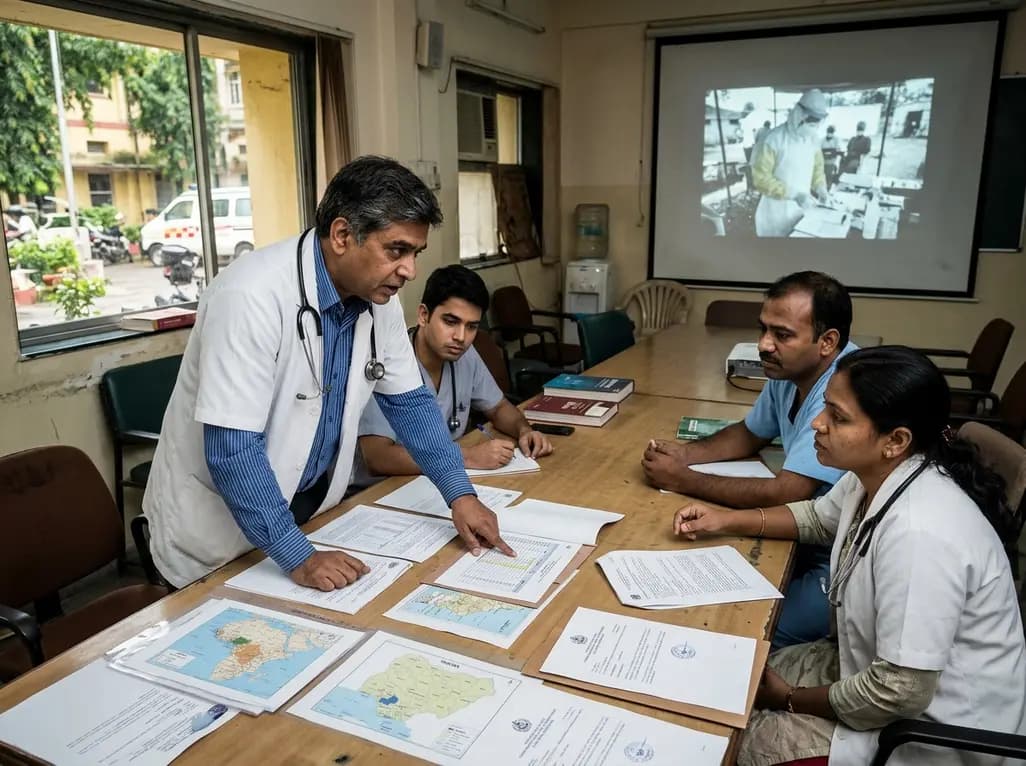
Following Nigeria's first recorded Ebola case linked to regional travel, the Africa CDC has convened an emergency ministerial summit. This alert underscores critical clinical priorities for healthcare professionals, including differentiating early viral infection from malaria, implementing barrier nursing, and triage.
Today

Leucine Rich Bio has introduced South Asia's first comprehensive vaginal microbiome test, BugSpeaks. By profiling microbial dysbiosis, pathogens, and antimicrobial resistance, this next-generation diagnostic platform provides clinicians with deeper insights into recurrent infections, fertility, and reproductive health.
Today

Review how tailored exercise programs benefit frail older patients with heart failure. Explore pathophysiological mechanisms, individualized training prescriptions, and strategies to overcome adherence barriers in clinical practice.
Today

This comparative study evaluates posterior labral tears with and without glenohumeral instability, highlighting distinct demographic patterns, MRI underestimation in stable shoulders, and successful arthroscopic repair outcomes.
Today

A clinical study demonstrates that early intervention with tocilizumab, either as monotherapy or bridged with corticosteroids, achieves significant proptosis reduction and resolves active inflammation in treatment-naive thyroid eye disease.
Today
