

Loading, please wait...
Loading, please wait...

The drivers of sexual dysfunction vary significantly across different conditions. For instance, in myotonic dystrophy, erectile dysfunction often stems from endocrine factors like hypogonadism. Conversely, women with Charcot-Marie-Tooth disease frequently experience changes in desire and satisfaction. These changes often correlate with disease severity. Amyloid neuropathies present a different challenge. In these cases, autonomic dysfunction leads to erectile and ejaculatory issues in men and multidimensional impairment in women.
Moreover, psychosocial distress and physical disability play a major role in conditions like Amyotrophic Lateral Sclerosis (ALS). Patients often maintain sexual interest. However, they face significant intimacy loss due to functional limitations and mobility decline. In myasthenia gravis, sexual challenges are mostly associated with comorbid mental health conditions like anxiety or depression. Furthermore, inflammatory myopathies show a high prevalence of dysfunction in both sexes. This highlights the urgent need for broad sexual health screening in clinical practice.
Consequently, the current lack of inclusive research regarding diverse orientations remains a significant barrier. Most existing studies rely on subjective questionnaires rather than objective physiological assessments. Therefore, clinicians must prioritize integrating sexual health evaluations into routine care. This proactive approach will significantly improve the overall well-being of people living with NMDs.
In men with NMDs, sexual dysfunction often manifests as erectile or ejaculatory issues. These problems may arise from hormonal imbalances like hypogonadism in myotonic dystrophy or autonomic nerve damage in amyloid neuropathies.
Yes. While men often face physiological issues like erectile dysfunction, women with conditions like Charcot-Marie-Tooth disease report significant alterations in desire and satisfaction. However, research into female-specific sexual health in NMDs remains limited compared to male-focused studies.
Disclaimer: This content is for informational and educational purposes only. It does not constitute professional medical advice, diagnosis, or treatment. Always seek the advice of your physician or other qualified healthcare provider with any questions you may have regarding a medical condition. Refer to the latest local and national guidelines for clinical practice.
References
El Kaïm A et al. Sexual health in neuromuscular diseases: Neglected challenges revealed by a scoping review. J Neuromuscul Dis. 2026 Mar 17. doi: 10.1177/22143602261434092. PMID: 41841320.
Elliott S, Birkhäuser V, Courtois F, et al. Sexual and reproductive health in neurological disorders: recommendations from the Fifth International Consultation on Sexual Medicine (ICSM 2024). Sex Med Rev. 2025 Oct 4;13(4):456-470.
Wang L, et al. Sexual dysfunction in patients with myasthenia gravis. J Neuroimmunol. 2021;358:577669.

Read summarized clinical updates, watch expert medical content, and earn CME certifications right from your smartphone.
Open your smartphone camera to scan and install.





A scoping review of 27 studies highlights that sexual dysfunction is common but under-recognized in neuromuscular diseases like ALS and myotonic dystrophy....
7 months ago

As monsoon seasons elevate arboviral disease threats, Tamil Nadu has initiated an ICMR-monitored evaluation of the tetravalent dengue vaccine in Tenkasi district. Clinicians emphasize clinical monitoring, public prevention, and high-quality early pediatric care to reduce disease morbidity across endemic regions.
Today
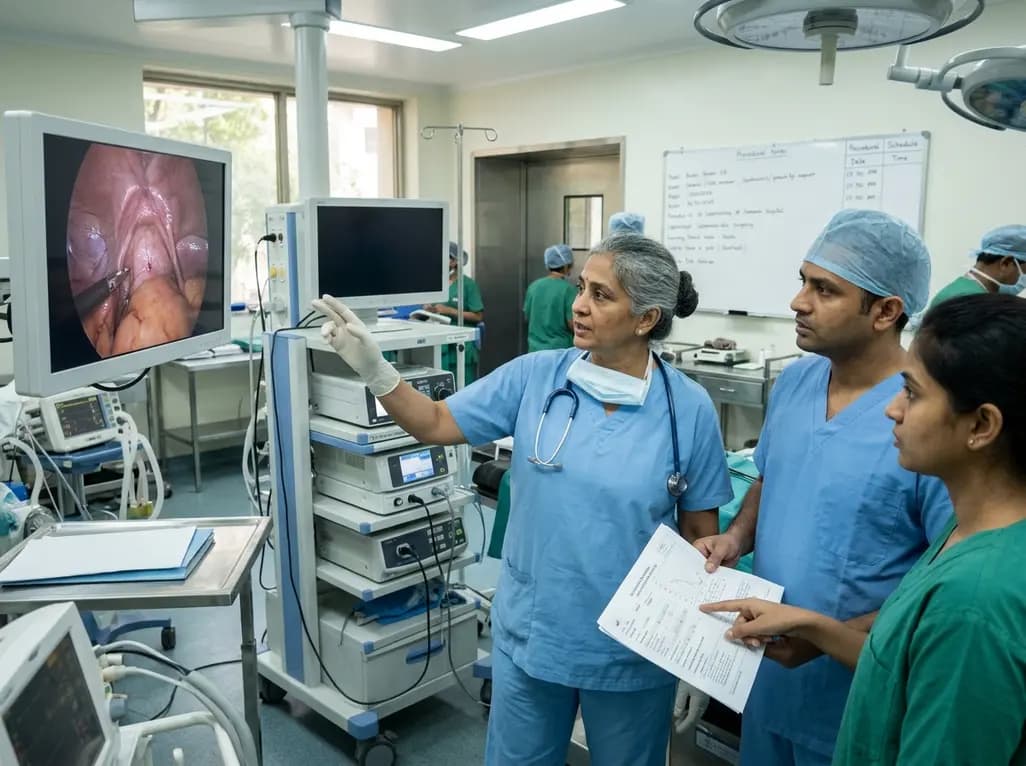
A comparative cohort study evaluates vNOTES vs TLH hysterectomy for benign conditions, demonstrating shorter operative duration, faster return to daily activities, and equivalent female sexual function scores without increased dyspareunia.
Today
Review how tailored exercise programs benefit frail older patients with heart failure. Explore pathophysiological mechanisms, individualized training prescriptions, and strategies to overcome adherence barriers in clinical practice.
Today

This comparative study evaluates posterior labral tears with and without glenohumeral instability, highlighting distinct demographic patterns, MRI underestimation in stable shoulders, and successful arthroscopic repair outcomes.
Today

A clinical study demonstrates that early intervention with tocilizumab, either as monotherapy or bridged with corticosteroids, achieves significant proptosis reduction and resolves active inflammation in treatment-naive thyroid eye disease.
Today
