.webp&w=384&q=75)

Loading, please wait...
Loading, please wait...

Functional seizures present formidable diagnostic and therapeutic challenges across neurology and psychiatry, particularly after traumatic brain injury. Consequently, identifying objective neurobiological mechanisms underlying symptom resolution has become an urgent clinical priority. Recent clinical trials evaluating neurobehavioral therapy functional seizures protocols demonstrate that structured behavioral interventions directly reorganize abnormal functional brain networks. Therefore, resting-state neuroimaging provides vital empirical insight into recovery pathways. This article examines the latest functional MRI evidence, details circuit-level therapeutic mechanisms, and explores practical clinical applications for modern multidisciplinary neurological care.
Functional seizures represent paroxysmal alterations in motor control, sensation, or consciousness without epileptiform electroencephalographic discharges. Historically, clinicians classified these episodes under conversion disorders or psychogenic nonepileptic seizures. However, advanced functional neuroimaging confirms that functional seizures originate from genuine network disruptions rather than structural lesions. Specifically, key neuroanatomical nodes like the anterior insular cortex, anterior cingulate cortex, and temporoparietal junction show pronounced functional connectivity abnormalities. Because these hubs coordinate emotional regulation, visceral sensation, and cognitive appraisal, their miscommunication triggers abrupt paroxysmal disruptions. Additionally, individuals with prior traumatic brain injuries exhibit heightened vulnerability to network disintegration. Such trauma frequently destabilizes emotional circuits and impairs executive coping mechanisms. Consequently, normal sensory and emotional stressors trigger sudden involuntary events that mimic epileptic seizures. Furthermore, chronic psychological distress perpetuates maladaptive corticolimbic loops, which further weakens volitional motor control. When these vital brain networks fail to synchronize properly, individuals lose functional self-regulation. Therefore, functional seizures reflect authentic, measurable neurobiological dysfunction across distributed neural systems. Recognizing these organic connectivity alterations helps clinicians deliver compassionate, validated care without reinforcing psychogenic skepticism.
Neurobehavioral therapy incorporates structured cognitive and behavioral methodologies specifically designed for functional neurological presentations. During 12 weekly sessions, trained clinicians guide patients through systematic symptom tracking, trigger identification, and emotional regulation strategies. Furthermore, therapists teach specialized somatic grounding techniques that actively interrupt pre-ictal sensations. As patients practice these skills, they actively dampen autonomous hyperarousal and reassert conscious control over distress responses. Consequently, this targeted intervention does far more than modify overt behavior; it systematically recalibrates disrupted neural communication. Recent resting-state functional magnetic resonance imaging shows that neurobehavioral therapy restores functional connectivity between the anterior insula and surrounding cognitive control networks. In addition, the therapy stabilizes aberrant signaling within the anterior cingulate cortex, which directly governs affective processing. Therefore, behavioral modifications produce quantifiable neurophysiologic reorganization across critical neural hubs. Patients no longer experience uncontrolled amplification of visceral sensations because emotional appraisal centers regain top-down cortical control. Thus, neurobehavioral therapy acts as a true neurobiological rehabilitative tool that bridges psychological restructuring and neurocircuit repair. Clinicians can confidently recommend this intervention as a targeted, neuroplasticity-driven treatment modality.
Resting-state functional magnetic resonance imaging evaluates spontaneous low-frequency fluctuations in blood-oxygen-level-dependent signals without demanding active task performance. Consequently, this imaging modality uniquely captures intrinsic functional architecture and baseline communication across distant cerebral regions. In a rigorous clinical trial led by Jerzy Szaflarski and colleagues, investigators examined seed-based functional connectivity before and after 12 weeks of neurobehavioral therapy. The study enrolled 40 patients suffering from both traumatic brain injury and functional seizures, alongside 55 control participants with brain injury alone. Researchers placed functional seeds in the anterior insula, anterior cingulate cortex, and temporoparietal junction to monitor network dynamics. Over the treatment course, patients who completed neurobehavioral therapy exhibited robust shifts in seed-to-whole-brain functional connectivity. Specifically, aberrant hyperconnectivity and pathological network segregation observed at baseline significantly normalized after therapy. Furthermore, these neuroimaging improvements occurred in parallel with dramatic reductions in weekly seizure frequency. In contrast, control subjects receiving standard supportive medical care showed no comparable functional network reorganization over the same interval. Thus, longitudinal functional neuroimaging provides empirical biological proof that psychotherapeutic success corresponds to measurable, restorative neuroplastic adjustments.
The therapeutic benefits of neurobehavioral therapy extend significantly beyond reduced seizure episodes. In longitudinal clinical evaluations, patients systematically recorded daily seizure occurrence while completing validated psychiatric inventories. Notably, participants exhibited substantial improvements in comorbid anxiety, depressive symptoms, and overall psychosocial functioning after completing the intervention. Statistical modeling revealed that reductions in seizure frequency closely correlated with functional connectivity changes between frontoparietal control networks and limbic regions. Furthermore, patients with longer pre-existing disease durations still demonstrated meaningful neuroplastic responses, proving that chronicity does not prevent recovery. Because chronic functional seizures frequently cause profound social isolation and occupational impairment, these behavioral gains fundamentally transform patient quality of life. Additionally, participants reported improved subjective somatic control, indicating that interoceptive processing regained functional stability. When patients observe tangible reductions in physical symptoms, their self-efficacy improves markedly. Consequently, this psychological reinforcement accelerates positive neuroplastic remodeling in a beneficial feedback loop. Therefore, neurobehavioral therapy provides comprehensive clinical relief by concurrently targeting psychological distress and underlying network anomalies.
Integrating neurobehavioral protocols into routine neurological care requires structured interdisciplinary coordination among neurologists, psychiatrists, and clinical psychologists. Initially, neurologists must establish an unequivocal diagnosis through video-electroencephalography monitoring, which prevents inappropriate antiepileptic drug escalations. Once clinicians confirm functional seizures, they must communicate the diagnosis clearly and transparently to the patient. Research shows that clear diagnostic communication represents an indispensable first therapeutic step. Subsequently, clinicians should introduce neurobehavioral therapy as an evidence-based neurorehabilitative pathway rather than an exclusionary psychiatric referral. Furthermore, health systems must train more clinical psychologists and allied professionals in standardized functional neurological disorder protocols. In regions where access to specialized therapists remains limited, clinicians can effectively utilize telehealth platforms to deliver manualized neurobehavioral therapy. Additionally, primary care physicians and emergency room teams must recognize that functional seizures represent network disorders that require psychological rehabilitation instead of escalating sedative medications. Consequently, establishing multi-tiered referral pathways ensures that patients receive prompt, personalized behavioral interventions. By bridging neurological diagnostics with structured behavioral psychotherapy, modern clinical practice can achieve durable functional recovery and lower hospital readmissions.
Functional seizures produce observable paroxysmal alterations in movement and consciousness that closely resemble epileptic episodes. However, functional seizures occur without abnormal epileptiform cortical electrical discharges on electroencephalography. Instead, functional seizures stem from disrupted functional communication across brain networks governing emotional regulation, interoception, and cognitive processing.
Neurobehavioral therapy incorporates structured cognitive reframing, emotional regulation techniques, and somatic grounding exercises. Longitudinal resting-state functional neuroimaging demonstrates that this structured therapy normalizes aberrant functional connectivity within key networks, particularly between the anterior insula, anterior cingulate cortex, and temporoparietal junction, thereby restoring cortical control over distress.
Yes, clinical trial findings indicate that disease duration does not prevent therapeutic success. Patients with longstanding functional seizures still demonstrate substantial neuroplastic reorganization and significant reductions in seizure frequency after completing 12 weeks of neurobehavioral therapy, confirming that brain networks remain capable of restorative healing.
Disclaimer: This content is for informational and educational purposes only and should not be considered medical advice. Always consult a qualified healthcare provider for diagnosis and treatment recommendations. Refer to the latest local and national guidelines for clinical practice.
References

Read summarized clinical updates, watch expert medical content, and earn CME certifications right from your smartphone.
Open your smartphone camera to scan and install.





A resting-state fMRI study demonstrates that neurobehavioral therapy significantly reduces functional seizure frequency by restoring functional connectivity across the anterior insula, anterior cingulate cortex, and temporoparietal junction, providing an objective neural mechanism for psychotherapeutic efficacy.
Today

Left bundle branch pacing is an emerging physiological resynchronization strategy for heart failure. While observational data and some trials show benefits over biventricular pacing, divergent trial outcomes highlight the importance of confirmed conduction capture and specialized operator technique.
Today

A retrospective study of 86,012 pregnancies demonstrates that size-selective cfDNA enrichment boosts mean fetal fraction to 18.88% and achieves a 59.20% PPV for fetal copy number variants. However, 85.83% of CNVs showed size discrepancies, underscoring the mandatory role of confirmatory microarray testing.
Today
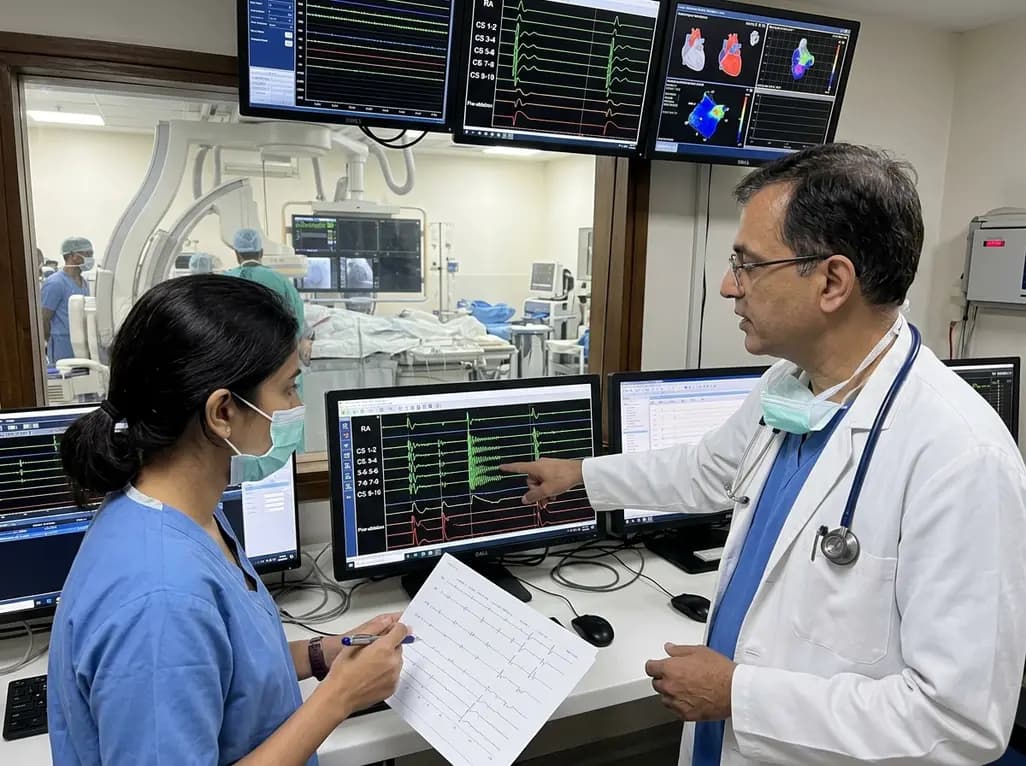
Radiofrequency catheter ablation of the cavotricuspid isthmus successfully terminates typical atrial flutter. This article reviews the mechanisms driving coronary sinus electrogram changes, wavefront activation pathways, and clinical criteria to verify bidirectional block during electrophysiology studies.
Today

A recent investigation examined load-dependent kinetic and kinematic profiles during two-way ballistic exercise across 30% to 80% 1-RM. Findings highlight load effects on velocity, impulse, and power, offering sports physicians objective guidance for neuromuscular conditioning and rehabilitation.
Today

A cross-sectional study demonstrates that increased BMI in adolescents significantly enhances mandibular length and alters salivary adipokines like adiponectin and resistin, providing novel insights into craniofacial growth and orthodontic planning.
Today
