.webp&w=384&q=75)

Loading, please wait...
Loading, please wait...
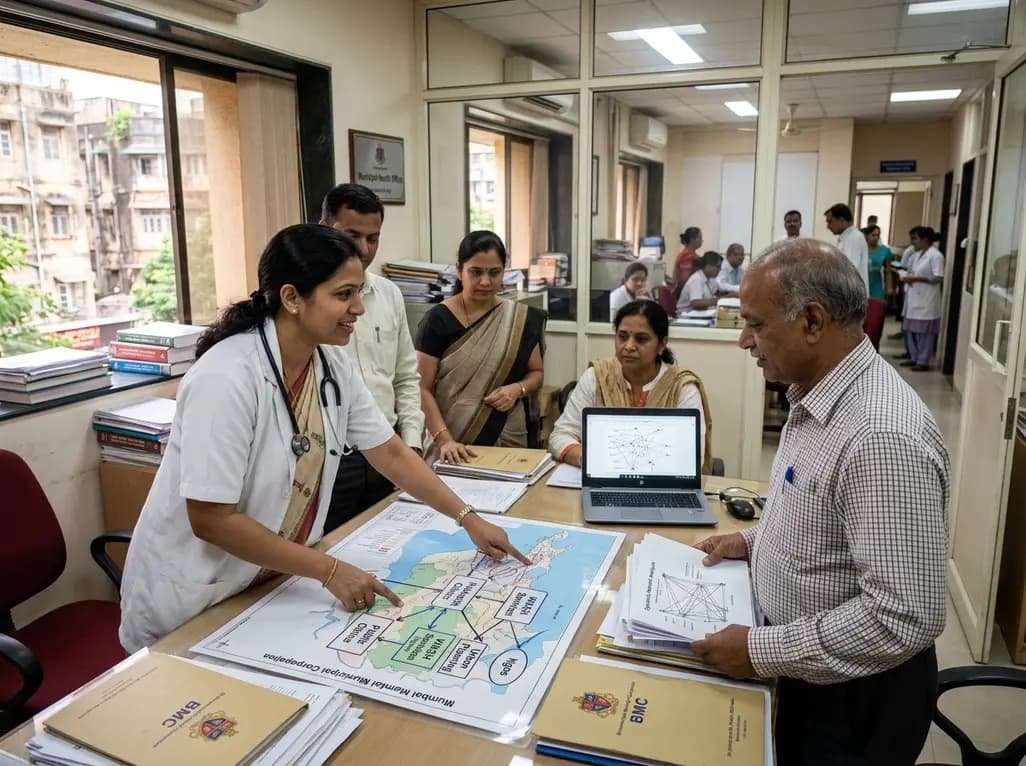
Modern urban public healthcare faces complex systemic hurdles that require robust cross-sector coordination. Consequently, municipal health promotion increasingly relies on intersectoral networks to address deep health disparities across vulnerable communities. Fragmented social, educational, and medical infrastructures often impede the delivery of equitable care. However, frontline professionals regularly establish collaborative ties to bridge these institutional gaps. A landmark convergent mixed-methods study recently investigated how fourteen health practitioners navigate these intricate multi-agency environments. Researchers effectively combined qualitative interviews with egocentric network analysis to explore professional networking behaviours. Specifically, they assessed quantitative structural measures, including connectivity, centrality, and clustering coefficients. Furthermore, the investigators evaluated deductive qualitative themes to understand authentic practitioner experiences. The qualitative findings clearly demonstrated that network strategies remain remarkably adaptive and situational. Practitioners rarely depend on rigid operational plans. Instead, daily administrative routines, severe resource constraints, and evolving community needs continuously shape practical coordination. Therefore, local healthcare leaders must appreciate the organic development of these interdisciplinary ties. By understanding how frontline workers navigate municipal settings, health authorities can better support primary care teams.
Health professionals employ multiple interactive approaches rather than maintaining a single isolated strategy. For instance, the mixed-methods study highlighted how bonding builds trust and consolidates relationships among familiar colleagues. This interpersonal bonding provides emotional support and psychological safety during stressful operational periods. Simultaneously, practitioners utilise clustering to assemble specialized working groups dedicated to specific municipal tasks. These cohesive clusters enable focused problem solving, rapid case management, and seamless interprofessional communication. In addition, formalisation introduces structured protocols and regulatory routines that protect program continuity against staff turnover. Formal administrative mechanisms anchor collaborative processes within organizational hierarchies. Consequently, practitioners merge these approaches into sophisticated hybrid strategic repertoires. Rather than classifying professionals into rigid operational archetypes, the findings demonstrate significant tactical fluidity. Clinicians and coordinators alternate between informal bonding and structured arrangements depending on immediate workflow demands. Moreover, this flexibility allows teams to bypass bureaucratic delays when delivering community health services. Thus, hybrid networking represents a practical coping mechanism in fragmented municipal landscapes. Such systemic adaptability preserves healthcare equity across complex urban settings.
A striking revelation from the mixed-methods investigation involves how bridging relationships develop across sectors. Interestingly, bridging emerged largely unintentionally through routine daily coordination rather than deliberate strategic planning. Healthcare professionals frequently connected external partners simply to resolve immediate patient concerns. These partners included social workers, educators, and municipal officers. In network analysis, actors who connect disconnected groups occupy structural brokerage positions. However, the study uncovered that practitioners rarely recognized their own structural prominence as brokers. They viewed their outreach as routine administrative communication rather than influential system brokering. This disconnect demonstrates that brokerage functions as an emergent property of everyday service delivery. Nevertheless, these unacknowledged brokers play a vital role in dismantling departmental silos. They channel critical epidemiological information, coordinate multidisciplinary case conferences, and align disparate agency resources. Because professionals overlook their strategic bridge role, organizations frequently fail to support these vital functions. If an unrecognized broker departs, crucial intersectoral linkages often collapse unnoticed. Therefore, municipal leadership must proactively map network positions and validate informal brokerage roles.
Integrating qualitative interviews with quantitative egocentric metrics showed only partial alignment between reported strategies and observed structures. On one hand, practitioners reported maintaining vast professional alliances across civic departments. On the other hand, quantitative network metrics revealed localized clusters with surprisingly limited overall density. This structural divergence indicates that subjective perceptions of collaboration often diverge from measurable network topology. Furthermore, professionals frequently underestimated the degree to which their networks relied on informal relationships. While formal agreements existed on paper, practical daily workflows relied heavily on personal goodwill. Consequently, formalised governance structures sometimes created an illusion of coordination without producing operational cohesion. Conversely, dense informal ties created strong peer networks that flourished outside institutional oversight. Therefore, health systems cannot rely solely on self-reported collaborative assessments or formal organizational charts. Instead, health administrators must employ empirical network analysis alongside qualitative appraisals. By combining both analytical perspectives, planners can accurately detect structural gaps and reinforce vulnerable network junctures. Ultimately, empirical network mapping validates authentic frontline collaboration.
These empirical insights hold direct relevance for medical officers and family physicians navigating urban healthcare delivery. In India, the National Urban Health Mission emphasizes intersectoral convergence between health facilities, municipal corporations, and community welfare schemes. Frontline doctors managing Urban Primary Health Centres must tackle chronic diseases, maternal morbidity, and communicable infections. However, medical interventions alone cannot resolve underlying social determinants like poor sanitation and food insecurity. Consequently, primary care clinicians must coordinate continuously with municipal sanitation departments, Anganwadi workers, and local health committees. As demonstrated by recent research, collaboration cannot follow a single rigid format. Instead, municipal health systems must provide institutional support for relationship-based coordination. Health authorities must establish dedicated liaison officers, allocate protected collaborative time, and supply adequate administrative infrastructure. Furthermore, training clinicians in network leadership empowers them to leverage their brokerage positions effectively. Sustaining intersectoral networks requires formal administrative backing rather than relying entirely on individual initiative. When municipal bodies invest in institutional coordination, primary care teams can build resilient community partnerships. Consequently, integrated governance meaningfully mitigates urban health disparities across vulnerable populations.
Egocentric network analysis is an empirical research technique that examines social environments surrounding individual focal actors, termed egos. In municipal health promotion, this method evaluates the specific ties connecting healthcare professionals to diverse social, educational, and governmental collaborators. Researchers quantitatively measure network properties such as density, centrality, and clustering coefficients. Consequently, this analytical approach uncovers unseen structural coordination, identifies critical network brokers, and reveals discrepancies between perceived partnerships and actual operational collaboration.
Healthcare practitioners often fail to recognize their brokerage roles because intersectoral communication develops organically through routine patient care. Clinicians connect social workers, municipal departments, and schools simply to solve immediate clinical dilemmas rather than executing strategic plans. Consequently, professionals perceive these vital intersectoral interactions as mundane administrative coordination. They rarely realize that their daily outreach bridges structurally disconnected civic domains, leaving their systemic brokerage unrecognized by healthcare leadership.
Municipal health authorities can sustain collaborative networks by providing dedicated institutional support rather than relying solely on individual practitioner initiative. Governing bodies must establish formal liaison positions, allocate protected coordination time, and supply adequate administrative infrastructure. Furthermore, organizations should offer interprofessional training programs that enhance coalition leadership and stakeholder communication. Standardizing operational routines ensures that multi-agency partnerships endure beyond individual staff turnover, successfully preserving healthcare continuity and reducing urban health inequities.
Disclaimer: This content is for informational and educational purposes only and does not constitute medical advice, diagnosis, or treatment. Healthcare professionals should exercise their independent clinical judgment when making healthcare decisions. Refer to the latest local and national guidelines for clinical practice.
References

Read summarized clinical updates, watch expert medical content, and earn CME certifications right from your smartphone.
Open your smartphone camera to scan and install.





A mixed-methods study reveals how healthcare professionals navigate intersectoral networks in municipal health promotion. Combining egocentric network analysis with qualitative interviews, researchers uncovered adaptive hybrid strategies, emergent brokerage roles, and the need for institutional coordination support.
Today
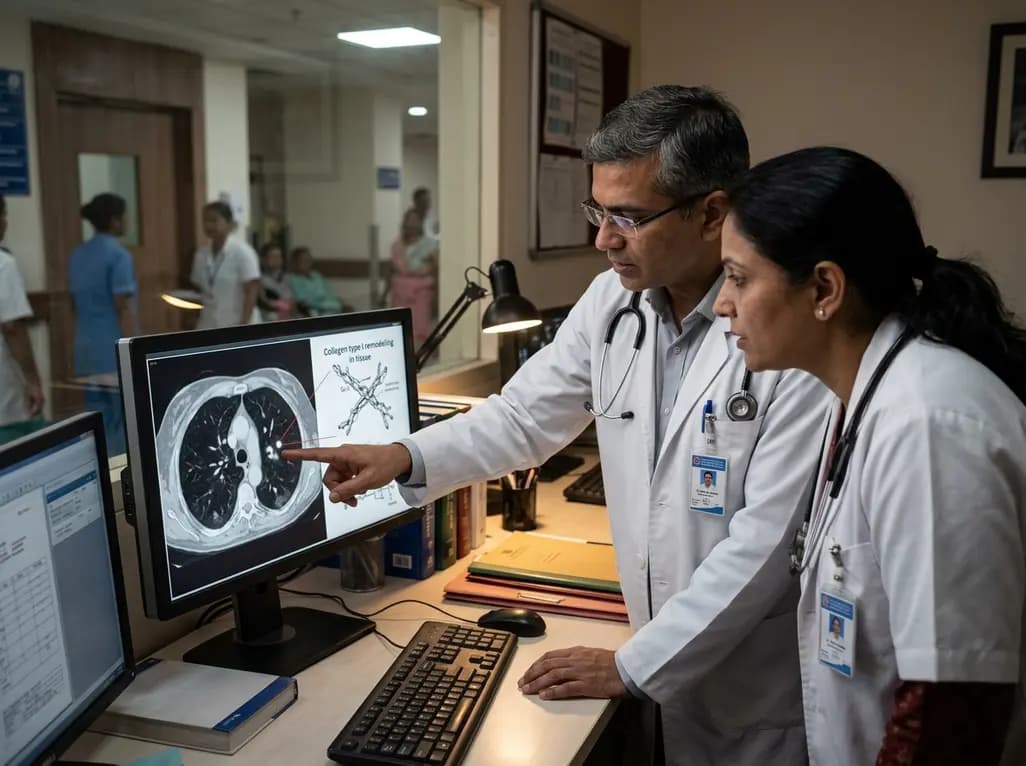
Preclinical findings demonstrate that hProCA32.Collagen, an innovative protein-based contrast agent, detects micro-metastases and aggressive lung adenocarcinomas down to 1 mm on MRI. By targeting collagen type I remodeling, this technology provides radiation-free diagnostic and prognostic evaluation for clinicians.
Today
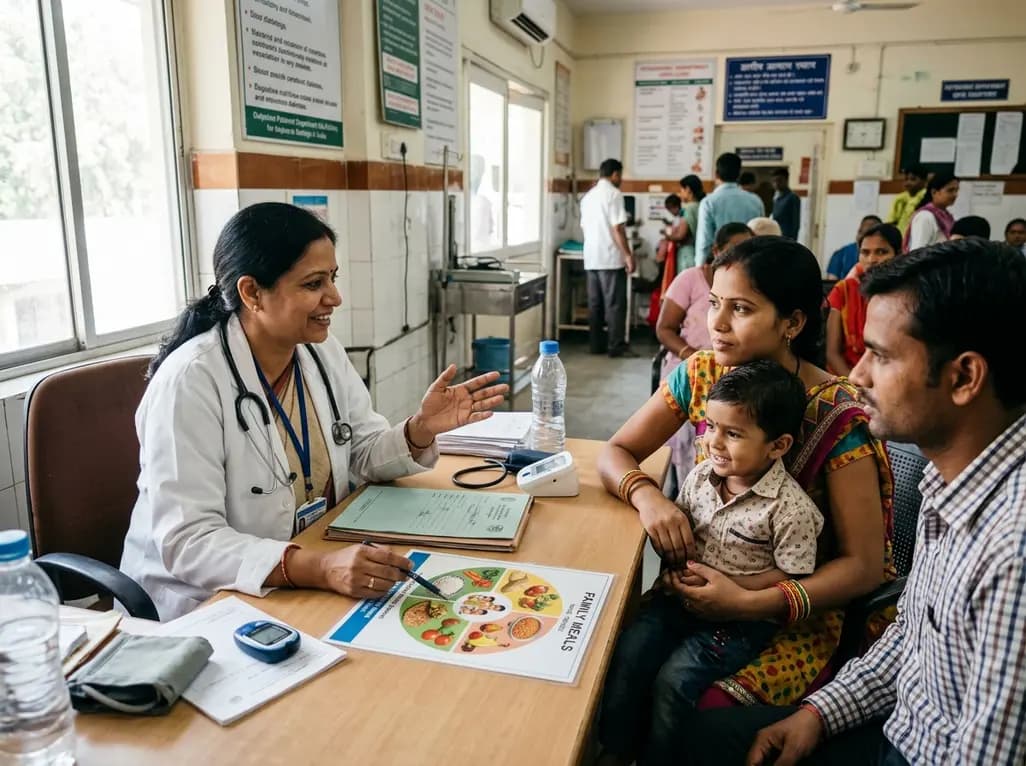
Gestational diabetes doubles the future risk of type 2 diabetes for mothers and offspring. Adopting a life-course approach centered on family meals and brief, supportive nutrition messaging empowers households to reduce metabolic risks and establish sustainable dietary habits across generations.
Today
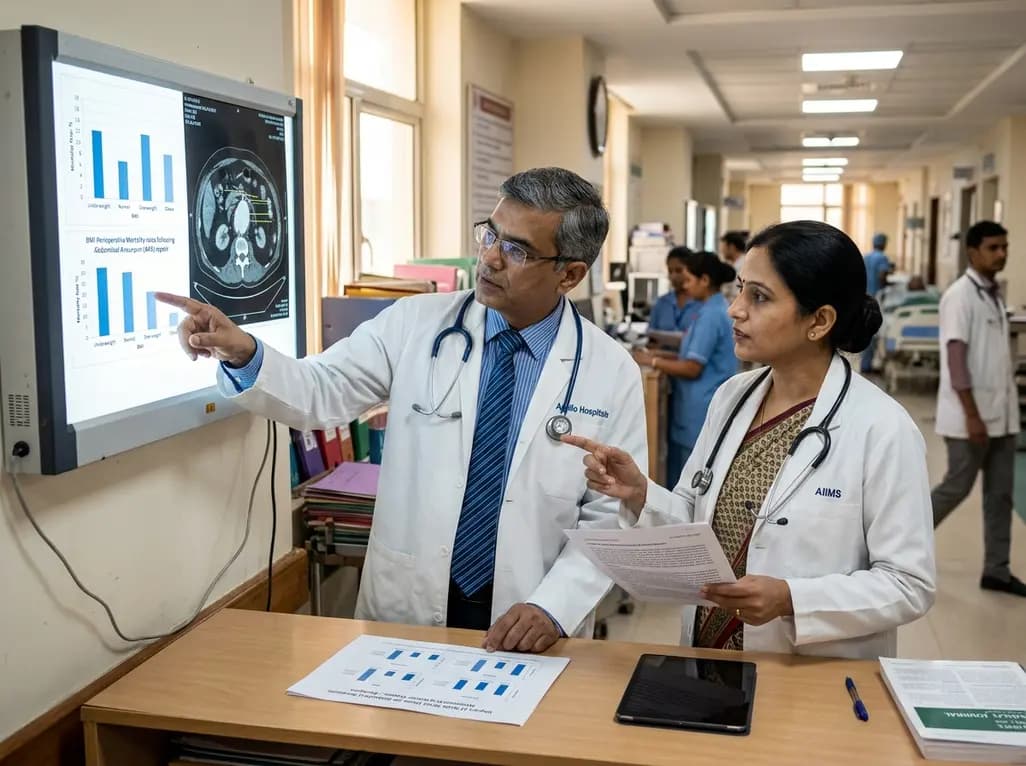
A comprehensive meta-analysis evaluates the association between Body Mass Index and outcomes following abdominal aortic aneurysm repair. Discover how overweight and obesity correlate with lower mortality while underweight status confers heightened risk, challenging conventional preoperative risk stratification.
Today

The SOLARIO trial shows that a short course (≤7 days) of systemic antibiotic therapy is noninferior to long courses (≥4 weeks) in orthopedic infections treated with local antibiotic carriers, with significantly fewer adverse events.
Today
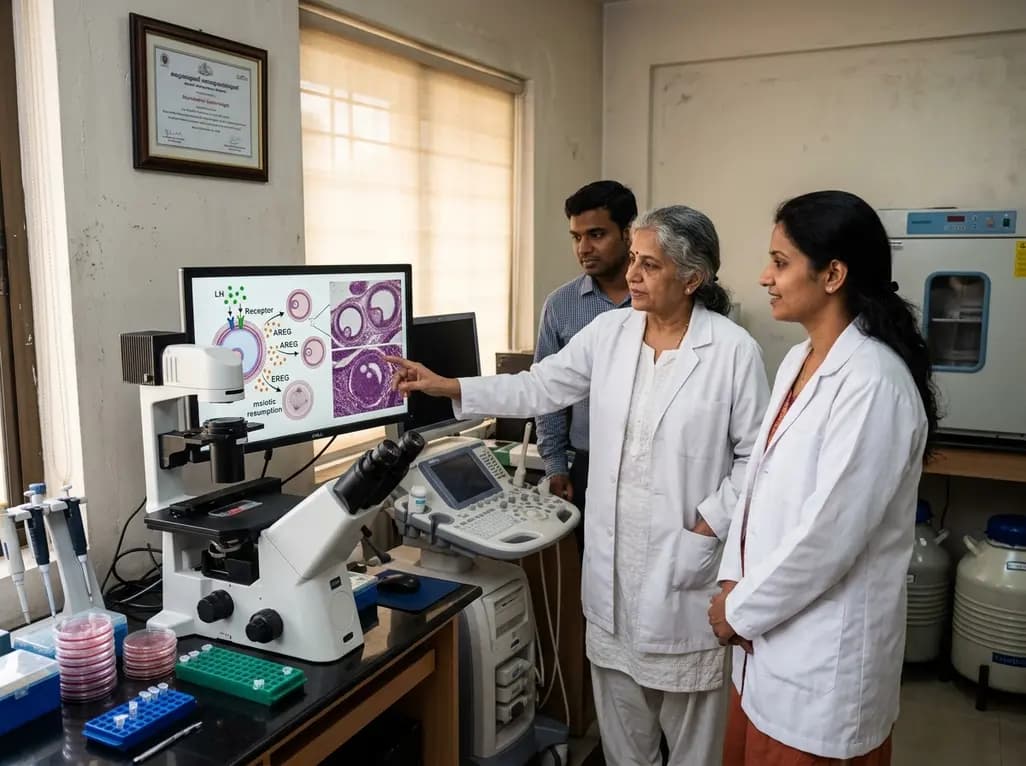
New research reveals that preovulatory follicles communicate via LH-induced paracrine signaling. Diffusible EGF ligands epiregulin and amphiregulin coordinate oocyte meiotic resumption across neighboring follicles, challenging traditional concepts of follicular autonomy.
Today
