.webp&w=384&q=75)

Loading, please wait...
Loading, please wait...

Surgical risk stratification represents a cornerstone of modern vascular practice, especially when evaluating candidates for abdominal aortic aneurysm repair. Clinicians routinely assess baseline comorbidities, cardiopulmonary reserve, and vascular anatomy before deciding between open reconstruction and endovascular intervention. For decades, elevated body mass index remained widely perceived as an adverse prognostic factor that complicated surgical dissection, extended operative time, and increased anesthesia risk. However, emerging vascular literature frequently conflicts with this traditional dogma. Accumulating epidemiological reports describe an unexpected protective effect among overweight and mildly obese surgical cohorts. Consequently, clarifying how weight extremes affect post-procedural survival remains vital for clinical teams managing complex aortic disease.
Historically, vascular specialists viewed excess adiposity as a primary driver of adverse perioperative events. Obese individuals display elevated baseline rates of arterial hypertension, systemic atherosclerosis, and metabolic syndrome. Despite these physiological handicaps, contemporary data confirm that overweight and moderately obese individuals often experience superior survival following major cardiovascular interventions. This counterintuitive epidemiological observation is known as the obesity paradox. Within peripheral vascular and aortic surgery, clinical evidence has historically remained less conclusive than in general cardiology cohorts. Therefore, investigators recently synthesized retrospective cohort data to define whether body habitus truly alters post-procedural mortality following abdominal aortic aneurysm repair. Their findings demonstrate that overweight and mildly obese patients experience significantly lower perioperative and mid-term mortality compared to individuals with normal weight. Furthermore, excess nutritional reserve appears to protect vulnerable patients during periods of severe post-surgical catabolism. Active metabolic reserves allow patients to tolerate hemodynamic shifts, extensive tissue healing, and systemic inflammatory responses. Consequently, higher body weight should not automatically serve as a standalone barrier when teams evaluate surgical candidacy.
While excess weight often dominates clinical discussions, underweight status represents a far more concerning prognostic indicator in vascular surgery. Patients presenting with a low body mass index frequently suffer from underlying frailty, occult malignancy, chronic malnutrition, or end-stage pulmonary cachexia. The recent systematic review confirms that underweight patients face significantly higher mortality following both open and endovascular interventions. Additionally, these fragile individuals possess depleted skeletal muscle reserves, reflecting severe sarcopenia that severely limits cardiopulmonary resilience. When surgical stress triggers hypercatabolism, underweight individuals rapidly exhaust their limited energy stores. Consequently, they experience impaired tissue healing, prolonged mechanical ventilation, and higher susceptibility to opportunistic infections. Preoperative workups must therefore identify low body weight as a red flag for poor physiological reserve. Surgical teams must look beyond anatomical feasibility and evaluate nutritional status meticulously before scheduling elective intervention. Implementing targeted nutritional support and prehabilitation protocols may stabilize these fragile candidates prior to undergoing invasive aortic reconstructions.
The choice between open surgical repair and endovascular aneurysm repair depends heavily on anatomical suitability and patient physiology. Subgroup analyses from the latest systematic review demonstrate that procedural approach interacts distinctly with body mass index. Open surgical repair demands extensive retroperitoneal or transabdominal exposure, which presents technical difficulties in morbidly obese patients. In contrast, endovascular techniques avoid large abdominal incisions, thereby minimizing direct wound complications and incisional hernia formation. Nevertheless, obese individuals undergoing endovascular repair continue to demonstrate a survival benefit over their leaner counterparts. This advantage persists despite technical hurdles such as difficult percutaneous femoral access, challenging fluoroscopic imaging, and prolonged fluoroscopy exposure. Conversely, underweight patients experience elevated mortality across both modalities, confirming that systemic frailty outweighs anatomical considerations. Open repair remains particularly hazardous for malnourished patients because massive fluid shifts and cross-clamping stress exhaust their limited physiological reserve. Endovascular approaches therefore offer an essential, less invasive alternative for high-risk, underweight individuals who possess suitable aortic anatomy.
Beyond all-cause mortality, surgical teams must anticipate organ-specific morbidity across varying weight categories. Interestingly, secondary outcome analysis demonstrates that overweight and obese patients experience significantly fewer postoperative adverse cardiac events. Researchers hypothesize that enhanced metabolic reserve and altered neurohormonal activation buffer the myocardium against acute perioperative stressors. In addition, obese patients frequently receive intensive cardioprotective pharmacotherapy, such as statins and beta-blockers, prior to surgery. However, elevated body mass index is not entirely benign. Morbidly obese cohorts frequently experience elevated risks of surgical site infection, seroma formation, and secondary wound breakdown, particularly after open incisions. They also face unique mechanical challenges that elevate rates of acute kidney injury and delayed extubation. In contrast, underweight patients consistently exhibit higher rates of pulmonary failure, failure to thrive, and prolonged hospital stays. Thus, perioperative teams must calibrate surveillance strategies according to specific weight phenotypes rather than anticipating identical complication profiles for every individual.
The clear association between body mass index and post-repair survival demands a fundamental shift in clinical risk stratification. Clinicians must avoid relying solely on body weight as a surrogate marker for operative risk. Instead, teams should integrate advanced body composition assessments into routine preoperative evaluations. Computed tomography scans, which clinicians already obtain for aortic anatomical planning, provide valuable opportunistic measurements of psoas muscle area, skeletal muscle index, and visceral adiposity. These radiologic markers differentiate muscular overweight patients from sarcopenic individuals carrying covert central adiposity. Furthermore, vascular teams must institute dedicated multidisciplinary pathways to optimize vulnerable candidates. Underweight individuals require aggressive dietary supplementation, physical therapy, and careful optimization of chronic organ dysfunction. Meanwhile, obese candidates benefit from targeted wound prophylaxis, strict glycemic control, and percutaneous vascular access techniques. By personalizing perioperative care according to comprehensive nutritional and metabolic profiling, surgical programs can improve survival and mitigate preventable complications across all patient demographics.
The obesity paradox refers to the clinical observation that overweight and mildly obese patients often exhibit lower mortality following aortic surgery than individuals with normal body weight. Abundant adipose tissue provides critical metabolic reserves that buffer against intense post-procedural catabolism. Additionally, these patients often receive earlier medical optimization with cardiovascular drugs, which protects vital organs during surgical recovery.
Underweight patients face higher mortality because low body weight frequently reflects severe systemic frailty, advanced sarcopenia, and chronic malnutrition. When major vascular surgery induces hypermetabolic stress, these individuals rapidly exhaust their minimal energy reserves. Consequently, they experience impaired wound healing, higher infection susceptibility, extended mechanical ventilation, and poor cardiopulmonary tolerance during recovery.
Clinicians should not deny aortic repair solely based on elevated body mass index. Current clinical evidence demonstrates that higher weight does not increase overall mortality and may even provide a protective survival benefit. Instead, vascular teams should thoroughly evaluate patient cardiopulmonary fitness, sarcopenia, visceral adiposity, and vascular anatomy rather than relying on weight alone.
Disclaimer: This content is for informational and educational purposes only. It is not intended to provide medical advice, diagnosis, or treatment. Refer to the latest local and national guidelines for clinical practice.
References
Fan H et al. Impact of Body Mass Index on outcomes of abdominal aortic aneurysm repair: a systematic review and meta-analysis. J Cardiovasc Surg (Torino). 2026 Sep 16. doi: 10.23736/S0021-9509.26.13660-X. PMID: 42747440.
Bornak A, et al. Effect of Body Mass Index on Early Outcomes of Endovascular Abdominal Aortic Aneurysm Repair. Ann Vasc Surg. 2023;93:182-191.
Snelder SM, et al. Obesity is not a risk factor for short-term mortality after abdominal aortic aneurysm repair: A systematic review and meta-analysis. J Vasc Surg. 2022;75(4):1456-1465.

Read summarized clinical updates, watch expert medical content, and earn CME certifications right from your smartphone.
Open your smartphone camera to scan and install.





A comprehensive meta-analysis evaluates the association between Body Mass Index and outcomes following abdominal aortic aneurysm repair. Discover how overweight and obesity correlate with lower mortality while underweight status confers heightened risk, challenging conventional preoperative risk stratification.
Today
New research reveals that preovulatory follicles communicate via LH-induced paracrine signaling. Diffusible EGF ligands epiregulin and amphiregulin coordinate oocyte meiotic resumption across neighboring follicles, challenging traditional concepts of follicular autonomy.
Today

A nationwide Dutch study of over 737,000 women reveals that a multistate model accurately stratifies postpartum cardiovascular risk as early as six weeks after birth. Hypertensive disorders, preterm delivery, and low socioeconomic status strongly drive premature hypertension and cardiovascular disease.
Today
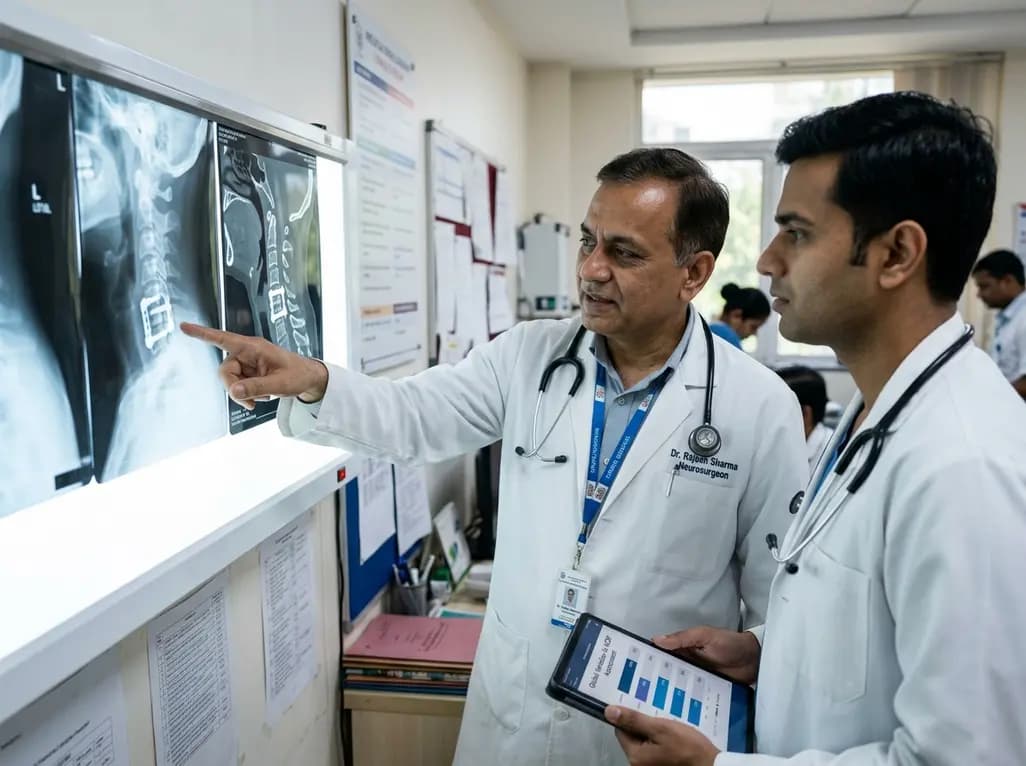
A global cross-sectional survey of cervical spine experts reveals significant variation in ACDF fusion assessment practices, imaging modalities, and fixation preferences, underscoring the need for standardized post-surgical protocols.
Today

A multicenter real-world prospective study in Taiwan demonstrates that liraglutide effectively reduces body weight and BMI standard deviation score in adolescents with obesity. The therapy shows a favorable safety profile with mild gastrointestinal adverse events and zero treatment discontinuations due to intolerance.
Today
