.webp&w=384&q=75)

Loading, please wait...
Loading, please wait...

Managing complex bone and joint infections presents persistent dilemmas for reconstructive surgeons and infectious disease physicians. Historically, clinicians prescribed prolonged antimicrobial courses to suppress lingering pathogens. However, extended medication regimens frequently cause severe drug toxicity and accelerate antimicrobial resistance. The multicenter SOLARIO trial evaluated whether local antibiotic carriers allow clinicians to shorten postoperative systemic antibiotic therapy. Consequently, the resulting data offer transformative insights for orthopedic surgery and clinical practice.
Orthopedic infections cause immense patient suffering and escalate healthcare expenditures. Historically, standard clinical guidelines mandated thorough debridement paired with four to six weeks of intravenous antibiotics. Clinicians believed this extended duration was vital to eliminate biofilm-dwelling pathogens on cortical bone surfaces. Nevertheless, prolonged antimicrobial therapy carries major risks of organ toxicity, catheter sepsis, and secondary infections. Furthermore, high antibiotic consumption exerts selective pressure that accelerates antimicrobial resistance.
To mitigate these problems, surgeons increasingly implant local antibiotic carriers directly into infected bone cavities during surgery. These vehicles, including synthetic bone substitutes and calcium sulfate, release exceptionally high bactericidal drug concentrations locally. Simultaneously, they maintain minimal serum concentrations throughout the body. Therefore, these delivery systems theoretically eliminate the need for prolonged systemic treatment. However, until recently, clinicians lacked conclusive randomized trial evidence verifying whether short systemic regimens remain safe and effective. Consequently, the SOLARIO study directly evaluated this modernized therapeutic approach. Orthopedic surgeons must therefore embrace local delivery to optimize therapeutic outcomes.
The SOLARIO trial was an open-label, randomized, noninferiority study conducted across prominent European surgical centers. Specifically, investigators evaluated whether short systemic treatment could match the efficacy of conventional long treatment. The trial enrolled 500 adult patients undergoing surgical revision or debridement for confirmed orthopedic infections. Importantly, surgeons implanted a local-antibiotic carrier directly at the infection site during the index operation.
Researchers randomly assigned eligible participants in a 1:1 ratio to two postoperative intervention groups. The short-duration group received systemic antibiotics for seven days or fewer. Conversely, the long-duration group continued standard systemic antibiotics for at least four weeks. The primary outcome was definite treatment failure within twelve months after surgical intervention. An independent clinical end-point committee adjudicated all treatment outcomes while blinded to trial assignments. Furthermore, investigators prespecified a noninferiority margin of 10 percentage points. Secondary outcomes assessed adverse symptoms, healthcare costs, and overall patient recovery. These parameters ensured reliable clinical evaluation. Consequently, this study generated robust comparative evidence to guide surgical decisions.
The primary analysis evaluated 475 patients who completed 12 months of structured clinical follow-up. Definite treatment failure occurred in 26 of 234 patients in the short-duration cohort, representing an 11.1% failure rate. Meanwhile, failure occurred in 34 of 241 patients in the long-duration group, yielding a 14.1% failure rate. This resulted in an absolute risk difference of -3.0 percentage points with a 95% confidence interval of -9.0 to 3.0 percentage points. Because the upper confidence limit remained far below the prespecified 10 percentage point noninferiority margin, the short regimen achieved noninferiority.
Moreover, sensitivity analyses fully confirmed the primary results. In the included population of 497 patients, the risk difference was -2.4 percentage points. Similarly, within the per-protocol population of 457 patients, the risk difference was -2.7 percentage points. Therefore, both analyses demonstrated consistent therapeutic equivalence between regimens. Consequently, stopping systemic antimicrobials within seven days does not compromise clinical infection control.
While efficacy proved equivalent, patient safety outcomes strongly favored the shorter regimen. By week six after surgery, treatment-related adverse symptoms occurred in 45.2% of patients receiving long-duration therapy. In sharp contrast, only 17.2% of patients in the short-duration group reported adverse symptoms. This difference yielded an absolute risk reduction of 28.0 percentage points, demonstrating exceptional statistical and clinical significance.
Patients on prolonged systemic courses suffered frequent gastrointestinal distress, acute kidney injury, and hepatotoxicity. Furthermore, extended intravenous administration triggered catheter complications, including superficial thrombophlebitis and line infections. Consequently, reducing treatment duration to seven days spared nearly one-third of all patients from distressing side effects. Additionally, shorter courses substantially improved patient comfort and facilitated prompt postoperative rehabilitation. Therefore, the short-duration strategy delivers superior safety without compromising orthopedic outcomes. Clinicians can confidently avoid prolonged regimens that provoke unnecessary patient harm. Accordingly, eliminating redundant antibiotic days protects vulnerable patients from avoidable adverse drug reactions.
The SOLARIO trial provides vital support for antimicrobial stewardship programs worldwide. Historically, orthopedic infection protocols consumed substantial quantities of broad-spectrum antimicrobials, including reserve glycopeptides and fluoroquinolones. However, excessive antibiotic exposure exerts intense selective pressure that fuels multidrug-resistant pathogens. By truncating systemic treatment to seven days, clinical teams markedly decrease hospital antimicrobial consumption. Local antibiotic carriers deliver exceptionally high drug concentrations into bone tissue without provoking systemic resistance.
Furthermore, shorter courses reduce nursing workloads, eliminate line maintenance, and decrease inpatient pharmacy costs. Nevertheless, surgeons must respect crucial clinical prerequisites to achieve success. Operating teams must perform radical debridement to excise all devitalized bone, fibrous tissue, and infected implants. In addition, microbiological testing must verify that isolated pathogens remain susceptible to the locally implanted agent. If bacteria display resistance to the carrier antibiotic, clinicians should avoid early discontinuation of systemic drugs. Ultimately, combining thorough surgical debridement with targeted local therapy establishes a modern standard for bone infection care.
Eligible patients include adults who undergo thorough surgical debridement for orthopedic infections and receive an implanted local-antibiotic carrier. Importantly, microbiological cultures must confirm that the causative pathogens remain fully susceptible to the locally implanted antibiotics. In addition, patients must not have concomitant infections that require prolonged systemic antimicrobial therapy. Consequently, patients who meet these strict criteria can safely discontinue systemic antibiotics within seven days without increasing recurrence risks.
The trial utilized bioabsorbable and non-absorbable antibiotic-eluting biomaterials placed directly into the debrided osseous defect during surgery. Commonly utilized materials included calcium sulfate bone graft substitutes and synthetic ceramics formulated with gentamicin or vancomycin. In addition, selected reconstructive procedures incorporated traditional polymethylmethacrylate bone cement. Crucially, these carriers provide extremely high local bactericidal concentrations at the infection site while maintaining negligible serum drug levels throughout the body.
Shortening systemic therapy to seven days markedly decreases the selective pressure that generates drug-resistant pathogens. Prolonged systemic exposure disrupts the patient's normal microbiome and promotes colonisation by multi-drug resistant hospital organisms. In contrast, limiting systemic therapy to one week preserves beneficial flora and substantially reduces total antimicrobial consumption. Therefore, this approach optimizes antibiotic stewardship, minimizes toxic drug reactions, and slows the proliferation of resistant bacteria within healthcare facilities.
Disclaimer: This content is for informational and educational purposes only... Refer to the latest local and national guidelines for clinical practice.
References

Read summarized clinical updates, watch expert medical content, and earn CME certifications right from your smartphone.
Open your smartphone camera to scan and install.





The SOLARIO trial shows that a short course (≤7 days) of systemic antibiotic therapy is noninferior to long courses (≥4 weeks) in orthopedic infections treated with local antibiotic carriers, with significantly fewer adverse events.
Today
Esophageal cancer remains a global health challenge with low five-year survival. This review examines epidemiological shifts between adenocarcinoma and squamous cell carcinoma, updated staging, and modern multimodality treatment strategies.
Today
A quasi-experimental study demonstrates that culturally tailored educational interventions significantly boost HPV knowledge and vaccination intentions. These findings provide actionable strategies for healthcare providers in India to overcome vaccine hesitancy and advance cervical cancer prevention.
Today

A comprehensive meta-analysis evaluates the association between Body Mass Index and outcomes following abdominal aortic aneurysm repair. Discover how overweight and obesity correlate with lower mortality while underweight status confers heightened risk, challenging conventional preoperative risk stratification.
Today
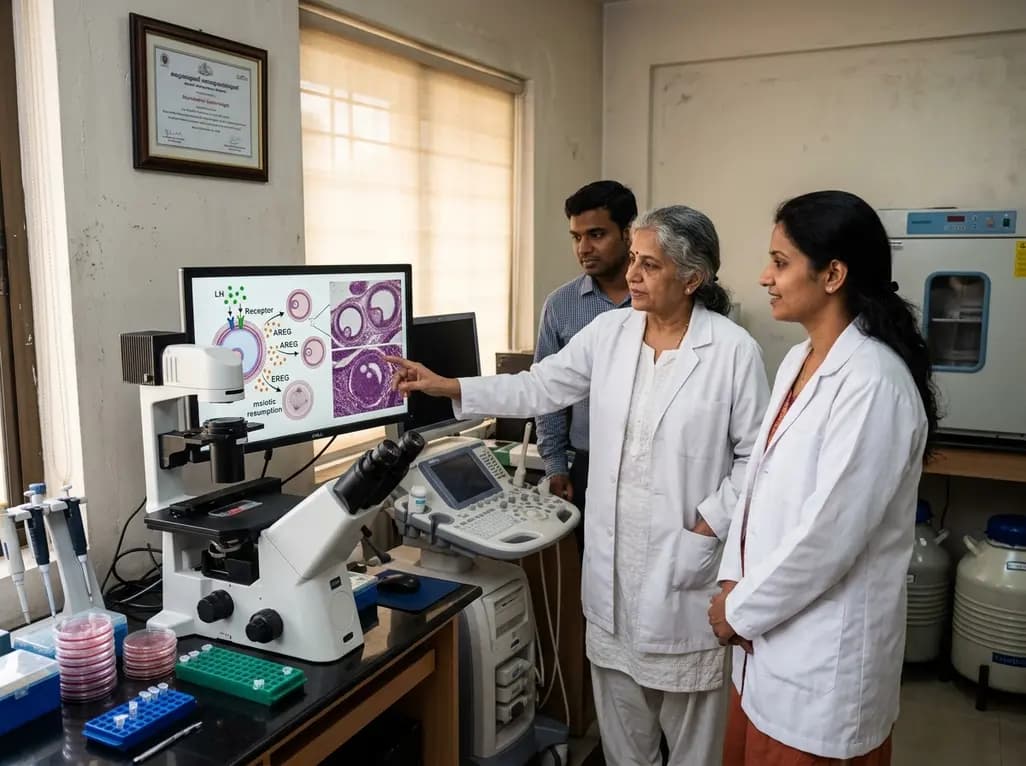
New research reveals that preovulatory follicles communicate via LH-induced paracrine signaling. Diffusible EGF ligands epiregulin and amphiregulin coordinate oocyte meiotic resumption across neighboring follicles, challenging traditional concepts of follicular autonomy.
Today
