.webp&w=384&q=75)

Loading, please wait...
Loading, please wait...

Suicide prevention remains one of the most pressing public health priorities worldwide, particularly in nations facing rapid socioeconomic shifts. Understanding the intricate psychometric relationships between emotional states, socio-demographic indicators, and perceived well-being is vital for modern mental health strategies. Recently, investigators published a groundbreaking nation-level study applying a sophisticated network analysis of happiness to evaluate affective ties across diverse demographics. By evaluating thousands of individuals, the authors mapped how discrete affective experiences connect to subjective well-being. Consequently, these findings offer valuable clinical insights for physicians managing mood disorders, acute distress, and long-term suicide risk.
Traditional psychiatric research frequently collapses diverse psychometric indicators into cumulative composite scores. However, aggregate scores often obscure subtle pairwise interactions between distinct emotional and evaluative symptoms. To overcome these diagnostic limitations, researchers employed a Gaussian graphical model with Least Absolute Shrinkage and Selection Operator regularization. This advanced statistical approach analyzed data from 61,675 complete cases across South Korea. Furthermore, the methodology successfully penalized spurious associations while retaining genuine conditional dependencies among variables. Specifically, the resulting psychological network retained 199 of 435 possible edges, illustrating a dense architecture of interconnected affective states. In addition, the researchers utilized permutation-based Network Comparison Tests to examine demographic disparities. These rigorous computational steps allow clinicians to visualize mental health as an interactive system rather than isolated categorical symptoms. Therefore, this modeling technique provides an objective roadmap for identifying central nodes that drive psychopathology. Clinicians can utilize such network structures to pinpoint high-yield intervention points during psychiatric evaluations.
The nationwide network revealed critical insights regarding how individuals process positive and negative emotional evaluations. Most notably, happiness demonstrated its strongest positive pairwise connection directly with daily enjoyment. This robust connection confirms that experiential hedonic engagement sustains subjective well-being far more effectively than abstract cognitive assessments. Conversely, negative emotional states clustered together into powerful pathological subnetworks. For instance, sadness shared an intense bridge with clinical depression, while depression exhibited strong reciprocal ties with pervasive anger. Similarly, chronic stress connected directly with physical tiredness, forming an exhausting somatic feedback loop. In contrast, global network strength did not vary drastically across sex or demographic cohorts. Nevertheless, localized topological differences emerged across specific population groups. Consequently, clinicians must recognize that targeted emotional nodes govern overall mental stability. Addressing persistent anger or somatic exhaustion can halt the rapid escalation into depressive despair. Thus, therapeutic strategies must systematically address these tightly bound emotional dyads.
Generational perspectives significantly shape how individuals perceive social strain and life satisfaction. When comparing Millennials and Generation Z with older cohorts, investigators discovered pronounced variations in affective wiring. Specifically, the edge connecting happiness directly to daily stress differed significantly between younger adults and Baby Boomers. Younger individuals often experience acute social pressure, career instability, and relentless competitive expectations. Therefore, stress impinges directly upon their overall happiness and sense of self-worth. In contrast, older adults often navigate stressors through established resilience frameworks, family structures, or social stability. Furthermore, no single happiness-connected edge survived false discovery rate correction when comparing younger cohorts to Generation X. This stability indicates a shared modern experiential framework among working-age individuals. Consequently, mental health professionals must tailor psychiatric assessments according to age-specific vulnerabilities. For younger patients, clinicians should aggressively screen for stress-induced emotional blunting. By doing so, doctors can preserve affective resilience and reduce vulnerability to suicidal ideation.
Financial security profoundly alters how personality traits and lifestyle factors influence subjective well-being. Network comparisons between high-income and low-income cohorts revealed stark structural divergences in affective connections. For example, happiness displayed a stronger positive connection with available time for personal hobbies among affluent respondents. This finding suggests that discretionary leisure acts as an active catalyst for psychological flourishing among financially secure demographics. Conversely, within low-income cohorts, happiness was negatively linked to the personality trait of being generally trusting. In economically vulnerable environments, high interpersonal trust may expose individuals to exploitation or severe social disappointment. Thus, interpersonal guardedness might emerge as a protective coping mechanism under persistent resource scarcity. Furthermore, financial hardship amplifies everyday emotional vulnerabilities, reinforcing depressive thought patterns. Healthcare providers must therefore acknowledge these structural determinants when formulating holistic treatment plans. Prescribing lifestyle modifications without addressing economic constraints often yields disappointing therapeutic outcomes. Hence, clinical practice requires an empathetic understanding of socioeconomic reality.
Integrating network concepts into everyday clinical workflows enhances diagnostic precision for physicians and mental health specialists. Rather than focusing solely on global symptom severity, clinicians can map patient-specific emotional networks during routine intake interviews. Specifically, physicians should examine whether persistent fatigue stems from uncontrolled workplace stress or primary affective disorders. In addition, assessing positive affect serves as a crucial diagnostic marker of recovery. Patients who regain capacity for small daily pleasures frequently demonstrate lower relapse rates and reduced suicide risk. Similarly, clinicians must remain vigilant regarding generational nuances when prescribing pharmacotherapy or psychotherapy. Younger patients require robust tools to dismantle toxic links between acute stress and self-esteem. Conversely, older individuals benefit from interventions that reinforce family connection and existential meaning. Therefore, treating mood disorders demands a personalized approach that aligns medical regimens with individual psychosocial networks. By prioritizing dynamic emotional interactions, practitioners can deliver comprehensive and compassionate psychiatric care.
Traditional approaches evaluate static composite symptom scores, which frequently overlook critical pairwise relationships between distinct emotional states. In contrast, network analysis reveals dynamic interactive systems, mapping how acute stress, sadness, and anger bridge into depressive despair. Consequently, this statistical framework enables clinicians to target central nodes that effectively disrupt pathways toward suicidal behavior.
The study demonstrated that daily enjoyment shares the strongest pairwise link with subjective happiness. For physicians, this emphasizes that promoting accessible, everyday hedonic experiences provides direct therapeutic benefits. Actively scheduling micro-activities that generate immediate positive affect can directly elevate mood and counter depressive apathy much faster than abstract cognitive interventions alone.
Socioeconomic status fundamentally shifts psychological wiring. In lower-income groups, interpersonal trust negatively correlates with happiness, reflecting defensive coping against exploitation. Conversely, higher-income groups derive happiness from discretionary leisure. Therefore, clinicians must consider social determinants, avoiding generalized lifestyle advice and offering realistic psychosocial support tailored to the patient’s economic reality.
Disclaimer: This content is for informational and educational purposes only... Refer to the latest local and national guidelines for clinical practice.
References

Read summarized clinical updates, watch expert medical content, and earn CME certifications right from your smartphone.
Open your smartphone camera to scan and install.





A massive nationwide study in South Korea uses network analysis to uncover how happiness interacts with daily stress, socioeconomic status, and generational factors, offering actionable mental health targets for clinicians.
Today

Bacteroides thetaiotaomicron utilizes an intricate multiprotein extracellular relay and outer membrane vesicles for cobamide scavenging in the human gut. This review examines its transport mechanics, riboswitch regulation, and potential clinical implications for host-microbe vitamin competition and nutrient absorption.
Today

Novel preclinical research demonstrates that antisense oligonucleotides targeting essential genes such as DARS1, DYNC1I2, and EIF2S3 selectively induce apoptosis in ovarian and lung cancer cells. Conditional biomarker activation provides a viable strategy to spare normal tissue while overcoming therapy resistance.
Today
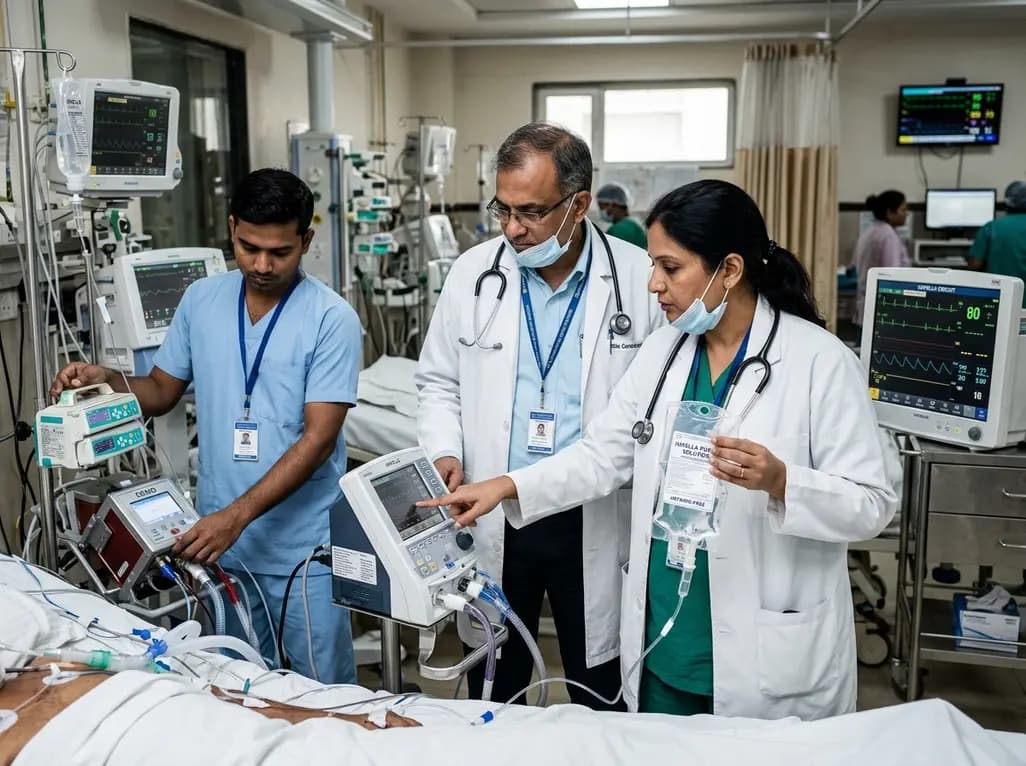
This clinical analysis examines heparin-free versus heparin-containing Impella purge solutions in patients receiving concomitant ECMO support (ECPELLA). Evidence suggests anticoagulant-free purges maintain device patency while reducing bleeding risks, offering a viable strategy alongside systemic anticoagulation.
Today

A 10-year Markov state-transition model shows minimally invasive tubular decompression dominates open laminectomy for pure lumbar spinal stenosis, yielding 5.95 vs 5.91 QALYs and saving $4,167 per patient through reduced complications and lower index costs.
Today
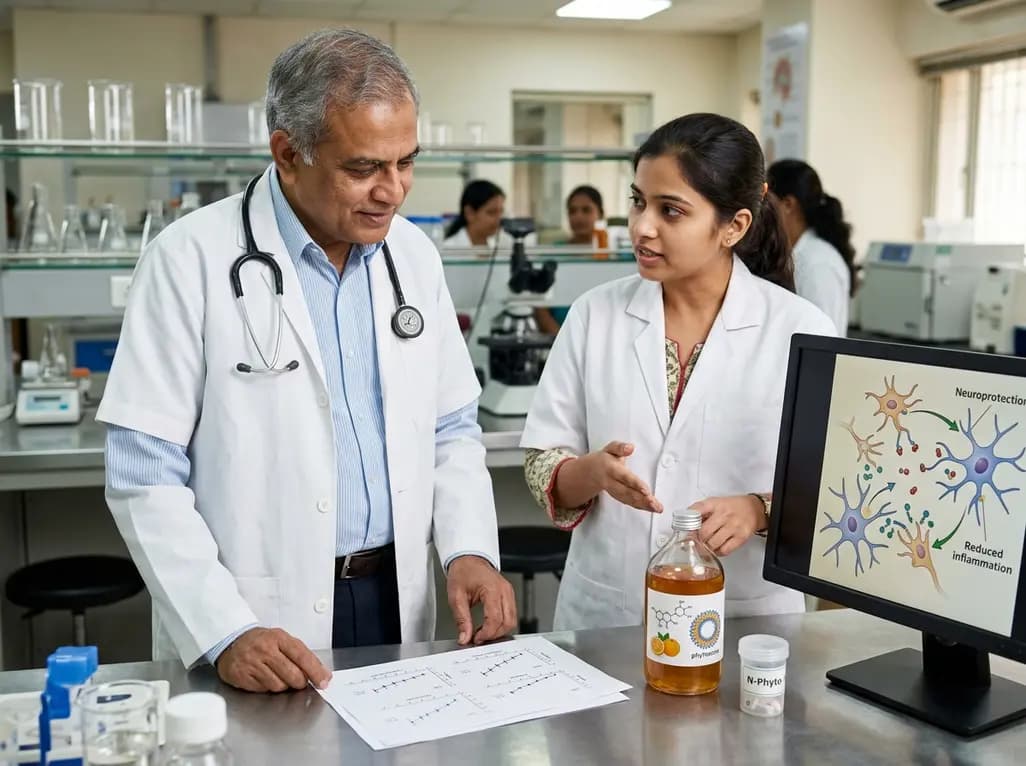
A preclinical study demonstrates that naringin-loaded phytosomes significantly enhance oral bioavailability and provide neuroprotective efficacy in diabetic neuropathy by dampening inflammation, reducing oxidative stress, and relieving neuropathic pain.
Today
