.webp&w=384&q=75)

Loading, please wait...
Loading, please wait...

Head and neck oncology continues to evolve as clinicians uncover complex interactions between tumors and host immunity. Recent research highlights how neutrophil extracellular traps, or NETs in HNSCC, orchestrate systemic inflammation during oncologic management. Understanding these pathways provides oncologists and otolaryngologists with fresh insights into radioresistance, microenvironmental remodeling, and potential therapeutic targets.
Neutrophils serve as the primary responders of innate immunity, yet their persistent activation often supports malignancy. When stimulated by malignant tissue signals, neutrophils undergo NETosis and release chromatin meshes decorated with active granular enzymes. Consequently, these web-like extracellular traps protect malignant cells from cytotoxic immune cells and facilitate local tissue invasion. Furthermore, bioinformatic investigations confirm that key NETosis-related genes exhibit dysregulated expression profiles in malignant tissues compared to adjacent normal mucosa. These findings show that sustained neutrophil activation creates a pro-tumorigenic niche. In addition, the continuous discharge of intracellular enzymes alters the extracellular matrix and accelerates regional tissue restructuring. Therefore, local neutrophil biology directly mirrors wider immunologic instability across the host system.
Researchers applied an integrative bioinformatic pipeline to identify central signaling hubs governing neutrophil recruitment and entrapment. Network analysis and ontology modeling revealed that interleukin-6 and CXCL8, commonly known as IL-8, occupy core regulatory positions. Specifically, CXCL8 acts as a potent chemoattractant that directs circulating neutrophils into neoplastic tissues. Once recruited, these immune cells release additional cytokines, amplifying a persistent inflammatory cycle. Meanwhile, IL-6 stimulates downstream signal transducer and activator of transcription pathways within neoplastic cells. As a result, this coordinated signaling cascade promotes cancer cell survival, accelerates proliferation, and suppresses adaptive immunity. Thus, these data confirm that cytokine hubs work synergistically with neutrophil networks to drive aggressive disease biology.
To complement bioinformatic discoveries, investigators evaluated circulating biomarker concentrations in a clinical cohort of patients undergoing definitive radiotherapy alongside healthy controls. The clinical analysis demonstrated that patients exhibited significantly higher baseline serum concentrations of NET-associated complexes, IL-6, and IL-8 than non-cancer controls. However, serial blood draws across separate intra-treatment time points showed no statistically significant variations between early and mid-treatment sampling. This persistence indicates that radiotherapy maintains, rather than immediately eliminates, systemic inflammatory elevations. Consequently, the chronic presence of circulating traps may shield surviving tumor clones from radiation-induced cytotoxicity. Clinicians must recognize that peripheral blood indices faithfully reflect persistent inflammatory signaling during active treatment courses.
Head and neck cancers represent a substantial healthcare burden across South Asia, particularly in India. Advanced presentation remains common due to widespread consumption of smokeless tobacco, betel quid chewing, and smoking habits. Therefore, Indian oncologists frequently encounter patients presenting with extensive tumor burdens and elevated baseline systemic inflammation. High circulating inflammatory markers correlate with reduced performance status, accelerated cancer cachexia, and compromised locoregional control. Moreover, conventional hematologic parameters, such as the neutrophil-to-lymphocyte ratio, already indicate poorer survival outcomes in this patient subset. Identifying specific molecular contributors, such as circulating NET complexes and chemokines, offers clearer biological context than general cell counts alone. Consequently, these markers could refine risk stratification in high-volume public cancer clinics.
Targeting neutrophil extracellular traps presents an appealing adjunctive strategy to sensitize recalcitrant head and neck tumors to radiation therapy. Preclinical investigations show that enzymatic degradation of DNA scaffolds using systemic DNase enzymes can dismantle protective NET barriers. Similarly, inhibiting peptidylarginine deiminase 4 suppresses neutrophil degranulation and diminishes chromatin extrusion. Furthermore, monoclonal antibodies neutralizing IL-6 or blocking CXCR1/2 receptors could interrupt neutrophil recruitment cascades altogether. Because systemic inflammation remains stable during radiation fractions, combining cytokine inhibitors with standard radiation might enhance antitumor immune responses. Nevertheless, physicians must interpret early cohort results with prudence given the exploratory nature of small cohorts. Prospective multi-center clinical trials remain essential to validate these inflammatory complexes as actionable predictive biomarkers.
Neutrophil extracellular traps act as physical shields that protect malignant cells from cytotoxic immune destruction. Furthermore, they trap circulating tumor cells within capillary beds, accelerate angiogenesis, and release proteases that degrade the extracellular matrix. Consequently, these processes promote local invasion, drive radioresistance, and foster distant metastasis across diverse squamous cell malignancies.
Radiotherapy induces continuous localized cellular stress and tissue necrosis, which triggers persistent systemic cytokine signaling. As a result, circulating concentrations of IL-6, CXCL8, and NET complexes remain elevated throughout the treatment course. This stability indicates that radiation-induced inflammation persists unabated, suggesting that short therapeutic intervals do not rapidly extinguish baseline immune activation.
Currently, these inflammatory markers serve as valuable investigational tools rather than routine diagnostic criteria. However, oncologists can combine emerging NET biology with standard prognostic indicators like the neutrophil-to-lymphocyte ratio to identify high-risk individuals. Furthermore, ongoing research may eventually establish pharmacological NET inhibitors as viable adjuncts to improve radiotherapy response rates.
Disclaimer: This content is for informational and educational purposes only and should not be considered medical advice. Always consult with a qualified healthcare professional regarding clinical decisions or conditions. Refer to the latest local and national guidelines for clinical practice.
References
Santos EM et al. NET-Associated Inflammatory Markers in Head and Neck Squamous Cell Carcinoma: Bioinformatic Prioritization and Exploratory Serum Assessment in Patients Undergoing Radiotherapy. Mol Carcinog. 2026 Oct 06. doi: 10.1002/mc.70190. PMID: 42836837.
Zachou Z, Mastronikolis S, Fountzilas G, et al. Prognostic value of systemic inflammatory markers in head and neck squamous cell carcinoma. Eur Arch Otorhinolaryngol. 2025;282(10):4981-4990.
Kono T, et al. Nutritional and Inflammatory Markers Associated with Complete Response to Near-Infrared Photoimmunotherapy in Recurrent Head and Neck Squamous Cell Carcinoma. Cancers (Basel). 2026;18(5):1022.

Read summarized clinical updates, watch expert medical content, and earn CME certifications right from your smartphone.
Open your smartphone camera to scan and install.





New exploratory research highlights the role of neutrophil extracellular traps (NETs) and key inflammatory cytokines, IL-6 and IL-8, in head and neck squamous cell carcinoma during radiotherapy. Discover the mechanistic connections and clinical implications.
Today

Preclinical evidence highlights how combining metronomic cyclophosphamide and metformin suppresses tumor progression by modulating NF-κB and p53 pathways while boosting antitumor immunity. This low-toxicity chemo-metabolic approach presents compelling opportunities for resource-conscious oncology care.
Today

India's national digital health service achieved a historic milestone of fifty crore virtual consultations. Notably, female patients account for over fifty-seven percent of utilisation, demonstrating improved healthcare accessibility for remote communities, chronic disease management, and primary triage.
Today
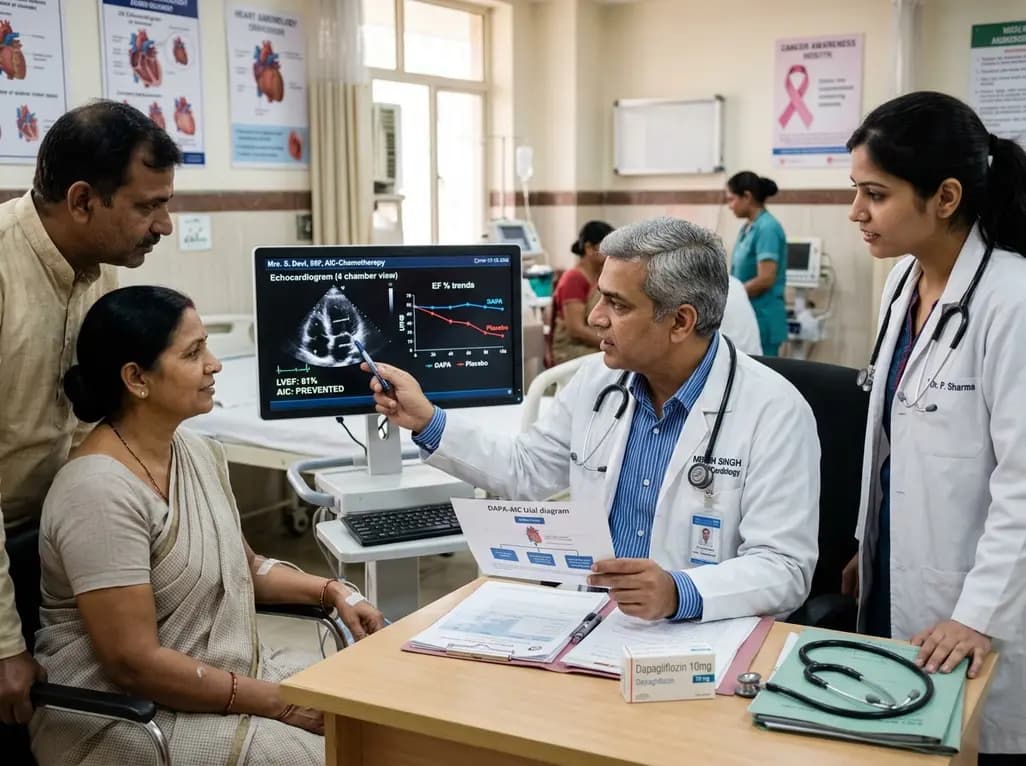
The phase II DAPA-AIC trial demonstrates that dapagliflozin 10 mg daily significantly preserves left ventricular ejection fraction compared to placebo over four months in adults undergoing anthracycline chemotherapy, highlighting a potential preventive strategy in cardio-oncology.
Today

A scoping review reveals severe gaps in long-term assistive technology provision following humanitarian emergencies. Addressing post-disaster rehabilitation requires systematic follow-up, workforce training, and integration into national health systems to sustain mobility and recovery.
Today

An interim propensity score-matched study comparing SASI vs OAGB demonstrates equivalent short- and mid-term outcomes. Both bariatric procedures achieved substantial excess weight loss and 100% medication-free blood glucose control at 18 months, underscoring the metabolic efficacy of both techniques.
Today
