.webp&w=384&q=75)

Loading, please wait...
Loading, please wait...

Neonatal mortality remains a severe global health concern, particularly in low- and middle-income countries with overburdened nursery wards. Recently, researchers developed a machine learning-derived neonatal risk predictor to help frontline healthcare workers triage vulnerable newborns. Evaluating how bedside clinicians experience such decision tools in routine practice provides vital guidance for neonatal intensive care units worldwide.
Machine learning models provide remarkable analytical power for forecasting adverse outcomes such as neonatal sepsis and mortality. However, complex digital algorithms cannot benefit fragile infants if bedside clinicians find them cumbersome or inaccessible. Consequently, researchers translated a sophisticated computational model into a practical paper-based neonatal risk predictor. This thoughtful approach enabled staff to stratify patient risk rapidly without requiring continuous electrical power, costly computers, or stable internet connectivity.
The multisite pilot evaluation spanned four months across three Kenyan health facilities, gathering real-world feedback from frontline nurses, clinical officers, and pediatricians. Participants completed validated usability instruments, including the System Usability Scale, Questionnaire for User Interaction Satisfaction, and the Post-Study System Usability Questionnaire. Additionally, investigators conducted semistructured key informant interviews with neonatal unit managers to assess broader institutional dynamics. The initiative investigated whether this streamlined paper format could support timely decision-making during the critical first 48 hours of newborn life. Ultimately, converting complex algorithmic predictions into intuitive bedside scoring charts bridges the critical divide between advanced data science and daily clinical triage in resource-constrained neonatal nurseries.
The quantitative evaluation revealed encouraging findings regarding user satisfaction, learnability, and perceived clinical value. Specifically, 75% of participating frontline health workers indicated a strong willingness to use the risk prediction chart frequently in their everyday workflows. Furthermore, 55% expressed clear confidence in utilizing the instrument independently during routine shifts. Median composite scores on the Post-Study System Usability Questionnaire remained below three across all subscales, demonstrating favorable overall acceptance among clinical teams.
Crucially, 80% of healthcare providers agreed that the tool effectively facilitates early identification of deteriorating neonates. Clinicians observed that structured risk scores helped them prioritize intensive nursing vigilance and urgent medical therapies within the first 48 hours following admission. Nevertheless, individual perceptions of complexity revealed noticeable divergence. Approximately half of respondents disagreed that the scoring system felt complicated, whereas 22% found it challenging to complete. This polarization suggests that provider comfort correlates with individual clinical background, numeracy, and baseline exposure to standardized assessments. Therefore, establishing structured onboarding programs is essential to standardize competencies and ensure widespread provider confidence. Consequently, continuous peer support helps junior nurses overcome technical hesitation quickly.
While frontline healthcare workers recognized the diagnostic utility of the tool, workflow integration proved highly workload-sensitive. Specifically, 40% of surveyed clinicians reported a marked increase in documentation burden during periods of peak admission volume. In resource-limited neonatal wards, nurses frequently care for multiple unstable infants simultaneously. Under such severe time constraints, filling out additional paper forms often clashes directly with emergency resuscitation, warming, and medication administration.
Furthermore, qualitative interviews highlighted that clinicians already grapple with administrative exhaustion caused by duplicate documentation systems. When a new clinical prediction tool operates as an isolated paper record, healthcare workers perceive it as redundant clerical work rather than an aid. Consequently, long-term sustainability depends on integrating predictive algorithms into existing national inpatient registers and admission charts. Moreover, streamlining required entry parameters minimizes recording time and prevents clinical disruption. By eliminating administrative redundancy, health systems can protect clinicians from occupational burnout while maintaining rigorous newborn assessment standards. Thus, leaders must align predictive tools with real-world nursing routines to ensure lasting clinical integration. Without this workflow alignment, healthcare providers inevitably abandon extra paperwork when clinical pressures escalate.
Key informant interviews with neonatal unit managers revealed that successful clinical adoption requires robust institutional support. Notably, visible administrative endorsement emerged as a critical catalyst for sustained compliance. When medical superintendents and nurse managers actively championed the prediction protocol during ward rounds, frontline healthcare workers utilized the tool consistently. Conversely, units without active administrative oversight experienced erratic documentation and waning engagement.
In addition, persistent staff shortages and frequent personnel rotations posed substantial challenges to maintaining institutional memory. Newly transferred nurses frequently missed introductory workshops, leading to uncertainty and reduced reporting accuracy. To address these vulnerabilities, hospitals must establish structured refresher training and continuous peer mentorship. Unit leaders should also organize regular clinical review meetings to examine risk scores, celebrate diagnostic successes, and resolve operational bottlenecks collaboratively. Therefore, institutionalizing ongoing educational reinforcement transforms risk prediction from a temporary research project into an enduring standard of care. Ultimately, healthcare facilities must provide supportive leadership, adequate staffing, and clear supervisory frameworks to empower frontline providers effectively. Without committed administrative sponsorship, even the most promising clinical innovations struggle to achieve long-term sustainability.
These pilot findings offer invaluable lessons for clinicians managing Special Newborn Care Units (SNCUs) and neonatal intensive care units across India. Like Kenyan healthcare facilities, Indian public SNCUs often handle excessive patient volumes, experience nursing shortages, and manage critically ill referrals. Although machine learning models hold tremendous potential for detecting early-onset sepsis and respiratory failure, practical translation remains the ultimate hurdle.
First, clinical leaders must design predictive decision aids that embed seamlessly into mandatory admission documentation rather than introducing parallel recording sheets. Second, health planners should recognize that low-cost paper formats or intuitive hybrid mobile applications can effectively overcome technological barriers in remote district hospitals. Third, institutions must implement ongoing, competency-based training to ensure uniform tool mastery among both rotating junior residents and senior staff. Furthermore, decision-support tools must focus exclusively on high-yield clinical indicators to minimize documentation burdens during acute resuscitations. By combining predictive machine learning algorithms with thoughtful, human-centered implementation strategies, healthcare teams can optimize newborn survival across high-demand clinical environments. In summary, successful digital health translation requires aligning mathematical precision with the demanding realities of bedside clinical practice.
A machine learning-derived neonatal risk predictor is an evidence-based clinical decision tool developed from complex computational algorithms. The model identifies subtle clinical and demographic variables associated with severe illness or mortality. By translating these analytical algorithms into accessible paper or digital checklists, the tool enables frontline healthcare workers to stratify newborn risk rapidly, prioritize critical interventions, and allocate limited intensive care resources effectively during the crucial first 48 hours of life.
Participating frontline clinicians evaluated the tool over a four-month implementation period using standardized psychometric instruments. These assessments included the System Usability Scale, Questionnaire for User Interaction Satisfaction, and the Post-Study System Usability Questionnaire. Additionally, researchers triangulated survey data with semistructured interviews from neonatal unit leaders. This mixed-methods approach examined independent provider confidence, perceived operational complexity, ease of learning, and practical clinical utility within routine, high-volume neonatal intensive care environments.
The primary implementation challenge involves increased documentation burden, particularly during periods of high patient volume and severe staff shortages. When clinicians must juggle emergency resuscitations alongside duplicate paper records, compliance often declines. Furthermore, parallel documentation systems generate significant administrative friction and provider fatigue. Addressing these bottlenecks requires integrating predictive tools directly into standard admission charts, providing continuous staff training, and securing visible administrative endorsement across all unit shifts.
Disclaimer: This content is for informational and educational purposes only... Refer to the latest local and national guidelines for clinical practice.
References

Read summarized clinical updates, watch expert medical content, and earn CME certifications right from your smartphone.
Open your smartphone camera to scan and install.





A multisite pilot in Kenya evaluated a paper-based neonatal risk predictor derived from machine learning. While 80% of providers praised its triage utility within 48 hours, high documentation burden and staffing shortages highlight the vital need for seamless workflow integration and administrative support.
last month

An observational study from the NIH All of Us Research Program reveals that adding a multi-ancestry polygenic risk score to machine learning models provides only modest improvements in predicting adult weight gain, underscoring the enduring significance of routine clinical and lifestyle factors.
Today

A study in JAMIA Open shows lightweight open-source reasoning LLMs achieve up to 95% sensitivity and accelerate evidence synthesis screening by nearly twentyfold, presenting a cost-effective, scalable AI solution for biomedical research and systematic reviews.
Today
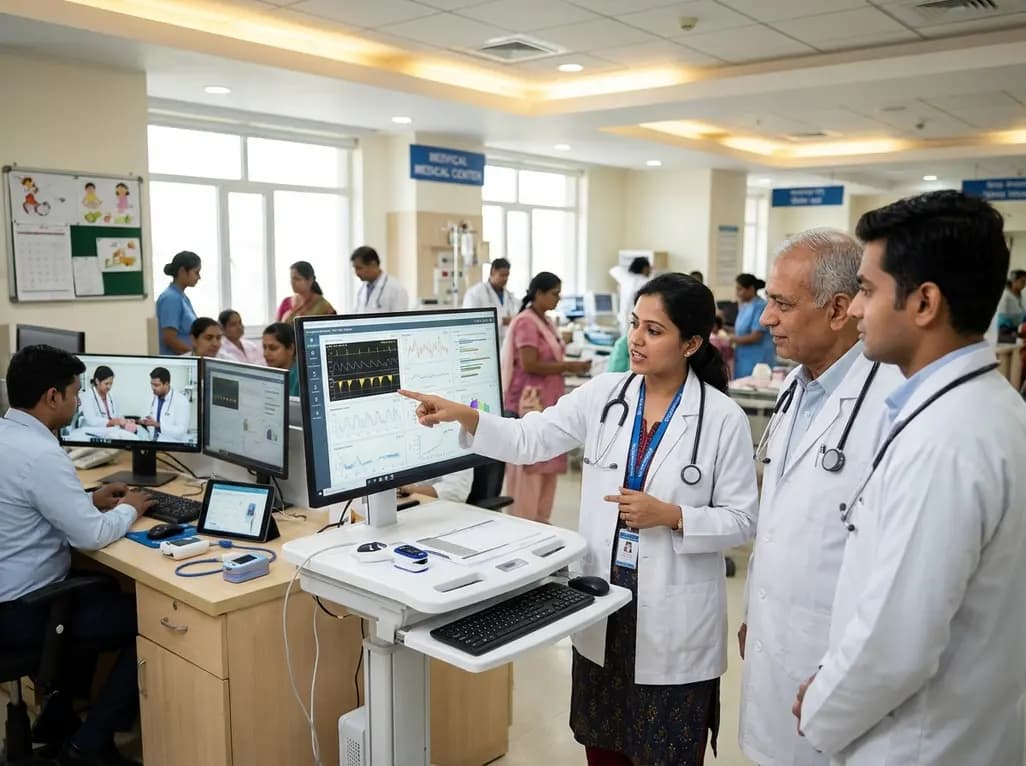
A landmark study details how an enterprise pediatric remote patient management model expanded from a single cardiology pilot to 16 diverse specialty programs by combining centralized digital operations with specialty clinical leadership.
Yesterday
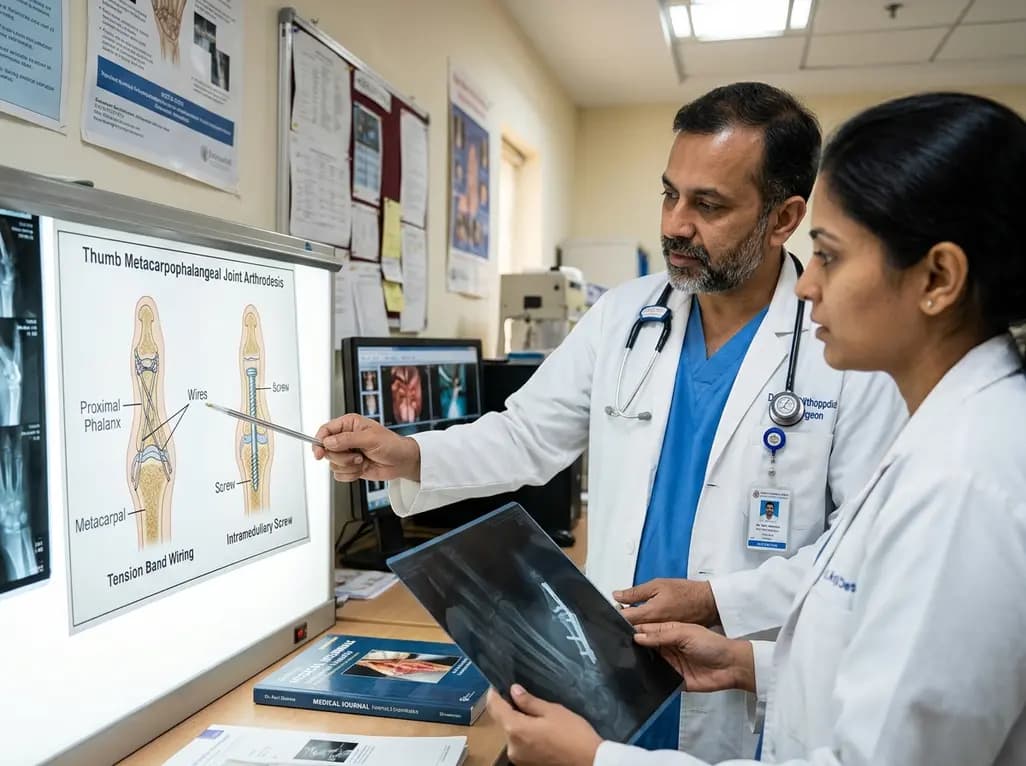
A comparative review of tension band wiring and intramedullary screw fixation in thumb metacarpophalangeal arthrodesis, evaluating union rates, hardware complications, and clinical outcomes.
Yesterday
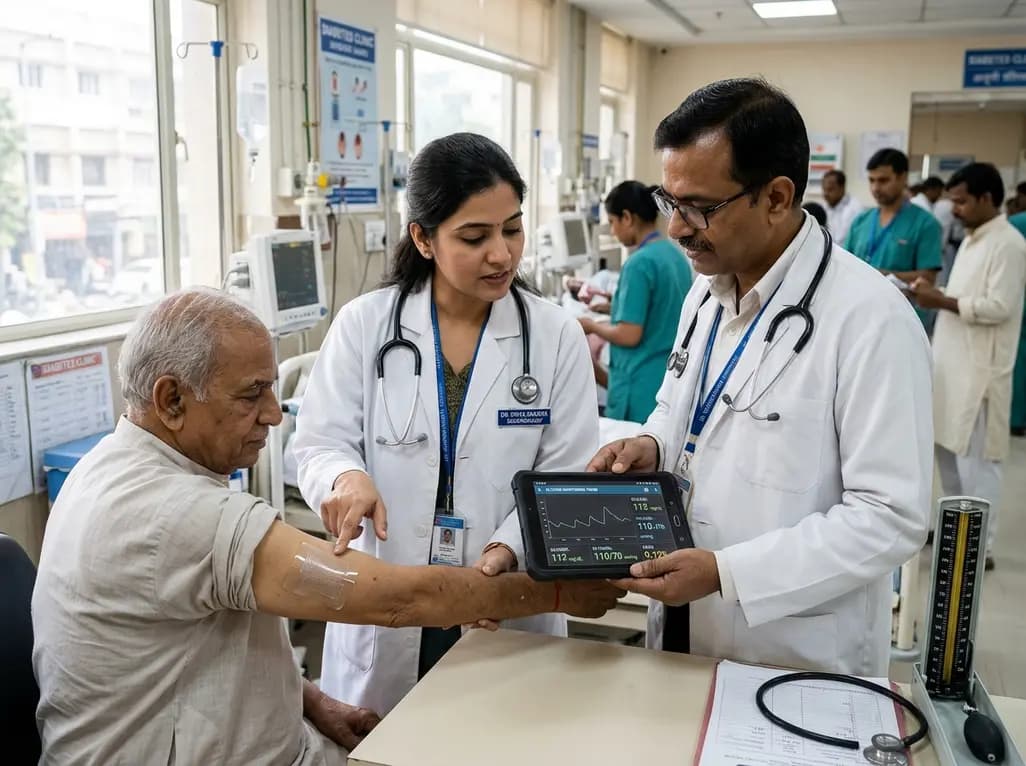
A breakthrough ultrathin multimodal sensor decouples physical hemodynamic monitoring from disposable electrochemical calibration, achieving long-term wearable glucose prediction with 81.36% accuracy and a 9.12% MARD. This offers a robust, drift-free solution for outpatient metabolic surveillance.
Yesterday
