.webp&w=384&q=75)

Loading, please wait...
Loading, please wait...
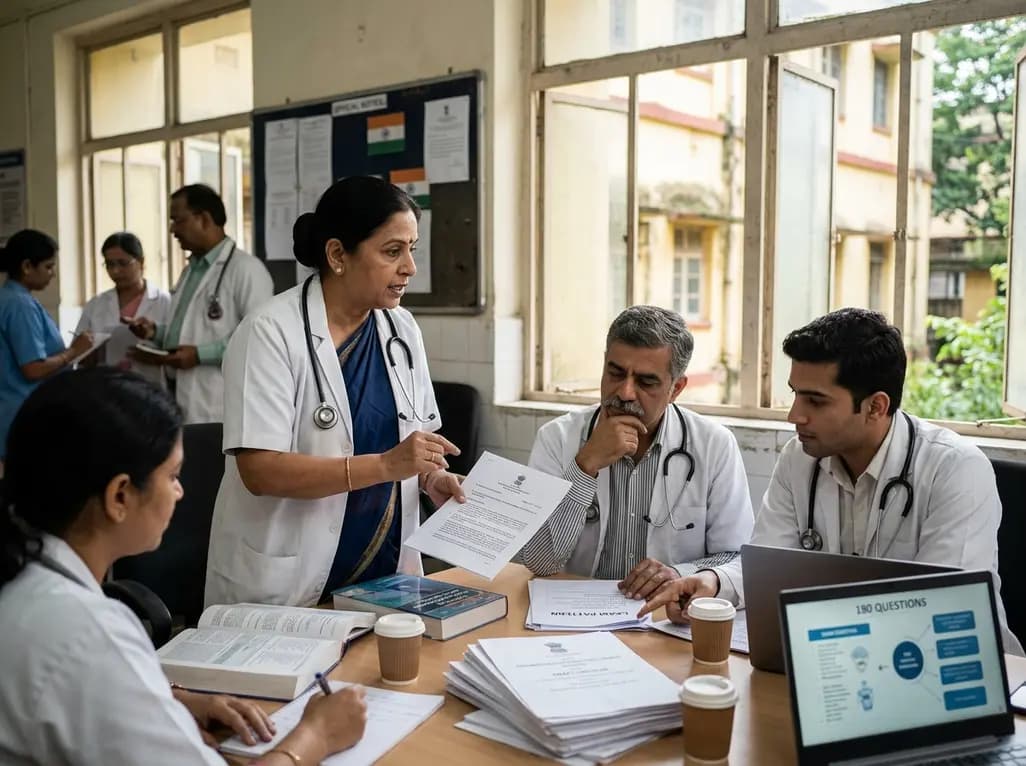
The Union Ministry of Health and Family Welfare has announced significant updates regarding the postgraduate medical entrance examination. Union Health Minister J P Nadda recently conducted a comprehensive review meeting to evaluate the preparedness for NEET-PG 2026. During this meeting, officials discussed major NEET PG 2026 reforms designed to improve candidate convenience and ensure maximum transparency. The minister directed all participating agencies, including the National Board of Examinations in Medical Sciences, to execute the examination smoothly. Consequently, candidates can expect a highly secure, technology-driven testing environment on August 30, 2026. Furthermore, authorities emphasized the importance of safeguarding the integrity of the evaluation process across all test locations. A total of 2,73,183 medical graduates have registered for the upcoming examination, reflecting a 12.5 percent increase compared to the previous year. Therefore, officials are expanding administrative logistics to accommodate the growing number of aspirants. The examination will occur in a single shift across approximately 340 cities and more than 1,300 test centers nationwide. Ultimately, these measures aim to deliver a fair and candidate-friendly experience for all medical aspirants.
The updated structure introduces key changes to the question paper format and timing allocations. Specifically, the total number of multiple-choice questions has been reduced from 200 to 180. However, the total duration of the examination remains unchanged at 210 minutes, or three hours and thirty minutes. As a result, candidates will receive significantly more time to analyze and solve each individual clinical scenario. In addition, the return to a single-shift examination model ensures uniform testing conditions for all registered students nationwide. In previous years, multi-shift schedules required complex normalization formulas to calculate final percentile scores. By conducting the entire examination in one single shift, NBEMS eliminates score variations caused by multi-session question papers. Moreover, candidates will answer identical questions simultaneously across all testing venues, ensuring equitable assessment standards. Official administrative teams will oversee candidate facilitation and technical infrastructure to prevent delays during the session. Overall, these adjustments aim to reduce exam stress and foster accurate clinical evaluation for postgraduate medical admissions.
Logistical reforms for NEET-PG 2026 focus heavily on making travel and accommodation arrangements easier for candidates. Previously, aspirants encountered difficulties due to distant test center allocations and delayed location announcements. To resolve these challenges, the health ministry altered the test city preference selection process. Candidates must now select three state preferences when completing their online application forms. Crucially, the correspondence state of the applicant must serve as the mandatory first preference. Therefore, candidates have a much higher likelihood of securing an examination center closer to their home residence. In addition, the National Board of Examinations in Medical Sciences will release test city intimation slips nearly three weeks before the scheduled examination date. Consequently, candidates will have ample time to arrange travel, transit, and lodging without last-minute panic or inflated travel costs. This advance notification significantly lowers travel stress, allowing candidates to focus fully on their final academic preparation. Furthermore, local command centers will coordinate with regional administrative bodies to assist candidates on exam day.
Maintaining security and preventing unfair practices remains a central focus for health ministry officials and examination organizers. During the preparedness review, Minister Nadda inspected the multi-layered security framework designed for NEET-PG 2026. To strengthen candidate identity verification, organizers integrated mandatory Aadhaar-based authentication during both application submission and venue entry. Furthermore, testing facilities will utilize iris-based biometric verification whenever fingerprint scanning fails to authenticate a candidate. Additionally, advance physical sealing and rigorous structural verification of all examination centers will occur before the test begins. Continuous high-definition CCTV surveillance will monitor testing halls, corridors, and entry points in real time. Besides monitoring, organizers will deploy active signal jammers at every venue to block unauthorized wireless communication. Moreover, dynamic computer allocation algorithms will assign seating randomly just moments before the test starts. Over 60,000 trained examination functionaries will oversee ground operations to prevent impersonation or misconduct. Real-time supervision by independent observers and regional command centers will ensure full compliance with established standards.
Authorities have implemented robust technological safeguards to protect question paper confidentiality and eliminate rumor-mongering surrounding leaks. Union Health Minister J P Nadda explicitly cautioned aspirants against believing fraudulent claims regarding leaked question papers. He explained that the final question paper is chosen through a secure, time-bound, and encrypted mechanism shortly before the examination commences. Multiple operational layers ensure that digital paper files remain completely inaccessible until the scheduled start time. Digital decryption keys become active only at the precise moment the test begins across authorized computer terminals. Therefore, any individual claiming prior access to the question paper is spreading false information to deceive candidates. To combat fraudulent schemes and touting, NBEMS established a dedicated email handle for reporting suspicious activity. Candidates should rely strictly on official communications issued by NBEMS and the Ministry of Health and Family Welfare. Moreover, candidates are urged to report any unethical solicitations immediately to law enforcement and exam authorities. Thus, these combined technical barriers guarantee absolute confidentiality throughout the examination process.
Q1: What are the main changes in the NEET PG 2026 exam pattern?
The NEET PG 2026 examination pattern reduces the total number of multiple-choice questions from 200 to 180. However, the overall exam duration remains 210 minutes, providing candidates with more time per question. Additionally, the examination returns to a single-shift format across all centers nationwide, eliminating score normalization issues.
Q2: How has the examination centre allocation process been improved for candidates?
Candidates now select three preferred states for their test centers, with their correspondence state being mandatory as the first choice. This policy ensures students receive exam venues closer to their place of residence. Furthermore, test city intimation slips will be issued nearly three weeks prior to the exam date, helping candidates plan travel efficiently.
Q3: What security measures are implemented to prevent paper leaks and cheating?
Organizers have deployed multi-layered security protocols including Aadhaar and iris biometric authentication, live CCTV surveillance, and signal jammers at all venues. Furthermore, question papers undergo end-to-end encryption and digital decryption only at the scheduled start time. Authorities also established a dedicated email address to report malpractices and impersonation attempts promptly.
Disclaimer: This content is for informational and educational purposes only. It does not constitute medical advice or replace professional judgment. Refer to the latest local and national guidelines for clinical practice.
References

Read summarized clinical updates, watch expert medical content, and earn CME certifications right from your smartphone.
Open your smartphone camera to scan and install.





Union Health Minister J P Nadda reviewed preparations for NEET-PG 2026, announcing major student-friendly reforms. Key updates include a revised 180-question pattern, single-shift execution, improved exam center allocation, Aadhaar biometric verification, and multi-layered encryption to prevent paper leaks.
last month

Dendritic cells bridge innate and adaptive immunity in myocardial infarction. This review explores their pathological roles, circulating dynamics, novel tolerogenic interventions, and how standard cardiovascular medications modulate dendritic cells to improve post-infarction myocardial repair and patient outcomes.
Today

A premature neonate developed upper limb compartment syndrome after uterine rupture extruded the arm through a scar defect. Conservative management with continuous monitoring yielded complete functional recovery and normal limb growth at 10-year follow-up, highlighting non-operative safety in selected cases.
Today
Atherosclerosis involves extensive glycometabolic reprogramming across immune and vascular cells. This review examines how glycolysis, the pentose phosphate pathway, and lactate-driven epigenetic shifts fuel plaque vulnerability, while highlighting novel therapeutic targets like PFKFB3 and LDHA.
Today
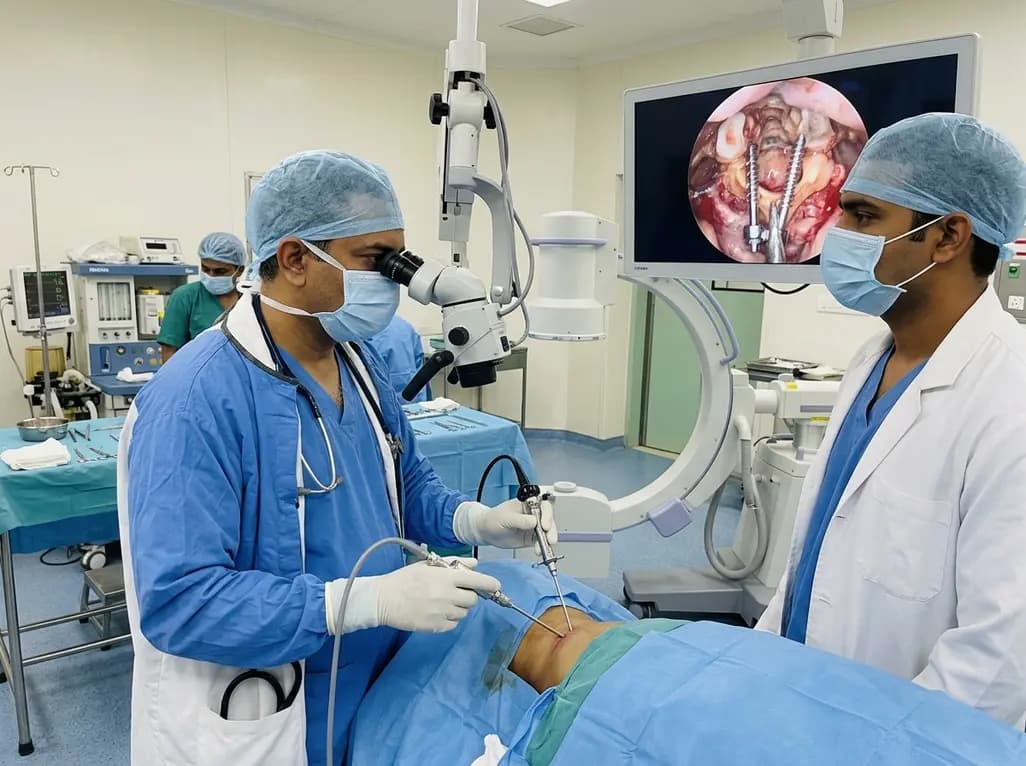
Endoscopic posterior cervical fusion combines minimally invasive decompression, joint preparation, and rigid screw-rod fixation for atlantoaxial pathologies. Early clinical findings demonstrate solid bony union, excellent symptom relief, and minimal soft-tissue morbidity without significant vascular compromise.
Yesterday
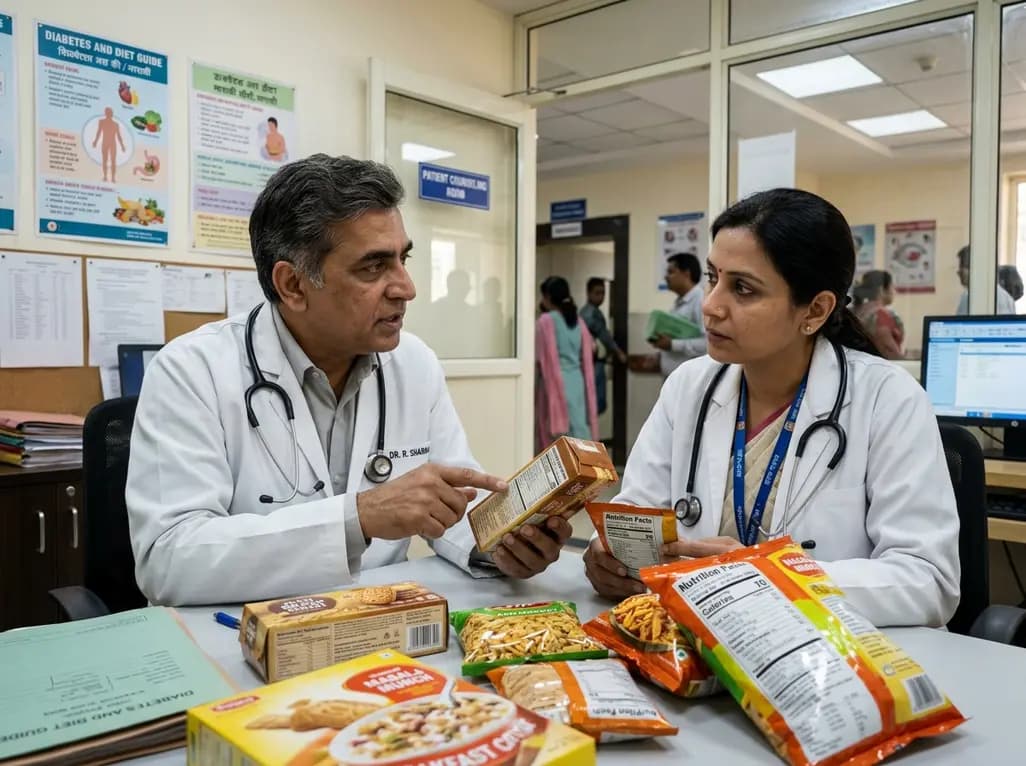
The All-India Food Processors' Association has approached the Supreme Court to oppose FSSAI's proposed per-100g benchmark for front-of-pack warning labels, advocating instead for a per-serving threshold. We explore the regulatory showdown, nutritional evidence, and implications for clinical lifestyle counseling.
Today
