.webp&w=384&q=75)

Loading, please wait...
Loading, please wait...

India has achieved a significant milestone by becoming the first country in the South-East Asia region to adopt a comprehensive national health AI strategy. During the India AI Impact Summit 2026, Union Health Minister JP Nadda introduced two pivotal initiatives: SAHI and BODH. These frameworks aim to streamline AI integration while ensuring data safety and clinical reliability. Consequently, India now sets a global benchmark for digital health innovation.
The SAHI (Strategy for Artificial Intelligence in Healthcare for India) initiative establishes a long-term policy framework. It guides the evaluation and adoption of AI across both public and private sectors. Furthermore, this framework addresses critical pillars like governance, data interoperability, and workforce readiness. Thus, the government ensures a common path for all health institutions. Moreover, the BODH platform guarantees that AI tools used by clinicians are safe and effective. This platform expedites the integration of advanced technologies into clinical systems.
AI already plays a crucial role in India's digital health transformation. For instance, the system currently utilizes AI for tuberculosis risk prediction and diabetic retinopathy screening. Additionally, telemedicine consultations benefit significantly from AI-driven assistance. These tools help health workers identify vulnerable spots and improve service delivery across the nation. Therefore, the national health AI strategy will accelerate these existing efforts. While the foundation was laid by the Ayushman Bharat Digital Health Mission, these new tools provide the next level of precision.
While the strategy sets clear rules, the primary focus now shifts toward successful implementation. The Ministry of Health and Family Welfare emphasizes that the national digital health blueprint provides the necessary foundation. Therefore, stakeholders from the National Health Authority (NHA) and ICMR will collaborate closely. This collective effort aims to move from theoretical promise to tangible clinical impact. Consequently, clinicians can expect more reliable decision-support tools in the coming years.
Q1: What are the SAHI and BODH initiatives?
SAHI is a national policy framework designed to guide AI adoption in healthcare. BODH is a benchmarking platform that ensures AI tools are safe, reliable, and effective before clinical use.
Q2: How is AI currently used in Indian public health?
AI is currently integrated into systems for tuberculosis risk prediction and diabetic retinopathy screening. It also supports telemedicine and mapping of vulnerable disease spots.
Q3: Why is the national health AI strategy important for doctors?
This strategy provides a regulated environment for using AI. It ensures that data remains secure and that AI-driven tools meet clinical standards for patient safety.
Disclaimer: This content is for informational and educational purposes only. It does not constitute medical advice or replace professional judgment. Refer to the latest local and national guidelines for clinical practice.
References

Read summarized clinical updates, watch expert medical content, and earn CME certifications right from your smartphone.
Open your smartphone camera to scan and install.





India leads the South-East Asia region by adopting the SAHI and BODH initiatives to govern and integrate AI tools into the national healthcare ecosystem....
8 months ago
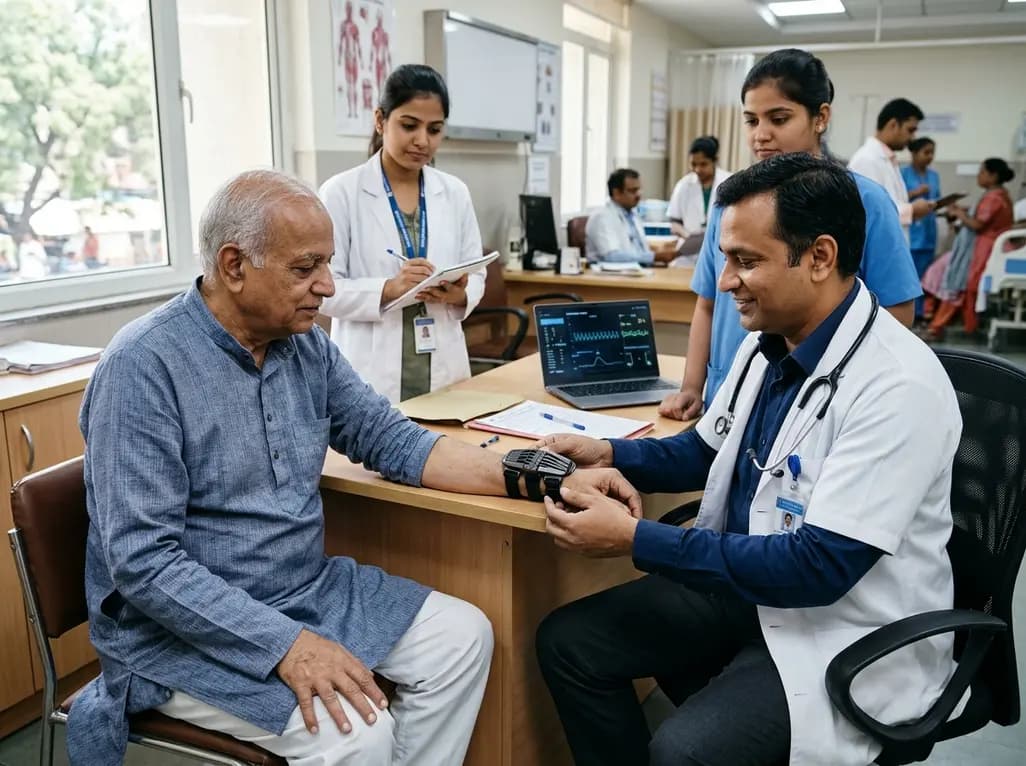
The TREM-AB open-label pilot study evaluated a wearable passive nonlinear vibration absorber for essential tremor. The Nonlinear Energy Sink bracelet reduced clinical Fahn-Tolosa-Marin tremor scores by 32.1% and electrophysiological tremor power by 49.2% with no adverse effects reported.
Today
A population-based study of 20,928 children reveals that small vulnerable newborns face sex-divergent mental capital outcomes at ages 6-7: term SGA girls show higher behavioral difficulties and lower resilience, while preterm non-SGA boys experience increased behavioral problems.
Today
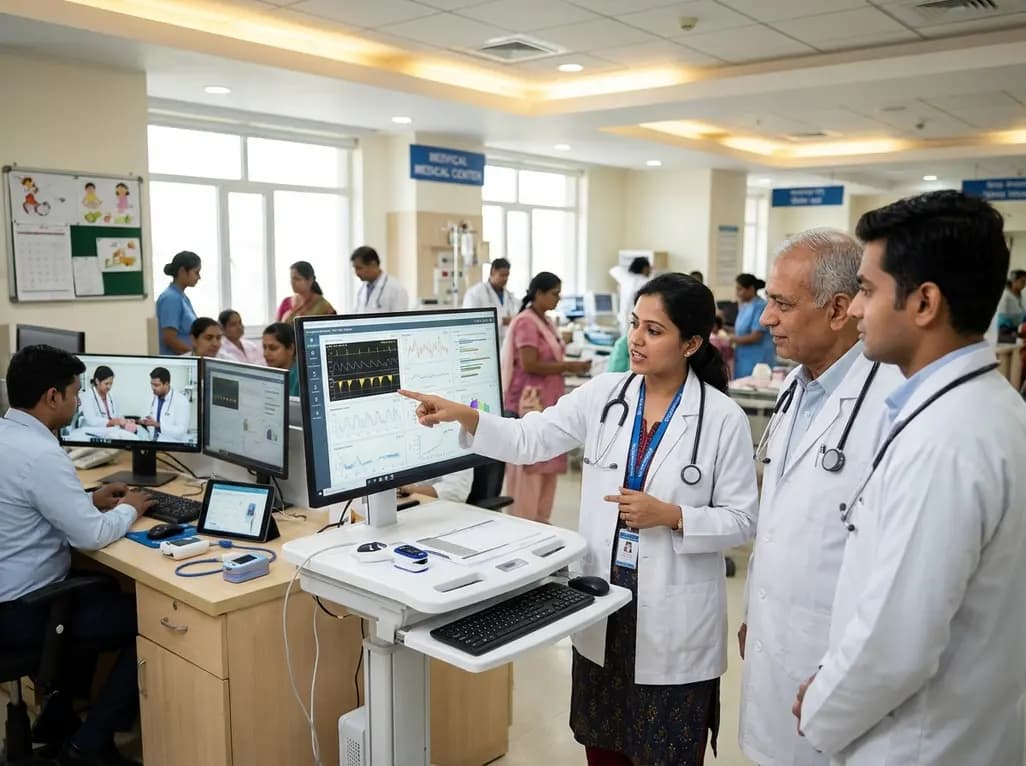
A landmark study details how an enterprise pediatric remote patient management model expanded from a single cardiology pilot to 16 diverse specialty programs by combining centralized digital operations with specialty clinical leadership.
Today
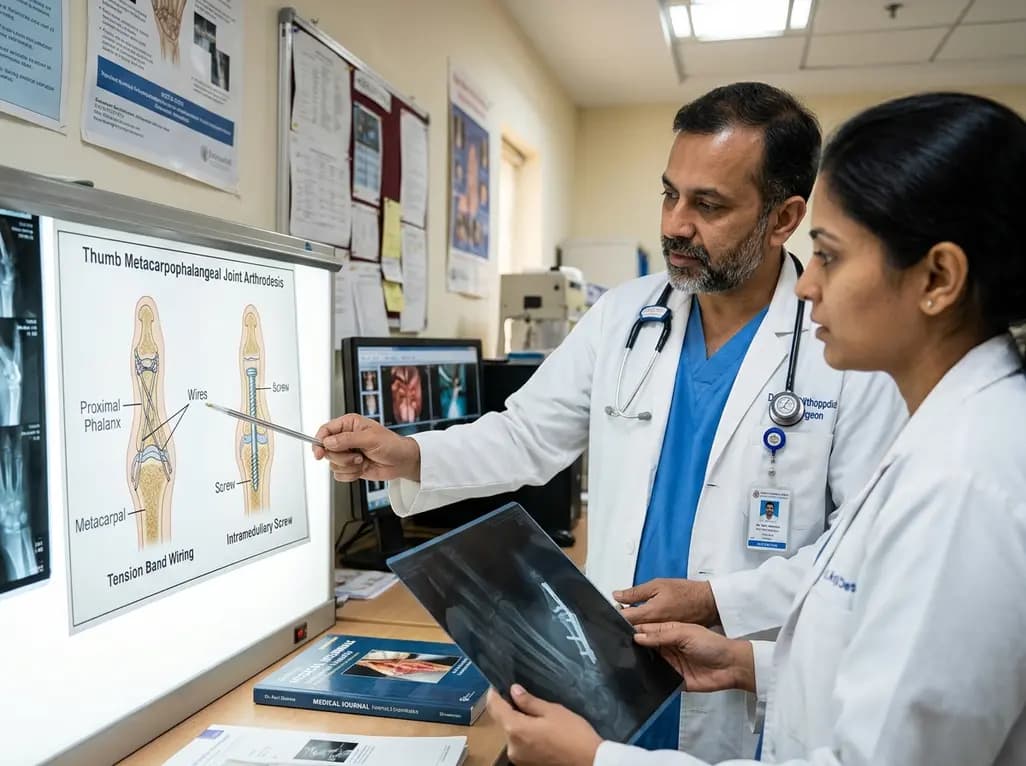
A comparative review of tension band wiring and intramedullary screw fixation in thumb metacarpophalangeal arthrodesis, evaluating union rates, hardware complications, and clinical outcomes.
Today
A breakthrough ultrathin multimodal sensor decouples physical hemodynamic monitoring from disposable electrochemical calibration, achieving long-term wearable glucose prediction with 81.36% accuracy and a 9.12% MARD. This offers a robust, drift-free solution for outpatient metabolic surveillance.
Today
