.webp&w=384&q=75)

Loading, please wait...
Loading, please wait...

Occupational health hazards present substantial challenges in maritime communities across South Asia. Recent epidemiological evidence highlights that musculoskeletal pain in fishermen represents an overwhelming clinical and socioeconomic crisis. Artisanal and small-scale marine workers routinely operate under demanding physical conditions without mechanized aids. Consequently, these workers endure repetitive biomechanical stress, excessive vibration, and unyielding postural strain. Primary care physicians, orthopedic practitioners, and occupational specialists must understand these work patterns to diagnose injuries early and mitigate long-term physical impairment in these vulnerable fishing cohorts.
Epidemiological research reveals an extraordinary concentration of physical morbidity among coastal workers. A recent landmark study among active fishermen in Point Pedro, Jaffna, demonstrated an astonishing 98% overall prevalence of musculoskeletal discomfort. In addition, comparative investigations from coastal fishing communities in India and Southeast Asia confirm remarkably similar patterns. Most workers endure continuous pain across multiple anatomical regions rather than isolated joint problems.
Furthermore, these high numbers reflect the harsh realities of small-scale artisanal fishing. Fishermen battle unstable deck environments, turbulent oceanic waves, and heavy manual loads without adequate safety protocols. Therefore, the cumulative mechanical strain on joints, tendons, and spinal discs accelerates degenerative changes. Unfortunately, many workers ignore early warning signs because they depend entirely on daily wages. As a result, mild acute strain rapidly transitions into debilitating chronic pathology. Clinicians practicing in coastal belts must actively screen every maritime patient for repetitive occupational trauma during routine primary consultations.
Specific physical tasks dictate distinct injury patterns across the body. The Point Pedro cross-sectional data revealed that lower back pain affected 94% of respondents, shoulder pain afflicted 85%, and wrist or hand symptoms troubled 65%. Similarly, studies conducted among Indian sea fishers report lumbar spine and shoulder disorders as the leading causes of physical limitation.
Moreover, these clinical findings correlate directly with specific vessel tasks. Lower back symptoms arise from repetitive bending, prolonged stooping, and deadlifting heavy nets filled with marine catch. Meanwhile, shoulder pathology, such as rotator cuff tendinopathy and subacromial impingement, stems from continuous overhead casting and net hauling. Furthermore, wrist and hand pain often reflects chronic flexor tenosynovitis or carpal tunnel compression caused by forceful hand gripping and wet line handling. Consequently, clinicians must perform segmental biomechanical assessments. Evaluating both static postural endurance and dynamic upper limb movements allows doctors to localize underlying soft tissue pathologies effectively.
The etiology of physical discomfort in maritime workers extends beyond simple mechanical load. Statistical analyses identify family income, alcohol consumption, high body mass index, and fishing frequency as significant determinants. Lower household income often forces fishermen to work extended shifts without adequate recuperation. Therefore, economic hardship directly compounds physical exhaustion.
In addition, increased body mass index places excessive axial stress on already strained lumbar spinal structures. Overweight workers experience heightened intra-articular pressure and systemic low-grade inflammation, which delays soft tissue healing. Meanwhile, hazardous alcohol consumption remains prevalent as a coping mechanism for relentless fatigue and untreated discomfort. However, regular alcohol intake impairs restorative sleep architecture and accelerates peripheral neuromuscular deterioration. Furthermore, higher weekly sea trips severely limit tissue remodeling time between arduous shifts. Consequently, physicians must recognize that musculoskeletal disorders in this demographic stem from a complex convergence of ergonomic hazards and lifestyle vulnerabilities.
When assessing maritime laborers, clinicians must apply structured occupational screening protocols. History taking should document daily voyage duration, vessel dimensions, manual hauling techniques, and past traumatic events. In addition, practitioners must meticulously identify red flag symptoms indicating serious structural damage. Unrelenting nocturnal back ache, progressive lower limb weakness, saddle paresthesia, or loss of bowel and bladder control necessitate urgent radiological evaluation for severe lumbar disc herniation or cauda equina syndrome.
Similarly, severe shoulder weakness during abduction and external rotation suggests full-thickness tendon ruptures rather than simple bursitis. Therefore, comprehensive physical examinations should include neurovascular assessments, provocative impingement maneuvers, and lumbar provocative tests. Clinicians must also examine peripheral joints for signs of secondary bacterial infections from marine punctures, as soft tissue pathogens can masquerade as common musculoskeletal strain. Prompt identification prevents preventable systemic complications.
Managing occupational pain in fishermen requires balanced conservative therapies tailored to their socioeconomic realities. Non-steroidal anti-inflammatory drugs offer short-term symptomatic relief during acute exacerbations. However, physicians should prescribe them cautiously. Unmonitored medication use combined with chronic dehydration and heavy alcohol intake elevates renal and gastric risks significantly. Therefore, topical analgesics, paracetamol, and muscle relaxants represent safer initial pharmacological options.
Furthermore, targeted physical therapy remains the cornerstone of lasting musculoskeletal rehabilitation. Clinicians should educate patients on core-strengthening exercises, hamstring flexibility drills, and scapular stabilization routines that can be performed on land. Moreover, addressing lifestyle factors produces meaningful clinical improvements. Physicians must counsel patients on weight reduction to diminish compressive spinal loads. Similarly, structured de-addiction programs for alcohol dependency break destructive pain-coping cycles. Combining appropriate pain control with proactive neuromuscular reconditioning empowers laborers to retain occupational functionality without accelerating spinal breakdown.
Individual medical care cannot permanently solve systemic occupational hazards without structural ergonomic reform. Coastal primary healthcare centers must establish dedicated occupational health outreach initiatives in collaboration with local fishing cooperatives. For example, deploying simple mechanical winches, net haulers, and lever-assisted pulleys on traditional craft drastically reduces lumbar spinal compression and upper limb strain.
In addition, community health workers should organize coastal workshops teaching proper manual handling techniques. Fishermen must learn to lift using lower limb kinetic power rather than twisting their lumbar spine under heavy cargo loads. Furthermore, local governments should mandate periodic health screenings at major landing centers. Providing subsidized knee pads, supportive non-slip footwear, and vibration-dampening flooring can minimize joint impact. Ultimately, multi-stakeholder collaboration linking primary care physicians, maritime policy makers, and community cooperatives provides the only sustainable defense against chronic physical disability in coastal fishing fleets.
Active fishermen endure continuous axial spinal loading due to repetitive bending, heavy net lifting, and rough sea motions. The constant rolling of the boat forces core muscles to contract continuously to maintain balance. Consequently, intervertebral discs suffer cumulative microtrauma, which accelerates degenerative disc disease, facet arthropathy, and debilitating muscular spasms across the lumbar region.
Excess body mass index substantially amplifies mechanical loads placed on spinal discs and weight-bearing joints during heavy manual lifting. Concurrently, high alcohol consumption acts as an unmonitored coping mechanism that disrupts muscle protein synthesis, blunts normal pain awareness, and worsens systemic metabolic inflammation. Together, these factors impair tissue recovery, worsening chronic pain and functional impairment.
Clinicians can recommend basic behavioral and mechanical adjustments that do not require expensive technology. Fishermen should utilize team lifting for loads exceeding twenty kilograms and avoid twisting the torso while hauling nets. Furthermore, using wide-grip hauling gloves, installing basic manual lever pulleys, and performing brief spinal extension stretches between net retrievals markedly reduce joint stress.
Disclaimer: This content is for informational and educational purposes only... Refer to the latest local and national guidelines for clinical practice.
References

Read summarized clinical updates, watch expert medical content, and earn CME certifications right from your smartphone.
Open your smartphone camera to scan and install.





Musculoskeletal pain affects almost all artisanal fishermen, predominantly targeting the lower back, shoulders, and wrists. Discover key occupational risk factors, clinical evaluation protocols, and practical interventions designed for primary care clinicians and orthopedic specialists managing coastal populations.
Today
Evaluating the Endothelial Activation and Stress Index (EASIX) provides critical prognostic insight into in-hospital mortality for patients with NSTEMI. Combining routine admission biomarkers like LDH, creatinine, and platelets enables rapid, cost-effective risk stratification in emergency and intensive cardiac care.
Today
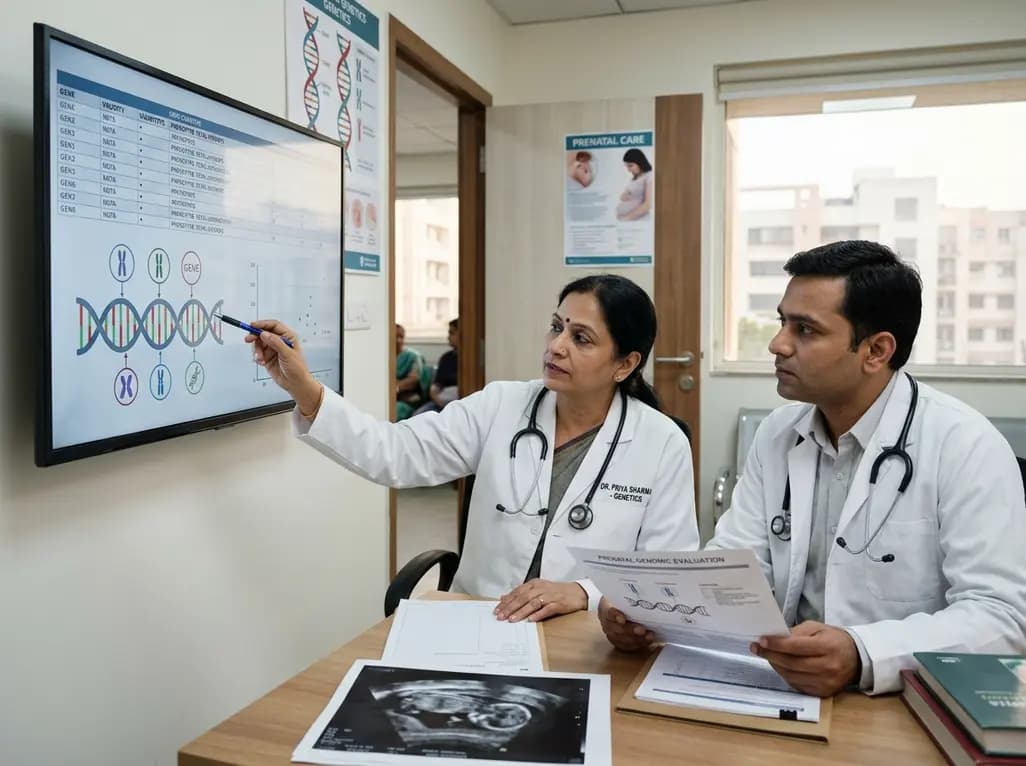
The ClinGen Prenatal Gene Curation Expert Panel evaluated 63 disease relationships across 61 genes, establishing clinical validity for severe fetal phenotypes like hydrops and stillbirth to enhance prenatal genomic interpretation and clinical care.
Yesterday
SWEDEPAD-1 trial insights show paclitaxel-coated devices do not improve long-term limb salvage in patients with chronic limb-threatening ischemia and tissue loss. While one-year reinterventions decreased, the devices were linked to a higher risk of major amputation at three months.
Today
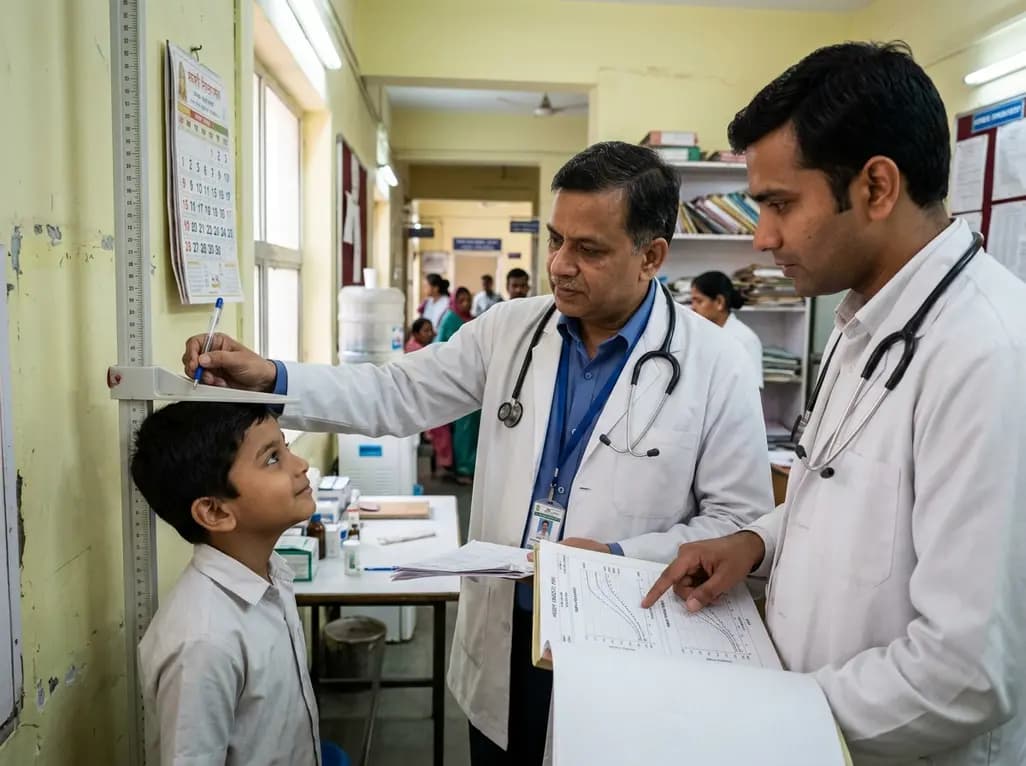
A real-world observational study evaluates pediatric isolated growth hormone deficiency patients transitioning to once-weekly somatrogon, showing sustained height velocity, early IGF-1 shifts, and stabilized BMI.
Today
