.webp&w=384&q=75)

Loading, please wait...
Loading, please wait...

Motor skill acquisition is a cornerstone of athletic development, particularly in high-precision disciplines like gymnastics. In the developmental window between ages 7 and 11, children exhibit significant neuroplasticity, making this a critical period for establishing fundamental movement patterns. Research consistently highlights that the quality and modality of feedback provided during this phase determine the long-term technical proficiency of the athlete. Within this context, multisensory feedback in gymnastics has emerged as a vital area of study. This approach integrates different sensory inputs to create a more robust mental representation of complex movements. By providing both visual and auditory cues, instructors can cater to diverse learning styles and enhance the cognitive processing of spatial information. Consequently, the integration of these modalities is no longer seen as merely supplementary but as a necessary component of modern sports pedagogy. Furthermore, understanding the physiological and neurological basis of feedback processing allows coaches to refine their instructional strategies to match the developmental needs of young gymnasts.
The human brain utilizes sensory integration to refine motor outputs through an iterative process of error detection and correction. In gymnastics, where athletes must maintain balance and orientation during multi-axis rotations, the reliance on a single sensory channel is often insufficient. Visual feedback provides a reference for body positioning in space, while verbal feedback offers prescriptive instructions on how to adjust specific joint angles. When these modalities are combined, the resulting multisensory feedback in gymnastics reduces the ambiguity of technical corrections. Therefore, the athlete can compare their perceived execution with the objective visual evidence provided by video analysis. This comparative process accelerates the transition from the cognitive stage to the associative stage of motor learning. Moreover, studies suggest that mixed feedback formats lead to better retention of skills compared to isolated verbal or visual instructions. This phenomenon occurs because the dual coding of information strengthens the memory traces associated with the motor task. By leveraging both auditory and visual pathways, educators can create a more immersive and effective learning environment for youth athletes.
Modern sports science increasingly relies on kinematic analysis to quantify movement quality and track progress over time. In a study involving sixty female gymnasts aged 7-11 years, researchers utilized two-dimensional kinematic software to evaluate skill acquisition across different feedback groups. The results demonstrated significant interactions between the feedback modality and the rate of improvement in complex skills such as the Back Scale and Split Jump. Specifically, the group receiving mixed feedback showed the most pronounced improvements in joint angle precision and postural stability. This objective data underscores the limitations of traditional, purely verbal coaching methods in youth gymnastics. By analyzing specific kinematic parameters like knee and shoulder alignment, coaches can identify subtle errors that are often missed by the naked eye. Additionally, the use of tools like Kinovea allows for a frame-by-frame breakdown of performance, providing athletes with clear visual goals. This level of technical detail is essential for mastering advanced gymnastic elements that require extreme flexibility and coordination. Thus, kinematic insights provide a scientific bridge between theoretical feedback models and practical athletic performance.
When implementing multisensory feedback in gymnastics, it is crucial to consider the cognitive load placed on young learners. Children have a limited capacity for processing complex information, meaning that providing too much feedback at once can lead to cognitive overload. This phenomenon often results in a decrease in performance as the athlete becomes overwhelmed by the volume of instructions. Therefore, instructors must strike a balance between providing detailed multisensory cues and allowing for autonomous practice. The concept of "faded feedback" suggests that as an athlete becomes more proficient, the frequency of external cues should gradually decrease. This shift encourages the gymnast to develop internal feedback mechanisms, which are essential for high-pressure competitive environments. Furthermore, the timing of feedback is just as important as the modality. Providing feedback immediately after a trial helps in immediate error correction, while delayed feedback may support better long-term retention. By managing the cognitive load and tailoring feedback to the athlete's current developmental stage, coaches can maximize the efficiency of the training program while minimizing the risk of frustration or burnout.
The advancement of digital technology has made high-quality feedback more accessible than ever before in sports medicine and physical education. Video feedback (VFB) has become a standard tool in many gymnastics programs, allowing for real-time visual analysis of performance. When combined with professional coaching, these digital tools facilitate a more interactive and collaborative learning process. Athletes can see their own movements side-by-side with a model performance, making technical concepts more concrete. Consequently, this visual representation serves as a powerful motivational tool, as athletes can track their own improvements over weeks of training. Additionally, the use of mobile applications and portable kinematic software enables coaches to provide feedback even in remote or under-resourced training environments. For pediatricians and sports medicine specialists in India, understanding these tools is vital for managing the health and development of young athletes. Integrating objective kinematic data into clinical assessments can help in early identification of movement patterns that may predispose an athlete to injury. Ultimately, the synergy between digital technology and multisensory instruction represents the future of athletic excellence.
In the context of the growing sports culture in India, applying evidence-based feedback models is essential for producing competitive athletes on the global stage. Gymnastics, in particular, requires early specialization and rigorous training, which must be supported by sound pedagogical principles. The findings regarding multisensory feedback in gymnastics have direct implications for how sports academies and schools design their curricula. By incorporating visual aids and structured verbal cues, Indian coaches can enhance the technical foundation of youth gymnasts. Moreover, the focus on kinematic precision helps in reducing the incidence of overuse injuries, which are common in sports requiring repetitive high-impact movements. Pediatricians should advocate for training environments that prioritize skill quality over volume, using multisensory approaches to achieve this goal. Furthermore, the adoption of objective analysis tools can help standardize judging and coaching standards across different regions. As India continues to invest in sports infrastructure, the emphasis must remain on the scientific management of talent. By leveraging the power of integrated feedback, the sports medicine community can ensure that young athletes reach their full potential in a safe and efficient manner.
Multisensory feedback is superior because it engages multiple neural pathways simultaneously, enhancing the athlete\'s mental model of the movement. While verbal cues provide specific instructions, visual feedback allows the gymnast to witness their own execution errors in real-time. This combination reduces the cognitive ambiguity associated with learning complex skills like the Back Scale. Consequently, children aged 7-11 can process and internalize technical corrections more effectively, leading to faster skill acquisition and better long-term retention than isolated feedback methods.
Kinematic analysis shows that joint angle precision, specifically at the knee, hip, and shoulder, is most significantly improved through mixed feedback. For instance, in skills like the Split Jump, the synchronization of limb movement and the maintenance of a straight torso are highly sensitive to multisensory cues. These tools allow for the measurement of angular velocity and displacement, providing objective data that guides verbal corrections. This precision is essential for meeting the strict technical requirements of artistic gymnastics competition standards.
The developmental window between 7 and 11 years is often called the \"golden age\" for motor learning. During this period, the central nervous system is highly adaptable, allowing children to acquire complex coordination patterns rapidly. Multisensory feedback is particularly effective during this stage because children are transitioning from purely intuitive movement to more analytical, skill-based performance. By providing structured visual and verbal inputs, coaches can capitalize on this peak neuroplasticity to build a robust technical foundation that supports more advanced training later in adolescence.
Disclaimer: This content is for informational and educational purposes only. It should not be used as a substitute for professional medical advice, diagnosis, or treatment. Always seek the advice of your physician or other qualified health providers with any questions you may have regarding a medical condition. Refer to the latest local and national guidelines for clinical practice.
References
Güler VŞ et al. Multisensory feedback in gymnastics education: a kinematic study on skill acquisition in youth athletes. BMC Sports Sci Med Rehabil. 2026 Jun 29. doi: 10.1186/s13102-026-01830-6. PMID: 42374486.
Bouzid MS et al. The impact of video feedback on motor skill and motivation in acrobatic gymnastics through the use of digital tools in physical education. Journal of Human Sport and Exercise. 2025 Aug 23. doi: 10.14198/jhse.2025.201.05.
Niźnikowski T. Feedback during learning gymnastic exercises. Teoriya.ru. 2026 May 23. Available at: http://www.teoriya.ru/en/node/13452.

Read summarized clinical updates, watch expert medical content, and earn CME certifications right from your smartphone.
Open your smartphone camera to scan and install.





A kinematic study examines the efficacy of visual, verbal, and mixed feedback in youth gymnastics. Results indicate that combined multisensory approaches significantly enhance skill acquisition and joint angle precision in athletes aged 7-11, offering vital insights for sports medicine and pediatric training.
3 months ago

Following regulatory scrutiny from FSSAI regarding promotional representations and lean muscle preservation claims, Dr. Reddy's Laboratories and Nestlé Health Science are currently reviewing the branding and marketing strategy for their joint nutritional supplement Celevida GLP+.
Today

Demanding exhaustive hormonal profiling can inadvertently discourage clinical studies involving females. Methodological standards must align with the specific scientific question to expand, not restrict, equitable evidence for women.
Today

The Directorate General of Health Services directs Indian states to halt the hazardous reuse and reprocessing of single-use medical devices. Discover regulatory implications under the Drugs and Cosmetics Act, critical infection risks, legal liabilities, and operational changes required across clinical specialties.
Today
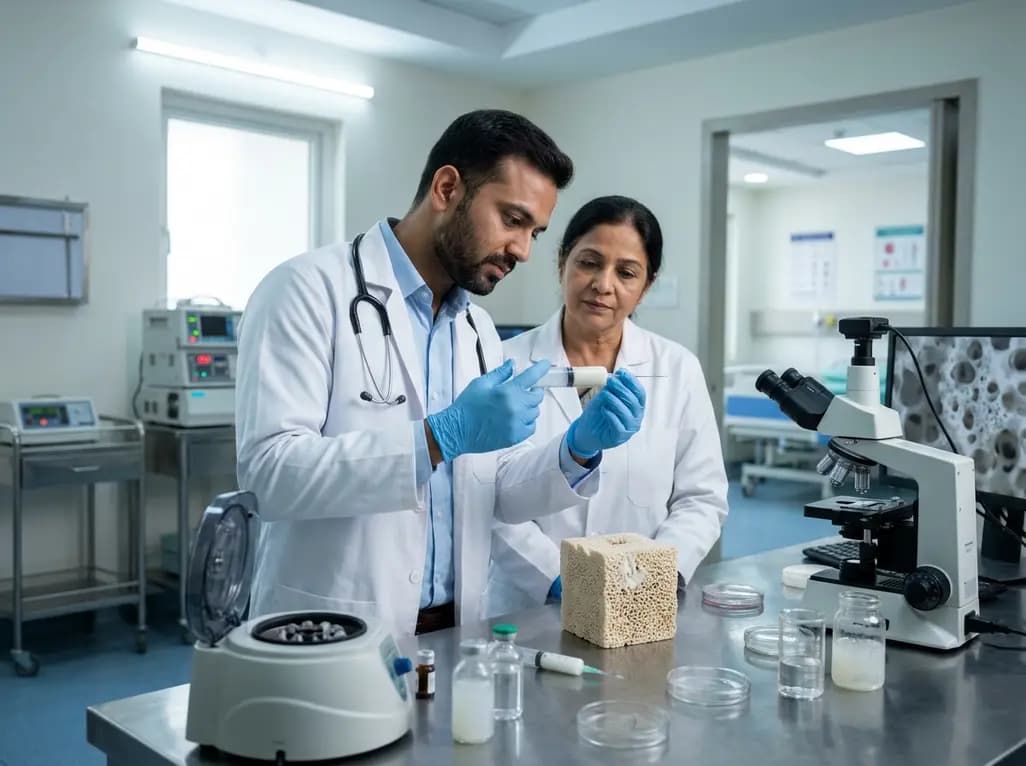
A novel calcium polyphosphate coacervate enables injectable bone implants with in situ hierarchical porosity via phase separation and gas foaming, significantly enhancing cell proliferation, energy metabolism, and osteogenic differentiation for minimally invasive bone defect repair.
Today

India is advancing preventive healthcare by integrating genomics, artificial intelligence, and quantum technologies. With the SANGAM programme sequencing one million Indian genomes, clinicians can unlock personalized therapies, detect cardiometabolic risks early, and curb the burden of diabetes and heart disease.
Today
