.webp&w=384&q=75)

Loading, please wait...
Loading, please wait...

Researchers developed a novel diagnostic platform called DRM-ES. This multibacterial detection system identifies live pathogens using advanced DNA technology. Consequently, clinicians can now detect multiple bacteria simultaneously from clinical, food, or environmental samples. Traditionally, testing multiple live pathogens at once has been difficult. However, DRM-ES uses bacteria-secreted proteins to trigger a specific molecular reaction.
First, these proteins cleave bead-immobilized DNAzymes. Subsequently, this process releases primers that initiate rolling-circle amplification (RCA). This technique generates long single-stranded DNA concatemers. These structures then activate spectrally distinct molecular beacons. Each beacon produces a unique color, such as blue, green, or red fluorescence. Afterward, a smartphone captures the light in a single image for analysis.
The platform employs a convolutional neural network (CNN) for precise decoding. The CNN analyzes fluorescence colors to identify and quantify pathogens. Currently, the system detects S. aureus, B. cocovenenans, and E. coli. Moreover, it achieves sensitivity levels comparable to traditional culture methods. Because it targets live-cell proteins, it ensures high specificity for viable bacteria. In a study of 32 real-world samples, the system correctly identified 29 contaminated cases. Furthermore, it showed 100% positive agreement with traditional cultures.
Therefore, this technology provides a vital tool for managing food-borne outbreaks. Clinicians can benefit from culture-comparable sensitivity and live-cell specificity. Finally, the platform offers a generalizable blueprint for large-scale pathogen screening. This development marks a significant step toward rapid, portable medical diagnostics.
The system detects specific proteins secreted by live bacteria. These proteins act as triggers for the DNAzyme-driven amplification process, ensuring that only viable pathogens are identified rather than dead cells.
Yes, the platform uses a standard smartphone and a trained convolutional neural network for analysis. This makes it a portable and cost-effective option for rapid pathogen screening in diverse clinical and environmental environments.
Disclaimer: This content is for informational and educational purposes only and does not constitute medical advice or a professional relationship between you and the authors. Always seek the advice of a qualified healthcare provider with any questions you may have regarding a medical condition. Refer to the latest local and national guidelines for clinical practice.
References
Xue W et al. Deep Learning-Enhanced DNAzyme-Driven Rolling-Circle Amplification Encoding for Multibacterial Detection. Angew Chem Int Ed Engl. 2026 Apr 15. doi: 10.1002/anie.4446117. PMID: 41983347.
Li J et al. Single bacteria detection by droplet DNAzyme-coupled rolling circle amplification. Anal Methods. 2022 Jun 16;14(23):2244-2248.
Miller S et al. Smartphone-based multispectral autofluorescence analysis of bacteria mixtures using convolutional neural networks. J Biol Eng. 2026 Jan 22;20(1).

Read summarized clinical updates, watch expert medical content, and earn CME certifications right from your smartphone.
Open your smartphone camera to scan and install.





DRM-ES uses DNAzymes and AI to identify live bacteria in clinical samples, offering sensitivity comparable to culture methods within a smartphone-based arra...
6 months ago

Following regulatory scrutiny from FSSAI regarding promotional representations and lean muscle preservation claims, Dr. Reddy's Laboratories and Nestlé Health Science are currently reviewing the branding and marketing strategy for their joint nutritional supplement Celevida GLP+.
Today
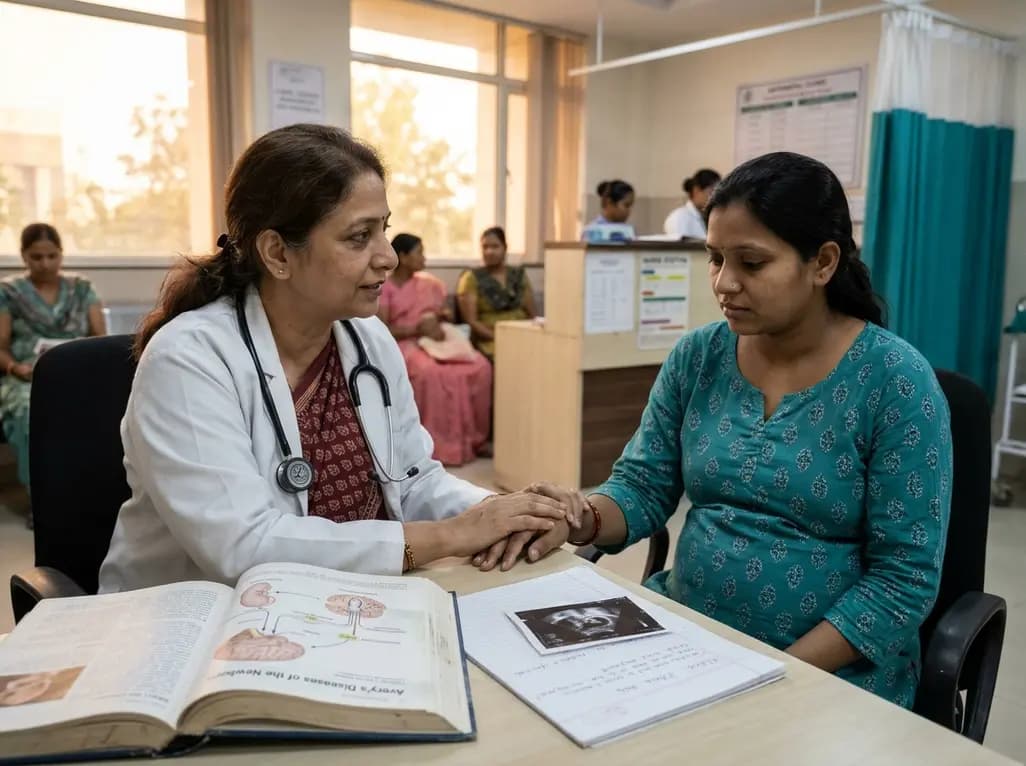
A comprehensive scoping review synthesises evidence linking prenatal maternal mental health to long-term offspring neurodevelopment, evaluating neuroendocrine, inflammatory, and epigenetic pathways while highlighting clinical screening and future research priorities.
Today

The Directorate General of Health Services directs Indian states to halt the hazardous reuse and reprocessing of single-use medical devices. Discover regulatory implications under the Drugs and Cosmetics Act, critical infection risks, legal liabilities, and operational changes required across clinical specialties.
Today
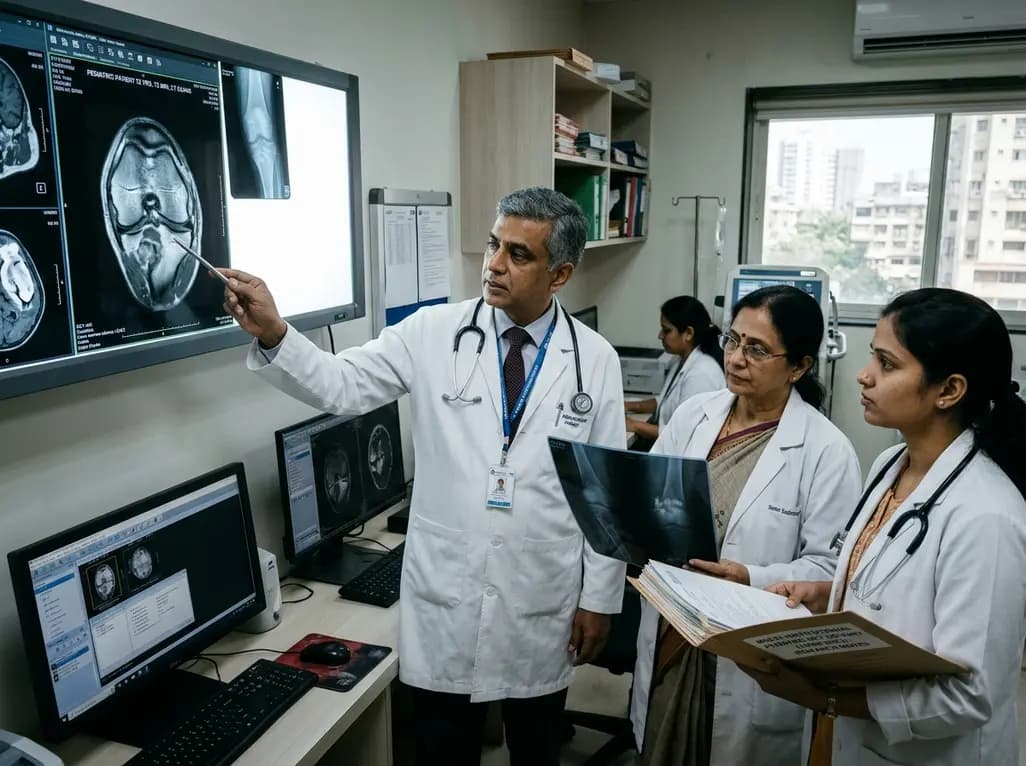
A 25-year multi-institutional cohort reveals high recurrence rates in pediatric giant cell tumor of bone, particularly in patients with open physes and bone marrow edema on preoperative MRI. Early surveillance and careful balance between growth plate preservation and tumor clearance are essential.
Today

India is advancing preventive healthcare by integrating genomics, artificial intelligence, and quantum technologies. With the SANGAM programme sequencing one million Indian genomes, clinicians can unlock personalized therapies, detect cardiometabolic risks early, and curb the burden of diabetes and heart disease.
Today
