.webp&w=384&q=75)

Loading, please wait...
Loading, please wait...

The clinical oncology paradigm is witnessing a pivotal evolution toward blood-based screening assays. Recently, an advisory panel to the US Food and Drug Administration voted in favor of Galleri. This milestone decision highlights the growing role of multi-cancer early detection technologies in modern clinical practice. Today, traditional screening protocols identify only a handful of malignancies before noticeable symptoms develop. Consequently, physicians often diagnose deadly malignancies only after widespread regional invasion or metastasis occurs. Multi-cancer blood tests seek to overturn this reality through proactive molecular screening. Therefore, clinicians worldwide must critically appraise their technical nuances, clinical efficacy, and practical utility.
The Molecular and Clinical Genetics Devices Panel recently reviewed extensive clinical data supporting this novel screening platform. Ultimately, the committee voted seven to two that the test's clinical benefits outweigh its potential risks. Although the FDA holds final authority, the agency typically follows advisory recommendations from its independent panels. If granted premarket approval, the assay will become the first officially sanctioned blood test for pan-cancer screening. Currently, preventive oncology guidelines endorse screening for only five malignant diseases across asymptomatic populations. These conditions include breast, cervical, colorectal, prostate, and selected high-risk lung cancers. Notably, routine prostate-specific antigen testing represents the only widely utilized blood test within standard preventive programs. The remaining modalities depend entirely on invasive endoscopic procedures, cellular cytology, or specialized radiological imaging. Healthcare experts emphasize that modern medicine screens for only five of more than two hundred distinct cancer types. In fact, standard screening regimens detect approximately fourteen percent of all incident cancers today. Therefore, multi-cancer early detection assays aim to bridge this massive gap through a single venipuncture. Moreover, broad implementation could revolutionize preventive medicine by identifying aggressive tumors before clinical symptoms manifest. Furthermore, primary care clinicians may soon access a standardized tool to triage high-risk adult patients.
At the biological level, solid tumors continuously release fragments of genomic material into systemic circulation. This circulating cell-free DNA carries distinct epigenetic marks that differentiate malignant cells from normal somatic tissues. Specifically, the Galleri platform utilizes next-generation sequencing to interrogate abnormal DNA methylation patterns across targeted genomic loci. Chemical methylation alterations alter gene expression without modifying the underlying nucleotide code. Consequently, machine-learning algorithms analyze these hypermethylation and hypomethylation signatures to identify a distinct neoplastic fingerprint. Beyond binary cancer detection, the computational model predicts the tissue of origin with remarkable fidelity. In clinical validations, the test localized the primary anatomic site with approximately ninety-three percent accuracy. This organ-localization feature provides clinicians with critical guidance for targeted diagnostic follow-up. For example, a signal indicating hepatobiliary origin directs physicians toward dedicated abdominal imaging rather than invasive endoscopic procedures. However, biological shedding varies considerably depending on tumor histology, anatomic vascularity, and disease stage. Early-stage, localized neoplasms often release exceedingly minute quantities of fragmented DNA into the bloodstream. As a result, circulating molecular assays face intrinsic technical hurdles when capturing micro-invasive lesions. Nevertheless, epigenetic sequencing represents a profound technological leap over legacy serum protein markers. Furthermore, computational refinement continues to suppress background biological noise effectively.
Clinical adoption of pan-cancer screening fundamentally rests on robust, prospective clinical trial outcomes. For instance, the large North American PATHFINDER 2 trial enrolled over thirty-five thousand asymptomatic individuals. Investigators reported that adding the blood assay to standard screening increased screen-detected cancers more than sixfold. Additionally, the test demonstrated an impressive specificity of ninety-nine point six percent across evaluated cohorts. This high specificity restrains the baseline false-positive rate to less than half a percent. In contrast, sensitivity remains moderate for early stage one and two malignancies. Data indicates that circulating assay sensitivity rises dramatically in advanced stages three and four. Meanwhile, findings from the large-scale NHS-Galleri trial in the United Kingdom presented a more nuanced clinical picture. Initial trial readouts indicated that the assay did not significantly decrease overall late-stage diagnoses after three screening rounds. However, secondary trial analyses revealed an encouraging twenty-six percent reduction in stage four diagnoses across twelve lethal cancers. Thus, clinical oncology experts continue to debate the ultimate survival benefits of such screening tools. Notably, an advisory panel endorsement does not resolve whether blood screening truly reduces cancer-specific mortality. Consequently, longitudinal observational studies must establish clear evidence of genuine stage shift and improved overall survival. Moreover, definitive clarity requires extended patient tracking.
While molecular screening offers substantial early detection potential, a positive signal introduces complex management challenges. Specifically, a positive result inevitably triggers an extensive cascade of diagnostic evaluations. These workups frequently involve contrast-enhanced computed tomography, whole-body positron emission tomography, magnetic resonance imaging, or invasive tissue biopsies. Dr. Aadel Chaudhuri from the Mayo Clinic notes that biological screening remains technically demanding in asymptomatic adults. Because early tumors shed extremely limited molecular signal, confirming an occult malignancy can prove extraordinarily difficult. Furthermore, clinicians often encounter cases where comprehensive imaging fails to localize a definitive neoplastic lesion. Consequently, patients experience profound psychological distress, cancer-related anxiety, and substantial out-of-pocket healthcare expenses during prolonged diagnostic searches. On the other hand, physicians must avoid dismissing true signals that indicate microscopic, aggressive malignancies. Therefore, health systems must develop standardized diagnostic pathways to navigate discordant or ambiguous test results. Moreover, clinical teams must emphasize that a negative result never completely excludes the presence of cancer. As Dr. Karthik Giridhar emphasizes, providers must counsel patients that these tests complement standard screening rather than replace it. Ultimately, clear pre-test counseling prepares individuals for potential diagnostic uncertainty. In addition, interdisciplinary tumor boards can streamline post-screening clinical pathways effectively.
Beyond technical efficacy, the economic viability of blood-based cancer screening presents a monumental challenge. Currently, Galleri and competing assays operate as laboratory-developed tests under clinical laboratory improvement regulations. Because private insurance and Medicare currently deny reimbursement, patients must pay between seven hundred and nine hundred dollars out of pocket. However, formal FDA approval could catalyze historic shifts in national coverage policy. Specifically, recent legislative measures may enable Medicare coverage for approved multi-cancer assays beginning in 2028. Furthermore, recommendation by the US Preventive Services Task Force would mandate commercial health plan coverage. Financial analysts project that broad insurance coverage could unlock an eighteen to thirty billion dollar market domestically. Globally, the commercial market for multi-cancer screening could eventually surge to one hundred and fifty billion dollars. For healthcare systems in middle-income countries like India, affordability remains the paramount determinant of adoption. Although private diagnostic chains in India actively observe these global trends, high costs restrict initial utilization to affluent urban demographics. Therefore, public health leaders must advocate for tiered pricing models, indigenous assay manufacturing, and robust cost-effectiveness evaluations before broad population rollout. In conclusion, regulatory approval marks merely the opening chapter in democratizing next-generation cancer diagnostics. Additionally, sustained cross-sector collaboration remains imperative.
Q1: How does the Galleri test detect occult cancer signals?
The assay interrogates circulating cell-free DNA fragments shed by cells into systemic circulation. Specifically, it employs next-generation sequencing and machine learning to identify aberrant DNA methylation signatures characteristic of malignancies. In addition to flagging cancer signals across fifty cancer types, the test predicts the primary organ of origin with ninety-three percent accuracy. However, positive results require subsequent diagnostic imaging and tissue biopsy confirmation.
Q2: Does a negative blood test result completely rule out cancer?
No, a negative result never conclusively excludes the presence of an occult malignancy. Many early-stage localized neoplasms shed minimal amounts of cell-free DNA into systemic circulation. Consequently, clinicians instruct patients to maintain guideline-recommended screening examinations, including mammography, colonoscopy, and cervical screening. Galleri supplements rather than replaces established preventive screenings. Therefore, clinicians must investigate any persistent or evolving clinical symptoms promptly despite negative test findings.
Q3: When will insurance programs and Medicare reimburse these cancer blood tests?
Currently, Medicare and private insurers do not provide routine coverage, leaving patients paying significant out-of-pocket costs. However, FDA premarket approval represents a vital prerequisite for national coverage determinations. Under recent legislation, Medicare could begin covering approved multi-cancer assays in 2028. Furthermore, private insurance coverage depends heavily on favorable endorsements from the US Preventive Services Task Force. Consequently, broad clinical access requires progressive policy reforms.
Disclaimer: This content is for informational and educational purposes only. It does not constitute medical advice or replace professional judgment. Refer to the latest local and national guidelines for clinical practice.
References

Read summarized clinical updates, watch expert medical content, and earn CME certifications right from your smartphone.
Open your smartphone camera to scan and install.





An FDA advisory panel has recommended approval for the Galleri blood screening assay. While clinical trials show expanded tumor identification, clinicians and health systems must balance diagnostic benefits, false positive workups, and health insurance reimbursement barriers.
Today

With Delhi reporting nearly triple the vector-borne infections since August, healthcare practitioners face heightened diagnostic challenges. Timely differentiation between dengue and malaria, vigilant monitoring during the critical afebrile phase, and strict avoidance of NSAIDs remain vital for reducing morbidity.
Today

A scoping review reveals how pregnancy affects phonation through laryngeal edema and reduced phonation time rather than major acoustic pitch alterations. Learn how to identify, evaluate, and manage vocal symptoms in expectant mothers.
Today
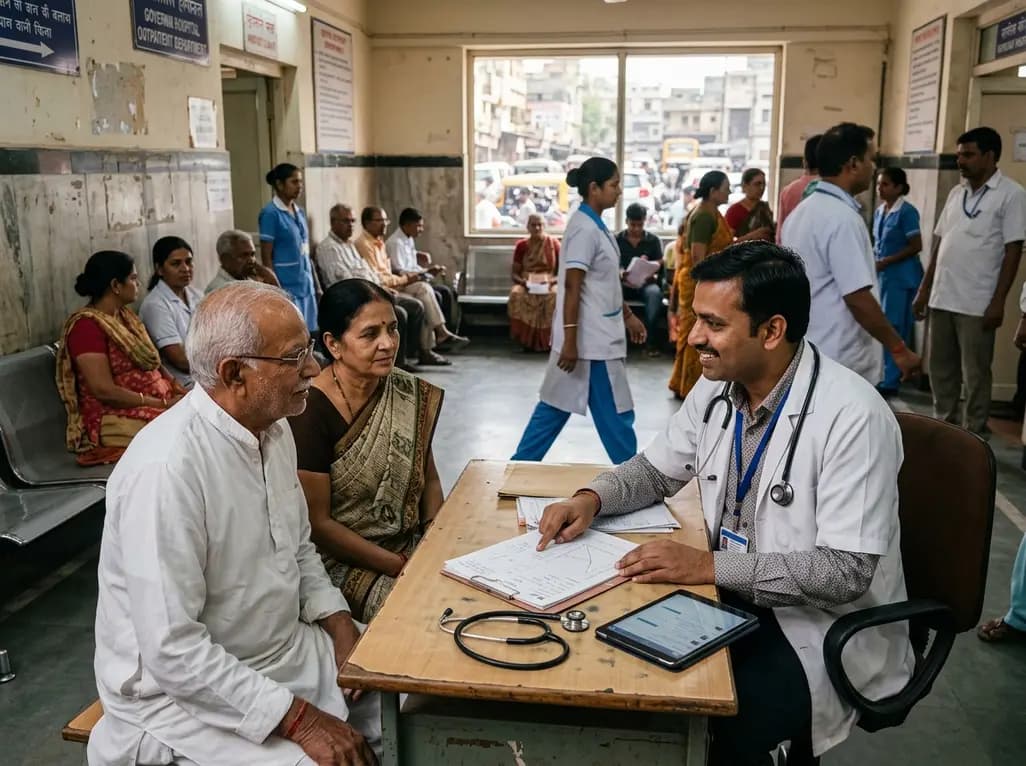
According to WHO data, average lifespan reached 73.3 years in 2023, recovering from pandemic lows. However, healthy life expectancy lags at 62.8 years due to surging noncommunicable conditions like cardiovascular disease and dementia, demanding proactive primary screening and sustained chronic care.
Today

Researchers have engineered an artificial sensory-pain integrated receptor using a multi-threshold organic synaptic transistor. The system distinguishes benign touch from noxious stimuli, enabling safer, more responsive prosthetic limbs with built-in memory and simplified hardware architecture.
Today

Medical robotics is transitioning beyond operative suites into diagnostics, cardiology, and endocrinology. Explore how innovations in tele-robotics, AI integration, and nanomedicine are overcoming geographical barriers and transforming precision healthcare delivery across India's evolving disease landscape.
Today
