.webp&w=384&q=75)

Loading, please wait...
Loading, please wait...

Recent municipal health data reveals an alarming escalation in dengue and malaria cases across Delhi and the wider National Capital Region. The post-monsoon period invariably accelerates vector proliferation in urban settings. Consequently, primary care practitioners and emergency clinicians must demonstrate heightened diagnostic vigilance. Because initial presentations frequently mimic routine seasonal viral syndromes, early laboratory confirmation and proactive triage remain essential. Healthcare providers must recognize critical physiological indicators early to forestall severe circulatory collapse or hemolytic complications.
According to municipal health authorities, confirmed infections have nearly tripled since the conclusion of August. Delhi has recorded 597 dengue infections alongside 214 malaria cases within the current calendar year. Notably, the month of September accounted for more than half of these occurrences, documenting 286 dengue and 124 malaria episodes. During the final week of September alone, surveillance teams registered 85 new dengue and 29 malaria cases. These numbers demonstrate an acute transmission curve that demands institutional preparedness across public and private hospitals.
Intermittent precipitation combined with elevated ambient humidity creates optimal conditions for vector propagation. Aedes aegypti thrives in small artificial containers, whereas Anopheles stephensi colonizes overhead domestic cisterns and urban construction pits. Civic authorities performed more than 3.03 crore household inspections, identifying active larval breeding in over 1.76 lakh residences. Although municipal bodies issued thousands of legal notices, vector abundance remains persistently elevated. Therefore, clinical teams must anticipate sustained patient influxes throughout October and November.
Accurate differentiation between dengue and malaria cases presents a frequent diagnostic dilemma during outpatient triage. Dengue typically manifests with abrupt high-grade pyrexia, severe retro-orbital pain, debilitating musculoskeletal aches, and facial flushing. Furthermore, laboratory investigations frequently demonstrate early leukopenia followed by progressive thrombocytopenia and hemoconcentration. Clinicians should confirm suspected dengue by ordering NS1 antigen assays during days one to five, transitioning to IgM capture ELISA after the fifth day of illness.
In contrast, malaria characteristically displays paroxysmal febrile spikes accompanied by severe rigors, diaphoresis, and progressive hemolytic pallor. Microscopic examination of thick and thin peripheral blood smears remains the diagnostic gold standard for species identification and parasite quantification. In addition, rapid diagnostic tests detecting histidine-rich protein II and parasite lactate dehydrogenase facilitate rapid decisions in urgent settings. Clinicians must remember that concurrent dual infections can occasionally occur in endemic urban centers. Consequently, physicians should order comprehensive testing for both pathogens whenever initial febrile patterns appear atypical or refractory to routine symptomatic therapies.
Pediatric patients face an exceptional risk of rapid clinical deterioration during vector-borne outbreaks. Dr. Navin Bhatia, Head of Pediatrics and PICU at PB Health, emphasizes that childhood infections frequently begin as nonspecific upper respiratory or gastrointestinal illnesses. Parents frequently assume mild initial symptoms represent uncomplicated viral fevers. However, pediatric vascular beds respond dramatically to systemic inflammatory cascades, accelerating dangerous plasma extravasation. Therefore, clinicians must counsel families meticulously regarding specific red-flag indicators that demand immediate hospital evaluation.
Critical red flags include persistent vomiting, severe abdominal tenderness, marked lethargy, extreme restlessness, mucosal hemorrhages, and oliguria. Crucially, clinicians must emphasize that defervescence does not signify clinical recovery in dengue infections. Instead, the afebrile transition period marks the onset of the critical phase, during which severe capillary leakage manifests. If intravascular volume drops unnoticed during this window, children can slip rapidly into compensated and decompensated dengue shock syndrome. Prompt hospitalization during this pivotal phase reliably prevents irreversible end-organ damage and ensures optimal pediatric survival.
Protocol-driven fluid management forms the cornerstone of clinical care for acute vector-borne disease. In uncomplicated outpatient dengue, clinicians must promote oral rehydration therapy utilizing oral rehydration salts, tender coconut water, and clear soups. However, patients demonstrating physiological warning signs require prompt admission for calibrated intravenous crystalloids. Clinicians should initiate isotonic solutions, such as normal saline or Ringer's lactate, matching the infusion rate strictly to physiological requirements. Regular monitoring of the hematocrit alongside hourly urinary output provides the most dependable guide for titrating crystalloid rates.
Conversely, clinicians must exercise extreme caution to prevent iatrogenic fluid overload, particularly when capillary permeability spontaneously stabilizes during convalescence. Excessive intravenous infusions can trigger respiratory distress, pulmonary edema, and expansive pleural effusions. For confirmed malaria, clinicians should promptly prescribe species-directed antimalarials in strict alignment with national guidelines. Artemisinin-based combination therapies remain mandatory for falciparum infections, whereas chloroquine or artemisinin combinations paired with primaquine eradicate vivax forms after confirming normal glucose-6-phosphate dehydrogenase enzyme status.
Prescription safety requires rigorous oversight during widespread febrile illness outbreaks. Clinicians must strictly warn patients and nursing staff against administering non-steroidal anti-inflammatory drugs, including ibuprofen, aspirin, mefenamic acid, and diclofenac. These common analgesics inhibit platelet aggregation and promote gastric mucosal ulceration, dramatically aggravating spontaneous gastrointestinal hemorrhages. Paracetamol remains the only acceptable antipyretic agent, administered strictly at weight-appropriate dosages of 10 to 15 milligrams per kilogram per dose in children.
Furthermore, indiscriminate platelet transfusions represent another prevalent therapeutic error during dengue management. National clinical protocols discourage prophylactic platelet transfusions based merely on numerical thresholds. Transfusions remain reserved exclusively for patients exhibiting severe spontaneous bleeding or profound thrombocytopenia below 10,000 cells per microliter. Clinicians should educate anxious relatives that conservative hemodynamic support allows bone marrow megakaryocytes to recover naturally. Finally, physicians must actively champion primary prevention, instructing recovering patients to eliminate domestic water stagnation and deploy insect repellents consistently.
Q1: Why is the post-defervescence period considered the most dangerous phase in dengue infections?
The afebrile transition marks the beginning of the critical phase, which lasts between 24 and 48 hours. During this period, increased capillary permeability allows substantial intravascular fluid to leak into pleural and peritoneal spaces. Patients may experience sudden hemoconcentration, profound hypotension, and metabolic acidosis even as body temperatures normalize. Therefore, clinicians must maintain close hemodynamic surveillance until plasma leakage completely resolves.
Q2: Which antipyretic and analgesic medications are strictly contraindicated in suspected dengue cases?
Clinicians must strictly avoid all non-steroidal anti-inflammatory medications, such as ibuprofen, aspirin, naproxen, and diclofenac. These therapeutic agents induce platelet dysfunction and exacerbate gastrointestinal mucosal erosion, which substantially increases the risk of severe life-threatening internal hemorrhages. Pure paracetamol remains the only safe antipyretic choice for fever control, provided patients adhere strictly to appropriate therapeutic dosing intervals.
Q3: What specific laboratory parameters mandate hospital admission for a pediatric febrile patient?
Hospital admission becomes mandatory when laboratory testing shows a rapid rise in hematocrit exceeding 20 percent baseline, indicating severe plasma leakage. Additionally, marked leukopenia accompanied by platelets falling sharply below 100,000 cells per microliter requires structured inpatient observation. Elevated liver transaminases, metabolic acidosis, or radiological evidence of ascites and pleural fluid also warrant immediate pediatric admission and parenteral hemodynamic stabilization.
Disclaimer: This content is for informational and educational purposes only. It does not constitute medical advice or replace professional judgment. Refer to the latest local and national guidelines for clinical practice.
References

Read summarized clinical updates, watch expert medical content, and earn CME certifications right from your smartphone.
Open your smartphone camera to scan and install.





With Delhi reporting nearly triple the vector-borne infections since August, healthcare practitioners face heightened diagnostic challenges. Timely differentiation between dengue and malaria, vigilant monitoring during the critical afebrile phase, and strict avoidance of NSAIDs remain vital for reducing morbidity.
Today

A scoping review reveals how pregnancy affects phonation through laryngeal edema and reduced phonation time rather than major acoustic pitch alterations. Learn how to identify, evaluate, and manage vocal symptoms in expectant mothers.
Today
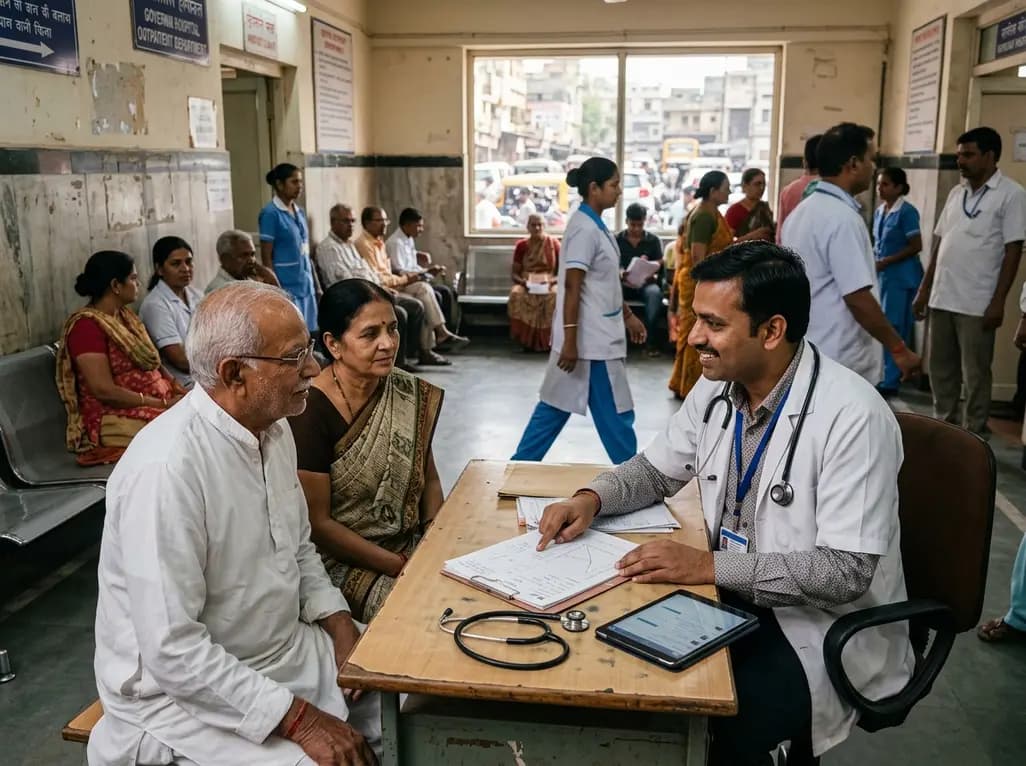
According to WHO data, average lifespan reached 73.3 years in 2023, recovering from pandemic lows. However, healthy life expectancy lags at 62.8 years due to surging noncommunicable conditions like cardiovascular disease and dementia, demanding proactive primary screening and sustained chronic care.
Today
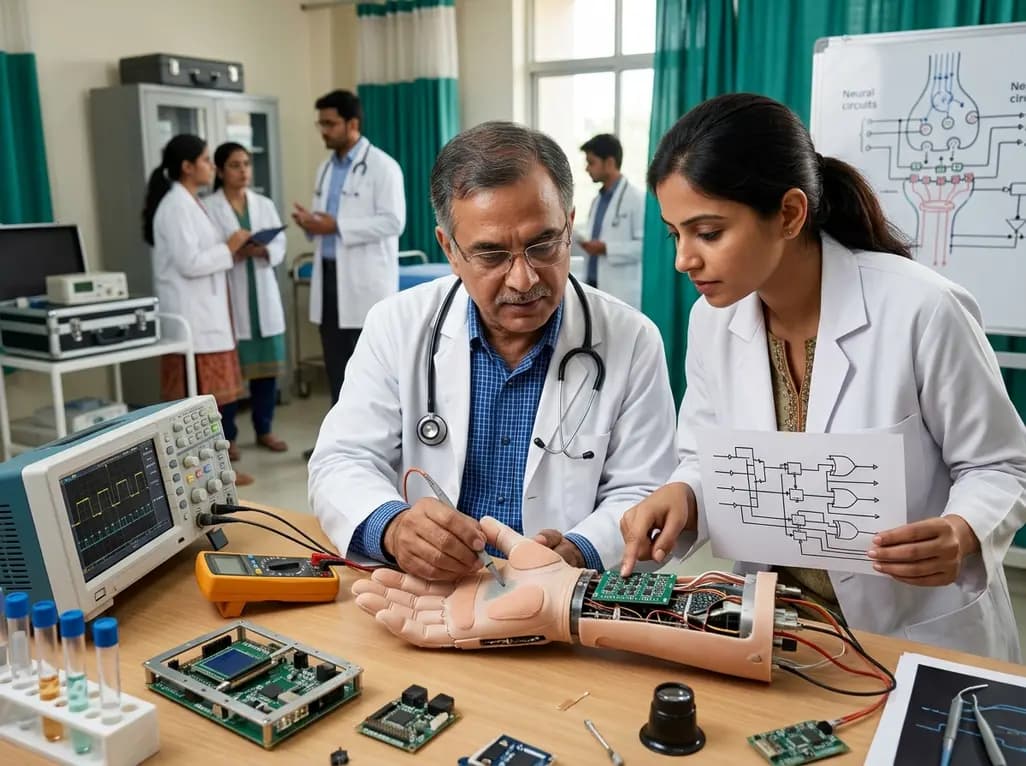
Researchers have engineered an artificial sensory-pain integrated receptor using a multi-threshold organic synaptic transistor. The system distinguishes benign touch from noxious stimuli, enabling safer, more responsive prosthetic limbs with built-in memory and simplified hardware architecture.
Today

Medical robotics is transitioning beyond operative suites into diagnostics, cardiology, and endocrinology. Explore how innovations in tele-robotics, AI integration, and nanomedicine are overcoming geographical barriers and transforming precision healthcare delivery across India's evolving disease landscape.
Today
