.webp&w=384&q=75)

Loading, please wait...
Loading, please wait...
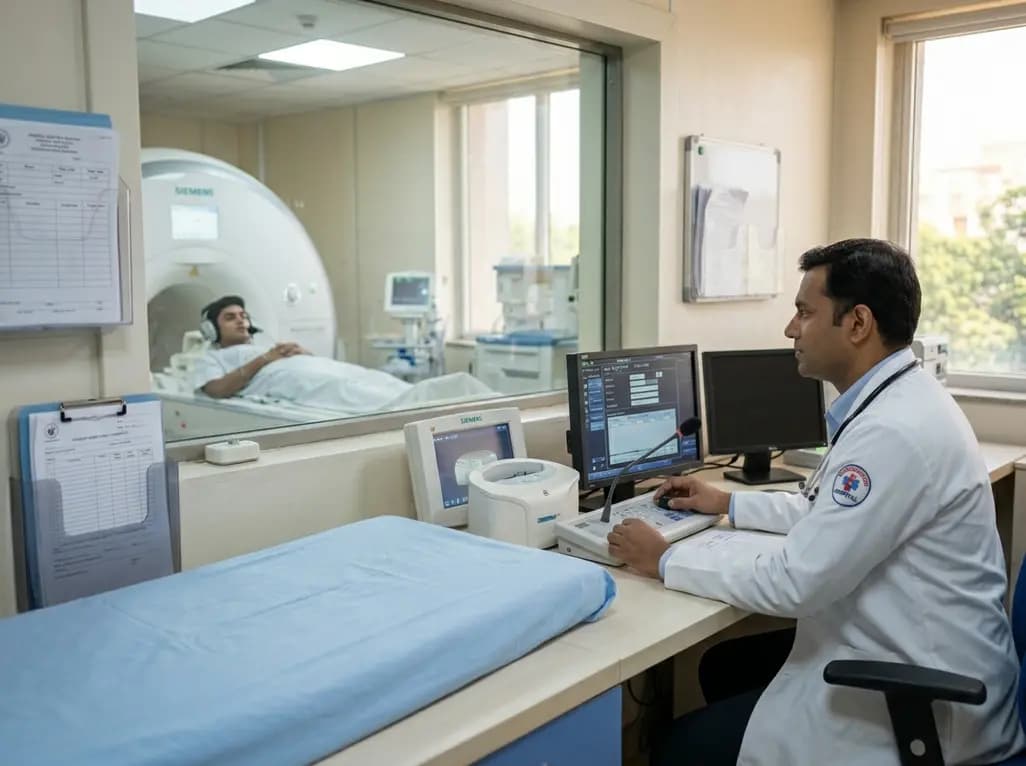
Improving the MRI patient experience is essential for high-quality diagnostic imaging. Radiologists often face challenges when patients experience anxiety or claustrophobia during long scans. Therefore, automated communication tools like "autovoice" are becoming increasingly valuable. This technology provides patients with real-time updates on scan duration, helping them manage expectations and stress levels throughout the procedure.
A recent study evaluated 313 patients to understand how automated prompts influence their scan journey. Most participants found the autovoice tool useful. Specifically, 68% of users expressed no preference between a radiographer and the automated system. However, one in five patients actually preferred the consistent delivery of the autovoice function. Consequently, these findings suggest that automation can provide reliable reassurance without increasing staff workload.
Patient demographics and emotional states also play a role in how these tools are received. For instance, patients under 50 years of age showed a higher preference for autovoice compared to older adults. Additionally, individuals reporting high anxiety on the day of the scan found the timing updates most beneficial. Clear communication helps reduce the likelihood of miscommunication or missed information during busy shifts.
Automated systems offer consistent information to every patient. This reliability helps reduce anticipatory anxiety and ensures that every individual knows exactly how much time remains. Furthermore, improving the MRI patient experience through such innovations can lead to better compliance and fewer motion artifacts. Staff can focus on critical safety checks while the system handles routine timing updates.
It provides consistent, real-time updates on the remaining scan duration, which reduces uncertainty and helps patients manage anxiety throughout the procedure.
While the majority of patients have no strong preference, approximately 20% prefer autovoice due to its consistency and clarity, especially during stressful head-first scans.
Disclaimer: This content is for informational and educational purposes only. It does not constitute professional medical advice, diagnosis, or treatment. Always seek the advice of your physician or other qualified healthcare provider with any questions you may have regarding a medical condition. Refer to the latest local and national guidelines for clinical practice.
References
1. Hudson DM et al. Evaluating autovoice as a patient support tool in MRI: Insights from service users. J Med Imaging Radiat Sci. 2026 Jun 12. doi: undefined. PMID: 42284664.
2. Prokopetz M, et al. Patient-centric comparative analysis of experiences in open upright and conventional closed MRI scanners. Radiography. 2024;30(5):1451-1454. doi:10.1016/j.radi.2024.06.021.
3. Hudson DM, Heales C. Virtual reality for MRI preparation: participant perceptions from a feasibility study. J Med Imaging Radiat Sci. 2025;56(4):101890.

Read summarized clinical updates, watch expert medical content, and earn CME certifications right from your smartphone.
Open your smartphone camera to scan and install.





A new evaluation reveals that automated voice prompts in MRI scans significantly enhance the patient experience. The study highlights how these updates provide reassurance and help manage anxiety, particularly in younger patients and those reporting high stress during diagnostic imaging.
4 months ago

Review how tailored exercise programs benefit frail older patients with heart failure. Explore pathophysiological mechanisms, individualized training prescriptions, and strategies to overcome adherence barriers in clinical practice.
Today

Leucine Rich Bio has introduced South Asia's first comprehensive vaginal microbiome test, BugSpeaks. By profiling microbial dysbiosis, pathogens, and antimicrobial resistance, this next-generation diagnostic platform provides clinicians with deeper insights into recurrent infections, fertility, and reproductive health.
Today

In high-risk pulmonary embolism complicated by severe anemia and active uterine bleeding, systemic thrombolysis is contraindicated. Large-bore aspiration thrombectomy provides rapid hemodynamic rescue without fibrinolysis, supported by inferior vena cava filter placement and multidisciplinary critical care.
Today

This comparative study evaluates posterior labral tears with and without glenohumeral instability, highlighting distinct demographic patterns, MRI underestimation in stable shoulders, and successful arthroscopic repair outcomes.
Today

A clinical study demonstrates that early intervention with tocilizumab, either as monotherapy or bridged with corticosteroids, achieves significant proptosis reduction and resolves active inflammation in treatment-naive thyroid eye disease.
Today
