

Loading, please wait...
Loading, please wait...

Early identification of clinically significant malignancy remains a vital clinical priority in modern urology. Recently, risk-adapted prostate cancer screening has emerged as a compelling strategy to balance timely cancer detection with harm minimization. While traditional protocols relied heavily on upfront prostate-specific antigen testing followed by systematic biopsies, this conventional approach frequently led to overdiagnosis. Consequently, researchers have evaluated incorporating magnetic resonance imaging directly into the diagnostic pathway. A landmark prospective study provides crucial evidence regarding oncological safety and procedural efficiency.
For decades, serum prostate-specific antigen testing formed the cornerstone of prostate assessment across outpatient clinics. However, routine PSA testing often triggers unnecessary invasive biopsies for indolent conditions, such as benign prostatic hyperplasia or low-grade prostatitis. Furthermore, systematic transrectal ultrasound-guided biopsies frequently miss anterior or apical aggressive tumours while detecting clinically indolent Gleason grade group 1 lesions. Because indolent lesions rarely threaten overall survival, diagnosing them causes substantial psychological distress and unnecessary radical interventions. Consequently, international oncological guidelines now encourage risk-adapted models that prioritize high-grade neoplasms. Multiparametric magnetic resonance imaging offers superior soft-tissue resolution, enabling radiologists to localize clinically significant lesions with remarkable precision. By integrating imaging before invasive tissue sampling, clinicians establish an anatomical map that dictates whether biopsy is truly required. Therefore, this paradigm shift seeks to maximize the detection of grade group 2 or higher tumours while minimizing patient harm from unneeded biopsies. Additionally, this imaging-led workflow substantially reduces the incidence of biopsy-induced hospital admissions, reassuring healthy individuals who require no intervention.
The prospective multi-site investigation conducted across Berlin evaluated whether an upfront MRI-first screening strategy reliably detects aggressive prostate cancer. Researchers recruited men aged 50 to 69 years through public healthcare providers to test this risk-stratified methodology. In this rigorous protocol, participants underwent both serum PSA testing and multiparametric magnetic resonance imaging at specialized imaging facilities. Investigators recommended tissue biopsy exclusively for individuals exhibiting suspicious MRI findings, defined as score 4 or 5, or for those presenting with high-risk PSA levels exceeding 4 ng/mL. In contrast, men displaying negative MRI scans alongside non-elevated PSA values safely avoided immediate invasive procedures. Instead, clinicians enrolled these low-risk individuals into structured longitudinal monitoring pathways. By reserving invasive interventions for patients with genuine radiological suspicion, the protocol aimed to curb procedure-related complications. Moreover, this prospective design enabled clinicians to observe real-world performance metrics across diverse community screening cohorts. Consequently, the investigators successfully demonstrated that community-based screening programs can integrate advanced imaging without creating unmanageable diagnostic backlogs.
The paramount clinical concern regarding any biopsy-sparing pathway is oncological safety. Clinicians must ensure that omitting immediate biopsies does not cause diagnostic delay for life-threatening tumours. Fortunately, the trial findings demonstrate that an MRI-directed approach maintains excellent diagnostic utility for grade group 2 or greater malignancies. Specifically, the negative predictive value of a non-suspicious MRI scan remained exceptionally high during multi-year clinical follow-up. Most patients who avoided initial sampling remained entirely free from aggressive disease during surveillance. Furthermore, the few malignancies identified later during systematic follow-up presented at early, curable stages without compromising therapeutic outcomes. Meanwhile, omitting routine needle sampling spared hundreds of men from painful procedures, severe hematuria, acute urinary retention, and dangerous sepsis. Thus, the risk-adapted framework achieves an optimal balance between protecting men from procedural morbidity and preserving definitive cancer detection. Indeed, longitudinal surveillance data indicate that deferring immediate biopsy in MRI-negative patients does not increase the risk of disease progression or metastasis.
Successful implementation of an imaging-driven screening algorithm depends heavily on interdisciplinary collaboration between urologists and uroradiologists. First, imaging protocols require rigorous technical standardization and high magnetic field strength to avoid artifact degradation. Radiologists must possess dedicated expertise in structured scoring systems to prevent both false-negative interpretations and unwarranted biopsy recommendations. Additionally, clinicians must recognize that biparametric MRI, which eliminates intravenous contrast agents, offers a rapid, cost-effective alternative for population-scale assessment. Furthermore, urologists should integrate clinical biomarkers, such as PSA density and free-to-total PSA ratios, when evaluating borderline or equivocal imaging scores. Combining targeted fusion biopsies with judicious sampling ensures optimal tissue yield when lesions do appear. Regular multidisciplinary tumor boards facilitate shared decision-making, allowing clinicians to tailor individual management plans based on patient age, baseline comorbidities, and specific imaging characteristics. Similarly, continuous radiologist auditing and histopathological feedback loops ensure consistent diagnostic accuracy across varied clinical practices.
The findings carry significant clinical relevance for healthcare delivery in developing healthcare landscapes, including India. In urban Indian clinical practice, prostate cancer incidence is steadily increasing due to greater life expectancy and wider PSA availability. However, over-investigating benign prostatic enlargement with indiscriminate needle biopsies strains domestic medical infrastructure and increases healthcare expenditures. Adopting an MRI-informed triage algorithm allows Indian clinicians to optimize resource utilization by directing biopsy procedures only to men with high-grade cancer suspicion. Moreover, avoiding redundant biopsies significantly curtails post-procedural infections, which is critical given the rising regional prevalence of multidrug-resistant pathogens. Nevertheless, widespread implementation across India requires expanded access to high-quality 3T scanners and specialized uroradiology training in tier-2 and tier-3 healthcare centers. By establishing risk-stratified referral pathways, Indian clinicians can deliver cost-effective, precise, and oncologically secure care to aging male populations. Hence, phased adoption in tertiary regional centers can establish a sustainable model for responsible prostate health management.
An MRI-first strategy visualizes prostatic architecture before any invasive needle biopsy occurs. Multiparametric MRI selectively highlights clinically significant tumors while remaining insensitive to small, indolent lesions classified as grade group 1. Consequently, clinicians avoid sampling indolent cancers that never cause clinical harm. This targeted approach prevents unnecessary surgical or radiation treatments, thereby protecting patients from lifelong urinary incontinence and erectile dysfunction while preserving their quality of life.
Prospective clinical evidence confirms that omitting upfront biopsy in men with normal MRI results is oncologically safe. Non-suspicious MRI scans demonstrate a negative predictive value exceeding 95% for clinically significant grade group 2 or higher disease. Furthermore, patients who defer biopsy undergo structured clinical surveillance, including serial PSA measurements and scheduled reassessments. This active safety net ensures that any subtle, emergent lesions are promptly identified and treated at an early, curable stage.
Prostate-specific antigen density provides critical risk stratification when interpreting borderline or equivocal magnetic resonance imaging scans. Clinicians calculate this metric by dividing total serum PSA by the total prostate volume measured on imaging. A PSA density value below 0.15 ng/mL/cc strongly correlates with benign conditions, such as glandular hyperplasia. Conversely, values exceeding 0.15 ng/mL/cc alert clinicians to occult significant malignancy, warranting targeted tissue sampling even when imaging features appear ambiguous.
Disclaimer: This content is for informational and educational purposes only... Refer to the latest local and national guidelines for clinical practice.
References

Read summarized clinical updates, watch expert medical content, and earn CME certifications right from your smartphone.
Open your smartphone camera to scan and install.





A prospective study evaluates an MRI-first prostate cancer screening strategy to detect grade group ≥ 2 disease. By reserving biopsies for MRI-suspicious or high-risk PSA findings, clinicians safely reduce unnecessary procedures and overdiagnosis while preserving oncological safety.
Today

A landmark Nature study reveals that only 27% of individuals with obesity have active clinical disease. By incorporating waist circumference and organ dysfunction, this new diagnostic framework moves beyond BMI to prevent widespread misclassification and guide personalized metabolic intervention.
Today

A breakthrough blood test measuring the RNA biomarker Tu-Stroma detects microscopic serous tubal intraepithelial carcinoma (STIC) lesions with remarkable accuracy. This non-invasive diagnostic tool offers crucial biological insight to guide prophylactic surgery decisions for women carrying high-risk genetic mutations.
Today
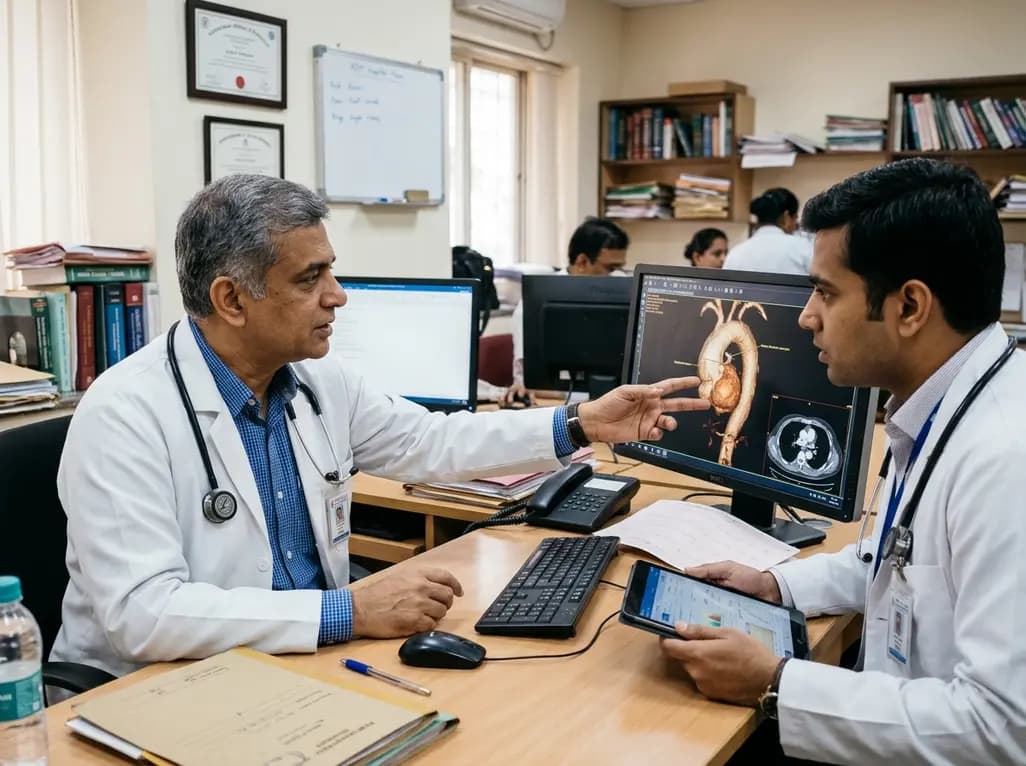
Thoracic aortic aneurysm lacks etiologic medical therapy. A new study reveals that targeting specific αV integrins with Cilengitide attenuates TGF-β and mechanotransduction pathways, effectively limiting pro-fibrotic remodeling and aortic bulb dilation in both syndromic and sporadic disease models.
Today
A nationwide observational study from Japan examines 10-year trends, regional variations, and mortality outcomes of cemented versus uncemented hemiarthroplasty in 296,841 femoral neck fractures, offering critical insights for orthopaedic practice and geriatric trauma care.
Today
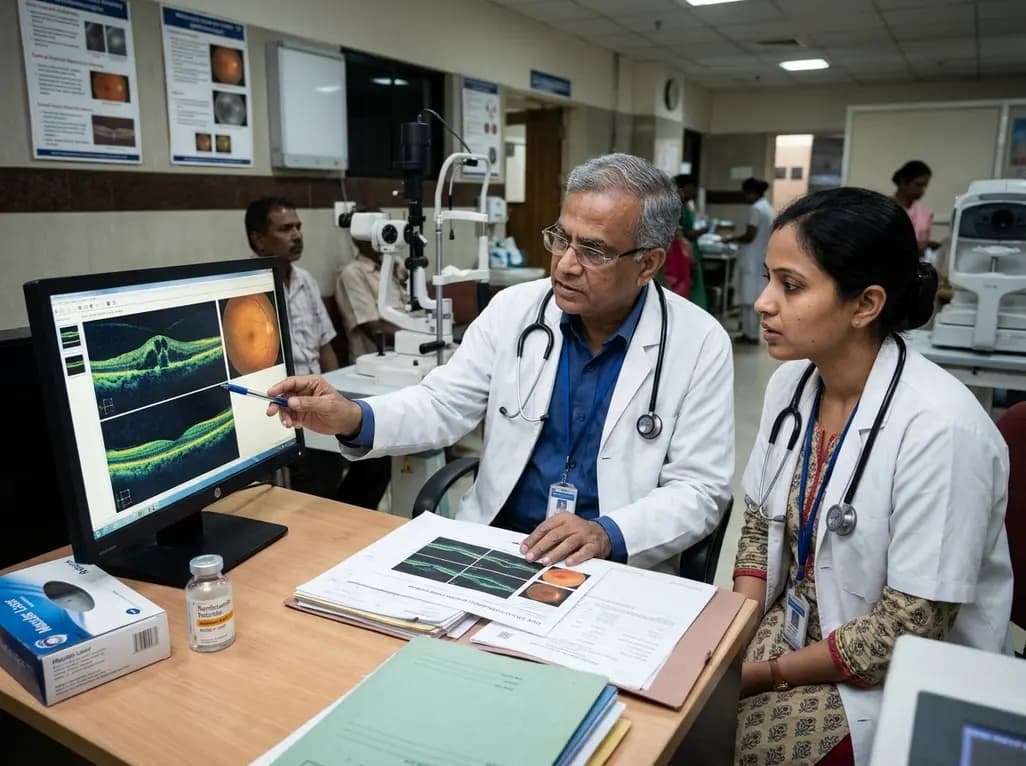
A real-world retrospective study demonstrates that combining intravitreal ranibizumab with focal/grid macular laser significantly improves visual acuity and central macular thickness compared to laser monotherapy in patients with center-involved diabetic macular edema.
Today
