

Loading, please wait...
Loading, please wait...

Modern healthcare systems increasingly rely on clinical decision support tools to improve diagnostic precision, enhance patient safety, and standardize evidence-based practices. However, designing effective clinical software requires close collaboration between software developers and frontline medical professionals. When institutions initiate user-centered design initiatives, clinical stakeholders routinely suggest an overwhelming array of desired features. Without structured prioritization, engineering teams risk severe resource depletion, prolonged launch delays, and reduced clinical usability. Consequently, healthcare informatics leaders require reliable prioritization methods to determine which digital capabilities deliver direct clinical value. A recent qualitative process study examined this exact challenge during the development of the Decision Aid Navigator administrative portal. By analyzing how health information technology experts evaluate prospective portal features, the investigation highlights practical strategies for healthcare software governance. Therefore, healthcare organizations can optimize digital health implementations by systematically differentiating indispensable tools from secondary functional requests.
To resolve competing functional demands, software development teams often implement the MoSCoW prioritization framework. This established agile methodology categorizes candidate features into four clear tiers: must have, should have, could have, and won't have. Specifically, must-have features represent mandatory functional capabilities without which the clinical tool cannot operate safely or legally. Should-have elements provide substantial clinical utility but allow temporary workarounds during initial deployment phases. Furthermore, could-have items represent desirable enhancements that technical teams can incorporate if project timelines and financial resources permit. Finally, won't-have components indicate low-priority functions that developers formally exclude from the current development iteration. Although technology firms frequently utilize this framework, clinical informatics teams historically lacked empirical data regarding its application in clinical environments. The Decision Aid Navigator process study demonstrated that the MoSCoW method establishes an effective shared language across multidisciplinary healthcare teams. In addition, this structured taxonomy prevents uncontrolled scope creep during software development cycles. As a result, informatics teams can transparently align limited engineering capacity with high-priority clinical objectives.
In the analyzed study, four health information technology professionals evaluated thirty administrative features for the Decision Aid Navigator platform. The participants completed their assessments during a seventy-four-minute remote workshop that combined independent feature rating with structured group debate. Notably, the majority voting revealed that participants designated eleven features as must have, four as should have, and six as could have. Interestingly, the expert panel assigned zero features to the won't-have category, while nine features generated divided ratings without consensus. This pattern illustrates a familiar challenge in digital health design, where stakeholders hesitate to dismiss proposed functionalities entirely. Moreover, the study documented that every participant modified their original ratings during the interactive discussions. These rating shifts frequently occurred when technical specialists clarified architectural constraints or backend data dependencies. Therefore, active peer discussion proved indispensable in transforming divergent individual opinions into cohesive group decisions. These findings demonstrate that structured group dialogue prevents rigid initial assessments and enables flexible, consensus-driven requirement ranking.
Qualitative evaluation of the prioritization session revealed four core insights that illuminate stakeholder interaction during software design. First, participants frequently interpreted feature descriptions differently, confirming that concise text prompts often cause subjective misunderstandings. Collaborative discussion rapidly resolved these interpretive gaps before final consensus scoring. Second, group interactions produced valuable suggestions for alternative design architectures that engineers had not previously identified. Third, participants highlighted crucial implementation considerations, including data security requirements, routine maintenance overhead, and user authentication hurdles. Fourth, clinicians systematically weighed idealized software capabilities against real-world clinical realities. For example, features that appeared advantageous in abstract conceptual models often introduced excessive operational burden for clinical staff. Consequently, participants reclassified several complex administrative features in favor of streamlined, dependable tools. These qualitative findings emphasize that software prioritization requires iterative human deliberation rather than simplistic numerical voting. Thus, engaging domain experts in interactive discussion uncovers vital operational constraints that static rating surveys frequently overlook.
The empirical insights from this study offer substantial value for healthcare institutions throughout India. Under the National Health Authority and the Ayushman Bharat Digital Mission, healthcare centers across India are accelerating digital infrastructure adoption. However, public hospitals and private networks often manage intense patient volumes while navigating tight budgetary limitations. In such demanding environments, deploying complex electronic tools without rigorous feature prioritization can exacerbate clinician burnout and prompt severe alert fatigue. Furthermore, hospital administrators frequently encounter difficulties when balancing clinician preferences against software development realities. By adopting the MoSCoW method, Indian healthcare leaders can engage medical specialists, nursing staff, and IT teams in collaborative decision-making sessions. This participatory methodology ensures that electronic health tools prioritize essential workflows, including antimicrobial stewardship prompts, emergency triage protocols, and teleconsultation tracking. Consequently, Indian healthcare institutions can minimize implementation failures, enhance user satisfaction, and maximize returns on digital health investments nationwide.
To apply these findings effectively, hospital leadership should embed structured user-centered prioritization into their regular clinical IT procurement cycles. First, project leaders must formulate detailed, unambiguous definitions for every proposed digital feature before conducting stakeholder evaluation workshops. Second, organizations should include experienced technical architects who can immediately clarify software feasibility, data interoperability, and maintenance demands. Third, organizers must provide adequate time for structured group discussion rather than relying exclusively on disconnected electronic surveys. Additionally, hospital administrators should foster a collaborative culture where clinicians feel empowered to categorize non-essential requests as won't-have features. Eliminating secondary requests early protects developmental capacity for vital patient safety systems. Finally, digital health committees must recognize feature prioritization as an ongoing, iterative process. Because clinical guidelines and hospital workflows continually evolve, healthcare institutions must periodically revisit system priorities. Ultimately, institutionalizing agile prioritization methodologies safeguards health IT investments and reinforces evidence-based clinical practice across healthcare organizations.
The primary objective of the MoSCoW method is establishing a clear consensus on software development priorities among clinical stakeholders and technical teams. By categorizing proposed functions into must have, should have, could have, and won't have, the framework prevents scope creep and optimizes resource distribution. Consequently, development teams can focus on critical safety functionalities while deferring non-essential features, ensuring that the final digital health tool remains practical, intuitive, and aligned with clinical needs.
Participants frequently altered their ratings because structured group discussions revealed critical operational perspectives and technical realities that individual evaluations missed. Clarifications from the technical lead illuminated software constraints, while peer clinicians explained practical workflow challenges. Additionally, dialogue highlighted the difference between idealized use cases and real-world clinical practice. Therefore, deliberative conversation allowed participants to reconsider initial assumptions, resulting in more coherent, realistic prioritization across the software feature portfolio.
Healthcare institutions in India can implement the MoSCoW method when rolling out hospital management information systems or digital decision support tools under national digital health programs. By assembling multidisciplinary teams of doctors, nurses, and IT administrators, hospitals can systematically filter unnecessary software features before procurement. Furthermore, this collaborative evaluation reduces clinician resistance, eliminates alert fatigue, and ensures that limited institutional funding is directed toward tools that demonstrably enhance bedside patient care.
Disclaimer: This content is for informational and educational purposes only and does not constitute medical advice or establish a doctor-patient relationship. Healthcare professionals must exercise independent clinical judgment. Refer to the latest local and national guidelines for clinical practice.
References

Read summarized clinical updates, watch expert medical content, and earn CME certifications right from your smartphone.
Open your smartphone camera to scan and install.





A recent study highlights the implementation of the MoSCoW method and user-centered design to prioritize features for the DEAN clinical decision support tool. Collaborative expert discussions identified key workflow trade-offs, refining software development for real-world healthcare environments.
Today
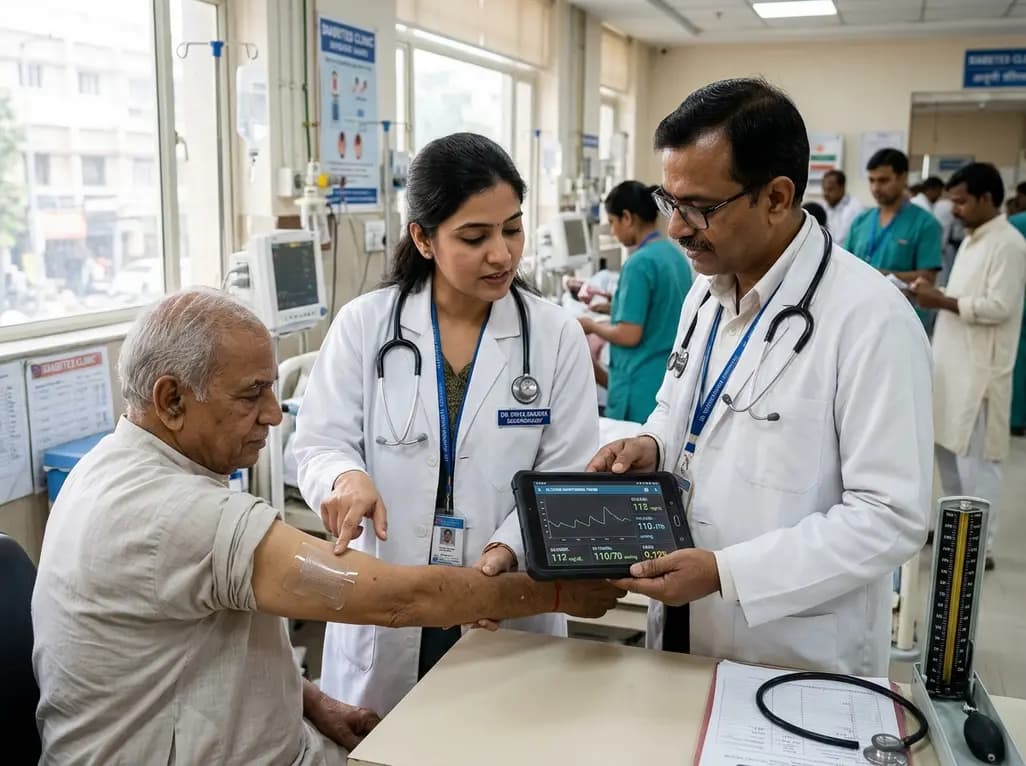
A breakthrough ultrathin multimodal sensor decouples physical hemodynamic monitoring from disposable electrochemical calibration, achieving long-term wearable glucose prediction with 81.36% accuracy and a 9.12% MARD. This offers a robust, drift-free solution for outpatient metabolic surveillance.
Today
Demanding exhaustive hormonal profiling can inadvertently discourage clinical studies involving females. Methodological standards must align with the specific scientific question to expand, not restrict, equitable evidence for women.
Today
Co-administering antiseizure medications and DOACs frequently causes pharmacokinetic interactions, subtherapeutic drug levels, and thromboembolic failures. This review highlights enzyme induction risks, unpredictable outcomes with levetiracetam, and the vital role of therapeutic drug monitoring.
Today
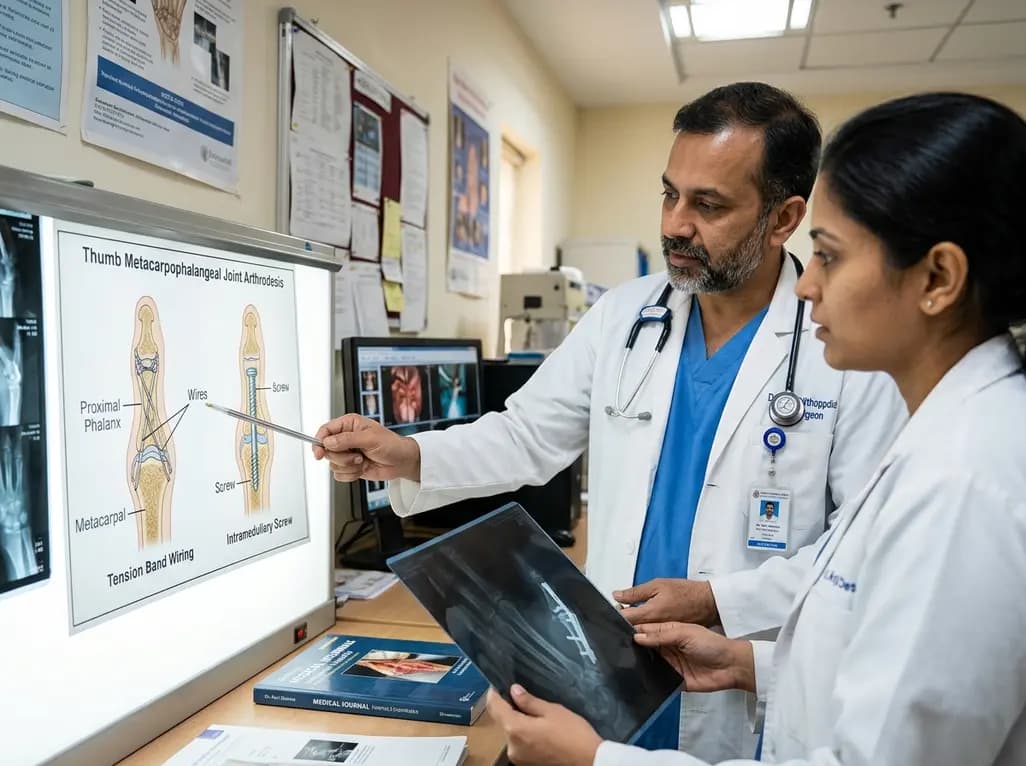
A comparative review of tension band wiring and intramedullary screw fixation in thumb metacarpophalangeal arthrodesis, evaluating union rates, hardware complications, and clinical outcomes.
Today
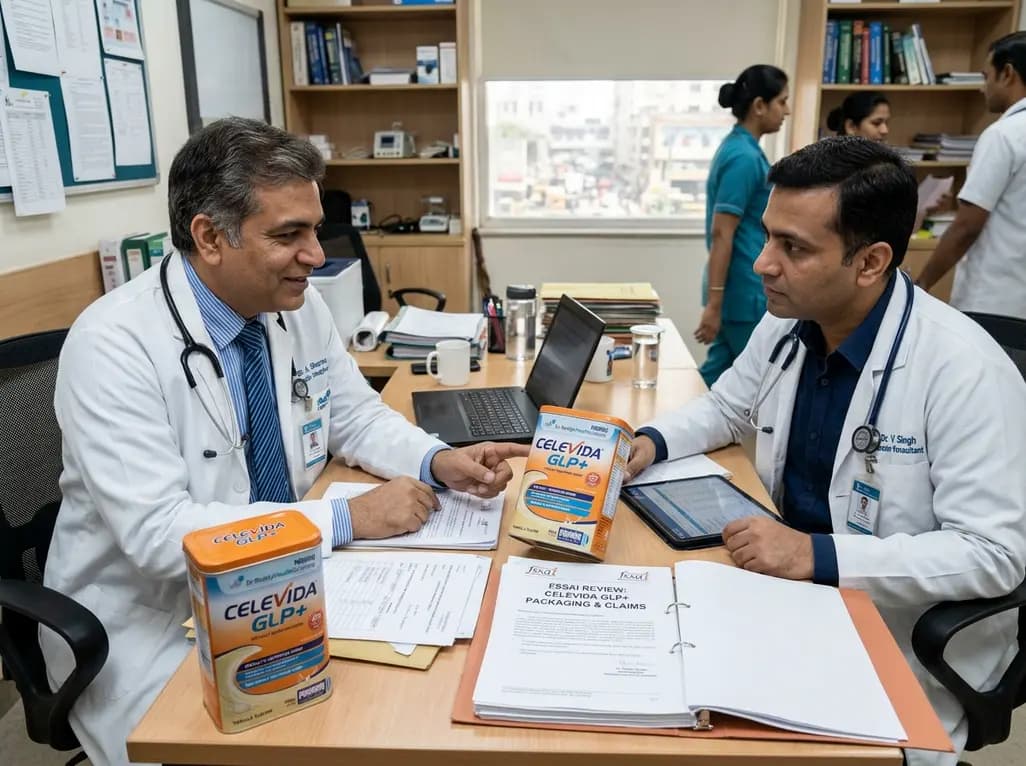
Following regulatory scrutiny from FSSAI regarding promotional representations and lean muscle preservation claims, Dr. Reddy's Laboratories and Nestlé Health Science are currently reviewing the branding and marketing strategy for their joint nutritional supplement Celevida GLP+.
Today
