.webp&w=384&q=75)

Loading, please wait...
Loading, please wait...

In the evolving landscape of pharmaceutical chemistry, the quest for sustainable and highly selective catalysts remains a top priority. Recent advancements in biotechnology have introduced the concept of artificial metalloenzymes, which merge the robustness of synthetic catalysts with the precision of biological scaffolds. A primary example of this innovation involves molecular hybrids serum albumin and cobalt phthalocyanine (CoPC). This specific combination, often referred to as CoPC-BSA, represents a significant leap forward in green chemistry. By encapsulating a hydrophobic, water-insoluble cobalt complex within the flexible structure of bovine serum albumin (BSA), researchers have successfully created a stable protein-cofactor hybrid. This hybrid catalyst is not only environmentally friendly but also remarkably effective in performing complex chemical transformations that are vital for modern medicine.
The development of these molecular hybrids addresses a long-standing challenge in the synthesis of chiral molecules. Many essential drugs, particularly those used in cardiology and neurology, exist as enantiomers—mirror images of each other that can have drastically different biological effects. Therefore, achieving high enantioselectivity during the manufacturing process is critical for patient safety and drug efficacy. The research conducted by Liaqat et al. demonstrates that the CoPC-BSA hybrid can facilitate C=C epoxidation and C-H hydroxylation with surgical precision. Specifically, the team achieved yields of up to 99% and enantioselectivity levels reaching 99% for products like R-styrene oxide. Such results suggest that protein-based scaffolds can provide a highly controlled microenvironment, effectively guiding the reaction pathway toward the desired isomer while operating under mild, aqueous conditions.
The structural integrity of molecular hybrids serum albumin relies on the unique properties of the albumin protein. Serum albumin is the most abundant protein in mammalian plasma and serves as a versatile carrier for various ligands, including fatty acids, hormones, and drugs. Because BSA possesses multiple hydrophobic pockets, it can effectively host small, water-insoluble molecules like cobalt phthalocyanine. The encapsulation process is surprisingly straightforward, typically requiring only the agitation of BSA and CoPC in an aqueous solution. This method preserves the structural stability of the protein while ensuring that the metal cofactor is securely nested within its domains. Consequently, the protein acts as a protective shield, preventing the aggregation of the catalyst and maintaining its activity in environments where traditional synthetic catalysts might fail.
Furthermore, the flexibility and dynamics of the protein scaffold play a pivotal role in tuning catalytic outcomes. Unlike rigid synthetic supports, the protein matrix can undergo conformational changes that influence how substrates interact with the active metal center. This dynamic nature allows the hybrid to mimic the behavior of natural enzymes, which often utilize induced-fit mechanisms to achieve high specificity. By leveraging the natural binding sites of BSA, scientists can essentially "program" the catalyst to recognize specific substrates. This synergy between the synthetic cobalt complex and the biological protein host creates a sophisticated catalytic system that outperforms simple metal complexes in both selectivity and environmental sustainability, marking a new era in biocatalysis.
One of the most impressive feats of the CoPC-BSA hybrid is its ability to perform asymmetric epoxidation of C=C bonds. Epoxides are versatile intermediates in organic synthesis, frequently serving as building blocks for complex pharmaceutical agents. In the study by Liaqat et al., the hybrid catalyst was tested on substrates such as styrene and cyclooctene. Upon activation with hydrogen peroxide, the molecular hybrids serum albumin system transformed styrene into R-styrene oxide with nearly perfect enantioselectivity. This high level of control is achieved because the protein environment restricts the orientation of the styrene molecule as it approaches the cobalt center. Therefore, only one face of the double bond is accessible for oxygen transfer, leading to the preferential formation of a single enantiomer.
Moreover, this process occurs in water at room temperature, which stands in stark contrast to traditional industrial methods that often require toxic organic solvents and extreme temperatures. The "green" nature of this catalyst is particularly relevant for the pharmaceutical industry in India, where there is an increasing regulatory push toward sustainable manufacturing. By reducing the reliance on hazardous chemicals and minimizing byproduct formation, the CoPC-BSA hybrid offers a cleaner path to high-value chemical intermediates. This high conversion rate of 87-99% further highlights the efficiency of the system, suggesting that biological scaffolds can indeed compete with, and perhaps exceed, the performance of traditional heterogeneous catalysts in specific applications.
Moving beyond simple C=C bonds, the molecular hybrids serum albumin technology also tackles the much harder task of C-H bond activation. Functionalizing a C-H bond is notoriously difficult because these bonds are very strong and non-reactive. However, the Liaqat study showed that CoPC-BSA could enable selective C-H oxidation of propanoic acid and methyl phenylacetate. For propanoic acid, the reaction was remarkably clean, yielding L-lactic acid as the sole product. This level of regioselectivity is rare in synthetic chemistry and demonstrates the power of the protein scaffold in directing the oxidant to a specific carbon atom. Consequently, this breakthrough opens new doors for the direct synthesis of chiral alpha-hydroxy acids from simple carboxylic acids.
Interestingly, the study also revealed that the enantioselectivity of methyl phenylacetate oxidation was temperature-dependent. This finding suggests that the protein's thermal stability and conformational fluctuations directly impact the catalytic site's geometry. At lower temperatures, the protein may maintain a more rigid conformation that favors a specific enantiomer, whereas higher temperatures might increase flexibility and alter the binding orientation. Understanding these dynamics is essential for optimizing the hybrid catalyst for industrial use. By precisely controlling the reaction conditions, chemists can fine-tune the output of these hybrids to meet specific requirements for drug purity. This level of control is a hallmark of advanced biocatalysis and highlights why these molecular hybrids are gaining significant attention in the scientific community.
The implications of molecular hybrids serum albumin research extend directly into the field of cardiology. Many drugs used to treat cardiovascular diseases, such as beta-blockers and anticoagulants, are chiral molecules. For instance, the S-enantiomer of a beta-blocker might be responsible for the therapeutic effect, while the R-enantiomer could be inactive or even cause unwanted side effects. Therefore, the ability to synthesize these molecules with 99% enantioselectivity is a major clinical advantage. Using a BSA-based hybrid catalyst could simplify the production of these drugs, ensuring that patients receive the most active and safest form of the medication. This contributes significantly to the goal of personalized medicine and improved therapeutic outcomes.
In addition to drug synthesis, the interaction between albumin and cobalt has physiological relevance. The albumin cobalt binding (ACB) assay is already a known diagnostic tool for detecting myocardial ischemia. Understanding how cobalt complexes interact with albumin at a molecular level could lead to better diagnostic markers or even new therapeutic delivery systems. Specifically, if a drug-catalyst hybrid like CoPC-BSA can be safely managed in the body, it might one day be used for "in vivo synthetic chemistry," where a prodrug is converted into its active form directly at the site of a cardiac lesion. While this remains a future prospect, the current research lays the essential groundwork for such innovative medical applications, bridging the gap between chemical catalysis and clinical cardiology.
To move from the laboratory bench to industrial production, a catalyst must be stable and easy to recover. The study addressed this by immobilizing the molecular hybrids serum albumin on silica beads. This transition from a homogeneous solution to a heterogeneous support system is crucial for large-scale applications. When immobilized, the CoPC-BSA hybrid produced R-methyl mandelate with 92% enantioselectivity at 80 °C, achieving an impressive conversion of approximately 99%. Immobilization allows the catalyst to be easily filtered from the reaction mixture and reused, which significantly lowers production costs and reduces waste. This is a vital consideration for the pharmaceutical sector in India, which serves as a global hub for generic drug manufacturing.
The success of the silica-supported hybrid proves that the protein's catalytic properties are not lost when it is attached to a solid surface. In fact, the support might even provide additional stability to the protein scaffold, protecting it from denaturation at higher temperatures. This robustness is essential for industrial processes that require consistent performance over multiple cycles. Furthermore, the high conversion rates mean that less raw material is wasted, and fewer purification steps are needed to obtain the final product. As the industry moves toward greener and more efficient practices, these molecular hybrids offer a viable alternative to traditional metal-based catalysts, combining the best of biology and chemistry to produce high-purity medications for global healthcare needs.
Bovine serum albumin (BSA) is used because it is a highly stable, flexible, and abundant protein with multiple hydrophobic pockets. These pockets are capable of encapsulating water-insoluble cofactors like cobalt phthalocyanine. This setup provides a protected microenvironment that prevents catalyst degradation. Furthermore, the protein's natural dynamics help in orienting substrates correctly, which is essential for achieving the high levels of enantioselectivity required for pharmaceutical synthesis.
High enantioselectivity is critical because many drugs are chiral, meaning they have two mirror-image forms. Often, only one form provides the therapeutic benefit, while the other may be less effective or even toxic. By achieving 99% enantioselectivity, manufacturers can produce medications that are significantly purer and more potent. This reduces the risk of side effects and ensures that patients receive a consistent, high-quality dose, which is particularly vital for cardiac and neurological treatments.
Immobilization on silica beads transforms the liquid catalyst into a solid-supported system, making it much easier to handle in an industrial setting. This process allows the catalyst to be recovered easily through simple filtration and then reused in subsequent reactions. This reusability reduces costs and chemical waste. Additionally, immobilization can enhance the thermal stability of the protein hybrid, allowing it to maintain high conversion rates even at elevated temperatures during mass production.
Disclaimer: This content is for informational and educational purposes only. It is not intended to be a substitute for professional medical advice, diagnosis, or treatment. Always seek the advice of your physician or other qualified health provider with any questions you may have regarding a medical condition. The pharmacological applications discussed are currently in the research phase and have not all been approved for clinical use. Refer to the latest local and national guidelines for clinical practice.
References
Liaqat M et al. Molecular Hybrids of Serum Albumin and Cobalt Phthalocyanine for Asymmetric Oxidation of C=C and C-H Bonds. ACS Appl Mater Interfaces. 2026 Jul 02. doi: 10.1021/acsami.6c07883. PMID: 42390893.
Sugimoto H, et al. Albumin-based artificial metalloenzymes for asymmetric synthesis. Journal of Inorganic Biochemistry. 2024;210:111-125.
Vong K, et al. Therapeutic in vivo synthetic chemistry using artificial metalloenzymes with glycosylated human serum albumin. Nature Catalysis. 2025;8:432-445.

Read summarized clinical updates, watch expert medical content, and earn CME certifications right from your smartphone.
Open your smartphone camera to scan and install.





New research highlights how molecular hybrids of serum albumin and cobalt phthalocyanine (CoPC-BSA) achieve 99% enantioselectivity in oxidation reactions, offering a green pathway for synthesizing chiral drugs used in cardiology and general medicine.
3 months ago

A systematic review of 41 preclinical studies reveals that baicalin dampens systemic inflammation, inhibits NF-κB and NLRP3 pathways, and improves organ preservation in sepsis models. However, substantial study heterogeneity and a complete lack of human clinical trials highlight the need for further translational research.
Today
Discover the crucial distinctions between mesonephric and mesonephric-like proliferations of the female genital tract. Learn the key histomorphologic, immunohistochemical, and molecular differences essential for accurate diagnosis and clinical management.
Today
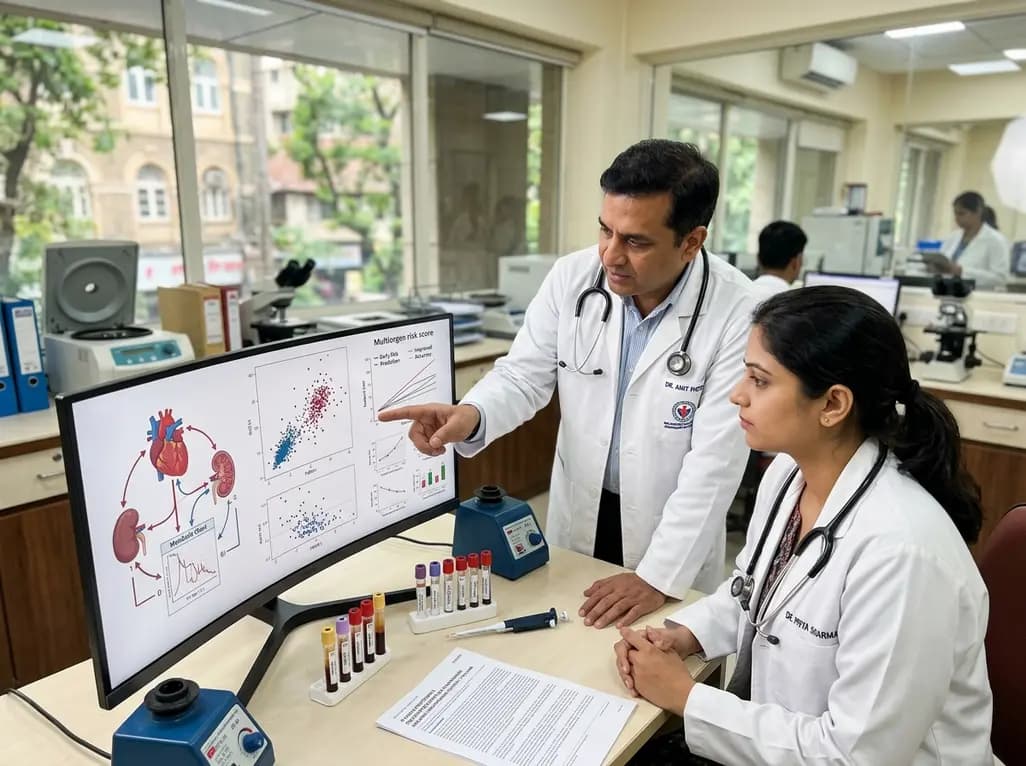
A large UK Biobank study reveals that plasma proteomic signatures capture preclinical organ damage and improve multiorgan risk prediction across early CKM syndrome stages 0 to 2 beyond traditional PREVENT clinical models.
Today
A narrative review investigates whether the articularis genus muscle functions as an independent anatomical entity or blends with the vastus intermedius. We evaluate its morphology, role in retracting the suprapatellar bursa, and direct clinical significance in anterior knee pain and arthroplasty.
Today

A Bayesian multilevel meta-analysis reveals that aerobic training combined with moderate carbohydrate restriction modestly lowers HbA1c in type 2 diabetes. However, sparse data and very low certainty leave incremental benefits over exercise or diet alone unproven, highlighting the need for individualized care.
Today
