.webp&w=384&q=75)

Loading, please wait...
Loading, please wait...
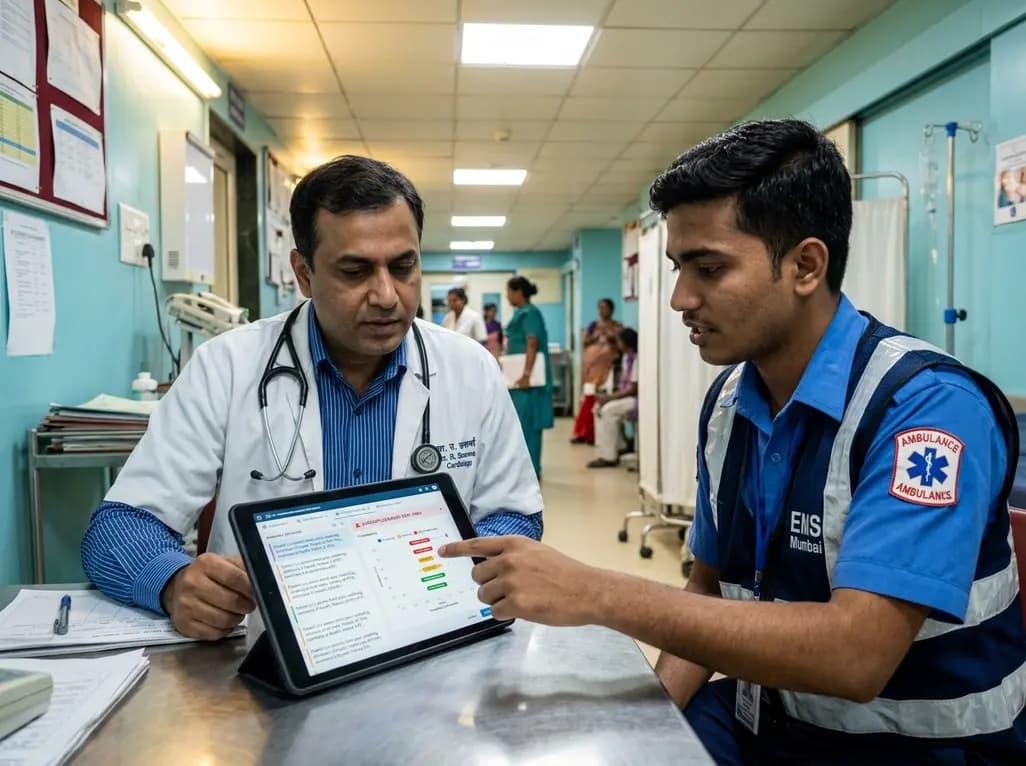
Emergency medical services encounter immense diagnostic pressure when dispatching crews to time-critical events. Acute chest pain, dyspnea, and sudden hemodynamic instability demand rapid decision-making before any healthcare provider reaches the scene. Traditionally, dispatchers rely on structured drop-down fields, caller demographics, and rudimentary complaint codes. However, this limited information often misses critical clinical nuances. A groundbreaking temporal validation study highlights how natural language processing of emergency call notes transforms prehospital risk stratification, enabling EMS systems to identify deteriorating cardiopulmonary patients earlier and allocate life-saving interventions more effectively.
Prehospital emergency medical services operate under tight temporal constraints with incomplete clinical information. When callers report cardiopulmonary distress, dispatchers must rapidly determine the level of urgency, appropriate response tier, and necessary vehicular equipment. Unfortunately, traditional structured dispatch systems capture only crude data points such as patient age, biological sex, and broad symptom categories. Consequently, dispatch teams frequently encounter unexpected clinical deterioration, cardiac arrest, or non-response to initial field therapy upon arrival.
Moreover, structured triage codes cannot fully reflect atypical presentations or subtle red flags. For instance, a patient complaining of mild shortness of breath might simultaneously report profuse diaphoresis, impending doom, or severe cyanosis in spoken narrative. Because conventional dispatch databases compartmentalize this information into rigid menus, critical clinical signals often remain hidden within unstructured free-text call logs. Therefore, emergency medicine clinicians urgently need advanced computational tools that can parse real-time text narratives and convert unstructured clinical language into actionable prognostic risk scores.
To capture nuanced clinical descriptors, investigators developed a multimodal machine learning framework powered by natural language processing. Emergency medical dispatchers routinely type notes summarizing the caller's tone, exact statements, and observed physical signs during emergency calls. These free-text EMS dispatch narratives contain rich semantic information, including symptom duration, subtle changes in mentation, and contextual environmental factors.
In this framework, natural language processing pipelines process the Chinese dispatch narratives using character-level n-grams. This computational approach captures linguistic patterns, medical keywords, and contextual colloquialisms without suffering from rigid dictionary constraints. Subsequently, the algorithm combines these extracted textual features with essential structured variables, including patient age, sex, and call timestamp. By integrating these disparate data streams, the multimodal framework dynamically evaluates patient complexity and predicts severe adverse events before emergency medical technicians arrive on scene.
Researchers conducted a large-scale, population-based retrospective cohort study utilizing emergency medical dispatch records from Nanning, China, spanning from 2021 to 2025. The investigators identified adult patients presenting with suspected cardiopulmonary emergencies based on predefined keyword protocols. After removing incomplete entries and non-medical calls, the final study population comprised 38,523 patients. The primary study endpoint was a composite prehospital critical outcome, defined as out-of-hospital death, significant clinical deterioration, or complete failure to respond to initial prehospital interventions.
To rigorously simulate real-world prospective deployment and evaluate temporal generalizability, the researchers divided the dataset by time period. They utilized records from 2021 through 2024, comprising 28,332 cases, as the development and training cohort. Meanwhile, they reserved all records from 2025, totaling 10,191 independent cases, exclusively as a temporal test cohort. This prospective-like validation ensured that the artificial intelligence model could withstand evolving call patterns, seasonal epidemiological shifts, and operational dispatch adjustments over time.
Among the 38,523 included patients, 12,476 individuals, representing 32.4% of the cohort, experienced the composite primary critical outcome. In the temporally independent 2025 validation cohort, the baseline structured model achieved an area under the receiver operating characteristic curve of only 0.681. However, incorporating narrative features dramatically increased discrimination to an AUROC of 0.803. The complete multimodal integration further improved performance to an AUROC of 0.808.
Additionally, the multimodal model demonstrated strong precision-recall capabilities, achieving an area under the precision-recall curve of 0.630. This performance substantially surpassed the no-skill prevalence baseline of 24.2% within the temporal test cohort. Crucially, the model maintained consistent discrimination and acceptable calibration across diverse age and sex subgroups, recording a Brier score of 0.1878. In a clinical risk enrichment analysis, the top 10% of predicted high-risk cases captured 32.1% of all critical outcomes, achieving a remarkable 3.2-fold risk enrichment over standard dispatch triage.
These robust validation results carry transformative implications for prehospital emergency operations and critical care medicine. By improving prehospital risk stratification, dispatch centers can intelligently prioritize high-tier advanced life support units, physician-staffed mobile intensive care ambulances, or rapid-response vehicles for patients with the highest risk profiles. Meanwhile, lower-risk callers can receive standard basic life support or telemedicine-assisted triage, preserving scarce regional resources.
Furthermore, early identification of high-risk cardiopulmonary decompensation allows emergency departments to prepare resuscitation bays, mobilize cardiac catheterization teams, or alert intensive care specialists prior to ambulance arrival. Because decision curve analysis demonstrated superior net clinical benefit across a broad spectrum of threshold probabilities, implementing this natural language processing tool could substantially reduce out-of-hospital mortality while minimizing emergency service overtriage.
Although these findings provide strong temporal validation, several practical challenges remain before widespread real-world deployment. First, emergency medical networks must integrate real-time natural language processing engines directly into existing computer-aided dispatch software. This architecture ensures that algorithmic risk scores generate dynamically as the dispatcher types notes, without causing cognitive distraction or workflow interruptions.
Second, clinicians must conduct multicenter prospective clinical trials to confirm generalizability across diverse geographical regions, dialects, and varied emergency medical service configurations. Future iterations of dispatch intelligence should also explore speech-to-text integration, direct acoustic vocal biomarker analysis, and automated call-transcript sentiment tracking. Ultimately, marrying machine learning algorithms with human dispatch expertise represents a promising frontier for modern emergency cardiovascular and pulmonary care.
Free-text dispatch narratives are unstructured clinical notes that emergency call-takers type in real time while communicating with callers. These notes capture spontaneous descriptions, subtle symptom nuances, behavioral observations, and patient history that standard structured triage drop-down menus frequently miss. Analyzing these narratives allows machine learning algorithms to extract vital prognostic signals and predict patient decompensation before paramedics reach the physical scene.
Natural language processing extracts linguistic patterns, clinical keywords, and complex contextual associations from unstructured conversational transcripts. In emergency medical dispatch, natural language processing algorithms parse caller descriptions to detect hidden indicators of severe physiological distress. When combined with patient age, sex, and dispatch time, these algorithms significantly increase model discrimination, outperforming traditional structured dispatch algorithms in predicting cardiopulmonary deterioration.
No, this artificial intelligence model functions as an assistive clinical decision-support tool rather than an autonomous replacement for human dispatchers. The model operates silently in the background, analyzing notes to provide real-time risk scores and alert dispatchers to high-risk presentations. Human dispatchers remain essential for conducting interviews, delivering bystander cardiopulmonary resuscitation instructions, and exercising critical clinical judgment during complex emergencies.
Disclaimer: This content is for informational and educational purposes only and does not constitute formal medical or operational advice. Emergency medical protocols, triage algorithms, and clinical implementations must be adapted to specific institutional systems and validated locally. Refer to the latest local and national guidelines for clinical practice.
References
1. Li Z, Shi L, Luo C, Huang S, Qin J, Yao M, Zhu S, Huang Z, Nong Y, Qiu G, Lyu L. Predicting Critical Outcomes in Suspected Cardiopulmonary Emergencies Using Dispatch Narratives: Temporal Validation Study. J Med Internet Res. 2026 Aug 14;28:e97672. doi: 10.2196/97672. PMID: 42600150.
2. Blomberg SN, Folke F, Ersbøll AK, Christensen HC, Ferré F, Sayre MR, Lippert FK. Machine learning as a supportive tool to recognize cardiac arrest in emergency calls. Resuscitation. 2019 May;138:322-329. doi: 10.1016/j.resuscitation.2019.01.015.
3. Sterling R, Ward MJ, Lindsell CJ, Boske A, Luangrath V, Liu D. Applications of natural language processing at emergency department triage: A narrative review. PLOS Digit Health. 2023 Dec 14;2(12):e0000388. doi: 10.1371/journal.pdig.0000388.

Read summarized clinical updates, watch expert medical content, and earn CME certifications right from your smartphone.
Open your smartphone camera to scan and install.





A new temporal validation study demonstrates that machine learning models analyzing free-text EMS dispatch narratives significantly improve prehospital risk stratification for suspected cardiopulmonary emergencies, boosting predictive accuracy over traditional structured triage data alone.
last month
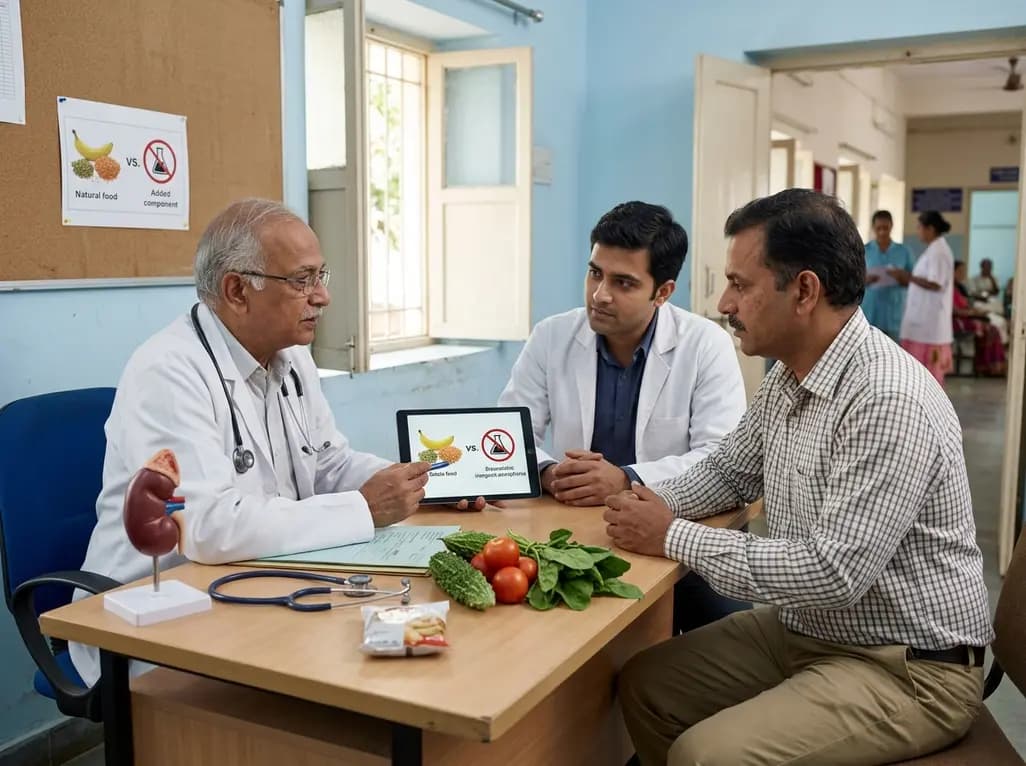
Modern renal nutrition is shifting toward additive-aware dietary guidance. This paradigm differentiates between intrinsic nutrients in whole foods and hyper-bioavailable inorganic additives, offering practical strategies to mitigate additive stacking and toxicity without restricting nutritious whole foods.
Today
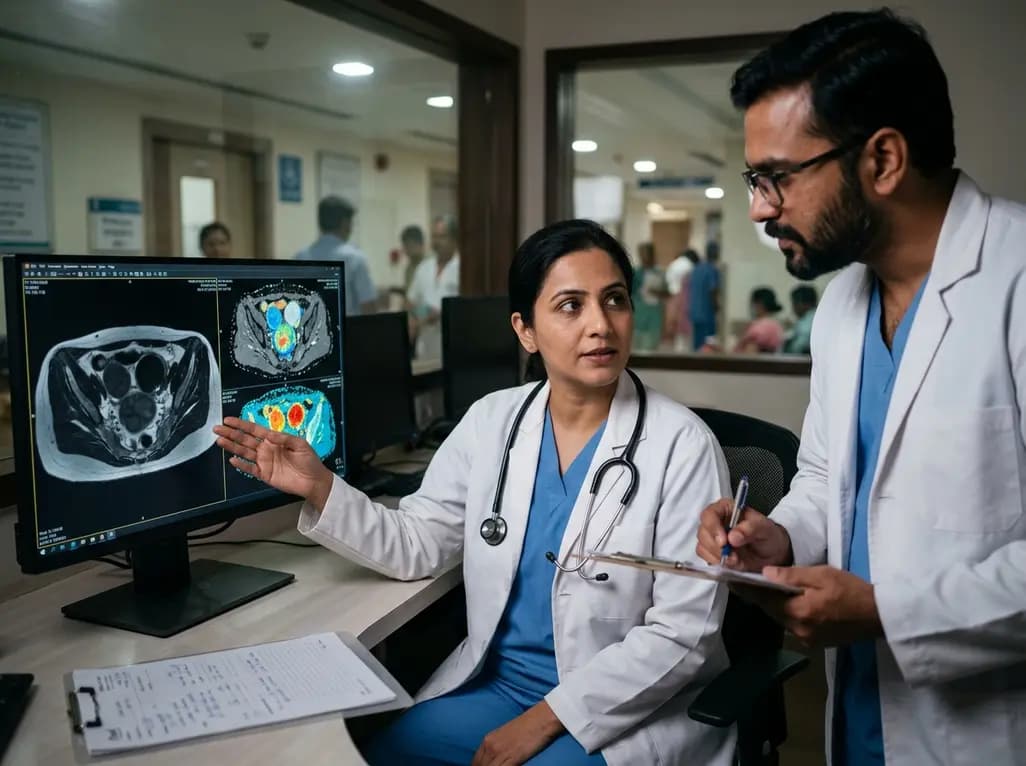
A multiparametric MRI approach combining quantitative T2 shading, apparent diffusion coefficient (ADC) measurements, and morphological signs provides superior diagnostic accuracy over subjective evaluation to differentiate ovarian endometriomas from benign hemorrhagic cysts.
Today
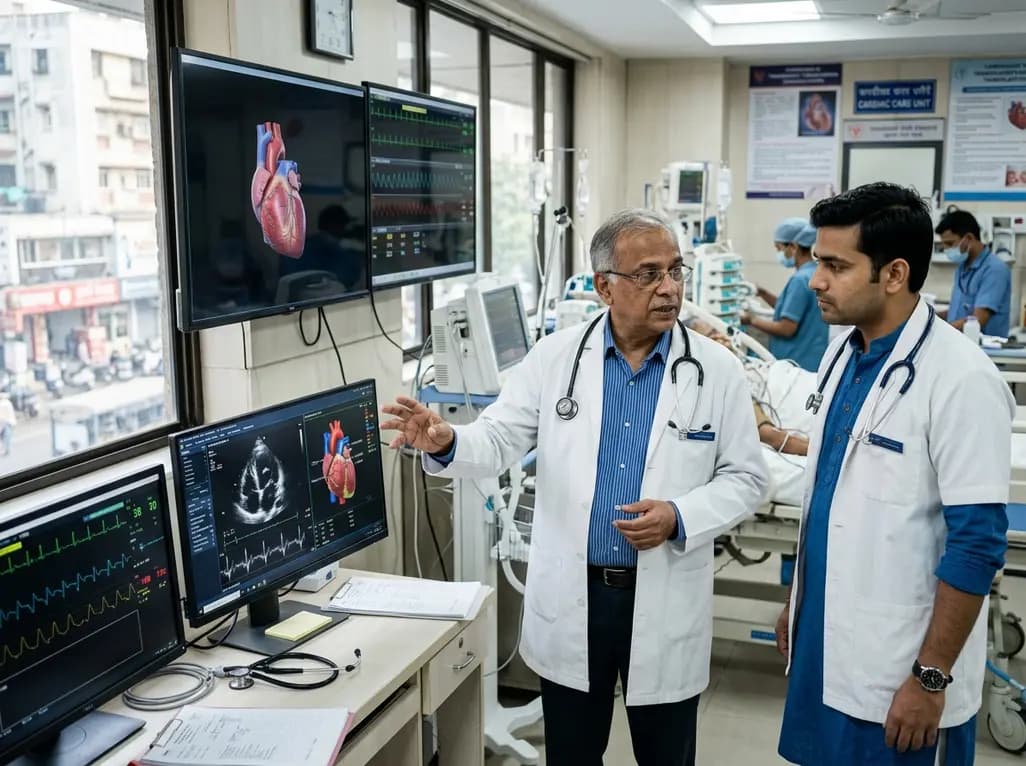
A landmark case report reveals a donor heart beating for a century in a 63-year-old recipient, challenging conventional age limits in cardiac transplantation and offering critical lessons on organ longevity, donor selection, and long-term graft survival.
Today

A new randomized crossover trial reveals that a hinged ulnar gutter orthosis significantly improves hand function and weight-bearing tolerance compared to standard volar splints in patients with degenerative triangular fibrocartilage complex lesions, supporting functionally permissive orthotic designs.
Today
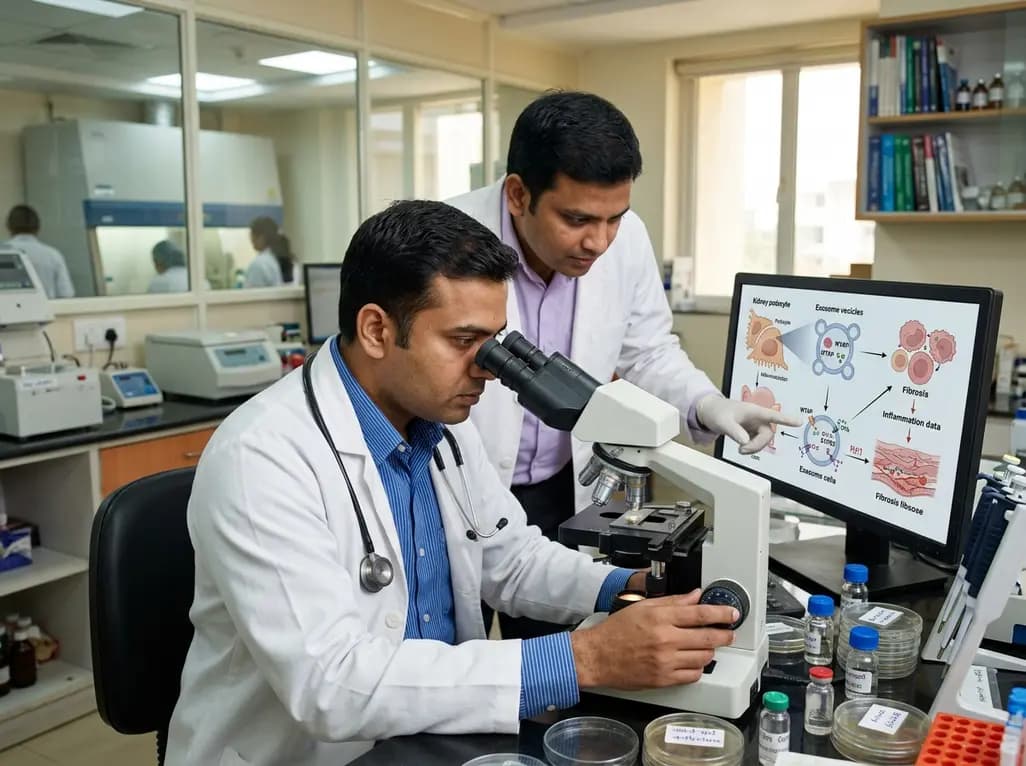
New research reveals that M1 macrophage-derived exosomes aggravate diabetic nephropathy by transferring WTAP to stabilize S1PR2 mRNA. Silencing WTAP in these vesicles attenuates endothelial injury and renal fibrosis, pointing toward innovative nanomedicine therapies.
Yesterday
