.webp&w=384&q=75)

Loading, please wait...
Loading, please wait...
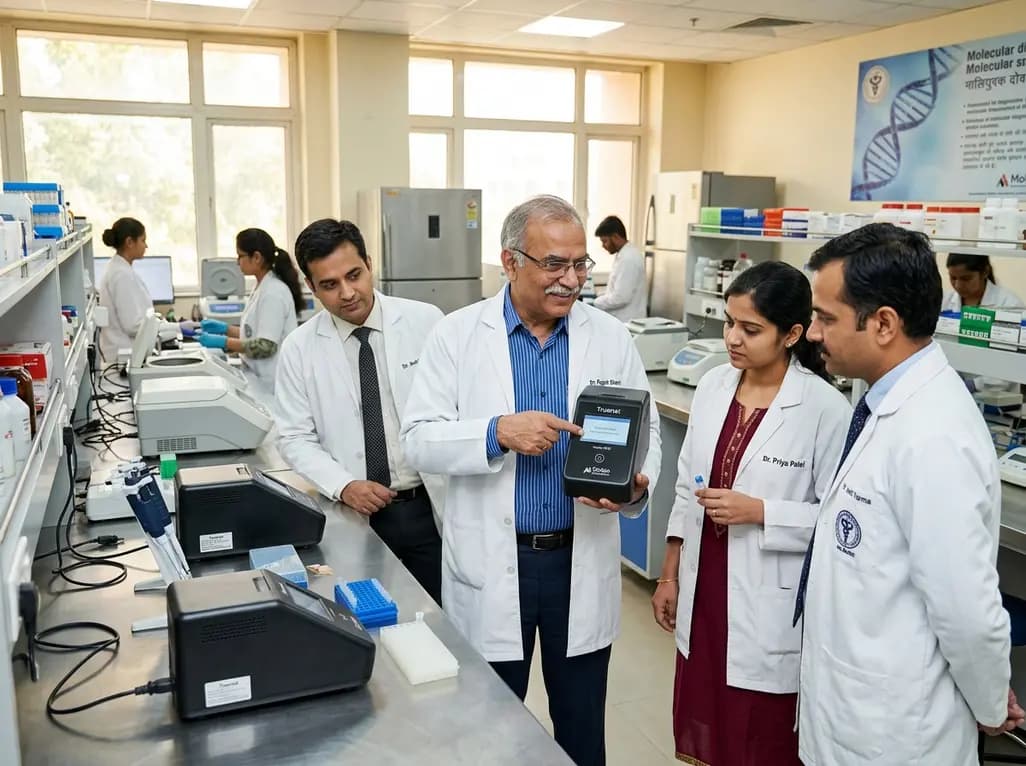
Point-of-care molecular diagnostics have transformed early clinical intervention by enabling rapid micro-PCR testing at peripheral healthcare centers across India. Goa-based healthcare pioneer Molbio Diagnostics Ltd has successfully raised ₹281.5 crore from prominent anchor investors ahead of its mainboard initial public offering. Furthermore, this strategic financial milestone underscores growing confidence in indigenous diagnostic technologies designed for resource-limited clinical environments. Consequently, healthcare providers and clinical diagnostic networks anticipate enhanced access to rapid point-of-care diagnostic tools across urban and rural medical facilities.
The anchor book allocation attracted notable interest from leading global and domestic institutional entities. Specifically, Molbio Diagnostics allotted 34.88 lakh equity shares to 33 anchor investors at a fixed price of ₹807 per share. Marquee financial participants included Goldman Sachs, BlackRock Global Funds, Mirae Asset, and the International Finance Corporation. In addition, major domestic mutual funds secured 23.54 lakh shares, representing 67.51 percent of the anchor allocation through 19 distinct schemes. Prominent domestic asset managers include ICICI Prudential, Kotak Mutual Fund, Tata Mutual Fund, Nippon India, and WhiteOak Capital. Furthermore, leading insurance providers such as Bajaj Life Insurance and HDFC Life Insurance actively participated in the anchor round.
The public issue opens for subscription on August 10 and closes on August 12 with a price band between ₹768 and ₹807 per share. Consequently, the total issue size ranges between ₹904 crore and ₹940 crore at the lower and upper price bounds, respectively. At the top of the price range, Molbio Diagnostics commands a post-issue market valuation of approximately ₹9,300 crore. Moreover, existing equity shareholders will divest up to 91.66 lakh shares through an offer for sale alongside the fresh issue component.
The company proposes to deploy fresh capital to strengthen its primary infrastructure and expand technological research capabilities. Specifically, Molbio plans to allocate ₹106 crore from fresh issue proceeds toward capital expenditure for setting up a specialized research facility. Additionally, these funds will support the creation of a Centre of Excellence and integrated corporate office space to drive innovation in point-of-care molecular diagnostics. Clinical diagnostics require continuous technological evolution to address emerging infectious pathogens and drug-resistant disease strains. Therefore, expanded research infrastructure will accelerate the commercialization of novel multi-target micro-PCR assay chips for clinical laboratories.
Furthermore, the company will deploy ₹72 crore toward purchasing advanced plant machinery and diagnostic manufacturing equipment. These technological upgrades will enhance production capacity across its primary Goa Unit I, Goa Unit II, and Visakhapatnam operational facilities. Consequently, higher operational efficiency will ensure a steady supply of high-precision diagnostic consumables to hospitals and public health programs. Remaining proceeds from the fresh issue will support general corporate objectives and working capital demands. Overall, this targeted capital deployment reinforces the corporate framework supporting decentralized laboratory testing across diverse clinical disciplines.
Molbio Diagnostics has established a prominent presence in diagnostic medicine through its proprietary Truenat platform. Patented in over 100 countries, Truenat is an automated, battery-operated, real-time micro-PCR system designed for rapid decentralized clinical testing. Moreover, the portable platform operates efficiently in resource-limited settings without requiring specialized laboratory infrastructure or continuous climate control. Clinicians can obtain actionable molecular diagnostic results within one hour, significantly reducing treatment initiation delays for vulnerable patient populations. Consequently, point-of-care micro-PCR testing bridges critical gaps between initial presentation and definitive clinical management in primary healthcare settings.
The Truenat portfolio currently supports real-time molecular assays for 30 distinct communicable and non-communicable conditions. Key clinical diagnostic applications include tuberculosis, COVID-19, human immunodeficiency virus, human papillomavirus, and hepatitis B and C. Furthermore, Truenat incorporates chip-based TaqMan chemistry to deliver high clinical sensitivity and specificity comparable to central reference laboratories. In addition, the system enables simultaneous detection of drug resistance markers, such as rifampicin resistance in tuberculosis cases. Therefore, frontline physicians can make evidence-based therapeutic decisions during initial patient encounters, improving clinical outcomes and suppressing community transmission of infectious pathogens.
To meet rising national and international diagnostic demands, Molbio Diagnostics maintains robust manufacturing and distribution infrastructure. Currently, the organization operates six advanced manufacturing facilities across India, including locations in Goa, Bengaluru, Visakhapatnam, and Pune. As of March 31, 2026, the company established an installed production capacity of 5,400 diagnostic devices per year. Additionally, its automated production lines generate up to 3.9 crore Truenat test kits annually to supply clinical networks. Furthermore, scalable manufacturing architecture enables rapid production surges during sudden disease outbreaks or seasonal epidemic surges across developing healthcare markets.
The integration of automated sample extraction systems alongside real-time micro-PCR analyzers minimizes manual handling errors and contamination risks. Consequently, standardized reagent manufacturing maintains diagnostic consistency across diverse clinical environments ranging from tertiary medical institutions to remote clinics. Moreover, international healthcare agencies and national disease eradication programs increasingly rely on decentralized molecular testing to achieve diagnostic coverage goals. By expanding domestic production capabilities, Molbio reinforces supply chain resilience for critical healthcare diagnostic supplies. Indeed, robust manufacturing infrastructure remains essential for maintaining widespread access to fast, affordable molecular diagnostics in high-burden disease regions.
Molbio Diagnostics has demonstrated substantial commercial expansion alongside its clinical technology deployments across healthcare sectors. In fiscal year 2026, the organization reported revenue from operations of ₹1,445 crore and achieved a profit of ₹164 crore. Moreover, the business model relies on a razor-and-blade structure, where device placement generates sustained, recurring demand for single-use test chips. This sustainable financial model supports ongoing research, international regulatory approvals, and expanded distribution partnerships across international markets. Consequently, private capital markets continue to view decentralized healthcare technology as a high-growth sector within healthcare delivery.
Furthermore, expanded point-of-care testing capacity directly advances global health initiatives aimed at eliminating major infectious diseases. Early identification of infectious cases reduces diagnostic dropouts, shortens hospital stays, and prevents inappropriate empirical antimicrobial prescriptions. Consequently, expanding diagnostic access supports national antimicrobial stewardship efforts by ensuring targeted therapeutic interventions. The company’s planned listing on the BSE and NSE on August 17 marks a key transition toward broader public institutional support. Kotak Mahindra Capital, IIFL Capital Services, Jefferies India, and Motilal Oswal serve as book-running lead managers for the issue. Ultimately, capital market expansion empowers medical technology providers to democratize precision diagnostics across underserved patient communities.
Q1: What primary objectives will Molbio Diagnostics pursue using fresh issue proceeds from its public offering?
Molbio Diagnostics will allocate ₹106 crore toward establishing an R&D facility, a Centre of Excellence, and corporate office infrastructure. Additionally, the company will deploy ₹72 crore to acquire plant and machinery equipment for its Goa and Visakhapatnam manufacturing units, while dedicating the remaining capital toward general corporate objectives.
Q2: How does the Truenat micro-PCR platform facilitate decentralized testing in resource-limited clinical environments?
The Truenat platform is a portable, battery-operated, micro-PCR system that functions effectively without central laboratory infrastructure or continuous climate control. Consequently, clinicians at peripheral health centers can perform automated nucleic acid extraction and real-time amplification, delivering lab-grade diagnostic results within an hour to guide immediate clinical treatment.
Q3: What diagnostic capabilities does the Truenat system offer for managing infectious and non-communicable diseases?
The Truenat system offers targeted molecular testing for 30 clinical conditions, including tuberculosis, COVID-19, HIV, HPV, and Hepatitis B and C. Furthermore, the platform detects drug-resistance markers, such as rifampicin resistance, enabling physicians to select effective, targeted antimicrobial regimens during early clinical presentation.
Disclaimer: This content is for informational and educational purposes only. It does not constitute medical advice or replace professional judgment. Refer to the latest local and national guidelines for clinical practice.
References

Read summarized clinical updates, watch expert medical content, and earn CME certifications right from your smartphone.
Open your smartphone camera to scan and install.





Molbio Diagnostics has raised ₹281.5 crore from anchor investors ahead of its ₹940 crore IPO. The Goa-based point-of-care molecular diagnostics company plans to utilize fresh proceeds to expand R&D facilities, establish a Centre of Excellence, and scale manufacturing of its patented Truenat micro-PCR platform.
last month

A comprehensive validation study using PPMI cohort data establishes the psychometric reliability, factor structure, and minimal detectable change of the SCOPA-AUT scale across prodromal and established Parkinson's disease, highlighting its longitudinal association with non-motor daily living experiences.
Today

The ClinGen Prenatal Gene Curation Expert Panel evaluated 63 disease relationships across 61 genes, establishing clinical validity for severe fetal phenotypes like hydrops and stillbirth to enhance prenatal genomic interpretation and clinical care.
Today

A cohort study demonstrates that the weight-adjusted waist index predicts all-cause and cardiovascular mortality more accurately than BMI and conventional adiposity metrics, offering clinicians a practical anthropometric tool for superior cardiometabolic risk stratification.
Today

New research reveals that HOXD13 regulates primary cilia signalling and genomic stability in distal synovial fibroblasts, uncovering why conditions like rheumatoid arthritis target specific joints.
Today
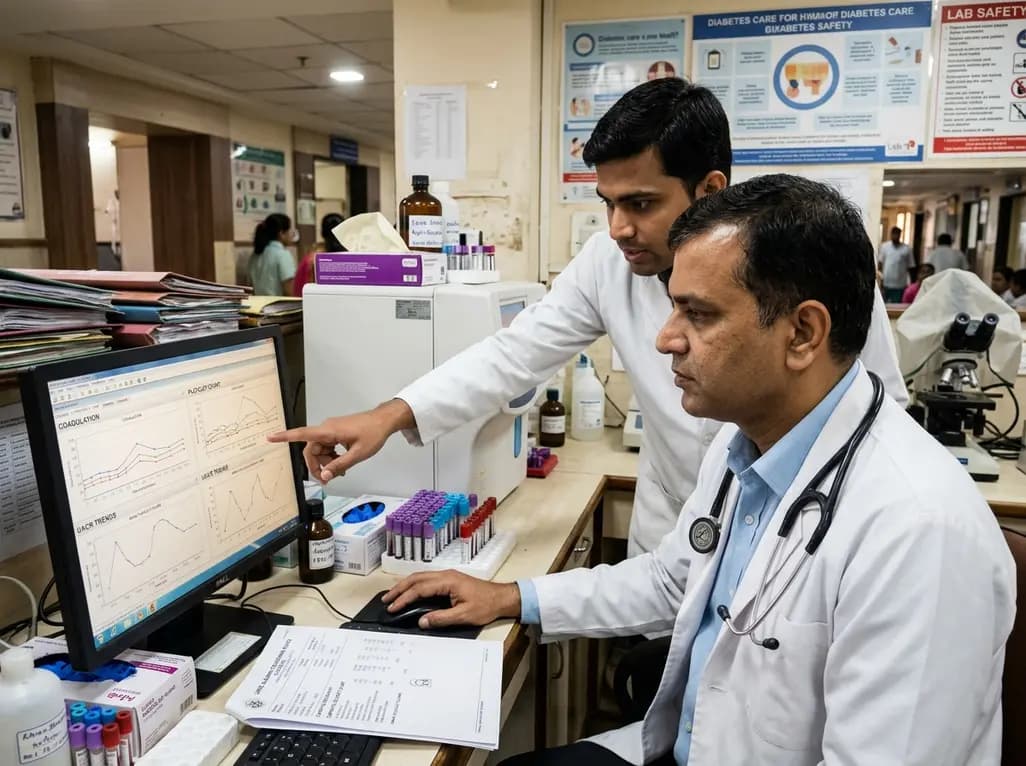
A western India study demonstrates that shortened coagulation times (PT, APTT), elevated mean platelet volume, and increased UACR strongly correlate with type 2 diabetes microvascular complications, highlighting the clinical value of combined hemostatic and renal profiling for early risk stratification.
Today
