.webp&w=384&q=75)

Loading, please wait...
Loading, please wait...
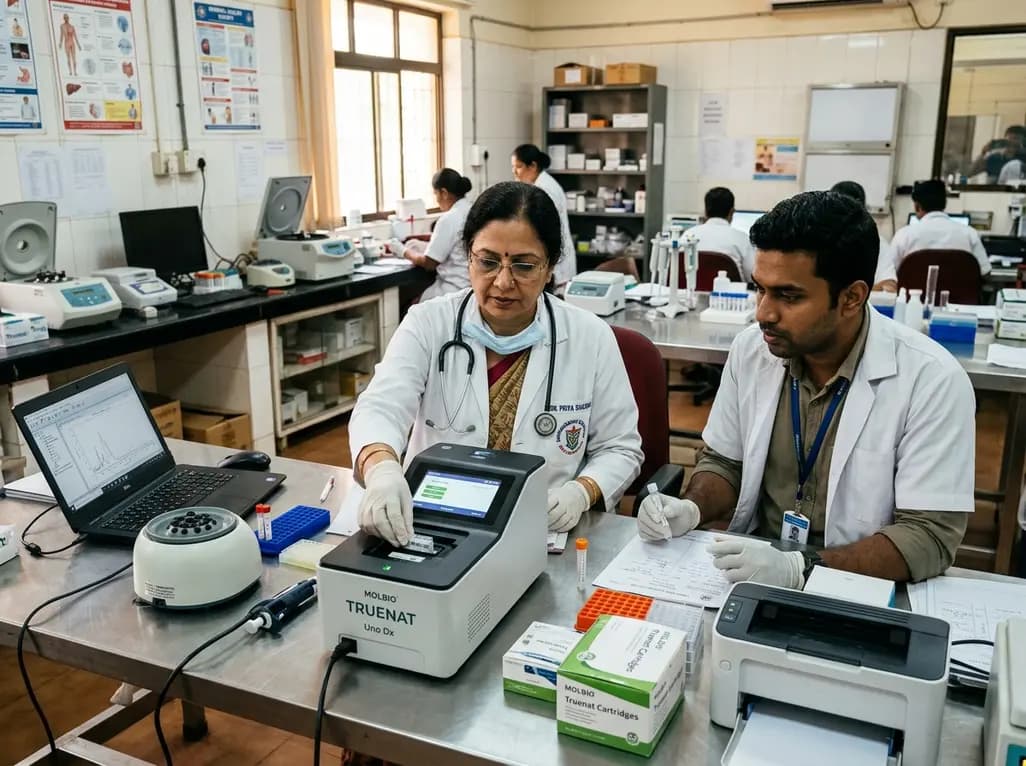
Point-of-care PCR diagnostics have transformed clinical practice by bringing molecular precision to bedside settings. Recently, Goa-based Molbio Diagnostics Ltd raised ₹281.5 crore from leading anchor investors ahead of its initial public offering. The company allotted 34.88 lakh equity shares to 33 anchor investors at ₹807 per share, the upper end of the price band. Renowned international and domestic funds participated in this allotment. Notable subscribers included Goldman Sachs, BlackRock Global Funds, Mirae Asset, Nippon India Mutual Fund, ICICI Prudential Mutual Fund, and Kotak Mutual Fund. Furthermore, domestic mutual funds acquired 67.51 percent of the anchor allocation across nineteen schemes. The public subscription opens on August 10 and closes on August 12, aiming to raise up to ₹940 crore overall. Molbio plans to deploy fresh capital to expand its research facilities and augment production capacity across its Indian manufacturing plants. Consequently, expanding diagnostic accessibility supports early disease intervention across primary healthcare networks in India.
The patented Truenat platform represents a landmark innovation in point-of-care PCR diagnostics for diverse clinical applications. Currently, this portable real-time PCR system holds patents across more than 100 countries worldwide. The device features battery-powered operation, enabling seamless functioning in resource-limited primary care settings without continuous electricity. Consequently, healthcare providers can execute nucleic acid extraction and real-time PCR locally, securing accurate diagnostic findings within one hour. As of March 2026, the Truenat platform offers molecular assays for thirty distinct conditions across forty-three test configurations. These assays cover critical pathogens including Mycobacterium tuberculosis, SARS-CoV-2, HIV, HPV, and Hepatitis B and C. Crucially, the World Health Organization endorses the Truenat tuberculosis test for initial diagnosis and rifampicin resistance detection. Because rapid molecular confirmation prevents ongoing community transmission, physicians can prescribe targeted therapeutic regimens during the initial visit. Furthermore, decentralized testing eliminates sample transport logistics, dramatically improving patient care continuity in remote health settings.
Strengthening decentralized diagnostic infrastructure is vital for addressing high infectious disease burdens across rural Indian populations. Historically, peripheral health centers depended on clinical assessment or low-sensitivity smear microscopy for diagnostic decisions. However, advanced molecular technologies provide superior sensitivity and specificity for active case finding. Molbio currently operates six manufacturing facilities situated in Goa, Bengaluru, Visakhapatnam, and Pune. As of March 2026, the company maintained an annual installed capacity of 5,400 testing devices and 3.9 crore Truenat test kits. To keep pace with rising demand, the enterprise will deploy ₹106 crore from fresh IPO proceeds toward capital expenditure. Specifically, these funds will build infrastructure for a dedicated research facility, a Centre of Excellence, and integrated office space. Moreover, an additional ₹72 crore will purchase plant machinery and modern equipment for production units in Goa and Visakhapatnam. Consequently, expanding domestic manufacturing capacity ensures an uninterrupted supply of essential diagnostic kits for national public health initiatives.
Financial strength and corporate growth enable diagnostic technology manufacturers to invest heavily in continuous clinical innovation. During fiscal year 2026, Molbio generated operational revenue of ₹1,445 crore while earning a profit of ₹164 crore. At the upper price band of ₹807, the enterprise commands an estimated post-issue market valuation of approximately ₹9,300 crore. The initial public offering combines a fresh equity issue of up to ₹200 crore alongside an offer for sale of up to 91.66 lakh equity shares. Through this offer for sale, early promoters and shareholders, including Exxora Trading LLP and Dr. Chandrasekhar Bhaskaran Nair, are divesting equity holdings. Furthermore, premier financial managers including Kotak Mahindra Capital, IIFL Capital Services, Jefferies India, and Motilal Oswal Investment Advisors are leading the transaction. Equity shares are slated for listing on the BSE and NSE on August 17. Consequently, entering public capital markets provides financial stability for long-term research endeavors, allowing expansion into digital pathology and oncology screening solutions.
National healthcare initiatives across India rely heavily on point-of-care testing to reach ambitious public health milestones. Specifically, the National Tuberculosis Elimination Programme integrates rapid molecular testing to detect drug resistance early in the diagnostic pathway. Historically, traditional culture methods required several weeks to deliver drug susceptibility profiles. However, rapid real-time PCR delivers precise results in less than two hours. Consequently, clinicians can initiate second-line anti-tubercular therapy immediately, curtailing the spread of drug-resistant strains. Beyond respiratory infections, point-of-care molecular testing enhances cervical cancer screening programs through rapid HPV DNA detection. Furthermore, portable testing platforms facilitate early screening for viral hepatitis B and C in community health centers. Prompt initiation of antiviral therapy prevents severe liver complications including cirrhosis and hepatocellular carcinoma. Additionally, integrated digital connectivity allows point-of-care devices to transmit real-time epidemiological data directly to central surveillance systems, enabling public health administrators to monitor disease trends and allocate resources effectively.
The future of decentralized medical practice depends on accessible, highly scalable point-of-care molecular diagnostic technologies. Consequently, expanding point-of-care PCR diagnostics into peripheral clinics will accelerate progress toward national disease elimination targets. Emerging diagnostic paradigms integrate portable real-time PCR devices with digital pathology scanners and artificial intelligence algorithms. Furthermore, performing multi-disease screening on a single portable platform enables comprehensive clinical evaluations during a single patient consultation. Researchers continue to develop novel assay chips targeting drug resistance markers, emerging pathogens, and non-communicable disease indicators. Additionally, battery-operated testing platforms remove dependence on centralized reference laboratories, drastically reducing overall diagnostic turnaround times. As domestic manufacturing scales up, molecular testing will become significantly more cost-effective for public health systems and private practitioners alike. Ultimately, timely access to definitive molecular results empowers healthcare providers to deliver precise, evidence-based care, yielding substantial long-term benefits for clinical care and public health management.
Q1: What is the clinical significance of the Truenat point-of-care PCR platform?
The Truenat platform delivers rapid real-time PCR molecular testing at the point of care, providing actionable clinical results within one hour. Because it is battery-operated and portable, clinicians can deploy it in resource-limited primary care settings. Endorsed by the World Health Organization for tuberculosis and rifampicin resistance detection, the platform facilitates immediate therapeutic intervention across thirty infectious and non-communicable diseases.
Q2: How will Molbio Diagnostics utilize its fresh IPO capital proceeds?
Molbio Diagnostics will deploy ₹106 crore from its fresh IPO issue proceeds toward setting up infrastructure for an advanced research facility, a Centre of Excellence, and corporate offices. Furthermore, the company will allocate ₹72 crore toward purchasing modern plant machinery and manufacturing equipment for its production units in Goa and Visakhapatnam, with remaining funds allocated toward general corporate purposes.
Q3: Which major institutional investors participated in Molbio's anchor book allotment?
Molbio Diagnostics successfully raised ₹281.5 crore by allotting 34.88 lakh equity shares to 33 anchor investors prior to its public issue. Major global and domestic institutional participants included Goldman Sachs, BlackRock Global Funds, Mirae Asset, Nippon India Mutual Fund, ICICI Prudential Mutual Fund, Kotak Mutual Fund, Tata Mutual Fund, WhiteOak Capital, Bajaj Life Insurance, and HDFC Life Insurance, reflecting strong investor confidence.
Disclaimer: This content is for informational and educational purposes only. It does not constitute medical advice or replace professional judgment. Refer to the latest local and national guidelines for clinical practice.
References

Read summarized clinical updates, watch expert medical content, and earn CME certifications right from your smartphone.
Open your smartphone camera to scan and install.





Molbio Diagnostics has raised ₹281.5 crore from anchor investors ahead of its IPO. The Goa-based point-of-care diagnostics firm plans to utilize proceeds to expand R&D and manufacturing capacity for its WHO-endorsed Truenat real-time PCR platform across India.
last month

Groundbreaking research from Mount Sinai reveals that vascular injury driven by the APOE4 gene is an active, potentially reversible driver of dementia. By inhibiting TGF-beta signaling, researchers restored microvascular integrity and cleared amyloid, opening novel therapeutic avenues for neurodegenerative care.
Today

A nationwide study covering 3.7 million Swedish births reveals that prenatal exposure to TORCH pathogens significantly elevates long-term risks of intellectual disability and autism. Healthcare providers must recognize clinical indicators, promote prenatal prevention, and track early pediatric neurodevelopment.
Today
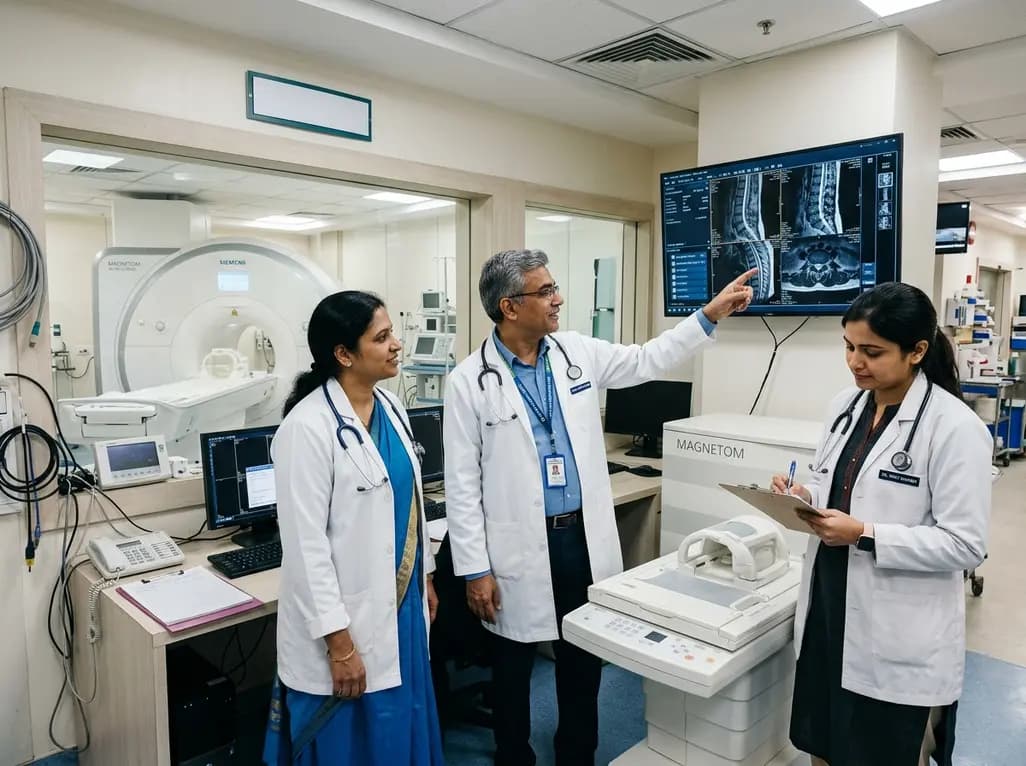
Under India's PLI initiative, domestic production of 57 critical medical devices has commenced, including MRI and CT scanners, cath labs, and heart valves. Global partnerships and local investments are expanding high-end technology, curbing import reliance, and strengthening clinical accessibility nationwide.
Today
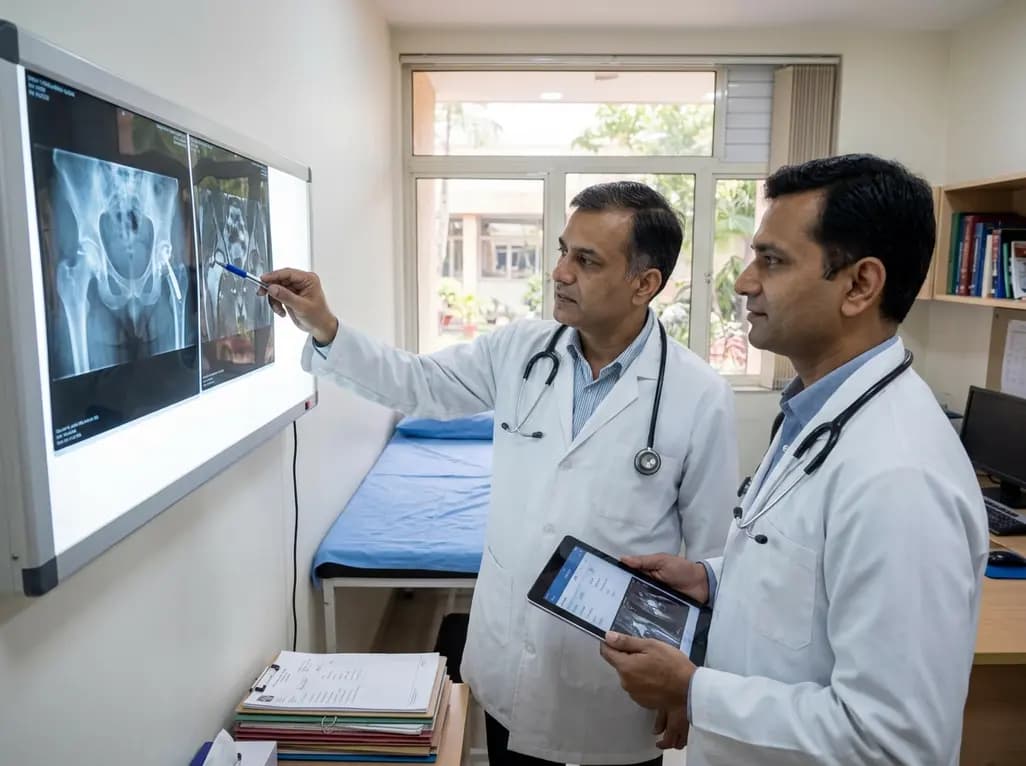
A longitudinal study reveals that patients undergoing staged bilateral hip arthroscopy experience progressive contralateral labral deterioration during surgical intervals. However, structural degradation does not compromise 2-year postoperative clinical outcomes or patient-reported satisfaction scores.
Today
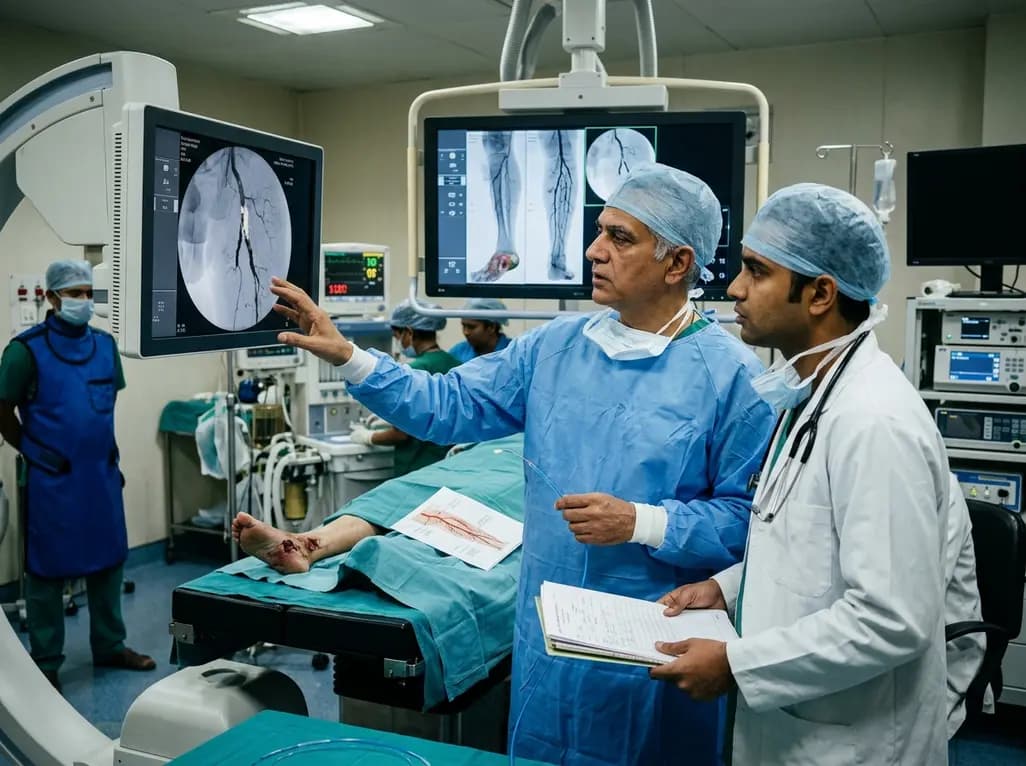
SWEDEPAD-1 trial insights show paclitaxel-coated devices do not improve long-term limb salvage in patients with chronic limb-threatening ischemia and tissue loss. While one-year reinterventions decreased, the devices were linked to a higher risk of major amputation at three months.
Yesterday
