.webp&w=384&q=75)

Loading, please wait...
Loading, please wait...
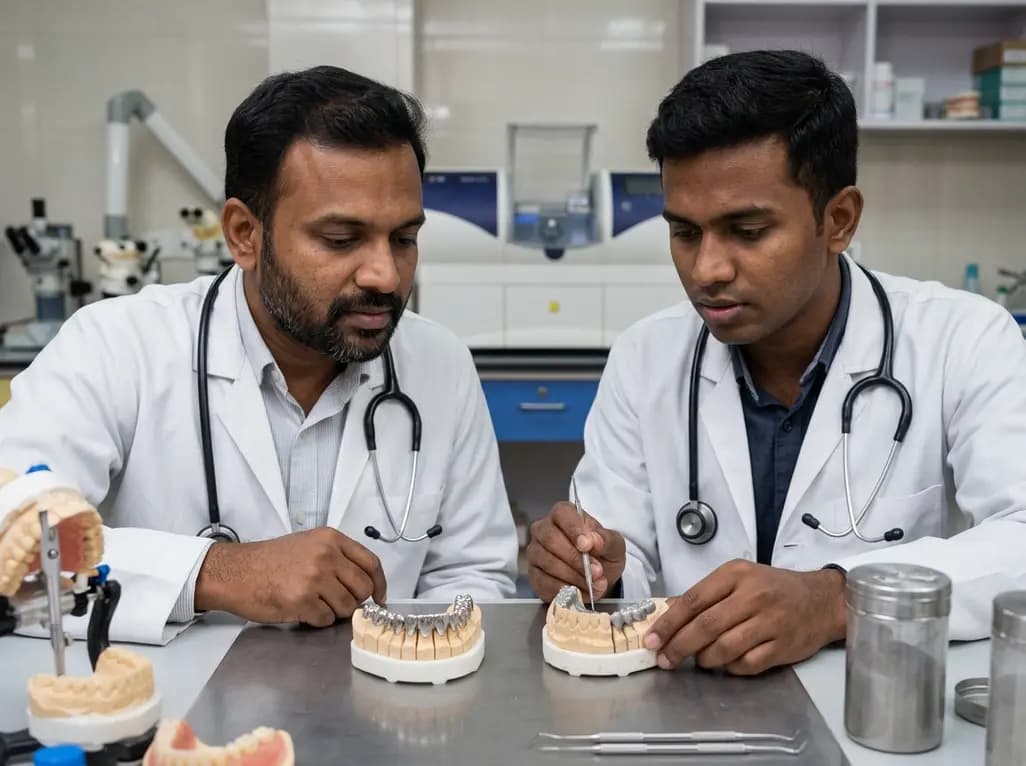
Digital advancements in prosthodontics continue to reshape restorative workflows across global and Indian practices. Clinicians increasingly depend on computer-aided manufacturing to produce complex cobalt-chromium dental superstructures. However, obtaining optimal implant framework trueness remains critical for long-term clinical durability and peri-implant tissue health. In multiunit implant-supported fixed dental prostheses, subtle dimensional deviations can trigger biological stress or mechanical breakdown. Historically, laboratories used lost-wax casting, but digital solutions now dominate the landscape. Today, prosthodontists choose between subtractive computer numerical control milling and additive direct metal laser sintering. A recent investigation provides essential comparative insights into how these modern production modalities perform under rigorous metrological conditions.
Modern restorative dentistry increasingly demands high manufacturing fidelity to deliver predictable clinical outcomes. For decades, dental technicians relied heavily on traditional investment casting methods for cobalt-chromium frameworks. Nevertheless, conventional casting often introduced wax distortion, expansion discrepancies, and unpredictable volumetric shrinkage. Consequently, the profession welcomed digital manufacturing pathways with immense enthusiasm. Subtractive manufacturing utilizes solid alloy discs that high-speed rotary burs carve into custom geometries. Because manufacturers produce these industrial metal blanks under standardized conditions, the resulting material exhibits minimal porosity. However, subtractive milling consumes significant raw material and causes rapid cutting tool wear. In contrast, additive manufacturing synthesizes metal frameworks layer by layer using high-powered lasers. Specifically, direct metal laser sintering allows technicians to fabricate intricate prosthetic shapes while minimizing metallurgical waste. Furthermore, additive workflows lower production expenditures and accelerate turnaround times for busy dental laboratories. Despite these clear logistical benefits, practitioners must evaluate whether additive frameworks match the metric accuracy of milled alternatives. Achieving passive fit remains mandatory to prevent biological and technical complications in implant dentistry.
To evaluate implant framework trueness with high precision, researchers designed an in vitro protocol simulating a challenging clinical scenario. Specifically, the authors constructed a rigid resin master model containing three noncollinear abutment analogs to replicate human jawbone anatomy. Additionally, they digitally designed a five-unit implant-supported framework featuring an asymmetrical geometry. For example, this complex design included a short mesial connecting bar measuring 10.6 millimeters and an extended distal bar spanning 17.7 millimeters. Subsequently, the team exported the digital design as a standard tessellation language reference file. Furthermore, technicians fabricated eight frameworks via computer numerical control milling and eight frameworks through direct metal laser sintering using medical-grade cobalt-chromium alloy. Afterward, the investigators digitized all physical frameworks with an optical laboratory scanner to yield test digital files. They then imported these datasets into metrology-grade inspection software to perform three-dimensional superimposition against the reference file. Next, the researchers quantified overall surface discrepancies, marginal seat variances, and localized bar connector deviations using root mean square values and color-coded error maps. Finally, they applied rigorous statistical analyses, including Mann-Whitney U tests and linear mixed models, setting significance at an alpha level of 0.05.
The study demonstrated clear dimensional differences between the two manufacturing techniques. For overall root mean square values, the computer numerical control milling group achieved a median discrepancy of 67.5 micrometers. In contrast, the direct metal laser sintering group recorded a significantly higher median deviation of 90.3 micrometers. Consequently, statistical testing confirmed that this overall discrepancy was significant, yielding a p-value of 0.010. Furthermore, subtractive milling exhibited significantly higher marginal trueness across the abutment mating surfaces. Specifically, the milled frameworks demonstrated a mean marginal root mean square error of 68.8 micrometers with a standard deviation of 9.2 micrometers. Conversely, the sintered frameworks showed a mean marginal deviation of 80.3 micrometers with a standard deviation of 11.5 micrometers. Thus, this marginal difference reached statistical significance with a p-value of 0.045. Therefore, the subtractive technique delivered superior fidelity at the critical implant-prosthesis junction. Interestingly, the fabrication method did not exert a statistically significant main effect on bar connector deviations, presenting a p-value of 0.211. However, dimensional variations differed markedly across specific anatomical surfaces, demonstrating that geometry directly influences fabrication behavior.
Understanding surface-specific dimensional behavior provides valuable clinical guidance for restorative dental teams. In multiunit prostheses, the intaglio surface interfaces directly with implant components, requiring the highest possible geometric precision. Consequently, the investigators found that the measurement surface significantly altered dimensional outcomes during digital comparison. While cross-sectional bar measurements remained comparable between manufacturing methods, localized surface deviations varied considerably. Specifically, thermal dynamics during additive manufacturing explain much of this variation. During direct metal laser sintering, fine cobalt-chromium powder particles undergo rapid localized melting and rapid cooling. Consequently, residual thermal gradients create micro-stresses within the developing alloy matrix. Even after standard stress-relieving heat treatments, microscopic thermal contractions can alter the passive fit across extended spans. In contrast, subtractive milling maintains room-temperature cutting stability through constant liquid irrigation. Thus, the mechanical milling process avoids thermal expansion cycles entirely. Nevertheless, milling burs face physical access constraints when carving intricate undercut areas or acute internal line angles. In this study, however, subtractive milling demonstrated consistent trueness across the critical seating interfaces, outperforming additive sintering in overall geometric fidelity.
These findings carry substantial relevance for dental surgeons and prosthodontists managing full-arch or multiunit rehabilitations across India. In private clinics and institutional centers, clinicians frequently balance financial constraints against prosthetic excellence. Specifically, direct metal laser sintering has gained rapid popularity across Indian commercial dental laboratories due to affordable hardware and low metal disc expenditure. Furthermore, local laboratories can produce additive frameworks rapidly, reducing turnaround intervals for edentulous patients. However, clinicians must exercise caution when selecting fabrication pathways for complex, multiunit fixed restorations. Because milled frameworks provide superior marginal trueness, they deliver a more predictable passive fit over multi-implant abutments. Consequently, poor marginal adaptation generates non-axial forces that provoke crestal bone loss, peri-implant mucositis, or screw loosening. Therefore, when managing long-span fixed prostheses or highly divergent implant fixtures, practitioners should favor high-precision computer numerical control milling. Alternatively, clinicians using sintered frameworks must incorporate meticulous verification protocols, such as intraoral resin verification jigs and one-screw tests. Ultimately, by integrating objective metrological data into daily treatment planning, dental practitioners can enhance clinical longevity and maintain biological harmony.
Implant framework trueness directly dictates the passive fit of multiunit prostheses over dental fixtures. When discrepancies occur, non-axial strain distributes unevenly across the supporting alveolar bone and hardware components. Consequently, this biological stress can accelerate peri-implant bone resorption, promote soft tissue inflammation, and cause persistent mechanical complications. Specifically, clinicians observe screw loosening, abutment screw fracture, or catastrophic framework failure. Achieving optimal trueness prevents these adverse biomechanical events and ensures long-term prosthetic success.
Subtractive computer numerical control milling carves frameworks from homogenous, industrially manufactured cobalt-chromium alloy blanks under rigid mechanical calibration. This process prevents high thermal variations during shaping. In contrast, direct metal laser sintering relies on localized laser melting of fine metallic powders. Therefore, repetitive rapid thermal heating and cooling cycles generate residual internal stresses within the alloy. These thermal contractions lead to micro-distortions during printing and post-sintering processing, ultimately reducing the overall marginal trueness.
Yes, clinicians can confidently select direct metal laser sintering for routine multiunit restorations when clinical protocols incorporate careful seating evaluations. Although milling offers superior metric precision, additive manufacturing significantly reduces alloy waste, lowers production costs, and shortens manufacturing turnaround times. Moreover, the observed dimensional deviations often fall within clinically acceptable biological thresholds of misfit. Practicing clinicians can perform minor adjustments or select hybrid restorative workflows to capitalize on the economic advantages of additive technologies safely.
Disclaimer: This content is for informational and educational purposes only... Refer to the latest local and national guidelines for clinical practice.
References

Read summarized clinical updates, watch expert medical content, and earn CME certifications right from your smartphone.
Open your smartphone camera to scan and install.





A comparative study reveals that CNC milled cobalt-chromium implant-supported frameworks provide significantly superior trueness and marginal fit compared to DMLS additive manufacturing. Learn how these metrological findings influence framework selection and passive fit in multiunit restorations.
Today

A landmark nationwide cohort study reveals that older adults with dementia who undergo cardiac catheterization for STEMI spend meaningful time alive at home, particularly community-dwelling individuals. Cognitive impairment alone should not preclude acute invasive revascularization.
Today

Prelacteal feeding persists in South Asian communities despite known clinical risks. This review examines determinants from Chitral, pathophysiological hazards, and pediatric strategies to eliminate harmful feeds and support exclusive breastfeeding.
Today

A randomized controlled trial demonstrates that theory-driven personalized mobile messaging reduces the risk of consecutive walking goal failures by 33 percent, highlighting the vital role of digital health tools in sustaining long-term exercise habits and chronic disease prevention.
Today
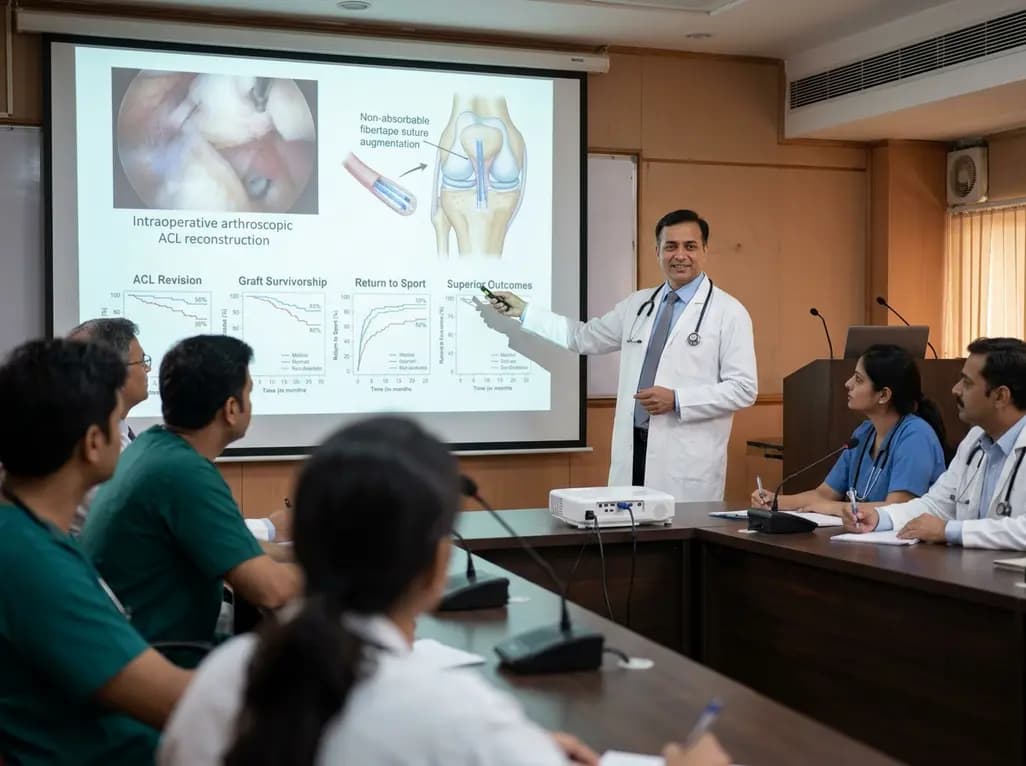
A comparative study demonstrates that suture-augmented revision ACL reconstruction using all-soft-tissue grafts achieves superior activity scores, quadrupled return to sport rates, and an 80% reduction in graft failure compared to isolated revision procedures.
Today

A cross-sectional study of 320 adults evaluated the link between habitual fasting duration and dietary quality using Nutrition Quotient scores, highlighting the clinical necessity of balancing time-restricted eating with nutrient density and meal quality in routine metabolic practice.
Today
