.webp&w=384&q=75)

Loading, please wait...
Loading, please wait...

Chronic subdural hematoma represents one of the most common neurosurgical conditions encountered in adult populations today. Because global life expectancy continues to climb, clinicians manage an increasing volume of older patients presenting with persistent intracranial fluid collections. Furthermore, the widespread prescription of antiplatelet and anticoagulant regimens significantly accelerates bleeding tendencies. While traditional burr-hole drainage remains the cornerstone of initial surgical evacuation, postoperative recurrence rates remain frustratingly high. In recent years, middle meningeal artery embolization has emerged as a transformative endovascular intervention. This procedure directly disrupts the fragile neocapillary network supplying the outer hematoma membranes. A recent systematic review and meta-analysis synthesizes evidence from seven randomized controlled trials comprising nearly two thousand patients to clarify its therapeutic role.
To appreciate the utility of endovascular therapy, clinicians must examine how subdural fluid collections persist and expand over time. Initial trauma often causes a tearing of delicate bridging veins across the subdural space. Consequently, extravasated blood triggers a chronic inflammatory cascade that promotes the formation of vascularized neo-membranes. These newly formed membranes exhibit high concentrations of vascular endothelial growth factor and tissue plasminogen activator. Therefore, the microvasculature remains exceptionally fragile and prone to repetitive microhemorrhages. Standard surgical drainage effectively evacuates the primary fluid collection, yet it frequently leaves the underlying vascularized membrane intact. As a result, continuous transudation and microbleeding perpetuate hematoma expansion, leading to symptomatic recurrence. The middle meningeal artery provides the dominant arterial supply feeding these pathological subdural membranes. Therefore, selectively catheterizing and occluding the distal branches of this vessel cuts off blood flow to the friable neocapillaries. By depriving the membrane of arterial inflow, the endovascular approach interrupts the self-sustaining cycle of inflammation, exudation, and rebleeding. This fundamental physiological mechanism provides a compelling rationale for pairing targeted devascularization with traditional operative decompression.
Until recently, neurosurgeons relied primarily on observational series and retrospective cohort data when assessing endovascular therapy. However, landmark randomized controlled trials have dramatically upgraded our clinical certainty. The updated systematic review and meta-analysis incorporates seven randomized trials encompassing 1,889 patients with confirmed chronic subdural collections. When researchers pooled the data, middle meningeal artery embolization combined with standard therapy demonstrated a statistically significant reduction in recurrent or residual collections. Specifically, patients receiving adjunctive endovascular therapy experienced a 37 percent relative reduction in recurrence compared to those undergoing conventional management alone. Furthermore, the meta-analysis demonstrated an even more pronounced benefit regarding surgical salvage. The risk of requiring repeat surgical reoperation dropped by 61 percent in the embolization group. This substantial risk reduction carries tremendous clinical importance because repeat cranial procedures in frail older adults entail substantial perioperative hazards. Interestingly, overall rates of complete hematoma resorption did not differ significantly between the treatment cohorts during follow-up. This observation suggests that the primary value of endovascular occlusion lies in stabilizing membrane vascularity rather than accelerating mechanical fluid clearance.
A critical question among neurosurgeons and interventional specialists centers on the optimal timing for performing middle meningeal artery embolization. Clinicians frequently debate whether endovascular devascularization should occur preoperatively, postoperatively, or as a delayed salvage procedure. To resolve this therapeutic uncertainty, the investigators conducted detailed subgroup analyses evaluating outcomes across different procedural timeframes. The clinical benefits proved remarkably robust, demonstrating consistent reductions in recurrence regardless of whether embolization took place immediately before or shortly after surgical evacuation. Preoperative devascularization offers the theoretical advantage of diminishing intraoperative bleeding and reducing immediate capillary refill into the cavity. Conversely, postoperative intervention enables urgent mechanical decompression of mass effect before undertaking endovascular catheterization. The meta-analysis revealed that therapeutic efficacy persisted across distinct surgical protocols and patient demographics. Furthermore, sensitivity analyses demonstrated that patient age did not diminish the protective effect against hematoma recurrence. Because procedural benefits appear largely independent of timing, neurosurgical teams can tailor scheduling based on institutional resources, operator availability, and individual clinical acuity.
Evaluating procedural safety remains paramount whenever introducing an invasive technique to older adults with complex comorbidities. Fortunately, the compiled evidence confirms an exceptionally favorable safety profile for endovascular therapy. In the pooled analysis of randomized trials, middle meningeal artery embolization did not increase the incidence of serious adverse events. In fact, point estimates favored the embolization cohort, showing an overall relative risk of 0.87. Importantly, endovascular treatment caused no increase in neurological mortality or all-cause mortality compared to standard management. Concerns regarding ischemic stroke resulting from inadvertent embolic reflux or cranial nerve palsies due to collateral anastomoses did not materialize into higher complication rates. Moreover, long-term functional independence, as measured by standardized functional scales, remained entirely comparable between the two arms. Length of hospital stay also showed no significant prolongation despite the addition of an endovascular procedure. Consequently, the data clearly indicate that selective endovascular occlusion safely prevents treatment failure without subjecting vulnerable patients to undue perioperative toxicity.
The burden of chronic subdural hematoma continues to rise across India, driven by rapidly aging demographics and expanding access to cardiac care. In Indian clinical settings, many patients present with significant brain compression while maintained on dual antiplatelet therapy or oral anticoagulants. Managing these individuals presents substantial challenges, especially when managing postoperative recurrences that demand repeated hospital admissions. Integrating middle meningeal artery embolization into clinical care algorithms offers a strategic solution to minimize devastating reoperations. Advanced tertiary neurointerventional centers across India already possess the biplane digital subtraction angiography suites and microcatheter expertise required for safe delivery. Nevertheless, implementing this modality nationwide requires careful resource allocation, multidisciplinary collaboration, and structured training pathways. Interventional radiologists, neurologists, and neurosurgeons must establish shared clinical protocols to identify ideal candidates promptly. Liquid embolic agents, such as ethylene vinyl alcohol copolymers, require careful handling to avoid non-target embolization. Therefore, maintaining rigorous anatomical understanding of dangerous anastomoses—particularly branches connecting to the ophthalmic artery and petrosal branch of the facial nerve—remains critical. By integrating targeted endovascular devascularization into neurosurgical workflows, Indian hospitals can markedly improve treatment durability and patient survival.
Middle meningeal artery embolization works by occluding distal feeding branches supplying the vascularized neo-membranes around the hematoma. This targeted blockage arrests continuous microbleeding and fluid exudation from friable neocapillaries. Consequently, it terminates the self-perpetuating cycle of inflammation and prevents blood from reaccumulating after initial surgical drainage.
Embolization does not immediately relieve acute mass effect or midline shift. Therefore, patients presenting with symptomatic brain compression still require urgent surgical evacuation, such as burr-hole drainage. However, middle meningeal artery embolization serves as a powerful adjunct that dramatically reduces subsequent recurrence and eliminates the need for repeat operations.
Interventional specialists typically use liquid embolic agents, such as ethylene vinyl alcohol copolymer or n-butyl cyanoacrylate, to achieve deep penetrance into distal membranous channels. Occasionally, clinicians employ microparticles like polyvinyl alcohol. Careful microcatheter navigation ensures thorough occlusion while preventing hazardous collateral reflux into the ophthalmic or petrosal arteries.
Disclaimer: This content is for informational and educational purposes only and is not intended to substitute for professional medical advice, diagnosis, or treatment. Refer to the latest local and national guidelines for clinical practice.
References
Dos Santos Carolino GDG et al. Efficacy and safety of middle meningeal artery embolization for chronic subdural hematoma: an updated systematic review and meta-analysis focusing on time of intervention. Neurosurg Rev. 2026 Sep 08. doi: 10.1007/s10143-026-04465-w. PMID: 42706447.
Davies JM, Knopman J, Mokin M, et al. Adjunctive middle meningeal artery embolization for subdural hematoma. N Engl J Med. 2024;391(20):1890-1900.
Fiorella D, Monteith SJ, Hanel R, et al. Embolization of the middle meningeal artery for chronic subdural hematoma. N Engl J Med. 2025;392(9):855-864.

Read summarized clinical updates, watch expert medical content, and earn CME certifications right from your smartphone.
Open your smartphone camera to scan and install.





An updated systematic review and meta-analysis of seven randomized controlled trials shows that middle meningeal artery embolization combined with standard therapy significantly reduces recurrence and reoperation rates in chronic subdural hematoma without increasing serious adverse events.
last month
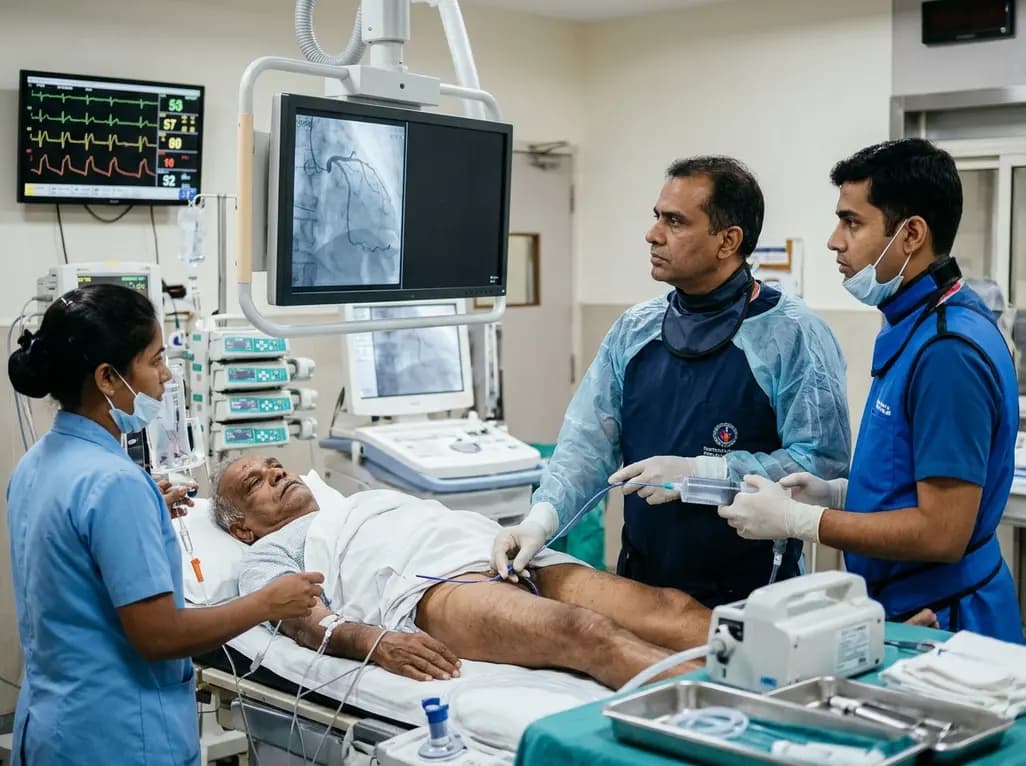
An elderly man with partially repaired Tetralogy of Fallot presented with STEMI caused by coronary embolism rather than atherosclerosis. Successful treatment with sustained mechanical aspiration thrombectomy underscores the vital need for high clinical vigilance in adult congenital heart disease.
Today

Demanding exhaustive hormonal profiling can inadvertently discourage clinical studies involving females. Methodological standards must align with the specific scientific question to expand, not restrict, equitable evidence for women.
Today

A recent study demonstrates that spinal oxygen sensors do not require mitochondrial electron transport to trigger sympathetic excitation during acute hypoxia, revealing new insights into how mitochondrial oxidative stress modulates autonomic tone in cardiovascular and neurological diseases.
Today

A novel calcium polyphosphate coacervate enables injectable bone implants with in situ hierarchical porosity via phase separation and gas foaming, significantly enhancing cell proliferation, energy metabolism, and osteogenic differentiation for minimally invasive bone defect repair.
Today

Following regulatory scrutiny from FSSAI regarding promotional representations and lean muscle preservation claims, Dr. Reddy's Laboratories and Nestlé Health Science are currently reviewing the branding and marketing strategy for their joint nutritional supplement Celevida GLP+.
Today
