.webp&w=384&q=75)

Loading, please wait...
Loading, please wait...
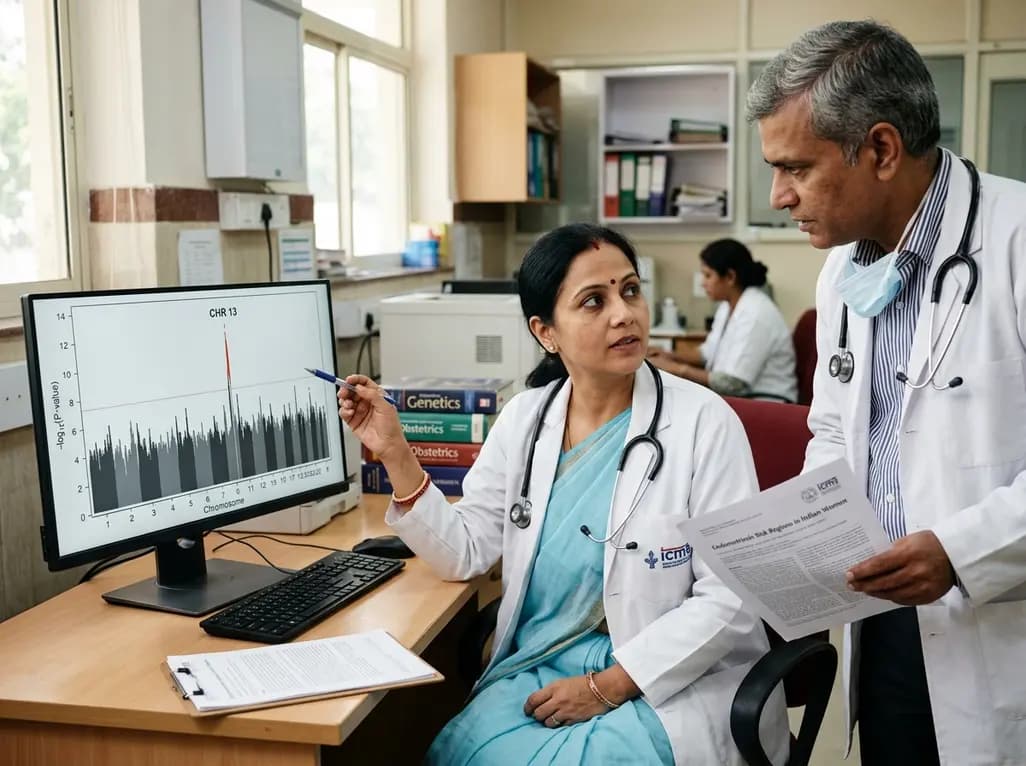
Endometriosis remains a debilitating gynecological condition that compromises the daily well-being of millions of reproductive-age individuals worldwide. For decades, researchers evaluated disease etiology primarily through Western cohorts, leaving an immense knowledge gap across South Asia. Fortunately, a landmark nationwide investigation led by Indian scientists has transformed this landscape. Specifically, by characterizing the genetic risk of endometriosis, the study delivers crucial insights into South Asian disease biology.
In India, endometriosis affects approximately 50 million women, creating an immense clinical and public health challenge. Globally, the disease impacts nearly 250 million women during their peak reproductive years. Affected patients routinely endure severe dysmenorrhea, chronic non-menstrual pelvic pain, deep dyspareunia, and debilitating subfertility. In addition, persistent cyclic pain frequently triggers systemic fatigue, severe anxiety, and secondary depression. Despite this staggering prevalence, individuals frequently wait many years before receiving an accurate surgical or clinical diagnosis. Historically, widespread social taboos surrounding menstrual health have discouraged open conversations and early healthcare visits. Moreover, healthcare practitioners often dismiss severe cyclic distress as ordinary physiological discomfort. Consequently, patients present with extensive pelvic distortion and invasive adhesions by the time clinicians identify the condition. This diagnostic delay causes severe emotional trauma and impairs long-term ovarian reserve. In fact, many individuals face irreversible tubal obstruction before receiving appropriate therapeutic interventions. Therefore, gynecologists and primary care physicians must evaluate persistent pelvic symptoms with heightened suspicion. Ultimately, validating reliable objective screening markers remains essential to prevent progressive reproductive compromise and preserve quality of life. Furthermore, timely diagnosis empowers women to make informed reproductive choices without unnecessary delays.
To resolve underrepresentation in global genomics, researchers launched the Endometriosis Clinical and Genetic Research in India initiative. Scientists at the ICMR National Institute for Research in Reproductive and Child Health coordinated eighteen prominent clinical centers nationwide. Furthermore, Indian investigators established a robust collaborative partnership with genomics experts from the University of Queensland in Australia. Together, the team recruited 2,523 Indian women across six distinct geographic zones of the subcontinent. Through this extensive multicenter infrastructure, the authors conducted the first nationwide genome-wide association study dedicated to Indian demographics. Significantly, the rigorous protocol incorporated standardized clinical phenotyping, lifestyle factors, and surgical histories. Previous international consortia evaluated massive patient cohorts, yet they almost entirely overlooked women of South Asian ancestry. Because endogamy shapes distinct genetic structures across India, clinicians cannot reliably extrapolate European genomic data to local patients. Thus, the ECGRI framework establishes an indispensable biobanking repository tailored directly to Indian genetic variations. In addition, the multicenter network harmonized diagnostic criteria to ensure high data integrity across all collaborating hospitals. Consequently, this initiative bridges a critical clinical gap, providing reproductive specialists with authentic, indigenous genetic insights.
The nationwide investigation identified twenty-one suggestive genomic regions associated with the disease among Indian women. Notably, the strongest disease signal mapped directly to the LINC00415 and SHISA2 locus on chromosome 13. This specific genetic architecture appears unique to South Asian populations, offering fresh clues regarding local disease susceptibility. Additionally, the investigators validated significant risk associations at well-known global loci, including WNT4 and CDKN2B-AS1. These conserved genomic regions regulate embryonic Mullerian duct development, cellular proliferation, and physiological tissue remodeling. Hence, the findings prove that Indian women share foundational pathophysiological mechanisms with European and East Asian populations. Simultaneously, the discovery of novel suggestive signals indicates that ancestry-specific variants modulate individual disease manifestation. Furthermore, researchers observed that European-derived polygenic risk scores demonstrated meaningful cross-ancestry predictive utility in the Indian cohort. This finding indicates that core polygenic mechanisms operate consistently across distinct ancestral backgrounds. Nevertheless, incorporating population-specific alleles will substantially improve local risk stratification algorithms. In fact, understanding the genetic risk of endometriosis enables researchers to untangle complex hereditary inheritance patterns. Therefore, uncovering these shared and unique loci deepens our appreciation of reproductive pathophysiology.
A particularly critical observation from the ECGRI study was the median participant age of 29.2 years. This demographic pattern highlights an exceptionally heavy disease burden among adolescents and young adults in India. During their most productive years, young women endure debilitating pain that disrupts education and career growth. For example, adolescents frequently suffer from severe primary dysmenorrhea that fails to respond to common over-the-counter analgesics. Regrettably, societal norms often dismiss this incapacitating pain as an expected aspect of the menstrual cycle. Because families rarely suspect underlying pathology, young women endure years of silent suffering before consulting a specialist. Consequently, ectopic endometrial implants continue to proliferate, generating chronic pelvic inflammation and progressive anatomical distortion. Many patients receive an accurate diagnosis only after experiencing severe subfertility when attempting conception years later. Thus, clinical recognition must occur far earlier in the disease trajectory to safeguard long-term reproductive health. In response, primary care doctors and gynecologists must proactively screen young patients who present with unyielding menstrual cramps. Ultimately, prompt diagnosis enables early medical suppression and protects future fertility before irreversible ovarian damage occurs.
Historically, clinicians have relied on invasive diagnostic laparoscopy with histological confirmation to verify the presence of endometriosis. While specialized ultrasonography and magnetic resonance imaging identify advanced endometriomas, they frequently miss subtle superficial peritoneal lesions. Consequently, the medical community urgently requires accurate, non-invasive screening biomarkers to facilitate early detection. The genomic findings from the ECGRI initiative establish a tangible framework for non-invasive risk assessment tools. In the future, polygenic risk scores derived from population-specific datasets could identify high-risk adolescents before severe tissue scarring develops. Clinicians could potentially incorporate these genomic scores into routine outpatient assessments using simple saliva or blood samples. Moreover, combining polygenic markers with clinical risk scoring and ultrasound imaging will significantly improve predictive precision. For instance, risk stratification could help reproductive endocrinologists design individualized fertility preservation protocols and targeted medical regimens. Prescribing oral progestins or gonadotropin-releasing hormone antagonists at an early stage arrests disease progression effectively. Furthermore, timely pharmacological intervention minimizes the need for repeated, fertility-compromising pelvic surgeries. In addition, these genomic insights align seamlessly with upcoming World Health Organization guidelines emphasizing precision medicine. Therefore, translational genomic research holds immense promise for reshaping gynecological care across South Asia.
Q1: What did the landmark Indian genome-wide association study discover about endometriosis?
The landmark nationwide investigation identified twenty-one suggestive genomic regions linked to endometriosis risk in Indian women. Notably, researchers identified the strongest risk association near the LINC00415 and SHISA2 locus on chromosome 13, highlighting population-specific genetic architecture. Additionally, the study confirmed shared susceptibility signals at established global loci, including WNT4 and CDKN2B-AS1. These findings demonstrate that Indian patients share fundamental biological pathways with global cohorts while exhibiting unique genetic variations.
Q2: Why is understanding the genetic risk of endometriosis crucial for young Indian women?
The nationwide ECGRI study revealed a median participant age of 29.2 years, underscoring an exceptionally heavy disease burden among young women. Because cultural taboos and diagnostic normalization often delay clinical evaluations for years, adolescents suffer unmanaged pain while internal inflammation progresses. Identifying genetic vulnerability early allows healthcare providers to initiate conservative medical therapies promptly. Consequently, early intervention prevents extensive pelvic distortion, preserves ovarian reserve, and mitigates future subfertility.
Q3: Can clinicians currently utilize these genomic findings for routine diagnostic testing?
At present, these genomic findings serve as a biological discovery platform rather than an immediate outpatient clinical test. The study investigators emphasized that direct diagnostic screening panels require further validation before entering daily clinical practice. However, this dataset provides the essential groundwork for developing future polygenic risk score models and non-invasive screening tools. Ultimately, such technologies will help clinicians detect high-risk individuals without relying exclusively on invasive laparoscopy.
Disclaimer: This content is for informational and educational purposes only. It does not constitute medical advice or replace professional judgment. Refer to the latest local and national guidelines for clinical practice.
References

Read summarized clinical updates, watch expert medical content, and earn CME certifications right from your smartphone.
Open your smartphone camera to scan and install.





An ICMR-led nationwide genome-wide association study of 2,523 Indian women has identified 21 genetic regions linked to endometriosis, including a strong signal on chromosome 13. The findings address a major South Asian data gap and lay the clinical foundation for non-invasive risk prediction and earlier diagnosis.
last month

Review how tailored exercise programs benefit frail older patients with heart failure. Explore pathophysiological mechanisms, individualized training prescriptions, and strategies to overcome adherence barriers in clinical practice.
Today

Leucine Rich Bio has introduced South Asia's first comprehensive vaginal microbiome test, BugSpeaks. By profiling microbial dysbiosis, pathogens, and antimicrobial resistance, this next-generation diagnostic platform provides clinicians with deeper insights into recurrent infections, fertility, and reproductive health.
Today

In high-risk pulmonary embolism complicated by severe anemia and active uterine bleeding, systemic thrombolysis is contraindicated. Large-bore aspiration thrombectomy provides rapid hemodynamic rescue without fibrinolysis, supported by inferior vena cava filter placement and multidisciplinary critical care.
Today

This comparative study evaluates posterior labral tears with and without glenohumeral instability, highlighting distinct demographic patterns, MRI underestimation in stable shoulders, and successful arthroscopic repair outcomes.
Today

A clinical study demonstrates that early intervention with tocilizumab, either as monotherapy or bridged with corticosteroids, achieves significant proptosis reduction and resolves active inflammation in treatment-naive thyroid eye disease.
Today
