.webp&w=384&q=75)

Loading, please wait...
Loading, please wait...

Recent research emphasizes that middle childhood mental health is a critical predictor of later psychiatric outcomes. Therefore, a significant study using the dual-factor model examined over 26,000 children to understand these developmental links. This specific model is unique because it considers both positive mental health and traditional psychopathology. Consequently, by identifying specific social-emotional profiles, clinicians can better predict who might require hospital services during their teenage years. Furthermore, this approach provides a more holistic view of child development compared to traditional symptom-only assessments.
Specifically, the study utilized latent profile analysis to categorize children at age 11 into five distinct groups. These profiles ranged from those with high competence to those facing significant psychopathology. However, the researchers found that all vulnerable profiles showed significantly higher odds of mental disorder diagnoses. Indeed, adjusted odds ratios for these risks ranged between 1.7 and 3.3. Moreover, this highlights the urgent need for nuanced screening in pediatric primary care settings to catch issues early. Thus, clinicians should look beyond simple symptoms to evaluate overall social-emotional well-being.
For healthcare providers, identifying these profiles early is absolutely essential. For instance, early intervention can successfully mitigate the risk of externalizing and internalizing disorders. Additionally, the findings suggest that positive social-emotional competencies act as a robust protective factor. Instead, children with low competencies and high psychopathology remain at the highest risk for self-harm. Therefore, integrating mental health promotion into school and primary care settings could significantly alleviate the burden of adolescent mental illness. In conclusion, early assessment leads to better long-term outcomes for young patients.
Unlike traditional models that focus only on the presence or absence of symptoms, the dual-factor model incorporates positive indicators of well-being. This approach recognizes that the absence of illness does not necessarily mean a child is thriving or resilient.
Childhood profiles are strongly associated with adolescent presentations for internalizing and externalizing disorders. Additionally, they correlate with heightened risks of self-harm and suicidal ideation, making early identification a vital tool for preventative care.
Disclaimer: This content is for informational and educational purposes only. It does not constitute medical advice or establish a doctor-patient relationship. Always seek the advice of a qualified healthcare provider regarding a medical condition. Refer to the latest local and national guidelines for clinical practice.
References
Carpendale EJ et al. Middle childhood profiles of social-emotional competencies and difficulties differentiate risk of health service presentations with adolescent mental disorders. Aust N Z J Psychiatry. 2026 Mar 25. doi: 10.1177/00048674261426776. PMID: 41881801.
Australian Early Development Census. Early childhood development and later social-emotional wellbeing and mental health outcomes. Available at: https://www.aedc.gov.au/

Read summarized clinical updates, watch expert medical content, and earn CME certifications right from your smartphone.
Open your smartphone camera to scan and install.





A large-scale study finds that social-emotional profiles at age 11 strongly correlate with the risk of psychiatric hospital presentations during adolescence...
6 months ago
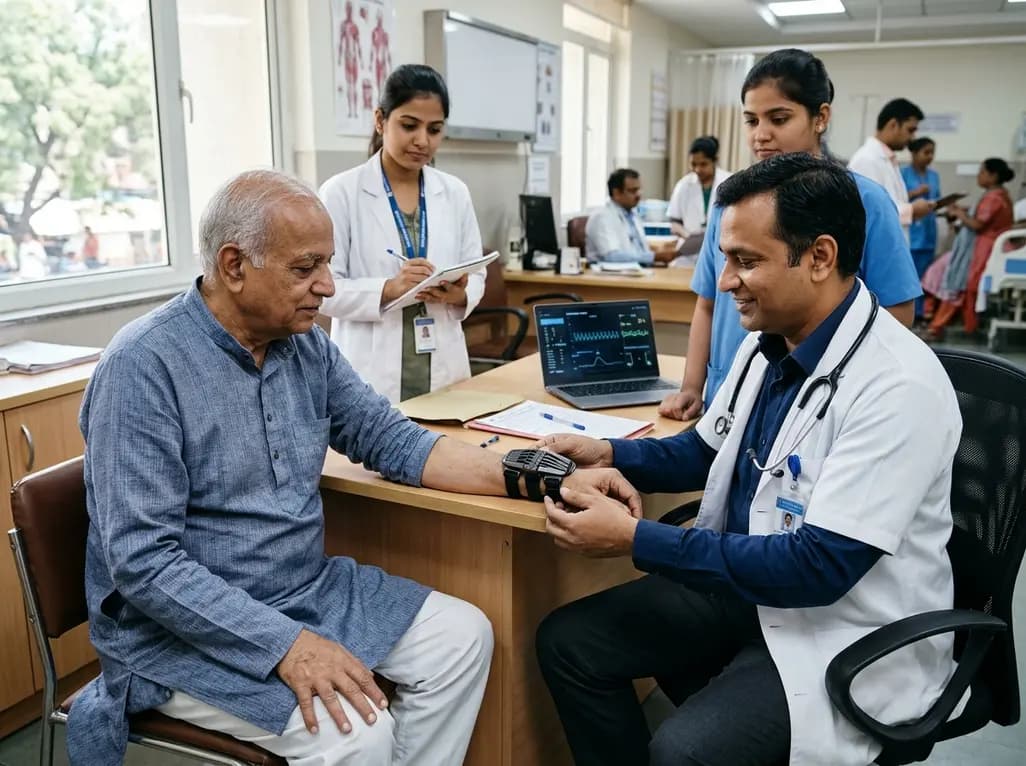
The TREM-AB open-label pilot study evaluated a wearable passive nonlinear vibration absorber for essential tremor. The Nonlinear Energy Sink bracelet reduced clinical Fahn-Tolosa-Marin tremor scores by 32.1% and electrophysiological tremor power by 49.2% with no adverse effects reported.
Today
A population-based study of 20,928 children reveals that small vulnerable newborns face sex-divergent mental capital outcomes at ages 6-7: term SGA girls show higher behavioral difficulties and lower resilience, while preterm non-SGA boys experience increased behavioral problems.
Today
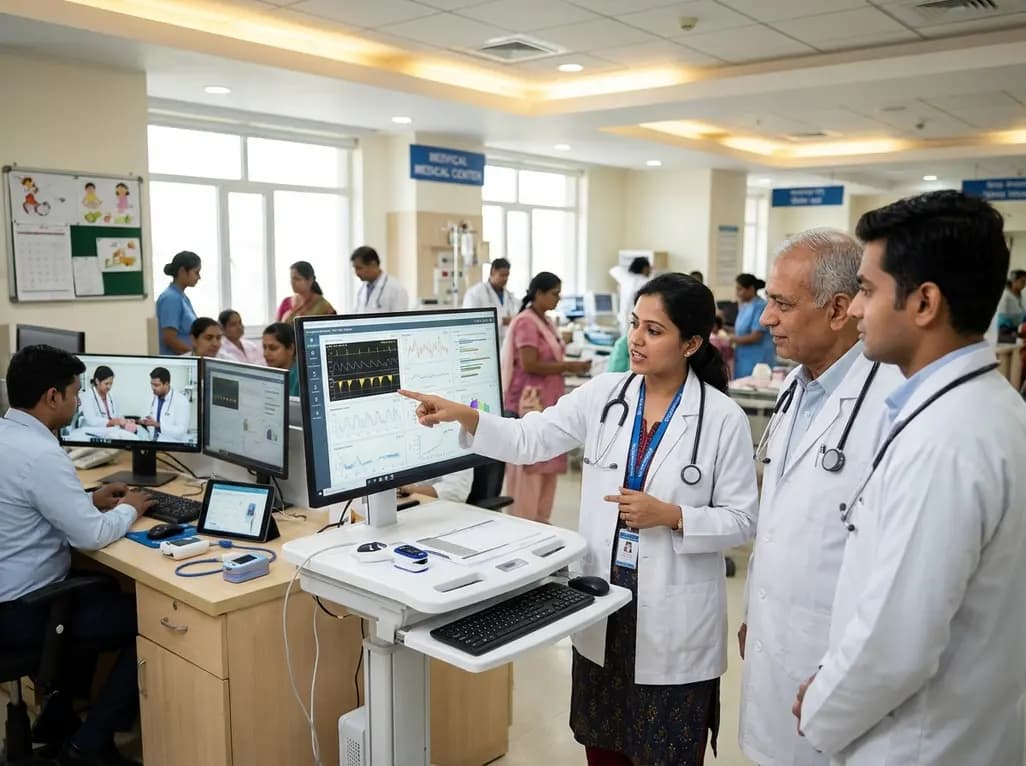
A landmark study details how an enterprise pediatric remote patient management model expanded from a single cardiology pilot to 16 diverse specialty programs by combining centralized digital operations with specialty clinical leadership.
Today

A comparative review of tension band wiring and intramedullary screw fixation in thumb metacarpophalangeal arthrodesis, evaluating union rates, hardware complications, and clinical outcomes.
Today
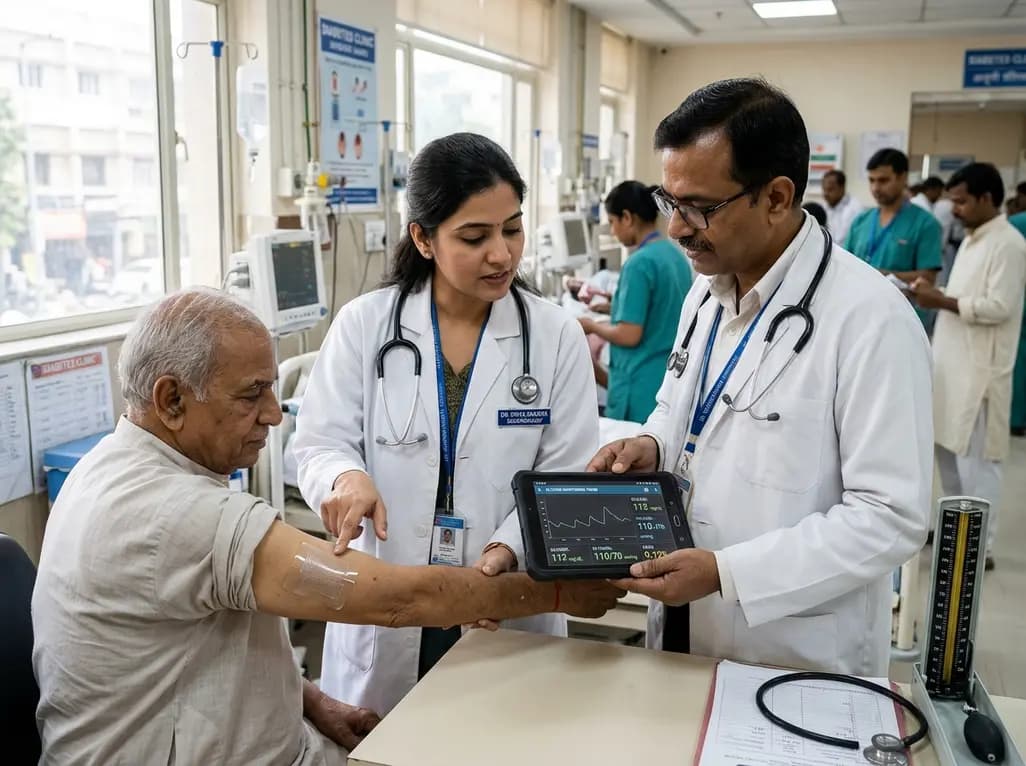
A breakthrough ultrathin multimodal sensor decouples physical hemodynamic monitoring from disposable electrochemical calibration, achieving long-term wearable glucose prediction with 81.36% accuracy and a 9.12% MARD. This offers a robust, drift-free solution for outpatient metabolic surveillance.
Today
