.webp&w=384&q=75)

Loading, please wait...
Loading, please wait...

Metastatic dissemination represents the primary cause of cancer-related mortality worldwide. Although malignant cells frequently detach from primary tumors, the overwhelming majority perish before forming detectable secondary colonies. Host immune surveillance aggressively eliminates these circulating threats. However, a minute subset of resilient cells survives and settles into distant anatomical niches. These subclinical lesions form micrometastases, representing an elusive and vulnerable transitional phase in tumor progression. Consequently, deciphering micrometastasis immunobiology is essential for developing curative clinical interventions. Recent insights demonstrate that micrometastases maintain distinct immunological properties fundamentally divergent from overt metastases. Therefore, exploring this critical bottleneck provides unprecedented opportunities for early therapeutic interception.
The metastatic cascade is inherently inefficient because circulating tumor cells encounter hostile hemodynamics, shear stress, and active immunological surveillance. Natural killer cells and cytotoxic lymphocytes rapidly destroy vulnerable neoplastic clones during vascular transit. Nevertheless, rare disseminated tumor cells navigate these barriers and lodge within pre-metastatic niches across distant organs. In this context, micrometastasis immunobiology highlights how these tiny cellular clusters interact uniquely with host microenvironments. Unlike bulky, vascularized lesions, micrometastatic foci exist in a delicate equilibrium with resident immune cells. Furthermore, their metabolic and antigenic profiles differ significantly from established macro-metastases. Primary tumors actively condition distant tissue sites by releasing extracellular vesicles, chemokines, and growth factors prior to metastatic colonization. Consequently, these conditioned niches offer specialized survival signals that shield disseminated tumor cells from immediate immune clearance. Understanding these dynamic tissue interactions helps oncologists identify the molecular determinants governing long-term disease relapse.
Cellular plasticity serves as a fundamental driver during metastatic colonization. Disseminated tumor cells frequently exploit epithelial-to-mesenchymal transition programs to acquire migratory and invasive capabilities. During this phenotypic shift, neoplastic cells downregulate epithelial adhesion markers such as E-cadherin while upregulating mesenchymal regulators like SNAIL, TWIST, and SLUG. Moreover, this transition intimately links to the acquisition of cancer stem cell properties. Stem-like tumor cells exhibit self-renewal capabilities, metabolic flexibility, and pronounced resistance to standard cytotoxic chemotherapy. In addition, these stem-like features facilitate active survival in nutrient-deprived distant tissues. Importantly, plasticity allows disseminated clones to undergo reverse mesenchymal-to-epithelial transition when establishing nascent clusters. Consequently, this dynamic adaptability enables survival within foreign tissue architectures, such as bone marrow, liver, and lungs. Because these plasticity programs modulate surface antigen presentation, they directly suppress immune recognition. Thus, targeting the molecular networks governing stemness and plasticity represents a compelling approach to eliminate subclinical metastatic reservoirs.
Following dissemination, neoplastic cells often enter a quiescent state termed metastatic dormancy to survive hostile physiological conditions. Cellular dormancy involves reversible cell-cycle arrest in the G0/G1 phase, driven by specialized microenvironmental signals. In this state, tumor cells markedly reduce their metabolic activity and halt active proliferation. As a result, conventional chemotherapeutic agents targeting dividing cells remain completely ineffective against these quiescent populations. Furthermore, dormant cells construct specialized immune-privileged niches within distant tissues, particularly the endosteal surface of bone marrow and perivascular regions. Resident stromal cells, non-myelinating Schwann cells, and extracellular matrix proteins collectively sustain this protective microenvironment. In addition, dormant cells downregulate surface major histocompatibility complex molecules, effectively escaping detection by cytotoxic T lymphocytes. Meanwhile, systemic physiological alterations, chronic inflammation, or tissue injury can spontaneously awaken these dormant reservoirs. Therefore, maintaining sustained dormancy or therapeutically forcing dormant cells into terminal clearance constitutes a pivotal clinical strategy.
Disseminated tumor cells utilize multifaceted immune evasion strategies to persist undetected in distant tissues. Although innate immune surveillance eliminates most circulating cells, surviving micrometastatic clones actively suppress local antitumor responses. Specifically, these cells recruit immunosuppressive cellular populations, including myeloid-derived suppressor cells, regulatory T cells, and M2-polarized macrophages. These suppressive elements release inhibitory cytokines such as transforming growth factor-beta and interleukin-10, creating a localized immune-tolerant microenvironment. In addition, micrometastatic cells upregulate inhibitory immune checkpoint molecules, such as programmed death-ligand 1 and T-cell immunoglobulin and mucin-domain containing-3. Consequently, tumor-infiltrating effector T cells undergo progressive exhaustion and functional paralysis. Furthermore, low antigen presentation and defective proteasomal processing prevent robust neoantigen recognition. Because these mechanisms operate silently during subclinical stages, conventional imaging modalities cannot detect these immunosuppressive niches. Thus, characterizing localized immune evasion pathways provides essential targets for preemptive immunotherapy.
Preventing metastatic recurrence requires time-tailored immunopreventive strategies deployed during the subclinical window of vulnerability. Once macro-metastases establish extensive vasculature and dense immunosuppressive stroma, therapeutic eradication becomes extraordinarily difficult. In contrast, subclinical micrometastases harbor fewer immune-suppressive barriers and display lower clonal heterogeneity. Therefore, early intervention offers a superior therapeutic window for curative immune activation. Clinicians can utilize adjuvant checkpoint inhibitors, targeted bispecific antibodies, or cancer vaccines during this post-surgical minimal residual disease period. Furthermore, combining immune checkpoint blockade with agents that disrupt the dormant niche can selectively sensitize quiescent cells to cytotoxic clearance. In addition, scheduling immunotherapeutic regimens based on biological kinetics ensures optimal effector T-cell engagement before immunosuppressive stromal remodeling occurs. Ultimately, shifting clinical oncology paradigms from reactive treatments of established metastases to proactive immunoprevention will substantially reduce disease relapse rates.
Translating micrometastatic immunobiology into routine oncology practice requires novel diagnostic and therapeutic clinical trial designs. Liquid biopsy platforms, including circulating tumor DNA assays and circulating tumor cell enumeration, now provide sensitive tools to detect minimal residual disease. Consequently, oncologists can identify patients harboring occult micrometastases who will benefit most from adjuvant immunoprevention. Moreover, modern clinical trials must incorporate molecular endpoints that measure the clearance of minimal residual disease rather than relying solely on radiographic progression. Stratifying patients based on immune dormancy signatures will optimize patient selection for targeted immunotherapies. Additionally, evaluating biomarker dynamics during adjuvant therapies will allow real-time regimen adjustments. Because healthcare systems worldwide seek cost-effective strategies to prevent cancer recurrence, validating these time-tailored interventions remains an urgent clinical priority. In conclusion, integrating advanced molecular surveillance with proactive immunotherapy promises to transform cancer care.
Micrometastases represent microscopic clusters of disseminated tumor cells that have colonized distant tissues but have not yet developed autonomous vascularization or extensive stroma. Unlike overt macro-metastases, which exhibit complex genomic heterogeneity and profound immunosuppressive microenvironments, micrometastases frequently exist in a quiescent or dormant state. Consequently, they remain radiographically undetectable through standard clinical imaging while presenting a highly vulnerable therapeutic window for preemptive immunotherapy.
Dormant tumor cells evade host immune surveillance by downregulating major histocompatibility complex class I molecules and neoantigen presentation, preventing effective recognition by cytotoxic T lymphocytes. Furthermore, they occupy specialized, immune-privileged anatomical niches, such as perivascular and bone marrow microenvironments. Additionally, these quiescent cells actively recruit immunosuppressive populations like regulatory T cells and myeloid-derived suppressor cells, which secrete anti-inflammatory cytokines to blunt local immune responses.
Time-tailored immunopreventive strategies involve delivering targeted immunotherapies during specific windows of subclinical disease, such as the minimal residual disease setting following surgical resection. By intervening before disseminated tumor cells establish dense vascular networks and profound immunosuppressive barriers, these strategies activate cytotoxic T cells to eliminate quiescent micrometastatic niches. Consequently, this proactive timing prevents the lethal awakening and outgrowth of dormant cells into clinically manifest metastases.
Disclaimer: This content is for informational and educational purposes only, and does not constitute medical advice or establish a doctor-patient relationship. Healthcare professionals should evaluate individual clinical circumstances and consult institutional protocols. Refer to the latest local and national guidelines for clinical practice.
References

Read summarized clinical updates, watch expert medical content, and earn CME certifications right from your smartphone.
Open your smartphone camera to scan and install.





Discover how micrometastasis functions as a distinct immunobiological state shaped by dormancy, stemness, and immune evasion, opening new doors for time-tailored immunoprevention.
last month

The novel chemiluminescent probe 2TPA-IsoL enables selective, deep-tissue monitoring of MPO-generated HOCl. This breakthrough offers real-time tracking of inflammatory bowel disease activity and therapeutic response.
Today

New evidence from Karolinska Institutet shows women vaccinated against HPV prior to conception have significantly lower rates of preterm birth and major perinatal complications. Clinicians in India can leverage these findings to strengthen adolescent immunisation and reproductive health advocacy.
Today

Cinematic rendering utilizes advanced global illumination to transform coronary CT angiography datasets. This imaging technique provides lifelike depth perception, helping cardiologists and surgeons precisely evaluate anomalous coronary artery origins, high-risk interarterial courses, and post-surgical anatomy.
Today
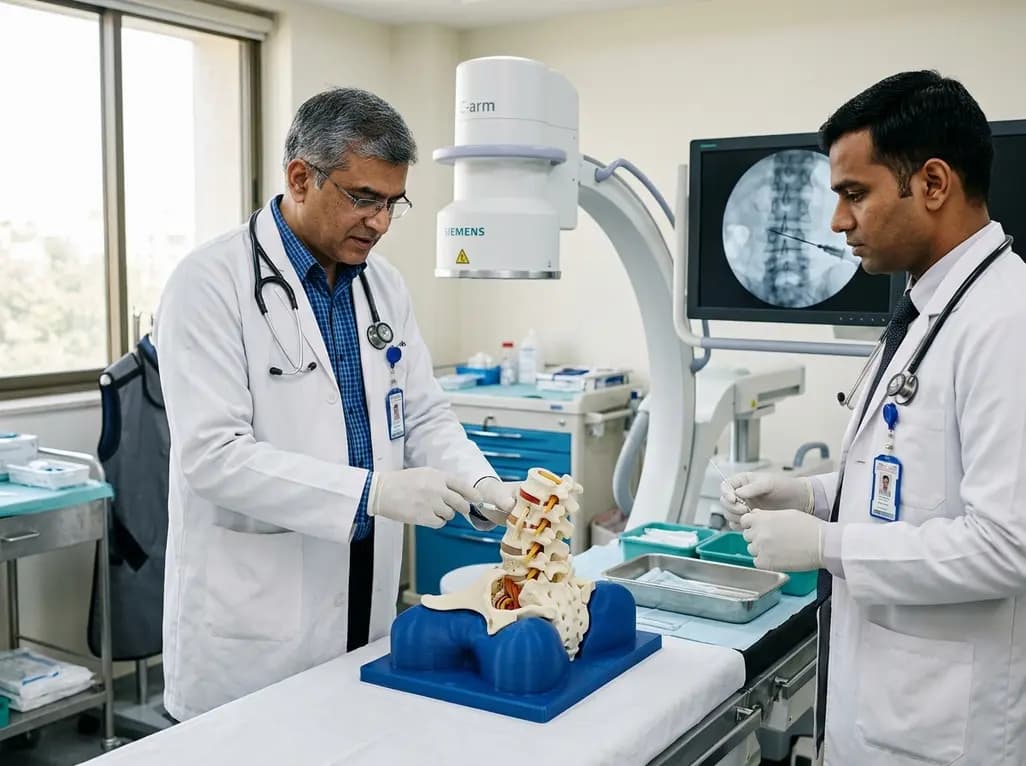
A novel 3D-printed lumbar spine simulator with tunable radiopacity provides realistic tactile and radiographic feedback for fluoroscopy-guided intervertebral disc puncture training, offering a low-cost, ethical alternative to cadaver models.
Today

A breakthrough study reveals that loss of SELENOT in hypothalamic POMC neurons triggers premature cellular senescence, ATF6α stress activation, and ER calcium depletion, linking neuroendocrine decay to metabolic disease.
Today
